Imaginary interview with Caracalla
by Charactorium · Caracalla (188 — 217) · Politics · 6 min read
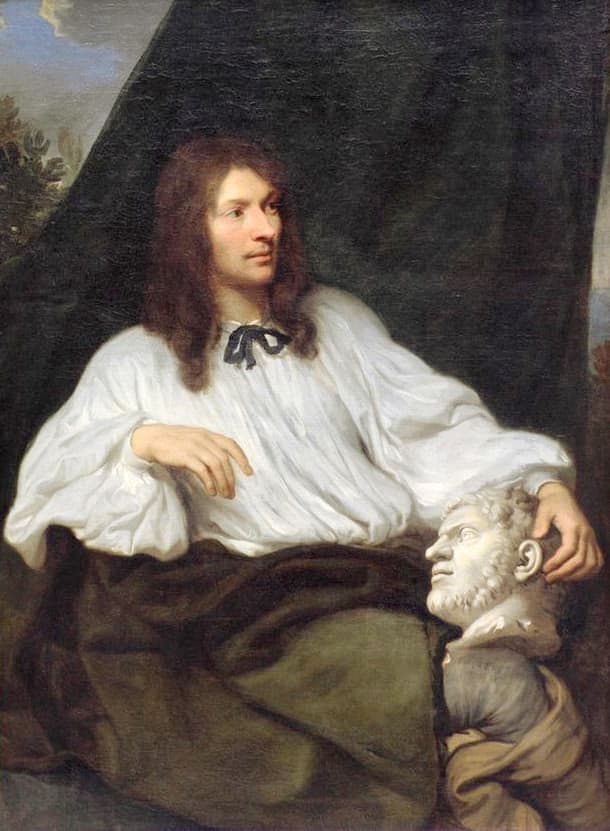
April 217. Somewhere in Mesopotamia, between Edessa and Carrhae, the imperial tent smells of leather, dust, and weapon oil. Caracalla receives without ceremony, his Gallic cloak on his shoulders despite the Eastern heat, his sword within reach. He does not know — but we do — that he will not see the end of the month.
—You are called Caracalla, but that is not the name you were given at birth. Where does it come from?
You laugh at my name? Caracalla is not an emperor's name; it is a barracks nickname. They called me that because of the caracallus, that long Gallic hooded cloak I wear over the purple, summer and winter. The senators find it vulgar — a poor man's garment, made for the rain of Gaul, not for the dignity of the prince. That is precisely why I love it, and I had it distributed to the people of Rome. My soldiers understand: when the emperor wears coarse wool instead of silk, he sleeps under the same rain as they do. Born in Lugdunum, I carry Gaul in my name as on my shoulders. Let them laugh all they want: I rule through this hood.
Let them laugh all they want: I rule through this hood.
—What does a day in the life of an emperor who wants to be a soldier first look like?
I rise with the light, on the Palatine, and endure the salutatio — courtiers, prefects, officers, all those who bow and beg. Then I flee the marble for the field. I eat what my men eat: army bread, lard, lentils, wine heavily watered. No peacocks or nightingale tongues like some of my predecessors. On campaign, I dig the trench, I carry the standard, I sleep under the tent when generals demand their heated quarters. The gladius never leaves my side, even at audiences. That is my true court: not flatterers in togas, but the tanned faces of the legions, from the Danube to the Euphrates.
An emperor who has never been cold cannot command men who shiver.
—In 212, you granted Roman citizenship to all free men of the Empire. Why such a sweeping measure?
When I sealed the Constitutio Antoniniana, in 212, the jurists on my council turned pale. To give the name of Roman to all free men, from the Rhine to the Nile, from Volubilis to the Parthian marches? My father Septimius Severus taught me a simple thing: an empire is not held by fear alone; it is held by what men believe they possess in common. I made a Gaul, a Syrian, an African into Cives Romani. They whisper that I did it for the tax, so that all would pay the citizen's taxes; let them whisper. A soldier who dies under the eagle wants to fall Roman, not subject. None of my predecessors, not even the divine Augustus, had dared such a stroke of the pen.
I gave Rome to the whole world with a single stroke of the pen.
—Was this citizenship truly offered to all, without exception?
You ask if truly all? No. There remains a fringe. The Deditici, those peoples conquered by the sword who gave nothing in return — I left them outside the circle. Citizenship is not alms thrown at those who have not bent the knee. The Papyrus of Giessen, that dried reed preserved in Egypt, still bears the trace of my will, with its half-erased words. The provincial copyists recopied the edict as far as the arch erected for me at Volubilis, at the edge of the Western world. Consider: a Moor and a Bithynian now fall under the same law. Before me, Roman law was the privilege of a few; I made it a common roof.
I made Roman law a common roof.
—You left in Rome some of the largest baths ever built. What do they represent for you?
Go to Rome, pass the Porta Capena, and you will see what I leave to the living: my thermae. Sixteen hundred bathers fit at once, under vaults so high they seem like a vaulted sky. There are libraries, gardens, exercise halls, and hot water runs through the walls like blood through a body. The humblest citizen enters like a prince and has his back scraped with the strigile, that bronze scraper, exactly like me — for I go there too, as a simple man. An emperor builds himself in stone as much as in law. In many years, if my face is forgotten, these walls will still speak for me.
The edict nourishes the law, the baths nourish the people.
—To finance your armies, you reformed the currency. How do you justify this decision?
All this has a price, and the price is counted in silver. The legions want their pay, and I increased it, for a poorly paid soldier sells his sword to the first rival. To pay, I struck a new coin, the antoninianus, recognizable by my head crowned with the radiate crown. It is worth two denarii on the inscription, but it weighs less in pure metal — I do not hide it from the money changers, who see it well. They will reproach me for having debased Rome's silver. I answer: give me a bottomless treasury, and I will strike full-weight coins. Between a frontier that gives way for lack of paid soldiers and a currency that shrinks, in 215, I chose. To rule is nothing other than to arbitrate between two evils.
To rule is nothing other than to arbitrate between two evils.
—They say you worship Alexander the Great. Where does this fascination come from?
Alexander. Since childhood, his shadow walks before me. When I entered Alexandria, I wanted to see the Macedonian's tomb before any palace, before any temple. I removed my cuirass, my rings, my ornaments, and laid them on his remains like a soldier laying his spoils at his master's feet. I even drew up my troops in the ancient manner, in tight phalanxes, so that the world might see the army that conquered the East march again. They call me mad for this dead man. But consider: a man of twenty subdued the land from the Nile to the Indus, and I hold an empire that must be defended step by step. I imitate Alexander because he is the only measure of my stature.
I imitate Alexander because he is the only measure of my stature.
—Yet that same city of Alexandria experienced, in 215, one of the darkest episodes of your reign. What did you do there?
You touch my black wound. The Alexandrians have sharp wit and acerbic tongues; they made satires and songs about me, even mocking my brother's death. One does not laugh at the blood of an Augustus. In 215, I summoned their youth under the pretext of a military review, and my legionaries closed the trap. What followed was a carnage; the streets of Alexander's city ran with blood. I will not hide it as one hides a fault. Herodian will say I was seized by a cold rage; perhaps. The same city that showed me my hero's tomb also showed me how low I could sink. One does not love a master: one fears him, and fear is sometimes paid in blood.
One does not laugh at the blood of an Augustus.
—Your reign began with an act that still haunts your memory: the death of your brother Geta. Do you wish to speak of it?
Geta. They always want me to speak of it, and I always hear the same question beneath the question: how does a man kill his brother? We were two Augusti for a single throne, and a throne is no more shared than a sword is held with two hands. At our father's death, in Eboracum, we hated each other as only brothers can. I had him struck down on the Palatine, in the apartments of our mother Julia Domna; she still held his blood in her arms. That is what they say, and I will not deny it. An empire with two heads is a monster. The gods will judge; men have already decided, and their verdict has never cost me sleep.
An empire with two heads is a monster; I cut off the second.
—You know that historians judge you harshly. How do you live with the idea of the memory you will leave?
After the sword, oblivion. I ordered Geta erased everywhere: his face scraped from frescoes, his name chiseled from inscriptions, his coins melted in Rome. That is what we call damnatio memoriae — not the death of the body, but the death of memory. Let nothing remain, not even a hollow in the marble. The senator Cassius Dio, who hates me and writes it without trembling, paints me as an enemy of all humankind. So be it: he holds the pen, I held the Empire. The history he writes will make me a monster, and I knew it when I signed the order. But ask the legions on the banks of the Danube if they miss me. Power does not love twins, and posterity does not love soldiers.
He holds the pen, I held the Empire.
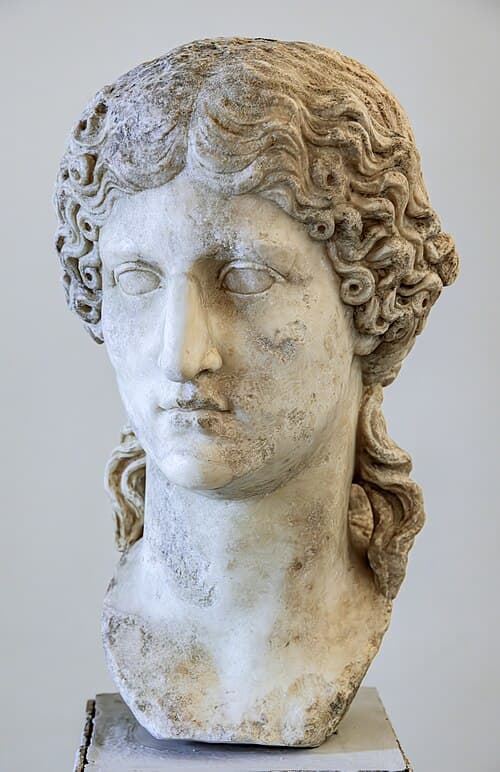
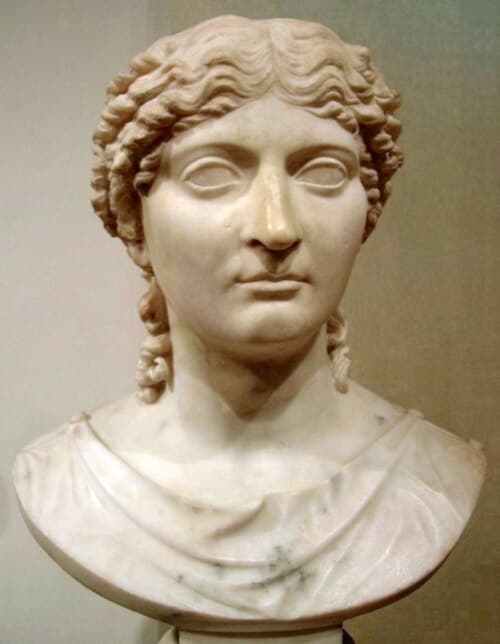
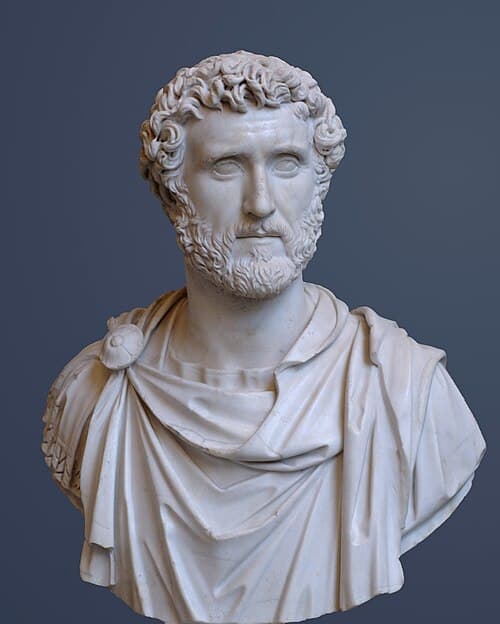
This imaginary interview was generated by artificial intelligence from sources documented in Caracalla's profile. It dramatises what the figure might have said based on what we know about them, but does not constitute attested historical testimony. For primary sources and factual documentation, refer to the full profile.