Imaginary dialogue between Julia Domna and Caracalla
by Charactorium · Caracalla (188 — 217) · Politics · 6 min read
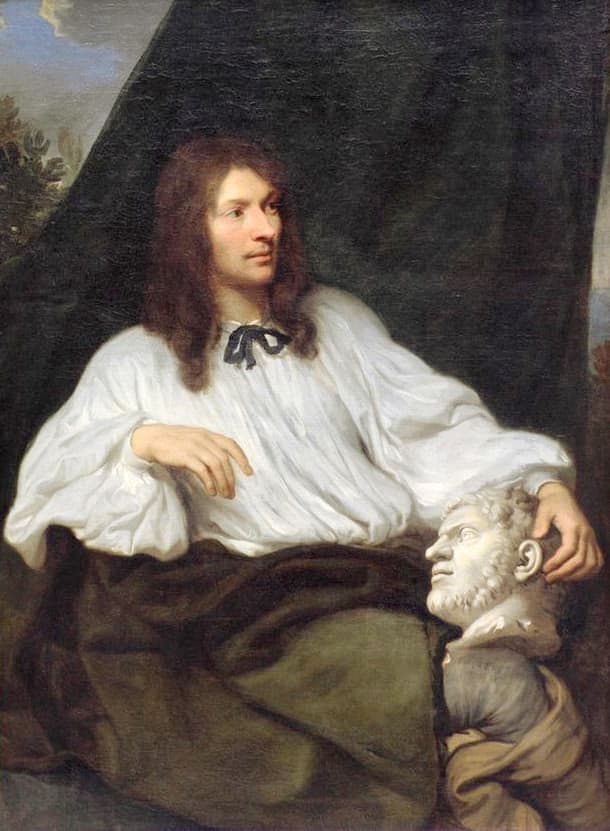
It is in the gardens of the palace of Antioch, in this year 216, that Julia Domna meets her son one summer evening, on the eve of the campaign against the Parthians. Oil lamps illuminate a table covered with dispatches from the provinces, and in the distance one hears the drills of the guard. Mother and son know each other better than anyone: she saw him born in Lugdunum, she held Geta dying in her arms, and she now administers his imperial correspondence. Tonight, she comes to find the man behind the purple.
—Bassianus, your edict of 212 made all free men of the Empire citizens. What did you hope to accomplish by signing such a law?
Mother, I wanted the Empire to no longer be a mosaic of the privileged and the subjects. By granting civitas to all free men, from the Rhine to the sands of Egypt, I raised to the gods of Rome the prayer of millions of new mouths — for a citizen honors our temples and our laws. Jurists call it the Constitutio Antoniniana; I thought of it as an act of piety as much as of governance. Whether one is born in Carthage, Antioch, or on the Palatine, one now falls under the same law. Some whisper that I was mostly seeking to broaden the base of the inheritance and manumission taxes; I won't deny that to you. But who else, before me, dared to make a foreigner a Roman with a single stroke of the pen?
Who, before me, dared to make a foreigner a Roman with a single stroke of the pen?
—Yet I am told that some, the dediticii, remain outside your favor. Why this exception, my son?
You touch on a point my secretaries debated at length, mother. The citizenship I granted embraces free men, but not those called dediticii — those surrendered peoples, subdued by arms and without a city, who have not yet earned entry into the Roman community. One does not pour new wine into a cracked wineskin. Citizenship is not only a privilege, it is a discipline: one must know how to bear the name of Antoninus, pay one's taxes, answer before our courts. The text that is copied even in the offices of Egypt, on papyrus sheets kept in the archives, therefore reserves this nuance. I opened wide the door of Rome; I did not, however, abolish every boundary between the one who submits and the one who adheres.
—Bassianus... I must ask you. That day, Geta died in my arms, in my own apartments on the Palatine. How could you?
Mother, do not think that image has left me for a single day. But understand what you know better than anyone: the Empire cannot bear two heads. From the death of our father at Eboracum, Geta and I shared power like two wolves in the same pit — separate guards, separate meals, the palace split in two. One of us had to perish so that Rome would not tear itself apart in civil war. I struck first because I knew he was thinking of it too. You cursed me, I know, and this blood will remain between us until the pyre. But I preferred the crime of a brother to the ruin of an Empire. The soldiers understood me: they wanted only one master.
I preferred the crime of a brother to the ruin of an Empire.
—And you wanted to erase even his name from monuments, coins, and documents. Did you also have to kill his memory, my child?
Yes, mother, and I know what a wound that adds to yours. But a dead man whose name is kept becomes a standard for the discontented. As long as Geta's face smiled from arches and aurei, he lived in the mouths of senators who hated me. So I ordered the damnatio memoriae: let his name be chiseled from inscriptions, let the coins be melted, let his image be scraped from paintings. It was not a brother's hatred, but an emperor's prudence. Thousands of his supporters, they say, followed the same path — I no longer count them. You alone kept the right to mourn him in secret; but in public, mother, nothing of him was to remain. An Empire cannot be governed with two rival memories.
—Let us change the subject, shall we? Your soldiers nicknamed you after that Gallic cloak you never take off. Where does this taste come from?
Ah, that caracallus! Old-stock Romans purse their lips when they see it — a hooded cloak from the Gauls, the garment of a peasant and a soldier, on the shoulders of their emperor! But that is precisely what I like about it, mother. I had them tailored in the Roman style and distributed them to the people: let them know that their prince does not drape himself in the toga of idlers. You have often reproached me for despising courtly attire. But when I march through the rain of Germania at the pace of my legions, this hood keeps me warm as it does the last of my infantrymen. The nickname is mocking in the mouths of senators; in the mouths of soldiers, it sounds like a title of honor. So I wear it all the more willingly.
Let them know that their prince does not drape himself in the toga of idlers.
—I am told you eat army rations and sleep under a tent, like the lowliest legionary. Do you get that from your father?
From him, yes, but also from my own heart, mother. Septimius Severus, on his deathbed at Eboracum, had advised us to get along and enrich the soldiers — the rest, he cared little about. I retained the second lesson. In camp, I dig the trench with my men, I carry my arms on long marches, I share their bacon and lentils. In the morning, a little bread and cheese suffice; I leave banquets to emperors whom softness has undone. When a general eats what his soldier eats and marches where he marches, that soldier would let himself be killed for him. My throne rests neither on the Senate nor on the plebs: it rests on the legions. So it is with them that I want to live, and not in the silk of the Palatine.
—During your stay in Alexandria, you laid your cuirass on the tomb of Alexander. What were you seeking from that ancient dead man?
Alexander is not a dead man to me, mother — he is a living model. In Alexandria, I went down to his tomb and left my own cuirass and rings there, like a son placing an offering on the altar of his ancestor. No man has carried Roman arms, or rather Macedonian, as far as he. I have formed phalanxes in his image, armed with the long pike, and I like it when they say I resemble him in the bearing of my head. You who saw me as a child tilting my neck to the left, you may smile — but this inclination, they now attribute to me as his. Conquering the East, subduing the Parthians where he subdued the Persians: that is the work I contemplate. If the gods grant me life, I will walk in his footsteps to the end of the world.
—And yet, in that same Alexandria you venerate, blood flowed by the thousands. How could you, after such devotion?
You put your finger on what the Greeks will not forgive me. The Alexandrians are a people with too quick a tongue: they composed satires against me, they mocked the death of Geta, they called me a fratricide in their theaters. I came as a pilgrim; they received me as a buffoon. I let my legionaries punish the city — their armed youth was put to the sword, the districts given over to looting. Was it too much? Perhaps. But an emperor who is mocked with impunity is already half overthrown. One respects those one fears. I loved Alexandria for its great dead; I punished it for its insolent living. The two feelings do not contradict each other in a prince's heart: they stand side by side, like the hand that offers and the hand that strikes.
—Tomorrow, your legions march against the Parthians. You know I fear for you, Bassianus. Why risk yourself so far from Rome?
Because that, mother, is where glory is won that no edict can give. The Parthians are the only enemy worthy of Rome in the East, and Alexander himself only tamed Persia by going there in person. I tried to obtain their king through an alliance, even a marriage; since I was rebuffed, it will be by the sword. Crassus once lost his eagles near Carrhae; I want to recover them and avenge that old shame. Fear nothing: I am surrounded by my guard and my prefects, and an emperor who shares his soldiers' tent is never alone. You administer my letters so well while I am at war that the Empire does not even feel my absence. Only keep Rome and the gods for me; I will bring you back the East.
—You trust your praetorian prefects a great deal. Are you sure, my son, that you truly know those who watch so close to your sleep?
That is a mother's concern, and I cherish it. The praetorian prefect is the most powerful man in the Empire after me: he commands my guard, reads my orders, holds my nights in his hands. So it is true that one cannot weigh the hearts of such men too carefully. But what would you have me do? An emperor who believes himself surrounded by traitors no longer sleeps and no longer rules. I prefer to command fear through fear: let them know I am quick to strike, as Geta and the Alexandrians learned. My soldiers love me, and as long as the legions are mine, no prefect will dare raise his hand. You watch over my letters, mother; let me watch over my praetorians. Between the two of us, the Empire is better guarded than any palace ever was.
This imaginary interview was generated by artificial intelligence from sources documented in Caracalla's profile. It dramatises what the figure might have said based on what we know about them, but does not constitute attested historical testimony. For primary sources and factual documentation, refer to the full profile.