Imaginary interview with Charlotte Brontë
by Charactorium · Charlotte Brontë (1816 — 1855) · Literature · 6 min read
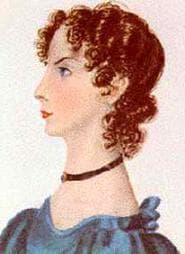
January 1854. The wind off the Pennines rattles the windows of Haworth parsonage, and the fire in the sitting room struggles to warm the stone. A small woman in a dark wool dress, her face grave and her gaze steady, agrees to speak in a low voice, as if confiding a secret from which she has not quite recovered.
—How did writing enter your life as a child?
We were singular children, raised here, in Haworth, in a stone house pressed against the churchyard wall, where the fog served as our horizon. My brother Branwell and I built an entire kingdom, Angria, which we kept in tiny notebooks sewn by our own hands, in handwriting so fine that a stranger would have thought it traced by insects. We were given few toys, but we had the moors and imagination, which are far vaster possessions. I sincerely believe that everything I have published since is merely the better-ordered continuation of those nursery scribbles. Childhood did not prepare me to write: it was already writing, through my hand, before I knew what it was.
Childhood did not prepare me to write: it was already writing, through my hand.
—Why did you choose to publish under a man's name, Currer Bell?
Because a woman who takes up the pen is judged before she is even read. In 1846, my sisters and I published a slim collection of poems signed Currer, Ellis and Acton Bell — three men's names chosen deliberately, ambiguous just enough. We feared, and experience proved us right, that a female author would be treated with indulgence or contempt that never touched the text itself. I wrote one day to Mr. Lewes, who kept reminding me of my sex: “I wish you did not think me a woman. I wish all reviewers believed ‘Currer Bell’ to be a man; they would be more just to him.” A mask, you see, is not a lie: it is sometimes the only door through which you are allowed to enter.
A mask is not a lie: it is sometimes the only door through which you are allowed to enter.
—What happened the day you revealed your true identity to your publisher?
It was in London, in 1849, at Smith, Elder & Co. Young George Smith and his circle had imagined Currer Bell under a thousand masculine guises; perhaps they expected some tormented gentleman. And then they saw a small, provincial woman, ill at ease, escaped from a Yorkshire parsonage, her gloves clutched in her hands. The stupefaction was almost comical, had it not revealed the full weight of the prejudice I dreaded. I do not like drawing rooms, nor being stared at like a curiosity. But that day I understood one thing: the book had existed first on its own terms, judged for what it was worth. That was precisely the justice I had demanded.
—Where did Jane Eyre come from, this orphan who refuses to bend?
From humiliation, to be frank. Between 1839 and 1841, I was a governess in families where I was paid to teach children while being treated like a useful piece of furniture — neither servant nor lady, suspended between two worlds, belonging to neither. One learns there, better than anywhere else, what a woman without fortune or name is worth. Jane Eyre was born from that false position: I wanted a heroine neither beautiful nor rich, small and obscure like me, but whose soul would not be sold at any price. I was reproached for making her so unsubmissive. That was the whole point. I could not write a smiling doll when I had before my eyes, every day, the real fate of women of my condition.
—Is there a sentence from that novel that you feel captures the essence of Jane?
One, yes, which I still reread as a profession of faith. When Jane stands up to the man who thinks he can keep her through pity or gold, she throws at him: “I am no bird; and no net ensnares me: I am a free human being with an independent will.” That is everything. Not the revolt of an overwrought woman, but the quiet affirmation that a conscience is caged for no one. When George Smith received the manuscript at Smith, Elder & Co. in 1847, I was told he read it in one sitting, unable to put it down. I believe it was that voice, stubborn, in the first person, that held him — not the plot, but someone who speaks and refuses to be silent.
A conscience is caged for no one.
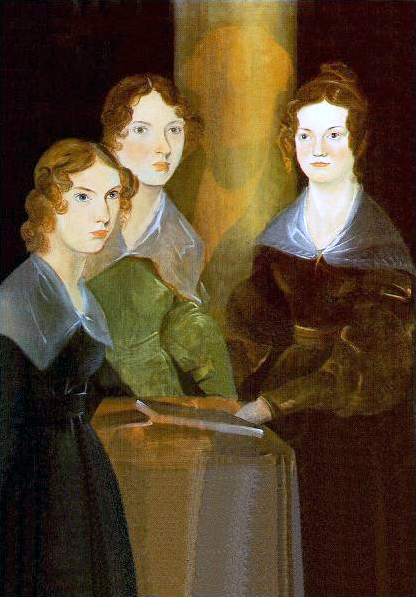
—What does Brussels represent in your journey?
A fracture, and a school. In 1842, Emily and I went to the Pension Héger to improve our French and German — I wanted to one day open our own establishment. There I found a master, Constantin Héger, whose intellect awakened me like no other's, and for whom I conceived an attachment I had neither the right to confess nor to nourish. He was married; I was only a foreign pupil. That silent love cost me years of silence and shame. But a writer loses nothing entirely: what I could not live, I gave to my books. The Professor first, rejected everywhere in my lifetime, then Villette, where Brussels becomes the city where one learns to survive alone.
—You say that Villette is about surviving alone — how did you write it?
With what I knew best: isolation. Villette, published in 1853, is the closest I have come to myself, perhaps the most painful. I put into it that truth that few people want to face: “The world can understand well enough the process of perishing for want of food: perhaps few persons can enter into or follow out that of going mad from solitary confinement.” One understands that a body may die of hunger; one does not understand that a soul may come undone, slowly, for lack of a being to speak to. I wrote this book in the parsonage emptied of my sisters, at the table where we once were three. Solitude is not a metaphor. It was my very life.
One understands that a body may die of hunger; one does not understand that a soul may come undone for lack of a being to speak to.
—You speak of your lost sisters. Can you talk about that terrible year?
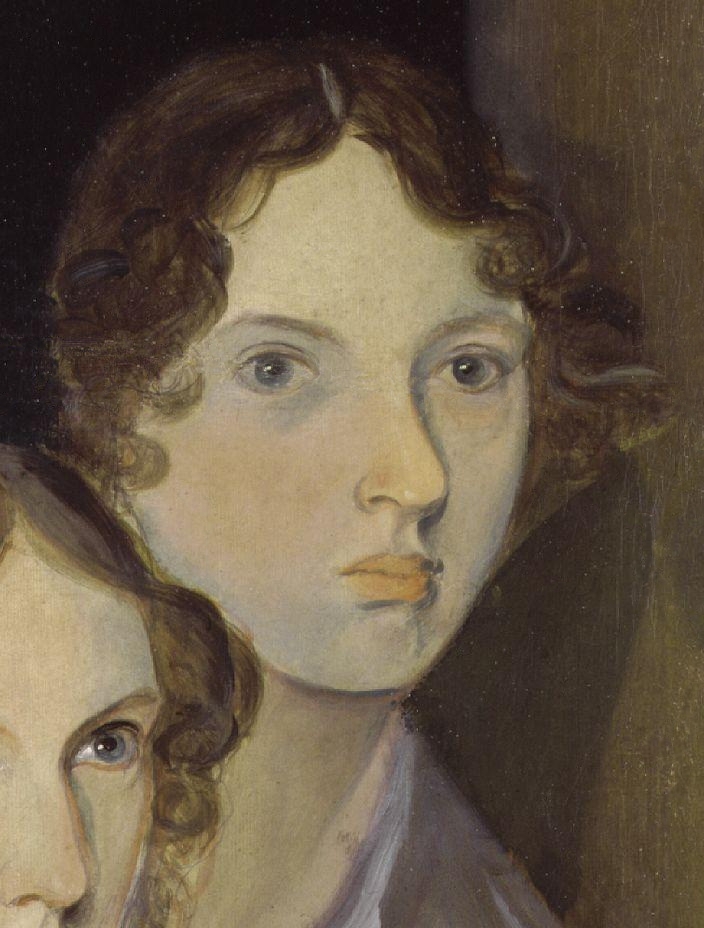
Within a few months, I lost nearly everything that remained. Branwell died in September 1848, then Emily in December of the same year, carried off by consumption without having agreed to be treated or even to take to her bed until the end. Anne followed in the spring of 1849. I wrote then to Mr. Williams, my publisher, words I cannot say better today: “My sister Emily first declined. The details of her illness are deep-branded in my memory, but to dwell on them, either in thought or narrative, is not in my power.” There are sorrows one can neither tell nor forget. One simply carries them, as one wears black mourning, for whole seasons.
—How could you continue to write after such losses?
Because it was that, or sink. I was finishing Shirley while they died one after the other; the chapters bear the mark of those griefs, and I dedicated the book to their memory. Our old evening ritual — we would gather by the fire to read aloud the pages of the day and criticize each other without mercy — that ritual had ceased, for lack of voices. I had to learn to write in silence, to make for myself the questions and answers that Emily and Anne would have given me. Work does not console, do not believe that. But it gives grief a shape, a discipline, a reason to get up in the morning and light the fire one more time.
Work does not console: but it gives grief a shape, and a reason to get up.
—What would you say about this moorland landscape that keeps reappearing in your pages?
That I could not write without it. The moors of the Pennines that surround Haworth are not a setting I choose: it is the air I breathe, wild, windy, melancholy, indifferent to human sorrows. With my sisters, we walked there every day, in all weathers, and discussed our plots as others talk about their neighbors. I would bring back sprigs of dried heather that I slipped between my pages. That nature is neither gentle nor consoling; it resembles life as I have known it. If one wants to understand my books, let them not only read my sentences: let them go up on the moor on a day of great wind, and listen.
This imaginary interview was generated by artificial intelligence from sources documented in Charlotte Brontë's profile. It dramatises what the figure might have said based on what we know about them, but does not constitute attested historical testimony. For primary sources and factual documentation, refer to the full profile.