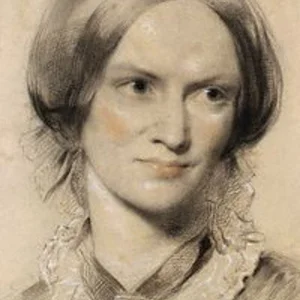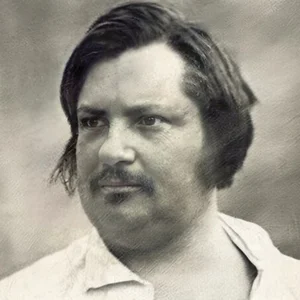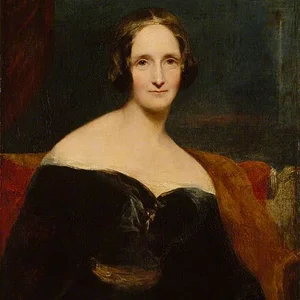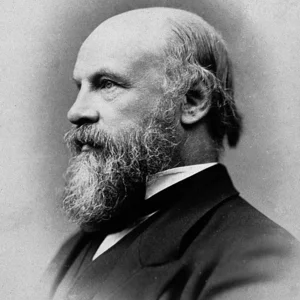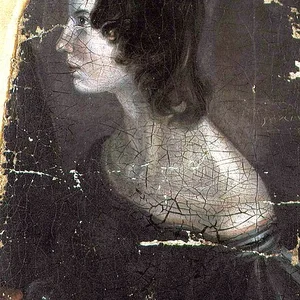

British writer
Emily Brontë(1818 — 1848)
Emily Brontë
Royaume-Uni de Grande-Bretagne et d'Irlande
7 min read
Frequently asked questions
Famous Quotes
« Je suis la seule être au monde qui me comprenne, et qui me comprenne à demi.»
« Quoi que soient nos âmes, la sienne et la mienne sont pareilles.»
Key Facts
- Née en 1818 à Thornton (Yorkshire), troisième des sœurs Brontë avec Charlotte et Anne
- Publie Les Hauts de Hurlevent en 1847 sous le pseudonyme masculin Ellis Bell
- Son roman est d'abord mal reçu par la critique pour sa violence et son amoralité
- Compose plus de 200 poèmes, dont beaucoup restent inédits de son vivant
- Meurt de tuberculose en 1848 à seulement 30 ans, quelques mois après son frère Branwell
Works & Achievements
Emily Brontë's only novel, published under the pseudonym Ellis Bell. A passionate and violent story of love and revenge set on the Yorkshire moors, now considered one of the greatest novels in English literature.
A collective collection published by the three Brontë sisters under male pseudonyms. Emily contributes poems of exceptional metaphysical and lyrical intensity.
Considered Emily Brontë's spiritual testament, this poem affirms her faith in an inner divine force in the face of death. Charlotte read it at a funeral as Emily's final poem.
One of Emily's most celebrated poems, a darkly beautiful elegy on grief and faithfulness to the absent. It is now studied in British secondary schools and translated worldwide.
Emily and her sister Anne invented an imaginary world from childhood, Gondal, whose history they wrote in prose and verse for many years. These texts, mostly lost, bear witness to an early and overflowing creativity.
Anecdotes
Emily Brontë published only one novel in her lifetime, Wuthering Heights, in 1847, under the male pseudonym Ellis Bell. In the Victorian era, women authors were rarely taken seriously, and she chose this mask to be judged on talent alone. The novel was initially poorly received: critics found it too dark and violent.
Emily lived as a recluse on the Yorkshire moors and refused almost all contact with the outside world. Her brother Branwell and her sisters Charlotte and Anne were her only true companions. She knew the names of every wild plant on the bogs and walked there alone in all weathers, even in storms.
In 1842, Emily accompanied Charlotte to Brussels to study French and German. She mastered both languages quickly but suffered deeply from homesickness. Upon returning to Haworth, she never left Yorkshire again, as though the moor was a vital necessity to her.
Emily Brontë died of tuberculosis on 19 December 1848, at only 30 years old, a few months after the death of her brother Branwell. According to Charlotte, she refused all doctors and treatment until the very last day, standing and dressed on the very morning of her death, combing her dog by the fireplace.
Emily had composed hundreds of poems throughout her life, which she kept secret. It was Charlotte who discovered them by chance in 1845 and convinced her, not without difficulty, to publish them. The collection Poems by Currer, Ellis and Acton Bell (1846) sold only two copies in its first year.
Primary Sources
"Whatever our souls are made of, his and mine are the same; and Linton's is as different as a moonbeam from lightning, or frost from fire."
"No coward soul is mine / No trembler in the world's storm-troubled sphere / I see Heaven's glories shine / And Faith shines equal arming me from Fear."
"Ellis Bell is difficult to describe. There is no human being who resembles their work less than he does. Her novel is the most powerful she ever wrote, but it is also the darkest."
"It is today the 30th of July 1845. I am alone in the sitting room. Anne is in the same room, writing in her journal. All is quiet around us. The four of us [...] are in good health."
Key Places
Village in northern England where Emily spent almost her entire life at her father's parsonage. The wild, windswept moor surrounding it is the spiritual backdrop of her entire body of work.
The Brontë family home, now a museum. Emily wrote Wuthering Heights and her poems here, in an austere yet sheltered domestic space.
The vast, wild, and windswept moorlands of Yorkshire that Emily walked every day. These landscapes are directly transposed into the oppressive and sublime atmosphere of Wuthering Heights.
A Belgian boarding school where Emily and Charlotte stayed in 1842 to study languages. Emily suffered so deeply from being uprooted there that she never returned to the continent.
A ruined farmhouse on the moor believed to have inspired the setting of Wuthering Heights. A pilgrimage site for readers from around the world, listed as a heritage site.
Typical Objects

Emily filled notebooks with poems she kept jealously secret. These manuscripts, written with a quill pen, made up her most intimate inner world.

A universal writing instrument in the 19th century, the pen carved from a bird's feather and dipped in ink was Emily's daily tool for writing her poems and her novel.

As a reverend's daughter, Emily had a deep knowledge of biblical texts. The Protestant Bible was at the heart of daily and intellectual life at Haworth parsonage.

Emily wore the sober, austere clothing typical of English middle-class women in mourning or everyday dress: a black or dark grey dress with a white collar, free of any superfluous ornament.

Emily had an extraordinary attachment to her dog, a large mastiff named Keeper. The eve of her death, she was still combing him by the fireplace — he followed her coffin at the funeral.

The bogs and desolate moors of Yorkshire surrounding Haworth were both the physical and mental territory of Emily, a direct source of inspiration for the landscapes of Wuthering Heights.
School Curriculum
Vocabulary & Tags
Key Vocabulary
Tags
Daily Life
Morning
Emily rose early, before her sisters, to light the fires and prepare breakfast. She handled the parsonage's household chores methodically — kneading bread, cleaning — all while reciting her poems under her breath or composing them in her mind.
Afternoon
The afternoon was devoted to long, solitary walks across the moor, in all weathers. Emily observed nature with a botanist's precision, collecting plants, watching birds. She returned before nightfall and settled at her desk to write.
Evening
In the evening, the family gathered in the common room. Emily would read, sew, or play the piano. It was often after her sisters had gone to bed that she took up her pen again, alone by the fireside, to work on her poems and her novel.
Food
The diet at Haworth Parsonage was simple and frugal: homemade bread, porridge, meat broth, vegetables from the garden. Emily ate little and without fuss, indifferent to food, preferring to busy herself with feeding the household animals.
Clothing
Emily wore plain dresses in wool or cotton, most often in dark tones — black, grey, brown — in keeping with Victorian conventions for a clergyman's daughter. She scorned any vanity and refused restrictive corsets during her long walks across the moor.
Housing
The Brontë family lived at Haworth Parsonage, an austere grey stone house adjoining the church and graveyard. The rooms were small, plainly furnished with dark wood, warmed in winter by coal fireplaces. The view looked directly onto the graves and, beyond, onto the moor.
Historical Timeline
Period Vocabulary
Visual Style
Esthétique gothique romantique anglaise : landes sombres et tourmentées du Yorkshire, intérieurs victoriens austères à la bougie, atmosphère mélancolique et sublime en camaïeu de gris, brun et violet.
Sound Ambience
Ambiance sonore des landes venteuses du Yorkshire : vent, bruyère, corbeau, feu de cheminée et plume grattant le papier dans le silence d'un presbytère victorien.
Liens externes & ressources
Références
Œuvres
Wuthering Heights (Les Hauts de Hurlevent)
1847
Poems by Currer, Ellis and Acton Bell
1846
Poème « No coward soul is mine »
1846
Poème « Remembrance » (Cold in the Earth)
1845
Carnets de Gondal (œuvre imaginaire)
1831-1848