Imaginary dialogue between Ellen Nussey and Charlotte Brontë
by Charactorium · Charlotte Brontë (1816 — 1855) · Literature · 6 min read
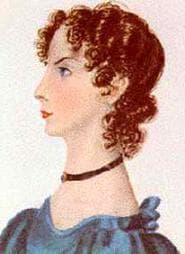
It is in the small parlor of the parsonage at Haworth, on a gray winter afternoon in 1853, that Ellen Nussey meets her lifelong friend. The fire crackles in the hearth, and on the table a goose quill still lies next to a closed notebook. They have known each other since Roe Head School, more than twenty years of friendship and exchanged letters; Ellen has come, as often, to seek the woman the world now calls Currer Bell.
—Charlotte, do you remember the long letters where you told me of your fears — why did you, Emily and Anne choose men's names for that collection of 1846?
You who read my confidences before anyone else, Ellen, you know it was no whim. When we published Poems by Currer, Ellis and Acton Bell, we feared what I still fear: that our verses would be judged not for their worth, but for the sex of the hand that wrote them. Currer, Ellis, Acton — names ambiguous enough to betray nothing. I wrote to Mr. Lewes: I wish all reviewers believed Currer Bell to be a man, they would be fairer to him. A woman who takes up the pen must first disarm prejudice before anyone deigns to hear her. The mask was not a shame, but a stratagem of war.
The mask was not a shame, but a stratagem of war.
—They say your publisher devoured the manuscript of Jane Eyre in a single day. But tell me, where did that orphan's voice that dares to say 'I' come from?
That voice, Ellen, I drew from a humiliation you know. When I was a governess, between 1839 and 1841, I felt what it is to be educated yet invisible, treated like a useful piece of furniture in houses that were not my own. Jane was born of that silent anger. I wanted a heroine neither beautiful nor rich, who refuses to sell her integrity for comfort. When Mr. Smith read the manuscript in one sitting, I believe he was struck by this: a poor woman who claims to have a soul equal to that of the great. I am no bird; and no net ensnares me; I am a free human being with an independent will. That is all I wanted to be heard.
I wanted a heroine who refuses to sell her integrity for comfort.
—When I came to Haworth as a young girl, I saw you scribbling on those tiny notebooks. How did you write, all three of you, in that house?
Ah, Ellen, those notebooks! As children, Branwell and I would sew pages the size of a palm to contain the whole kingdom of Angria, writing so fine that one almost needed a magnifying glass. That habit of night, quill, and candle never left me. Later, we would write in the afternoon by the fireside, each on her manuscript, without a word. And in the evening came our dearest ritual: we would walk around the table reading aloud our pages of the day, criticizing each other without indulgence. That circle of three sisters was my true workshop, my only literary school. You knew that room full of laborious silence; you cannot know how fertile that silence was.
That circle of three sisters was my true workshop, my only literary school.
—You spoke so little to me about Brussels when you returned. Yet that stay at the Pension Héger seems to haunt your pages — what did you leave of yourself there?
You are right to reproach me, Ellen: there are things one does not confide even to the dearest friend. I studied French at the Pension Héger in 1842, and there I met a master whose mind dazzled me as none other. What I felt there, and which was not reciprocated, I could only tell by disguising it in a novel. The Professor first, rejected everywhere, then Villette. The world understands dying of hunger; few know what it is to go mad from solitude. It is that solitude, burning in the midst of a foreign city, that I poured into Lucy Snowe. They thought me studious and quiet in Brussels; I learned there above all the pain of a feeling that must be silenced.
There are things one does not confide even to the dearest friend.
—Charlotte... I hardly dare mention that terrible year. Branwell, then Emily, then Anne, in so few months. How did you even manage to keep writing?
Do not fear to speak of it, Ellen — you alone wrote me words that did not ring false. In less than a year, from autumn 1848 to spring 1849, I saw my brother, then Emily, then Anne depart. Emily's illness is burned into me like hot iron; but dwelling on it, in thought or in narrative, is not in my power. I wore strict mourning, those long black dresses you saw me in, while the house emptied around my father and me. And yet I wrote Shirley. I had to write to keep from sinking; each page was a plank laid over the abyss. I dedicated that book to my departed sisters — it was all I had left to offer them.
Each page was a plank laid over the abyss.
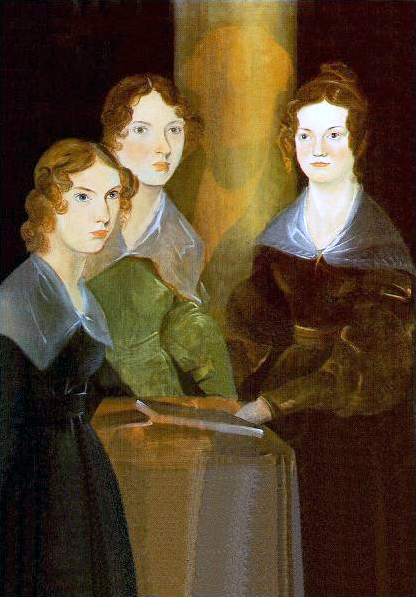
—Do you remember that trip to London in 1849, when you revealed to your publisher that Currer Bell was only a little woman from Yorkshire? What did you feel?
What a strange moment, Ellen! Imagine those gentlemen of literary circles who had imagined Currer Bell virile, formidable, mysterious — and who saw appear a discreet, nearsighted woman from a parsonage facing the churchyard. Their astonishment almost made me laugh, and tremble a little. I had protected that name like armor, and now it had fallen. But I never wanted worldly fame; those salons intimidated me more than they flattered me. I met Mr. Thackeray, whom I admired so much, and I remained almost speechless with emotion. At heart, I remained the same: a provincial who preferred her moor to all the dinners in London. The mask fallen, I aspired only to return to Haworth.
I had protected that name like armor, and now it had fallen.
—Many have criticized Jane Eyre for its passion, its boldness. Did that hurt you, you who are so reserved among us?
It pained me more than I showed, Ellen. They called the book coarse, almost immoral, because a woman spoke of passion and rebellion without lowering her eyes. But I wrote only the truth as I felt it: that a penniless governess has a heart as ardent as a lady's, and the right to say so. What they called boldness was only honesty. I believe they forgave Currer Bell what they would never have tolerated from a Miss Brontë. That is the whole injustice: the same words change weight depending on the hand that wields them. I do not regret a line. If I shocked, it was because I refused to lie about what a woman can feel.
The same words change weight depending on the hand that wields them.
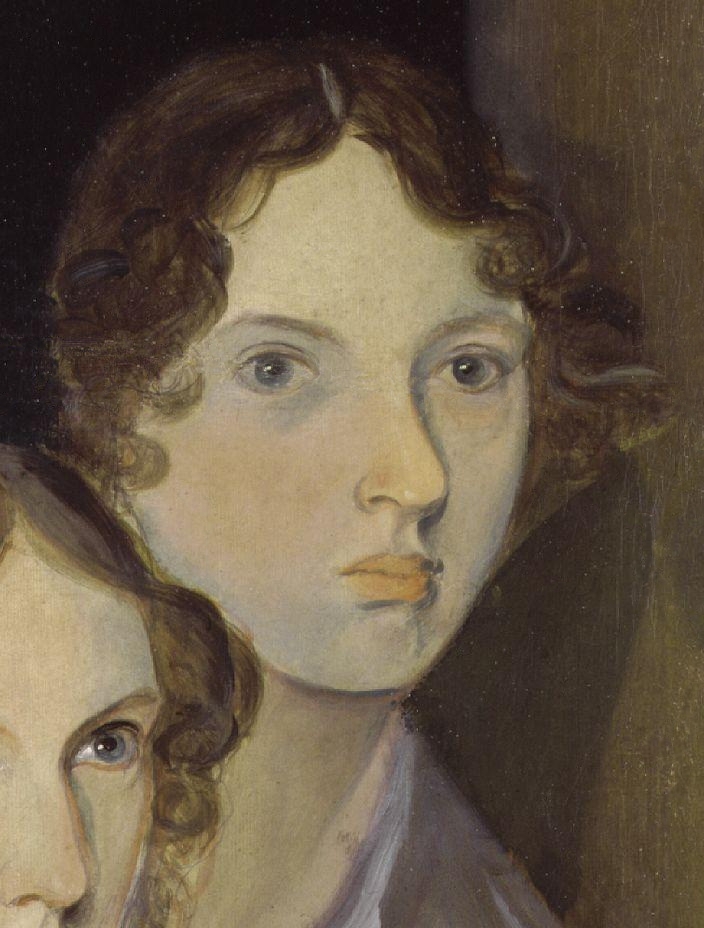
—When we walked together on the Pennine moors, in all weathers, I felt you were elsewhere. What were you seeking in those wild expanses?
You saw it well, Ellen: on those moors, I was both here and far away. That wind, that stunted heather, that heavy sky — it is the very landscape of my soul and my books. Emily was wilder there than I; we walked every day, mulling over our plots without always telling each other. I sometimes brought back dried sprigs that I kept like relics. Those melancholy landscapes are not a mere backdrop in my novels: they are a mood, a breath. Far from the moor, I wither. It is there, I believe, that I learned to write — not from books, but in that great wind-beaten silence where one finally hears oneself think.
That great wind-beaten silence where one finally hears oneself think.
—Do you remember that letter from 1839 where you confessed you could not marry a man without adoration. Do you still think that way about marriage, after so many years?
I remember it, Ellen, as if I wrote it to you yesterday. I told you I could never marry a man for whom I did not feel that intense attachment, and that if I ever married, it would be in a kind of adoration. For a long time I believed I would remain alone, and I resigned myself without bitterness — my work was enough, and friendship like yours. My father long opposed Mr. Nicholls's courtship. I will not hide from you that it was not the dazzle of my twenties that decided me, but a deep esteem, and the weariness of too long a solitude. A woman of my age no longer marries a dream; she chooses a companion. And that, you see, is no lesser happiness.
A woman of my age no longer marries a dream; she chooses a companion.
—In this parsonage so cold, against the churchyard wall, do you not sometimes think that this house cost you all too dear?
You touch there, Ellen, my deepest bitterness. This stone house, perpetually icy despite the fireplaces, set against the churchyard whose waters, they say, poison our own — it saw my mother die, my two elder sisters at Cowan Bridge, then all the others. And yet it is here that we wrote everything, imagined everything, loved everything. I could not curse it without denying what it allowed us to create. My father has now buried six children; it remains for me to watch over him. Haworth was our tomb and our workshop at once — one does not go without the other. I stay because I am, at heart, only a daughter of this parsonage and this moor.
Haworth was our tomb and our workshop at once — one does not go without the other.
This imaginary interview was generated by artificial intelligence from sources documented in Charlotte Brontë's profile. It dramatises what the figure might have said based on what we know about them, but does not constitute attested historical testimony. For primary sources and factual documentation, refer to the full profile.