Kids interview Charlotte Brontë
by Charactorium · Charlotte Brontë (1816 — 1855) · Literature · 4 min read
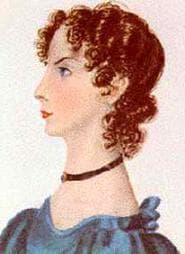
Two twelve-year-old students push open the door of an old stone parsonage, high on the Yorkshire moors. A small, quiet woman dressed in dark clothes greets them by the fire. Her name is Charlotte Brontë, and she has agreed to tell them everything.
—Is it true you signed your books with a boy's name?
Yes, my child, and I will tell you why. In 1846, with my sisters Emily and Anne, we published a collection of poems. But we signed it Currer, Ellis, and Acton Bell — three boys' names. A pseudonym is a false name you take to hide. Imagine: in my time, as soon as people read a woman's book, they sneered before the first page. We wanted to be judged on our words, not on our skirts. So Charlotte became Currer. And you know what? It worked.
We wanted to be judged on our words, not on our skirts.
—And no one ever discovered it was you?
Yes, one day. In 1849, I went to London to see my publisher, George Smith. He thought he was receiving a tall mysterious gentleman named Currer Bell. And there, before him, a shy little woman from the depths of Yorkshire! You should have seen his face. I even wrote to a critic, Mr. Lewes, to tell him something: as long as I was taken for a man, people would be fairer to my work. It's sad, isn't it? But that was the truth of my time. Hiding my name was the only way to truly exist.
Hiding my name was the only way to truly exist.
—What was your job before you wrote novels?
I was a governess, my child. A governess is a woman hired by a wealthy family to teach their children at home. It sounds pretty put that way… but it was humiliating. Between 1839 and 1841, I lived with rich people, neither servant nor guest — just a paid shadow. They barely spoke to me. Imagine eating at a table where no one looks you in the eye. That sadness, I didn't throw it away: I put it in a book. My heroine Jane would also be a poor little governess. But proud.
That sadness, I didn't throw it away: I put it in a book.
—What is your book Jane Eyre about exactly?
Jane Eyre, published in 1847, is the story of a poor orphan who refuses to be ordered around. In my preface, she says a line I love: “I am no bird; and no net ensnares me” — I am no bird; no net ensnares me. You understand? She wants to stay free, even without money, even alone. My publisher read my manuscript in one sitting, in a day, unable to stop! Six weeks later, the book was everywhere. For once, a poor girl spoke up. And the world listened.
“I am no bird; and no net ensnares me.”
—What did your house where you wrote smell like, feel like?
Our parsonage in Haworth was a stone house, always cold, despite the fireplaces. And you know what was right behind the wall? The cemetery. Yes, my child, we lived facing the graves. In the morning, I went down to light the fire before everyone else. In the evening, it was the best moment: my sisters and I read aloud what each had written during the day. We criticized each other, laughed, started over. Imagine three girls around a candle, each with her story. That was our little secret workshop.
We lived facing the graves, and yet we wrote life.
—Were you sad to lose your brother and sisters so quickly?
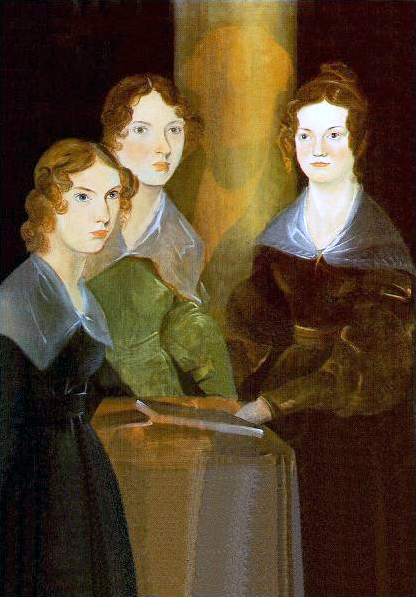
Sad is not strong enough, my child. In less than a year, I lost my brother Branwell, then Emily, then Anne. 1848, 1849 — blow after blow. To my publisher, I wrote that the details of Emily's illness were branded on my memory, but I could not speak of them. Of six children, I was left alone. So I did the only thing that kept me standing: I kept writing. My novel Shirley, I dedicated to my lost sisters. Writing was my way of not falling.
I did the only thing that kept me standing: keep writing.
—You went far from home once, didn't you? Where was it?
Yes! In 1842, I left for Brussels with Emily, to study French at a boarding school — the Pensionnat Héger. A pension is a school where you sleep and eat on site. For a Yorkshire girl who had seen almost nothing, it was immense. I learned French, German… and something else too. I became attached to my teacher, Monsieur Héger. An impossible attachment, because he was married. That silent pain, I kept it for years. Traveling is not just seeing cities: it's coming back changed.
Traveling is not just seeing cities: it's coming back changed.
—And that hidden love, what did you do with it?
I turned it into books, my child. When a sorrow cannot come out through the mouth, it comes out through the pen. From that stay in Brussels came two novels: The Professor and especially Villette, in 1853. In Villette, I wrote about solitude — that gentle madness that overtakes you when you are locked up alone with yourself. Many say it is my finest book. That is because it is the truest. You see, writers never lie as much as when they invent: deep down, they always tell what they have lived.
When a sorrow cannot come out through the mouth, it comes out through the pen.
—What is Luddism you talk about in Shirley?
Ah, good question! In Shirley, published in 1849, I tell a true revolt. Luddism was the anger of textile workers at the start of the century. Factory owners installed machines that did their work faster — and they lost their bread. So, in desperation, they broke those machines. Imagine starving men watching a big mechanism replace their two hands. That was the Industrial Revolution, that great upheaval where factories changed everything. I lived in Yorkshire, right in the middle of it. I didn't invent that misery: I watched it.
I didn't invent that misery: I watched it.
—Why talk about poor women in a book about factories?
Because everything is connected, my child. In Shirley, alongside the angry workers, I placed women without money. In my time, a girl without a husband and without fortune had almost no rights: she couldn't vote, could barely work with dignity. The Victorian woman's condition, they called it. Imagine being told your only future is to marry or disappear. Machines crushed workers; laws crushed women. I wanted to show both in the same book. Because injustice never walks alone.
Injustice never walks alone.
This imaginary interview was generated by artificial intelligence from sources documented in Charlotte Brontë's profile. It dramatises what the figure might have said based on what we know about them, but does not constitute attested historical testimony. For primary sources and factual documentation, refer to the full profile.