Imaginary interview with Che Guevara
by Charactorium · Che Guevara (1928 — 1967) · Politics · 7 min read
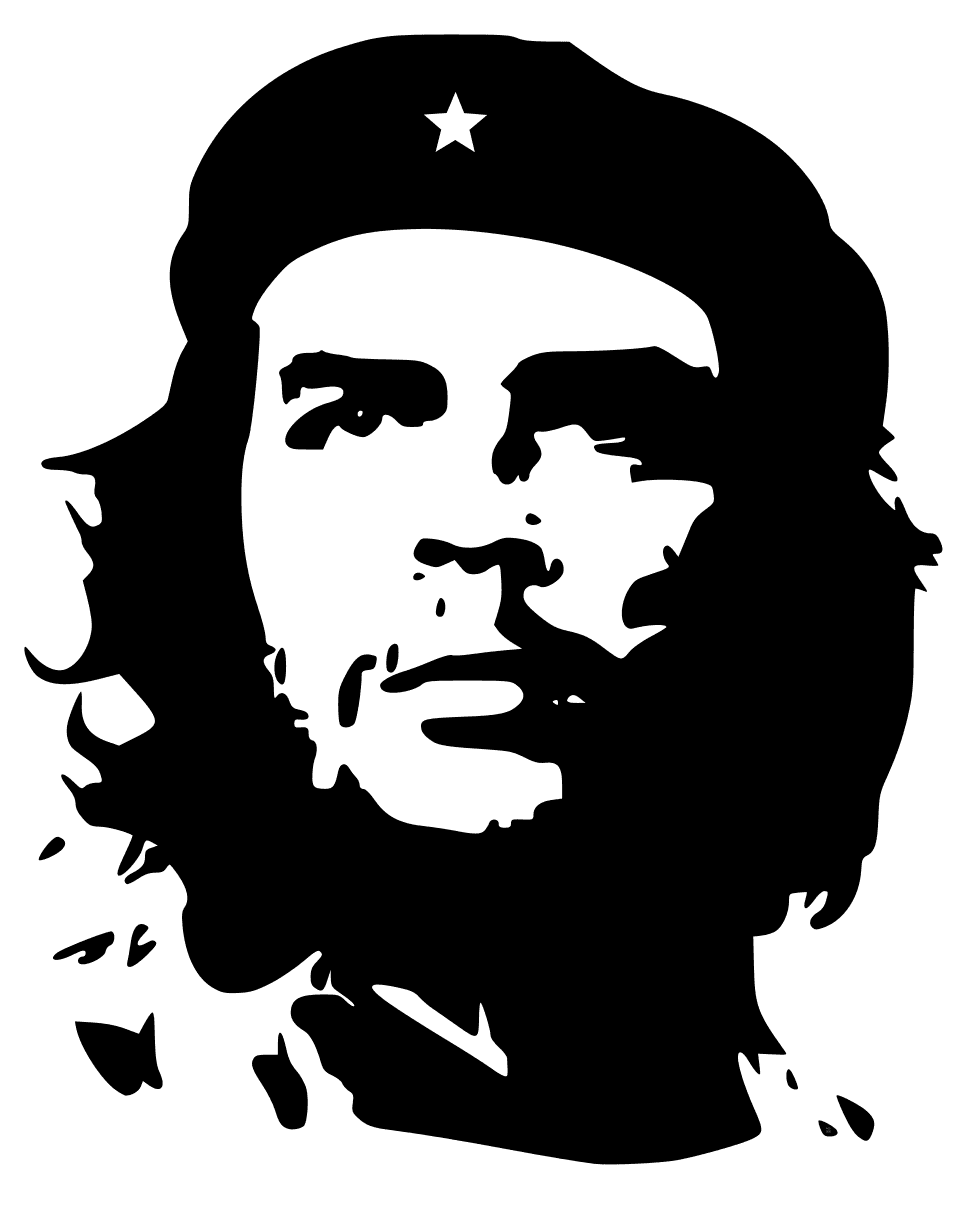
Sierra Maestra, one evening in the late 1950s. Under a shelter of branches, a kerosene lamp lights a short-breathed man, beret tilted, a steaming mate within reach and a notebook open on his knees. He agrees to lay down the rifle for a few questions.
—Do you remember the moment your view of the continent shifted?
It was in 1952. My friend Alberto Granado and I mounted an old Norton 500 we had christened La Poderosa, the Mighty One—a presumptuous name for a machine that gave up the ghost at every pass. For eight months, we traveled down the cordillera, the copper mines, the Inca ruins, the Amazon leper colonies. I was a medical student, I thought I was going to see the continent; in truth, it was the continent that saw me. Before the miners creaking like dry wood, before the Indians driven from their lands, something broke inside me. I left as a kid from Rosario; I came back with a rage that never left me. I kept the diary of that journey as one keeps the scar of a first wound.
—What, after that journey, transformed indignation into commitment?
The journey gave me eyes; Guatemala gave me a cause. In 1953, I took to the road again northward and landed in the country of President Árbenz, who dared to redistribute land to the peasants. I saw how a democracy is brought down as soon as it disturbs the interests of big corporations: a coup supported from abroad, and a whole people is reminded that they do not belong to themselves. As a doctor, I dressed wounds; but what wounds, if the disease was the system itself? That's when I understood that the syringe was not enough, that one day I would have to take something else in hand. Two years later, in Mexico, Fidel's face would only confirm that certainty.
—How did you wage war in the mountains with a body that betrayed you?
My body was my first enemy, long before Batista. Asthma has held me since childhood; it never let go, not even in the humidity of the Sierra Maestra. At night, often, my chest would close like a fist, and I had to wait, sitting, for the air to return. My inhaler never left me any more than my rifle—my comrades will tell you they saw me suffocating between marches, then moving on ahead. I learned one thing: willpower does not cure illness, but it decides what you do with it. A man who waits to be in perfect health to fight will never fight. So I walked, short of breath, because History does not ask if you breathe well.
A man who waits to be in perfect health to fight will never fight.
—What were your days like in that camp?
We rose at daybreak, sometimes earlier if the night had been bad. My first gesture was almost always the same: a mate, that bitter infusion from my native Argentina, which I passed around like sharing a loyalty. Then came the maps, the column movements, the wounded to treat—for I remained a doctor as much as a fighter. In the afternoon, we marched through the jungle, we instructed the peasant recruits. And in the evening, by lamplight, I wrote my diary and taught school: many of my compañeros could not read, and I insisted that a rifle and an alphabet weigh the same in their hands. We slept in hammocks, rice and black beans in our bellies when there were any. The revolution, believe me, tastes of scarcity more often than glory.
—Why did you want to write a guerrilla manual?
Because a victory that cannot be explained is eventually lost. After 1959, I wanted to set down in Guerrilla Warfare what the Sierra Maestra had taught us in the flesh. The idea boils down to a few words: you don't always need to wait for all conditions to be ripe for revolution—a small nucleus of determined fighters, what we called the foco, can light the fire and create those conditions themselves. The peasant is not a backdrop: he is the terrain, the water in which the guerrilla swims. I distrusted theorists who made revolution in cafés. I wrote for those who would make it in the mud, with a bad rifle and a torn map. Deep down, it was a doctor's book: a diagnosis, and a prescription.
—What were you seeking behind this idea of the "New Man"?
A revolution that only changes the owners is a mere moving of furniture. I wanted something else: to change man himself. In Socialism and Man in Cuba, I tried to describe this citizen moved not by the lure of profit, but by conscience, by duty towards others. That is why, as a minister, I went on Sundays to cut cane with the workers: voluntary work was not a show, it was the daily exercise of that morality. I was called naive, sentimental. So be it. Let me say, at the risk of seeming ridiculous, that the true revolutionary is guided by great feelings of love. Without that, you only produce technicians of violence. I never wanted to produce technicians.
—It is said you signed banknotes with a simple "Che." What did you mean by that?
It's true, and it scandalized many. In 1959, Fidel was looking for an economist; apparently I thought he was asking for a convinced communist, and I raised my hand. There I was, president of the National Bank of Cuba! I, who despised money, found myself signing the currency. So I signed it Che—not Ernesto Guevara, doctor, governor, none of that: Che, the nickname my comrades had given me. The financiers of the old world saw it as a provocation, and they were not wrong. It was a way of saying that money was changing masters, that it was ceasing to be a sacred object and becoming a simple tool in the hands of the people. A banknote signed with a nickname: sometimes a whole revolution fits into that kind of insolence.
Sometimes a whole revolution fits into that kind of insolence.
—Which achievement of those Cuban years was closest to your heart?
Figures sometimes speak better than speeches. The agrarian reform of 1959 broke the latifundio, those immense estates where a few families owned what thousands of people cultivated. Giving land back to those who work it: there is no revolution without that. But if I had to choose just one, it would be the great literacy campaign. In a single year, brigades of young people went into the countryside, notebook in hand, and illiteracy fell from nearly a quarter of the population to almost nothing. A peasant who learns to read his name learns at the same time to read the world, and a man who can read the world no longer lets himself be led like a herd. Cane and the zafra feed the body; the alphabet frees the mind.
—Why did you leave Cuba at the height of your power?
Because the revolution has no borders, and a settled man is a half-dead man. In 1965, I wrote to Fidel that letter returning my titles and the nationality he had given me. Other lands of the world claim the contribution of my modest efforts. I could not remain a minister in Havana while other peoples bled. So I left, in secret, for the Congo, to lend my rifle to an African insurrection. It was a failure, I say without hesitation: you cannot light a foco on terrain you don't know, among men whose language you don't speak. I came back bruised, but not cured of the idea. I simply needed another soil—and that soil would be America, my old wound from youth.
—How would you describe those last months in Bolivia?
A slow asphyxiation, and this time it was not my asthma. I arrived clandestinely in 1966, convinced that a focus in Bolivia would set the whole continent ablaze. But the Andean mountain is not the Sierra Maestra. My Bolivian Diary bears witness, day after day: the lack of food, the rotting feet, the radio that no longer picks up anything. And above all that phrase that returns like a death knell—the peasants are not joining us. Without the peasant, the guerrilla is merely an armed stranger in hiding. I had written that one must be the fish and the water; here, the water had receded. I noted it in the evening, lucid, perhaps already knowing that this campaign would be the last, and that I was writing it as much for History as for myself.
—If you knew you would still be read a century from now, what would you want to remain of you?
If I were to imagine being read a century from now—an asthmatic's supposition who knows he is mortal—I would not want people to remember the beret, nor that photograph that Korda took of me in Havana in 1960 and which is already plastered everywhere. The image sells, and by dint of selling, it empties out. What I would want to remain is the demand: that a man can give his life for people he does not know, on a land that is not his, simply because injustice has no homeland. I left Rosario asthmatic and bourgeois; if my path means anything, it is that one is not condemned to remain what one was born. The rest—the statues, the songs—belongs to those who come after. Let them make a weapon of it, not a relic.
One is not condemned to remain what one was born.
This imaginary interview was generated by artificial intelligence from sources documented in Che Guevara's profile. It dramatises what the figure might have said based on what we know about them, but does not constitute attested historical testimony. For primary sources and factual documentation, refer to the full profile.