Imaginary dialogue between Fidel Castro and Che Guevara
by Charactorium · Che Guevara (1928 — 1967) · Politics · 5 min read
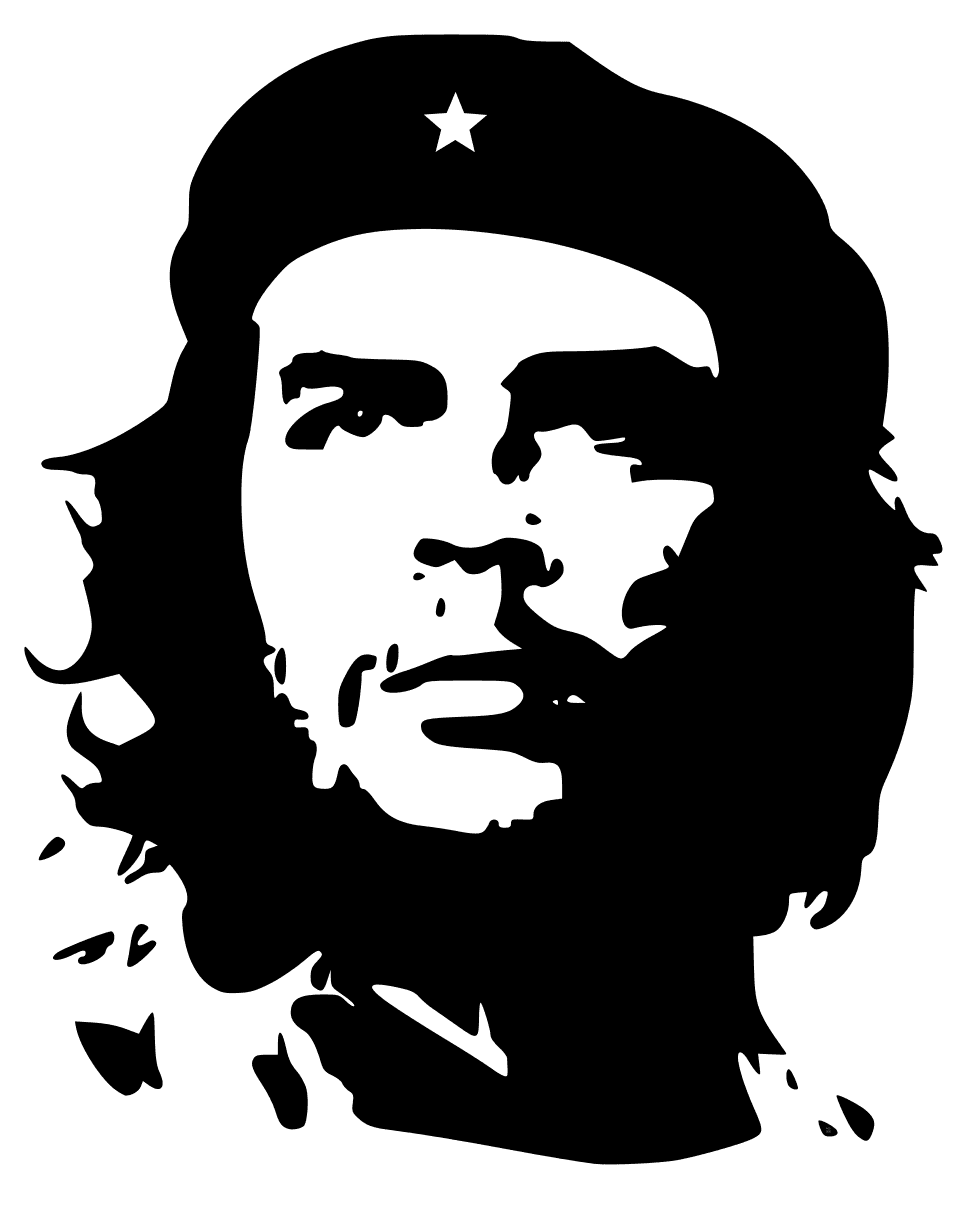
It is in a sparse office of the Ministry of Industry, in Havana, that early in 1965 Fidel Castro comes to find his comrade-in-arms. On the table, a mate cools next to an ashtray where a Cuban cigar smokes, and the lamp lights up annotated maps. The two men have known each other since Mexico City, since that night in 1955 when they talked until dawn before risking everything together. Fidel has not come as a head of state: he comes as a brother, to sense the man behind the commander that the world is beginning to idolize.
—Ernesto, before I knew you, you rode eight months on your old Poderosa. What did you see on those roads that made you change?
You who listened to me tell you about those roads in Mexico City, Fidel, you know it wasn't the motorcycle that changed me, but what it showed me. In 1952, with Alberto Granado, I saw the miners of Chile spat out like beasts, the Indians driven from their lands, the lepers abandoned whom I treated with my own hands. I had left as a medical student, curious and a bit carefree; I came back with a cold anger. I understood that the misery of the continent is not a fatality but an organization, and that a doctor who treats without changing this order merely soothes the condemned. The Poderosa taught me that Latin America is a single wounded homeland.
I left as a curious student; I came back with a cold anger.
—In Guatemala in 1954, you saw Árbenz fall. Did that defeat prepare you for the night we met?
It taught me everything, Fidel. In Guatemala City, I saw an honest, elected government carry out a peaceful agrarian reform — and the CIA break it in a few days because it touched the lands of the United Fruit Company. I begged them to arm the people, they preferred to negotiate, and we lost. I understood that night that you never disarm before imperialism, that a toothless revolution gets devoured. When I met you in Mexico City the following year, and you spoke to me of landing in Cuba to finish off Batista, I didn't hesitate a second. Guatemala had convinced me: one must fight arms in hand or remain silent.
A toothless revolution gets devoured.
—You wrote that manual, Guerrilla Warfare. Tell me, you who were by my side in the Sierra Maestra: what makes a handful of men win?
Three things, Fidel, and you saw them as I did. First, the terrain: the mountain protects the weak and stifles the regular army that gets lost there. Second, the peasant: without him who feeds us, informs us, and hides us, the guerrilla is only a hunted bandit. Finally, the idea of the foco, the focal point — a small nucleus of determined fighters does not wait for the conditions of revolution to be ripe; it creates them through example and audacity. We were twelve survivors after the Granma, and we made an army of tens of thousands tremble. Guerrilla warfare is not just a military tactic: it is a pedagogy; it teaches the people that they can win.
The foco does not wait for the revolution to ripen; it makes it ripen.
—My brother, I saw you suffocating at night in the Sierra, inhaler in hand. How did you endure marches that healthy men abandoned?
You witnessed my worst nights, Fidel, so I won't tell you stories. Asthma has held me since childhood; in the middle of the jungle, it pinned me to the ground, chest on fire, while the column had to advance. But I always refused to let it decide for me. You carry your illness like you carry your rifle: it is a weight, you learn to walk with it. Will does not erase the body; it surpasses it for the space of a ridge to cross. And then I told myself that a commander who listens to his own suffering no longer has the right to command others to suffer. My inhaler, I always kept it closer than my cartridges.
You carry your illness like you carry your rifle: a weight you learn to walk with.
—Between battles, I saw you with your nose in a book and you taught peasants to read. Where did that obstinacy come from, Che?
Because a rifle liberates a territory, Fidel, but only reading liberates a man. In the Sierra, I always had books in my pack — economics, philosophy, sometimes verse — and in the evening, by lamplight, I taught the alphabet to illiterate compañeros and the peasants who joined us. How do you expect a people who cannot read to defend their own revolution? They would entrust it to others, and be deceived again. That is why the great literacy campaign of 1961 was so close to my heart: moving Cuba from nearly a quarter illiterate to almost nothing, in a single year. A rifle seizes power; an alphabet keeps it.
A rifle liberates a territory, but only reading liberates a man.
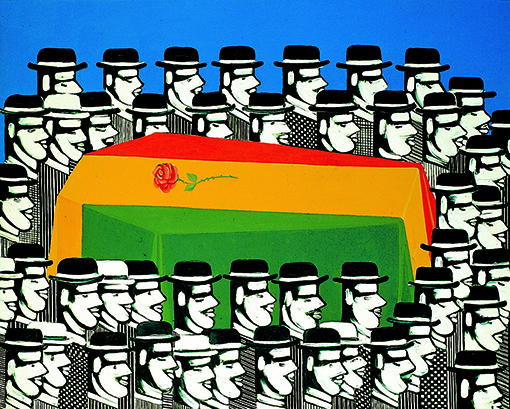
—When I entrusted you with the National Bank, you signed the banknotes with a simple 'Che'. Provocation, or something else?
A bit of provocation, I admit, Fidel — and you laughed hard when the bankers choked. But above all a principle. Signing 'Che' rather than my full name on the currency was to say that money is no longer the sacred idol of old, that it serves the people and not the reverse. Me, the Argentine doctor, at the head of the Bank of a country I was discovering — that was already a break with the old order of notables. I refused privileges, the plush office, conventions. My entire function had to shout that the Revolution respects none of the solemnities inherited from exploitation. A banknote signed 'Che' was a revolution slipped into the pocket of every Cuban.
A banknote signed 'Che' was a revolution slipped into the pocket of every Cuban.
—In your essay Socialism and Man in Cuba, you speak of a 'new man'. Explain to me: can we truly remake man?
Not remake him, Fidel, but awaken in him what money had lulled to sleep. The 'new man' is not an abstraction: it is the minister who goes to cut cane on Sunday for voluntary work, it is the worker who produces not for the bonus but out of consciousness of duty toward his own. Capitalism pits man against man; we must motivate him through the sense of the collective rather than the lure of gain. I know what they reproach me for — that I ask too much, that man remains man. But let me tell you, at the risk of sounding ridiculous: the true revolutionary is guided by great feelings of love. Without that, we will only change masters.
The true revolutionary is guided by great feelings of love.
—You were seen in fatigues at the ministry, sometimes sleeping in your office. Why keep the uniform of the Sierra at the heart of power?
Because the day a revolutionary leader swaps fatigues for a suit, Fidel, beware: he has begun to believe he is of a different species from those he commands. I keep the olive green, the worn boots, I sleep on site when work demands it, because I refuse that the Revolution creates a new caste of privileged in place of the old one. That is the deadly danger of power: embourgeoisement, the comfortable office, the car, the deference. The mountain had made us equal in mud and hunger; I do not want the ministry to make us unequal in comfort. My uniform is a daily reminder — for myself first — that I am only one more soldier.
The day a leader swaps fatigues for a suit, beware.
—You handed me that letter where you write that 'the hour of separation has come.' Why leave what we built, brother?
Because other lands demand the contribution of my modest efforts, Fidel, and I can do what is denied to you. You, your responsibility binds you to the head of Cuba; I, I am free to carry the fire elsewhere. A single free island in a chained continent is not a victory, it is a reprieve. If the revolution does not spread, it is encircled and dies. Believe me, nothing tears my heart out like leaving you, and this land that made me a citizen. But proletarian internationalism is not a speech word: it is a duty paid with one's person. I would not be worthy of what we swore if I stayed warm while other peoples bleed.
A single free island in a chained continent is not a victory, it is a reprieve.
—The Congo failed last year. Yet you leave again for new mountains. What makes you still believe in victory?
Failure does not erase necessity, Fidel; it instructs it. In the Congo, the foco did not take — the conditions were not ripe, the men not ready, and I learned in defeat what no victory would have taught me. But Latin America, it is my land, I know it as the Poderosa made me know it. Somewhere in those cordilleras, there is a mountain from which the continental fire can be reborn. I know the possible price — solitude, the hunt, perhaps death in a nameless village. A revolutionary who calculates his survival too much has already ceased to be one. As long as a people is oppressed somewhere, my place is at their side, rifle in hand.
Failure does not erase necessity; it instructs it.
This imaginary interview was generated by artificial intelligence from sources documented in Che Guevara's profile. It dramatises what the figure might have said based on what we know about them, but does not constitute attested historical testimony. For primary sources and factual documentation, refer to the full profile.