Imaginary dialogue between Tsung-Dao Lee and Chien-Shiung Wu
by Charactorium · Chien-Shiung Wu (1912 — 1997) · Sciences · 5 min read
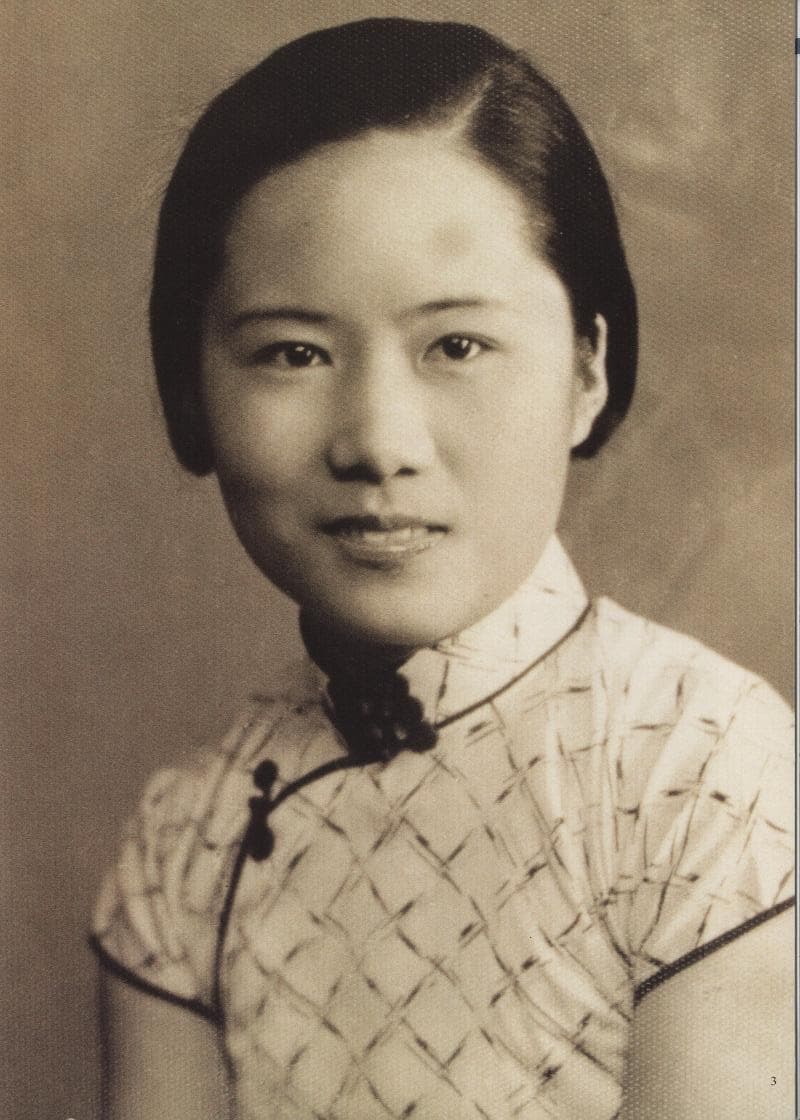
It is in a cluttered office at Pupin Laboratories, Columbia University, that Tsung-Dao Lee meets Chien-Shiung Wu on a gray autumn afternoon in 1982. The light falls on an old sealed cobalt source she keeps like a talisman, placed near a pile of journals. They have known each other since the mid-1950s, when a young theorist came to find the most formidable experimentalist on campus. Lee arrives without a notebook, only with the desire to hear her tell — to him, who witnessed it — what she has never confided to a journalist.
—Chien-Shiung, before the labs and the prizes, there was Liuhe. What did your father, that schoolteacher from a village near Shanghai, pass on to you?
My father ran a school where girls studied alongside boys, which was almost unthinkable at the time. He never told me that science was not for me; on the contrary, he bought me books, encouraged me to ask questions, to accept nothing on faith. I believe it all started there: the idea that a girl could calculate, measure, doubt. When I left for Berkeley in 1936, I thought I would return quickly to teach near him. War, and then history, decided otherwise. I did not see China again until decades later, after both of them had died. That debt to my father, I carried it into every experiment.
A girl could calculate, measure, doubt: it all started at my father's school.
—At Berkeley, you did your thesis under Ernest Lawrence. How did a young woman from China make her mark in those labs?
One does not impose oneself through speeches; one imposes oneself through accurate measurements. At Berkeley, I learned experimental physics at the highest level, with Lawrence and his cyclotrons. I worked on beta decay, and I understood very early that my only weapon would be precision. Where others were satisfied with a result, I would repeat the measurement, hunt down the slightest source of error. The men in the lab might smile at this meticulous Chinese woman; they soon stopped when my numbers held while theirs wavered. It was also at Berkeley that I met my husband, Luke Yuan. There I became, without yet knowing it, an experimentalist of beta radioactivity.
One does not impose oneself through speeches; one imposes oneself through accurate measurements.
—During the war, you were recruited for the Manhattan Project. The reactor at Hanford was mysteriously shutting down — what did you see that others had missed?
I was at Columbia, working on uranium separation by gaseous diffusion. When the Hanford reactor started dying and then restarting, with no apparent logic, the engineers were baffled. Fermi suspected a fission poison, a nucleus that devoured neutrons. My measurements on beta decay had familiarized me with those products. I pointed to xenon-135, whose neutron absorption capacity is enormous: it built up, choked the reaction, then decayed and released it. Identifying that culprit allowed them to correct the process and restart plutonium production. I feel no simple pride in that. But it was a physics puzzle, and I solved it with the tools I knew.
Xenon-135 choked the reaction and then released it: an invisible poison at the heart of the reactor.
—Let us come to what binds us. In 1956, when Yang and I brought you our crazy idea about parity, what did you think when you heard us?
I thought you were proposing a magnificent and terribly difficult experiment, and that no one else would dare attempt it. You were suggesting that nature could distinguish left from right in weak interactions — that the mirror lied. Most of our colleagues found it absurd; many bet against you. But a physics question is not settled by betting; it is settled in the lab. I even gave up a trip I had been looking forward to for a long time to devote myself to it. You, Tsung-Dao, know how seriously I took it: we had to align the spins of a nucleus and see if the electrons preferentially went one way. If symmetry held, I would see it. If it fell, I would see that too.
A physics question is not settled by betting; it is settled in the lab.
—Describe that experiment at the National Bureau of Standards: the cobalt-60, the extreme cold. How did you know the mirror had shattered?
We had to cool cobalt-60 to one-hundredth of a degree above absolute zero, to align the nuclear spins without thermal agitation scattering them. I went to Washington, to the National Bureau of Standards, because they alone mastered that cryogenics. We worked entire nights, monitoring the detectors, dreading the slightest heat leak. And then the asymmetry appeared: electrons came out preferentially in one direction relative to the spin. Parity was not conserved. I remember checking, rechecking again and again, because such a claim could not afford any weakness. By early 1957, we were certain. The mirror had indeed shattered — and with it a symmetry everyone had believed sacred.
Electrons came out on one side only: parity was not conserved.
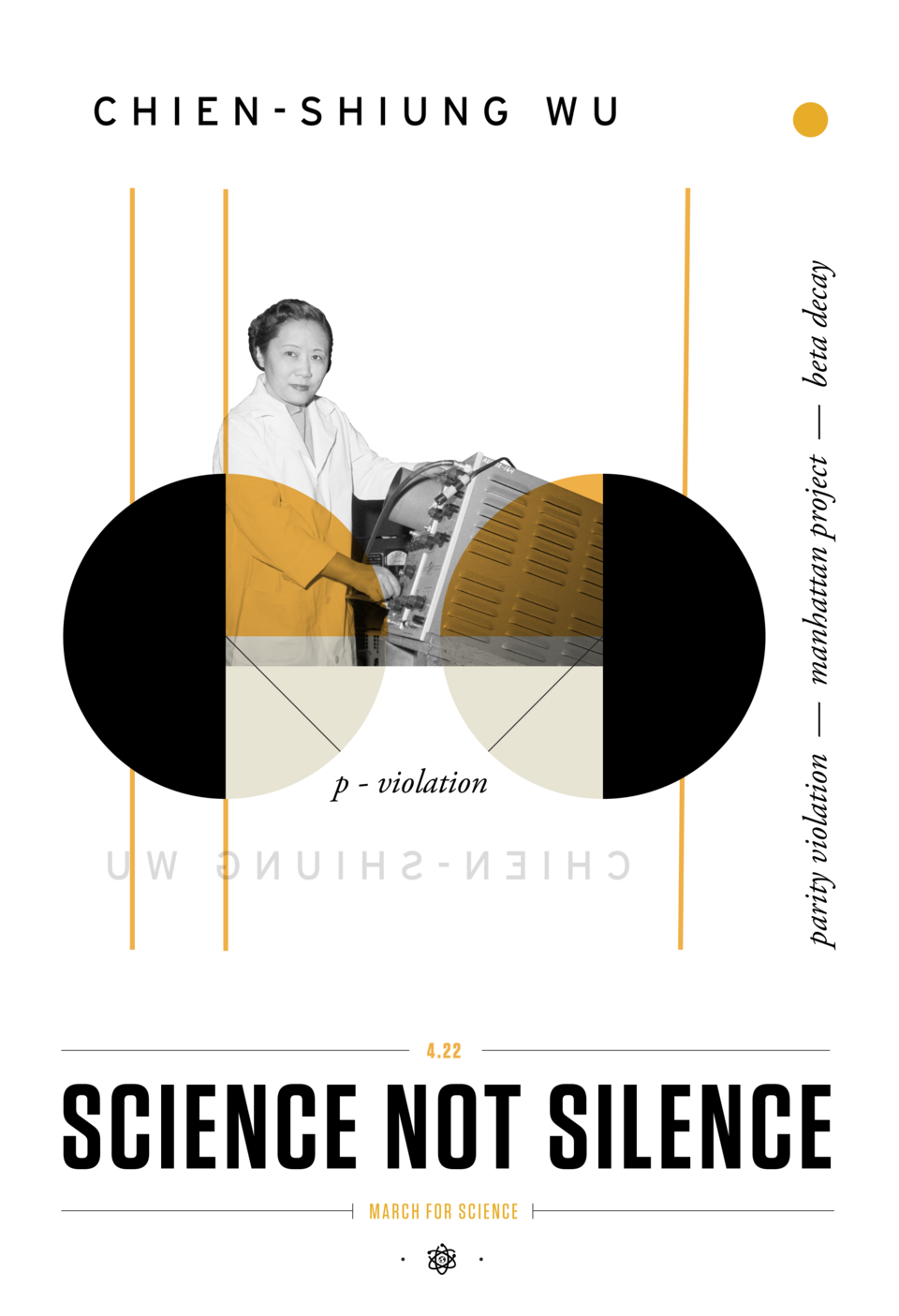
—In 1957, Yang and I received the Nobel for that theory. You, who had provided the proof, were left out. How did that make you feel?
I will hide nothing from you, Tsung-Dao, since it is you asking. Yes, it hurt me, deeply, far more than I showed. I had designed the experiment, tracked every error, spent nights in the cold of those labs — and the committee looked elsewhere. In your Nobel lecture, you had the grace to mention my contribution and that of my collaborators, and I have not forgotten that. But a mention is not a medal. What grieves me is not only for myself: it is the signal sent to all the young girls who still hesitate to enter a lab. They are told, without being told, that the work of the hands counts less. I know what I did. That, no one can take from me.
A mention is not a medal. But I know what I did.
—In 1978, you were awarded the very first Wolf Prize in physics. Many saw it as a reparation. Did you feel that way?
I received it with gratitude, sincerely. The Wolf Prize came from Israel, and it was often said that it honored work that other committees had overlooked. Perhaps. I do not much like that word 'reparation', because it implies that a wrong can be erased; lost time cannot be recovered. But I admit it was sweet to see experimental work recognized — the craft of those who build devices, calibrate, measure. Too often the idea is crowned and the hand that proves it is forgotten. That prize said the opposite. I accepted it thinking of my assistants, my students, all those who kept watch with me by the detectors. Science is a collective, patient labor.
Too often the idea is crowned and the hand that proves it is forgotten.
—In 1975, you became the first woman to preside over the American Physical Society. What did you want to say to your colleagues that day?
I told them what I believed, and what my entire experience had taught me: that nothing in a woman's intelligence makes her unfit for physics. The obstacles are not intellectual; they are social and institutional. Presiding over the American Physical Society, the great society of all American physicists, was to occupy a place that had never been offered to a woman since its founding. I saw it not as a personal honor but as a door held open. I challenged my colleagues, these men I respect, about the small, daily discouragement, almost imperceptible, that turns so many young girls away from science. Multiplied a thousand times, it creates careers that never began. I wanted them to see it.
The obstacles are not intellectual; they are social and institutional.
—One thing has always struck me: at our colloquia, you wore the cheongsam, among all those Western suits. Was that a deliberate choice?
Entirely deliberate, and you are right to notice it. The cheongsam is the dress of my country, and I never wanted to shed it to resemble others. In a room full of men in dark suits, in New York or at an international conference, I wanted to say in a single glance where I came from. I had left as a young girl from Liuhe; I would not deny that to blend in. In the lab, of course, I put a white coat over it, because physics makes no distinctions of origin. But outside the lab, that garment was my silent way of affirming that a physicist could be fully Chinese. My identity was never an obstacle to my rigor.
In a room of men in dark suits, my dress said in a single glance where I came from.
—To conclude, you who always defended measurement against speculation: what advice would you give to the young experimenter starting out today?
To distrust one's own desires. The danger, for an experimentalist, is not the trivial error: it is seeing what one hopes to see. When the parity asymmetry appeared, I first looked for all the reasons it could be an artifact, before believing in its reality. Repeat the measurement, change the setup, suspect your own instruments — that is the discipline. Precision is not a coquetry; it is honesty. I would also say: work early, work late, and never delegate the calibration that decides everything. Theory proposes, but the lab disposes. And nature, unlike committees, never errs in its verdicts — but one must know how to listen without whispering the answer.
The danger for an experimentalist is seeing what one hopes to see.
This imaginary interview was generated by artificial intelligence from sources documented in Chien-Shiung Wu's profile. It dramatises what the figure might have said based on what we know about them, but does not constitute attested historical testimony. For primary sources and factual documentation, refer to the full profile.