Kids interview Chien-Shiung Wu
by Charactorium · Chien-Shiung Wu (1912 — 1997) · Sciences · 5 min read
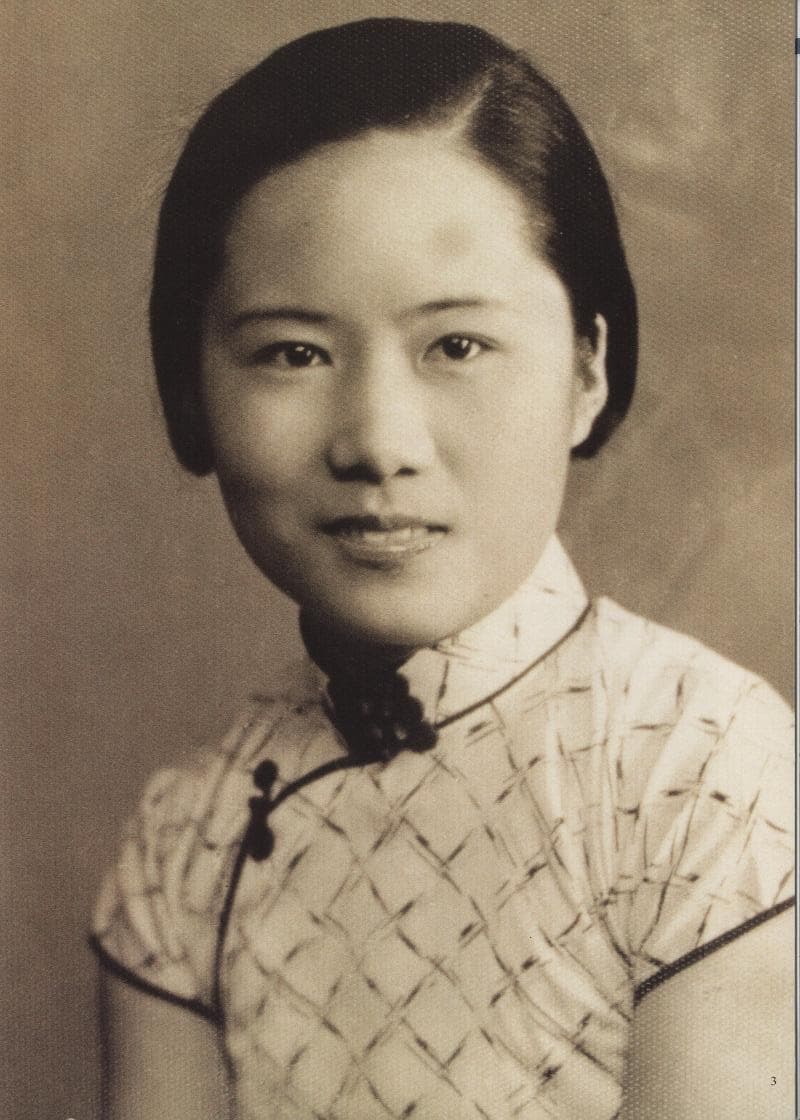
Two twelve-year-old visitors step through the door of a Columbia laboratory. Amid detectors and cables, a lady in a Chinese dress awaits them, a graph in hand. She sets down her pencil and smiles: “Come closer, I have all morning for you.”
—How old were you when you left China to study physics?
I was twenty-four, my child. In 1936, I took a boat to America, to the University of Berkeley. I thought I would return soon, you know. Imagine: I had only a small suitcase and a lot of hope. But war came, then life kept me. I only returned decades later, after my parents had died. My father ran a school for girls in Liuhe, near Shanghai. In my time, a girl who studied was extremely rare. He kept telling me to learn, always learn. When you love someone from afar, you keep a little of them in your work.
I had only a small suitcase and a lot of hope.
—Why did you always wear that beautiful Chinese dress in the lab?
Ah, you noticed my cheongsam! It's a traditional dress from my country, fitted and embroidered. I wore it even in front of great American scientists at their conferences. Why? To never forget where I come from. Imagine you move far away, to a country where no one speaks your language. You might keep an object from home to feel whole. My dress was that. Over it, in the lab, I put on the required white coat. But underneath, I remained a girl from Liuhe. You can learn physics from another country without renouncing your own.
You can learn from another country without renouncing your own.
—Is it true you fixed a reactor that kept turning itself off?
Almost, my child! During the war, I was recruited for a very secret program, the Manhattan Project. At Columbia, I worked on separating a rare material from uranium. And there, at the Hanford site, a huge reactor kept shutting down for no reason, like a candle being blown out. The engineers were desperate. I thought of an invisible gas, xenon-135, born from the reaction itself. It swallowed the necessary particles and killed the fire. Imagine a poison that makes itself while you cook. Once the cause was understood, we could restart the machine. Understanding the invisible is my whole job.
A poison that made itself while you cook.
—How did it feel to work on something so dangerous?
That's a serious question, and I'm touched that you ask it. Yes, the Manhattan Project was meant to build a terrible weapon. At the time, there were thousands of us, each on a small piece of the puzzle, without seeing the whole picture. I worked with isotopes, those unstable variants of a metal that disintegrate by radiating. It was fascinating science. But science never says what it will be used for afterward. Imagine a knife: it can cut bread or wound. The hand that holds it decides. I learned that a scientist must always ask: and then, what will men do with it?
Science never says what it will be used for afterward.
—What was your most famous experiment, the one from 1956?
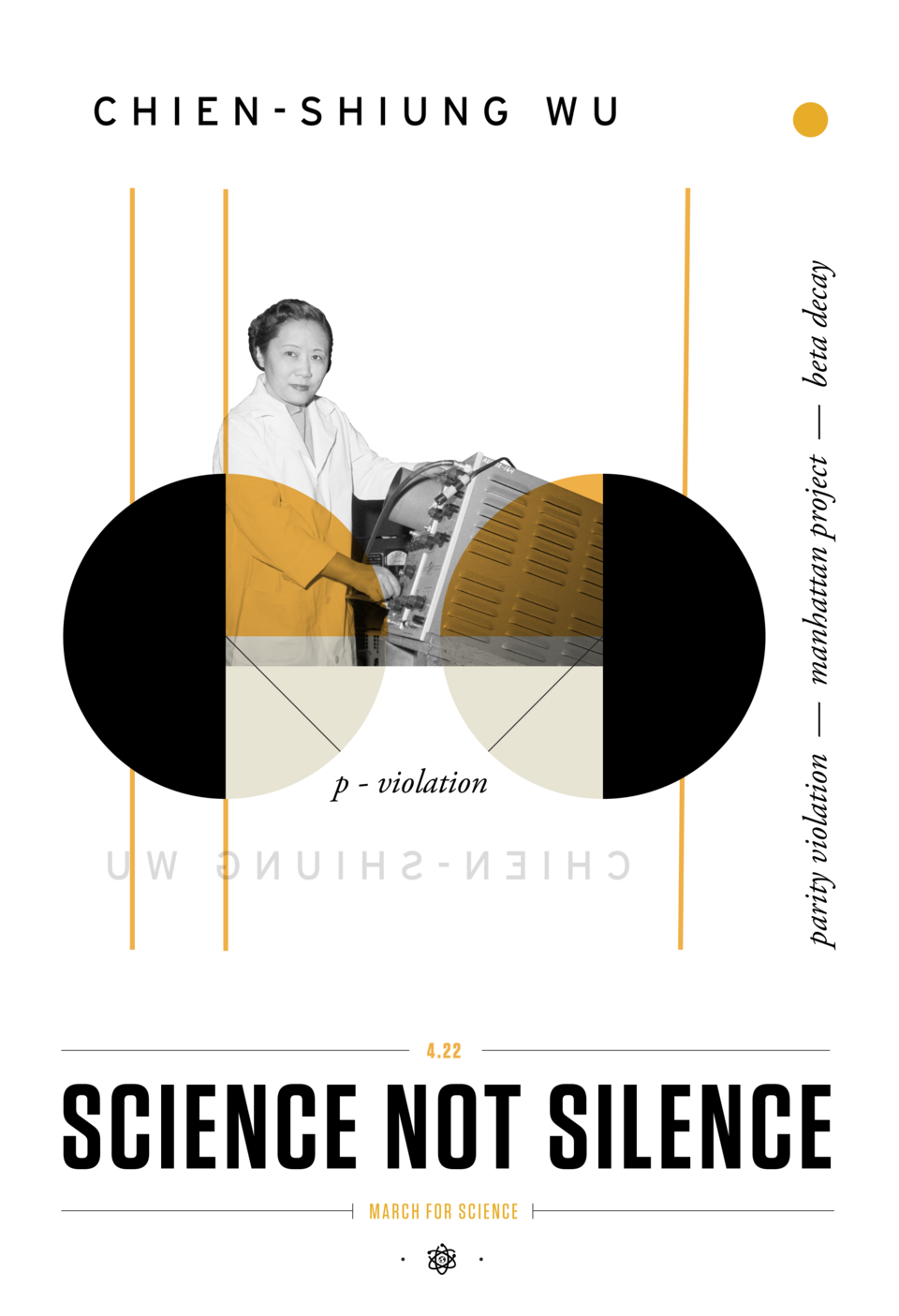
My greatest adventure, yes! Two scientist friends, Lee and Yang, had a crazy idea: what if nature did not behave the same in a mirror? No one dared to test it. I took up the challenge. I used cobalt-60, a radioactive metal, and cooled it near absolute zero, to a hundredth of a degree above the greatest cold possible. At that temperature, the nuclei align like tiny obedient tops. And then, surprise: the particles came out more from one side than the other! The mirror was lying. We knew it in early 1957.
The mirror was lying, and all of physics trembled.
—Why did it have to be so cold? I have trouble imagining.
Good question! You see, the nuclei of atoms spin on themselves, like tiny tops: we call that spin. Normally, they point in all directions, complete disorder. Impossible to observe anything in there. To align them, you must kill heat, because heat is agitation. Imagine an overexcited classroom: as long as it's moving, you see nothing. Silence, extreme cold, calms everyone down. At 0.01 Kelvin, my cobalt nuclei finally stayed still, all turned the same way. Only then did the asymmetry become visible. Patience and cold: those were my two tools.
As long as it's agitated, you see nothing.
—They say you arrived super early at the lab. Was that true?
Before everyone else, yes! When my students pushed the door, I was already there, bent over the curves from the night. My coffee was cooling on the desk, forgotten, and oh well. You see, my scintillation detectors, those devices that count particles, require perfect adjustment. My assistants would tell me: “It's good, professor, it's calibrated.” And I would often redo it myself. Not out of mistrust, no. Because a measurement that is almost right is still wrong. Imagine a drawing where one line is off: it ruins everything. In physics, it's the same. Care is not a detail: it's the heart of the trade.
A measurement that is almost right is still a wrong measurement.
—And in the evening, at home, did you still talk about physics?
All the time, believe it or not! My husband, Luke Yuan, was a physicist too. In the evening, in our apartment in Manhattan, we would discuss experiments while preparing dinner. I cooked dishes from Shanghai and Canton, like at my parents' home. I loved to entertain: students, visiting colleagues, and the table would be covered with Chinese specialties. Between bites, we talked about nuclei and disintegrations. Imagine a house full of physics books and cooking smells. For me, science and life were not separate. You can be a great researcher and keep a warm table.
Science and life, at home, were never separated.
—Isn't it unfair that you didn't get the Nobel Prize? Were you sad?
You have a strong sense of justice, and that warms my heart. In 1957, my friends Lee and Yang received the Nobel for the idea. I, who had provided the proof with my hands and machines, got nothing. Yes, it hurt. Imagine you run the whole race and they give the medal to someone else. But I didn't cry in a corner. I kept working, even better. Later, in 1978, I was given the great Wolf Prize. Recognition, at last. The best answer to injustice is to continue your work.
The best answer to injustice is to continue.
—What did you say to the other scientists when you became president?
Ah, 1975! I became the first woman to lead the great American Physical Society. On the day of my speech, I looked at that room full of men and dared to speak frankly. I told them that if so few girls go into science, it's not a matter of intelligence. Girls are just as gifted, believe me! The problem is the obstacles that society erects, sometimes without even thinking. Imagine a door left barely ajar: many give up pushing. My dream was to open it wide. For you, perhaps, one day.
It's not the girls who are the problem, but the doors left barely ajar.

This imaginary interview was generated by artificial intelligence from sources documented in Chien-Shiung Wu's profile. It dramatises what the figure might have said based on what we know about them, but does not constitute attested historical testimony. For primary sources and factual documentation, refer to the full profile.