Imaginary interview with Chien-Shiung Wu
by Charactorium · Chien-Shiung Wu (1912 — 1997) · Sciences · 6 min read
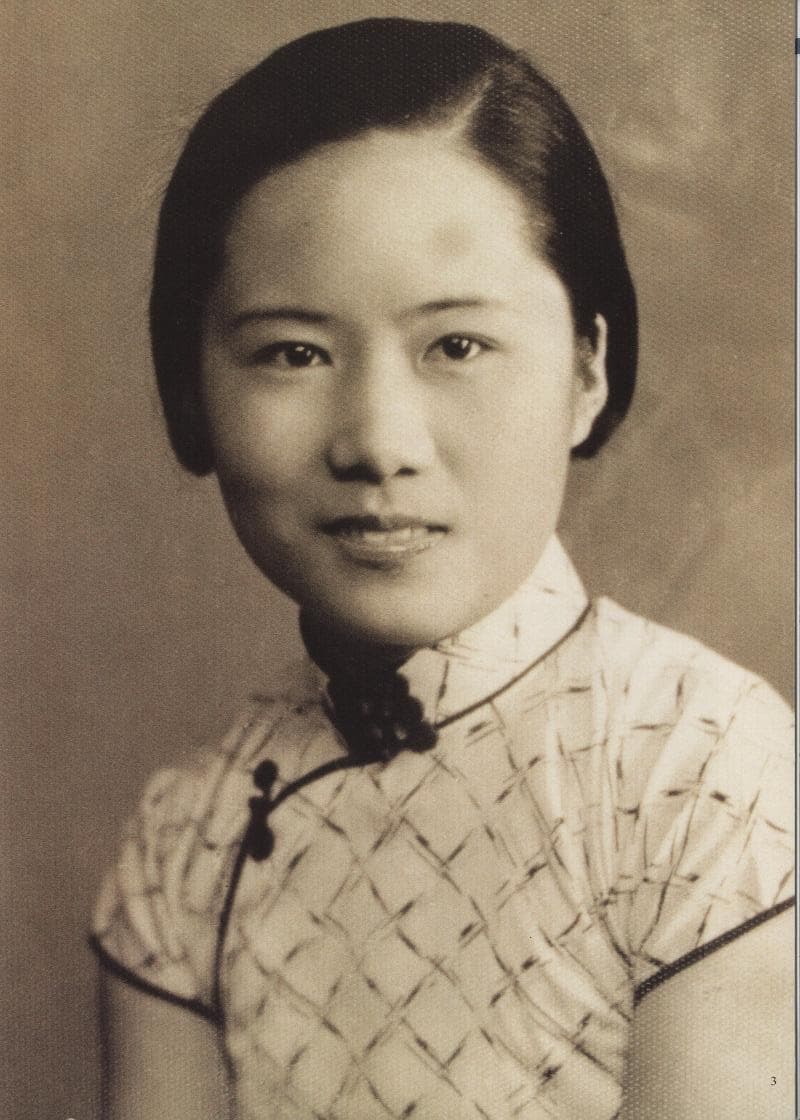
Manhattan, a winter evening in 1975. In an apartment near Columbia University, shelves bend under physics journals and a few Chinese bronzes keep watch in the dim light. Chien-Shiung Wu, a cup of cold tea within reach, agrees to look back on a life spent tracking the hidden asymmetry of the world.
—You were born in a small town near Shanghai. How did a girl become a physicist there, at a time when it was almost unthinkable?
I was born in Liuhe, in Jiangsu, in 1912, the year the Republic was born. My father ran a small school that accepted girls — a bold move for the time. He kept telling me that a girl could calculate as well as a boy, and that arithmetic didn't ask anyone's permission. That's where, in front of a dusty blackboard, I developed a taste for numbers that don't lie. When I left China in 1936 for Berkeley, I believed I would soon return to teach at home. War and exile decided otherwise: I never saw my country again until after my parents died. But that school, and my father's face bent over my first numbers, I carried everywhere, like a lamp one does not let go out.
Arithmetic didn't ask anyone's permission.
—You were often seen giving lectures in traditional Chinese dress. Was that a deliberate choice?
Entirely deliberate. I wear the cheongsam in American lecture halls and at international conferences, and over it, in the lab, I put on the required white coat. People sometimes asked if this dress was a coquetry; I replied that a physicist from Liuhe did not have to fade away to be taken seriously. At home, in our apartment in Manhattan, I still cook the Shanghainese and Cantonese dishes of my childhood, and I love to receive my students at a laden table. Physics is universal, but the person who practices it always comes from somewhere. Keeping my dress, my cooking, my language was a reminder — to myself as much as to others — that scientific rigor has no skin color and no mandatory uniform.
A physicist from Liuhe did not have to fade away to be taken seriously.
—During the war, you were recruited for work you couldn't talk to anyone about. What can you say about it today?
They came for me at Columbia in the middle of the war, for the program discreetly called the Manhattan Project. My job was the separation of uranium isotopes by gaseous diffusion — a patient task, tracking a tiny mass difference between two almost twin atoms. I did not approach the bombs themselves; I was behind the scenes, where you adjust instruments and check a hundred times what others take for granted. It was a strange time: I was entrusted with state secrets while at the same time, in many universities, they still hesitated to give a classroom to a woman. I learned there that experimental precision was the best recommendation — it always ends up speaking louder than prejudice.
—They say you solved a puzzle that was paralyzing an entire reactor. Do you remember that problem?
In 1944, the Hanford reactor, the first large-scale plutonium producer, kept shutting down on its own, as if capriciously. It would start, build up power, then choke a few hours later, and no one understood why. Fermi and the others were going in circles. I had studied, since my thesis at Berkeley, the fission products of xenon; I recognized a familiar culprit: xenon-135, a gas that forms in the heart of the reaction and devours neutrons like a sponge soaks up water. This invisible poison absorbed the neutrons needed to sustain the chain, and the reactor died of asphyxiation. Once the cause was named, we knew how to compensate. It was pure nuclear physics, and yet it was almost like detective work: you had to listen to what the machine refused to say.
This invisible poison absorbed the neutrons, and the reactor died of asphyxiation.
—Let's come to the 1956 experiment. Lee and Yang brought you a hypothesis that no one dared to test. Why did you accept it?
In early 1956, Tsung-Dao Lee and Chen-Ning Yang put forward an almost scandalous idea: that parity — that symmetry according to which nature would not distinguish right from left, the world from its mirror image — could be violated in the weak interaction. Most of my colleagues shrugged: this symmetry was considered as certain as the conservation of energy. But a law that has never really been put to the test is merely a well-dressed belief. I had devoted my life to beta decay; if anyone could decide, it was me. I canceled a trip to Asia and set to work. The question was no longer whether the idea was beautiful, but whether nature, properly questioned, would be willing to answer yes or no.
A law that has never really been put to the test is merely a well-dressed belief.
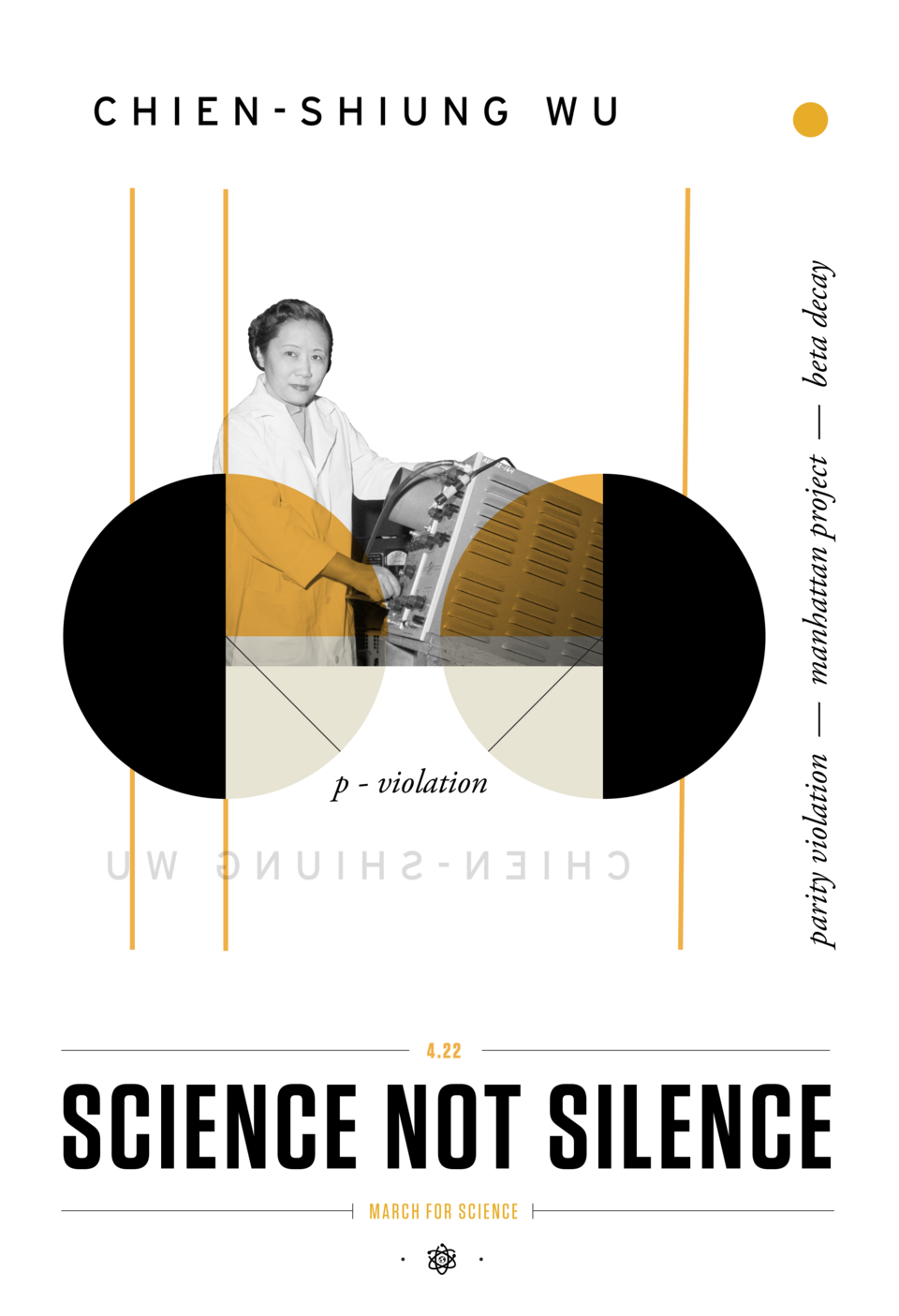
—How do you force atoms to reveal such a secret? Describe the setup for us.
We needed cobalt-60 nuclei whose nuclear spins were all aligned in the same direction, like an army standing at attention. But thermal agitation blurs everything: at ordinary temperature, these tiny needles point in all directions. The only solution was cold — an almost unreal cold, going down to a hundredth of a degree above absolute zero, that theoretical point of −273 °C where motion ceases. I had to set up at the National Bureau of Standards in Washington, which had the necessary cryogenics. Once the spins were aligned, it was a matter of counting the electrons emitted forward and backward. If they came out in equal numbers, the symmetry held; if not, the mirror broke. The electrons came out in excess in one direction. The world, decidedly, distinguishes left from right.
—The following year, the Nobel Prize rewarded Lee and Yang. Your name was not on it. How did you feel?
The Nobel of 1957 went to Lee and Yang for the theory — which was fair, their intuition was magnificent. But a theory without proof remains a conjecture, and it was my experiment on cobalt-60, published at the very beginning of that year, that turned it into certainty. My name remained outside the committee's door. I won't pretend I was indifferent: you work entire nights refrigerating atoms, and you are relegated to the margin of the story. Lee, at least, had the honesty to publicly acknowledge, in his acceptance speech, the courageous and skillful nature of our experiment. I stuck to my rule: keep measuring. Prizes crown a career; they do not validate a discovery. Nature had already done that.
Prizes crown a career; they do not validate a discovery.
—Years later, you received the very first Wolf Prize in Physics. Did this belated recognition have a special flavor?
In 1978, I was awarded the very first Wolf Prize in Physics, in Israel. Many saw it — perhaps rightly — as a way to repair the Nobel oversight, a symbolic substitute offered to the one left in the shadows. I received it with gratitude, but without illusion: a late honor does not rewrite history; it comments on it. In the meantime, I had continued: in 1963, at Columbia, I had experimentally confirmed the vector-axial structure of weak currents, validating the theory of Feynman and Gell-Mann. That is my true consolation — not medals, but the fact that the chain of knowledge holds, link by link. They always end up naming an asteroid after you; what matters is that the equations proved you right in your lifetime.
—In 1975, you became the first woman to preside over the American Physical Society. What did you want to say to your colleagues that day?
Presiding over the American Physical Society in 1975, as the first woman since its founding, was not a personal trophy: it was a platform. I looked at this largely male assembly and told them what my entire experience had taught me — that if women are so rare in our laboratories, it is not a matter of intelligence or talent, but of patiently built social and institutional obstacles. You don't discourage a young girl all at once; you do it through a thousand small remarks, a thousand doors half-opened and then closed. I had spent my life measuring asymmetries in nuclei; it seemed only honest to name also the far cruder one that reigned in our institutions. The laws of nature, for their part, make no distinction between a man and a woman bent over a detector.
You don't discourage a young girl all at once; you do it through a thousand doors half-opened and then closed.
—As early as the 1960s, you spoke of a 'nearly imperceptible' discouragement suffered by some scientists. What did you want to denounce?
Yes, I had mentioned that much earlier, in a speech on women in science. I was reflecting on that tiny, almost imperceptible discouragement that so many scientists encounter without seeing it in their formative years — and which, in the academic world, is multiplied dozens of times for some of them. It is not a spectacular persecution; it is an erosion. A fellowship refused without clear reason, a position given to a less meticulous colleague, a skeptical look when you adjust a scintillation detector yourself that your assistants already deemed perfect. I was lucky to have a father who had immunized me early against these signals. But how many vocations die out like that, quietly, as the Hanford reactor suffocated without anyone first understanding the cause? Detecting that poison seemed to me, in the end, as urgent as the xenon.

This imaginary interview was generated by artificial intelligence from sources documented in Chien-Shiung Wu's profile. It dramatises what the figure might have said based on what we know about them, but does not constitute attested historical testimony. For primary sources and factual documentation, refer to the full profile.