Imaginary interview with Clara Zetkin
by Charactorium · Clara Zetkin (1857 — 1933) · Politics · Society · 5 min read
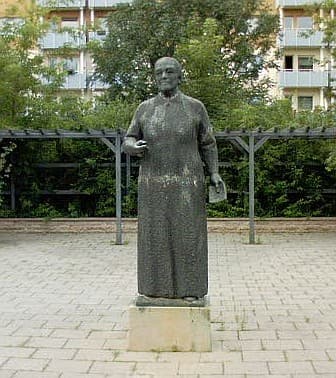
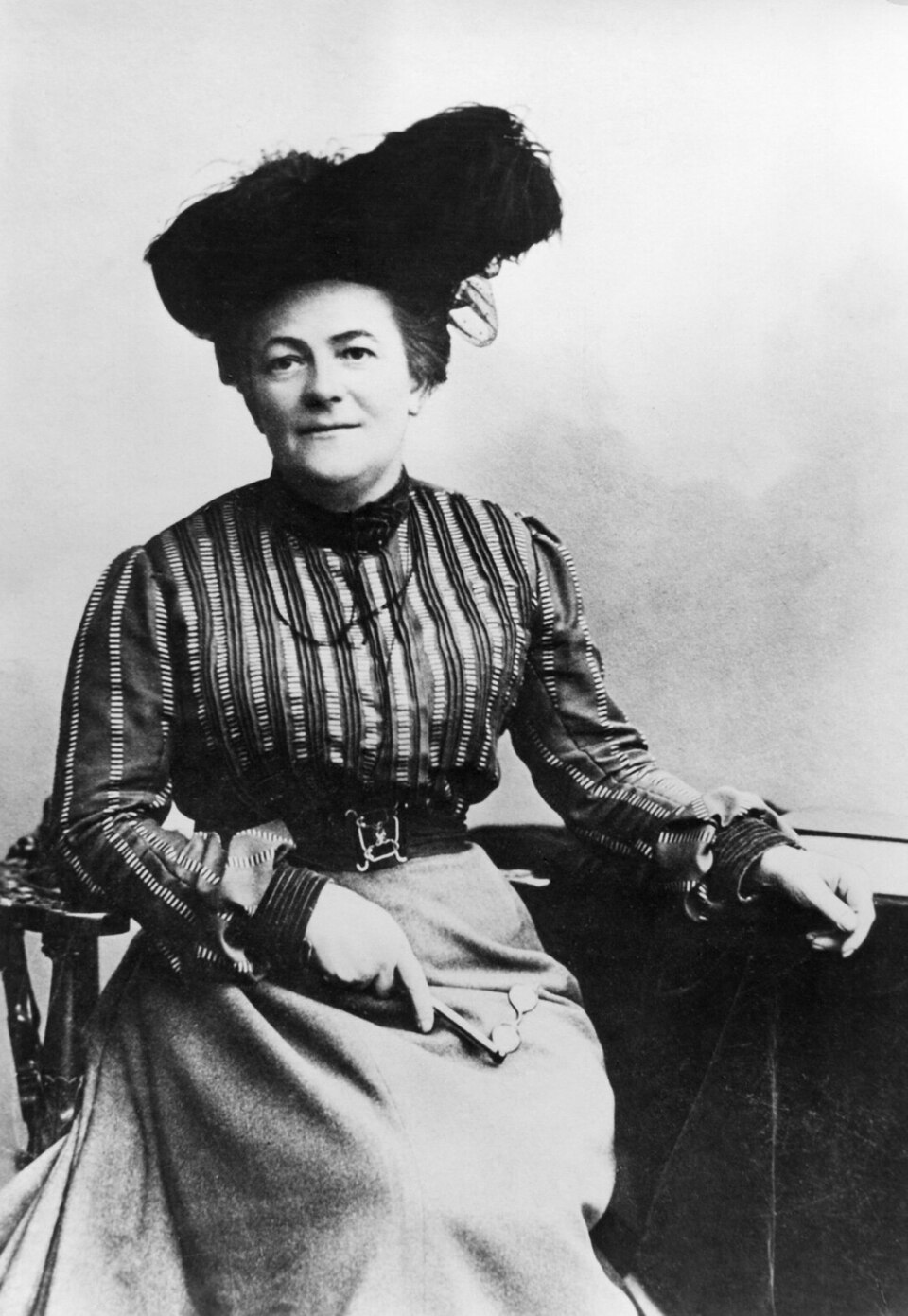
Stuttgart, a winter evening at the turn of the century. In a modest apartment in the working-class districts, the table is buried under piles of Die Gleichheit and bundles of letters barely dry. A woman with bright eyes, a dark shawl over her shoulders, moves aside the proofs to make room for us — and begins to speak in a voice that has harangued half of Europe.
—How did you transform a modest bulletin into a magazine read by hundreds of thousands of women?
When I took Die Gleichheit in hand, in 1892, people expected dress patterns and jam recipes from me. I flatly refused. A working woman coming home after twelve hours in the factory doesn't need instructions on darning a stocking — she needs to understand why her wage is half that of the man at the next machine. So I turned this newspaper into a school: labor market analyses, strike reports, debates on suffrage. In twenty-five years, we went from a few thousand subscribers to over a hundred thousand. This earned me storms with the party leadership, who found my pen too harsh. So much the better. You don't wake a sleeping class with lullabies.
You don't wake a sleeping class with lullabies.
—Why were you so insistent that women's press not be a housewives' press?
Because reducing woman to the home is already defeating her before the fight. In an editorial from 1895, I wrote what I still believe: 'We do not demand women's rights out of charity or pity. We demand them because they are the sine qua non of a truly just society.' A magazine that only talks to working women about their homes locks them inside the four walls they are meant to see as their horizon. I wanted to put the whole world before their eyes, in Berlin as in Stuttgart, in the spinning mills as in the galleries. The Frauenfrage, the woman question, is not a matter of lace: it is a class question.
Reducing woman to the home is already defeating her before the fight.
—Do you remember the moment you proposed an International Women's Day?
Copenhagen, August 1910, the Second International Conference of Socialist Women. One hundred delegates from seventeen countries filled the hall, and I stepped up to the rostrum with a very simple motion in my voice: that a single day each year should rally working women around the world under one slogan. The text called for winning universal suffrage for women. The resolution was adopted unanimously — not a single hand raised against. I remember the silence just before the vote, that second when you don't yet know if the idea will catch fire or fall flat. It caught fire. As early as March 19, 1911, over a million women marched in Germany, Austria, Denmark, and Switzerland.
I remember that second when you don't yet know if the idea will catch fire or fall flat.
—What did that tide of a million women taking to the streets in the first spring mean to you?
It was the living proof of what I had been repeating since Stuttgart in 1907: 'The economic liberation of woman is the prerequisite for her social and political emancipation.' Seeing textile workers, maids, and clerks leave their workshops to brandish signs demanding the vote — that was worth all the speeches. I had been told that working-class women were too exhausted, too submissive, to rise up. They rose up by the hundreds of thousands. That day, International Women's Day was no longer my motion: it belonged to those who marched. An idea truly belongs to you only when others carry it in their hands.
An idea truly belongs to you only when others carry it in their hands.
—Tell us about Rosa Luxemburg. What was she to you?
Rosa was my sister in struggle and, I believe, half of my intelligence. We wrote to each other tirelessly — hundreds of letters where a sharp analysis of the conjuncture sat side by side with a laugh or a casual confidence. She had that joyful ferocity in polemics, I that Northern obstinacy; together we made many a congress tremble. My pen and notebook were never used so much as to answer her. When you hear two women discussing Marxism between jokes, you understand that thought is not cold marble: it is a friendship at work. We believed ourselves indispensable to each other, and we were.
Thought is not cold marble: it is a friendship at work.
—How did you cope with her death in 1919?
In January 1919, when the repression of the Spartacist uprising cut down Rosa and Karl Liebknecht, something was torn from me that never healed. Assassinated, thrown into a canal — for having refused the war and the cowardice of the moderates. I had known clandestinity under Bismarck's laws, exile, military censorship; nothing had prepared me for that silence. I carry this grief like a splinter too deep to be removed. Every time I take up the pen, a part of me still writes for two. You can kill a woman; you cannot extinguish what she has lit in others.
You can kill a woman; you cannot extinguish what she has lit in others.
—You had long discussions with Lenin in Moscow. What did you dare say to him?
In 1920, during my stay in Moscow, we had long conversations that I later recorded in my Reminiscences of Lenin. I admired him, but I never forbade myself from contradicting him. He confided his reservations about those feminist discussion circles he considered too detached from the class struggle. 'The cause of women's emancipation,' he told me, 'is an integral part of the great social cause.' I replied that this in no way excused treating it as a secondary cause. Therein lies the nuance, and it is crucial: recognizing the link must never serve as a pretext to postpone the question until after the revolution.
Recognizing the link must never serve as a pretext to postpone the question until tomorrow.
—Ultimately, is women's emancipation for you a consequence or a condition of the revolution?
A condition — never a mere consequence, and that is where I part company with many comrades. I was often told: 'Let's make the revolution first; gender equality will follow on its own.' A comfortable lie. A society that postpones half its people will not change its nature; it will only change its masters. The emancipation I speak of is at once economic, political, and social: it cannot be carved into slices. No woman is free as long as she depends economically on man or capital. I said it to Lenin, I wrote it in Die Gleichheit, and I will repeat it to the end: you do not build justice on the postponement of half the living.
A society that postpones half its people will only change its masters.
—How did you find the strength to preside over the opening of the Reichstag in August 1932?
I was seventy-six years old and illness had me bedridden; I was transported by ambulance to the Reichstag in Berlin. As Alterspräsidentin, the senior member by age, it fell to me to open the session — and I was not going to let this last chance slip away. From my wheelchair, voice hoarse, under the jeers of the deputies in brown shirts, I launched what I considered the duty of the hour: 'to form a united front of all workers' organizations to bar the way to fascism.' The strength? It did not come from my body, believe me. It came from knowing that staying silent at that moment would have been a greater betrayal than death.
Staying silent at that moment would have been a greater betrayal than death.
—What does it feel like to launch an anti-fascist appeal before those who embody the threat?
Strangely, one feels a great calm. A whole life of union meetings, posters plastered from Leipzig to Bern, platforms defended against censorship — all of it converges into a single minute when you must speak straight. The young men in uniform shouted to drown me out; I watched them as one watches the rise of a storm that had been foretold and that no one wanted to believe. I called for a united front, knowing it might be my last word on German soil. It was. An old red flag in tatters is worth more than a new flag borne by fear — and I preferred to fall standing before them than to survive on my knees elsewhere.
I watched them as one watches the rise of a storm that no one wanted to believe.
This imaginary interview was generated by artificial intelligence from sources documented in Clara Zetkin's profile. It dramatises what the figure might have said based on what we know about them, but does not constitute attested historical testimony. For primary sources and factual documentation, refer to the full profile.