Kids interview Clara Zetkin
by Charactorium · Clara Zetkin (1857 — 1933) · Politics · Society · 5 min read
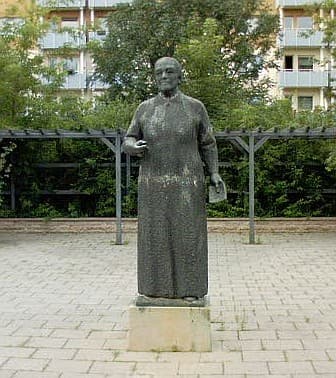
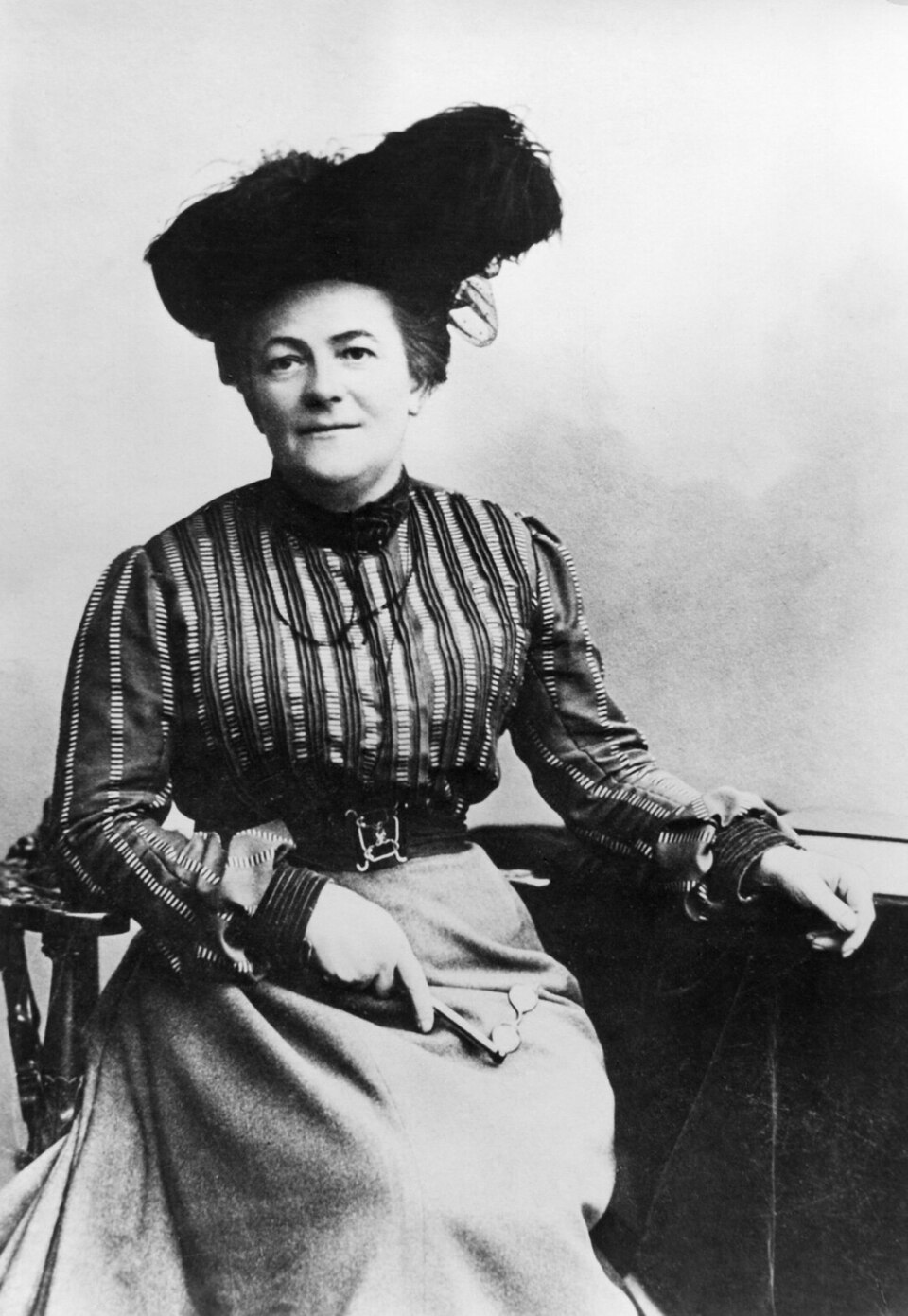
Two twelve-year-old students step through the door of a small office cluttered with newspapers and letters. An old woman in a dark dress greets them with a tired but warm smile. Her name is Clara Zetkin, and she has a lifetime of struggles to tell.
—What was your work at the beginning, when you were a young activist?
You know, my child, my real tool was a newspaper. It was called Die Gleichheit — that means Equality. I edited it for twenty-five years, from 1892 to 1917. Picture a modest little sheet, almost a bulletin. Well, I turned it into a major journal read by over a hundred thousand working women across Europe. Every morning I devoured the newspapers before breakfast. Then I wrote, and wrote some more. A pen and a notebook were my weapons. Not a sword — words. Because a right word can awaken a thousand women asleep in their workshops.
—Why did you argue with your party over that newspaper?
Ah, it bothered them a lot, my party comrades! In my time, a women's newspaper talked about cooking, sewing, soup recipes. I refused. I wanted working women to understand politics, to think about the world. So in Equality I wrote difficult, demanding things. Some leaders of the Social Democratic Party grumbled: 'Clara, you'll exhaust them!' But I tell you: a woman who reads about pots stays at the pot. A woman who reads about the world can change it. I respected them too much to serve them printed soup.
A woman who reads about the world can change it.
—What was it like, the night you invented March 8?
Oh, what an evening! We were in Copenhagen, Denmark, in August 1910. Women from seventeen countries were gathered in a hall. I took the floor, heart pounding, and proposed a very simple idea: create one day, just one, when women everywhere would rise together to demand the right to vote. You know what happened? All the delegates said yes, unanimously. Not a single dissenting voice. Imagine the silence, then the applause. That night, without grand speeches or fanfare, a small motion on paper had just given birth to March 8.
—And afterwards, did anything really happen? Did people listen?
Oh yes, my child, and much faster than I hoped! As early as March 19, 1911, they came out. Not a hundred, not a thousand. Over one million women marched in the streets of Germany, Austria, Denmark, and Switzerland. Imagine entire streets filled with dark dresses, banners, voices singing. They demanded the right to vote and equality at work. I almost wept when I learned the numbers. An idea launched one evening in a hall had become a human tide. That's the power of a good idea: it walks on its own, with millions of legs.
A good idea walks on its own, with millions of legs.
—Did you have a best friend? Someone you told everything to?
Yes. Her name was Rosa Luxemburg. She was my dearest friend, and also the most brilliant mind I ever knew. We wrote letters to each other, hundreds of letters! We talked about politics, of course, but also about our little worries, our sorrows, and we laughed a lot. Imagine two friends who understand each other with a single glance. In the evenings, I read Marx, but I also read her words. In socialist circles, they called us the inseparable duo. Having a friend like that, when you fight your whole life, is like having a light on in a long winter night.
—What made you saddest in your life?
I'll tell you the truth, my child, even if it's heavy. In January 1919, in Germany, there was a revolution, then a terrible repression. My Rosa was murdered. They tore her away from me. I never really got over it. I carried that grief like a stone in my pocket, every day, until my death. You know, you can lose a battle and start over. But lose a friend like that, you don't start over. So when I kept on campaigning, writing, speaking, a part of me did it for her too. So that her silence would not be the last word.
You can lose a battle and start over, but not a friend like that.
—Is it true that you dared to contradict Lenin? Weren't you afraid?
Ha! Afraid, me? In 1920, I went to Moscow and had long conversations with Lenin. I admired him enormously, you know. But admiring someone doesn't mean always saying yes. He thought that the women's cause should not be separated from the great workers' struggle. He told me one day: 'The cause of women's emancipation is not a separate cause; it is an integral part of the great social cause.' And I replied, looking him straight in the eye, that this did not excuse treating it as a secondary cause. A true friend of truth listens even when they disagree.
—But why were women's rights so important to you?
Listen carefully, this is the heart of my whole life. Many thought: first we change society, then women will be free, later, someday. I said the opposite. Women's freedom is not a reward given at the end. It is one of the conditions for building a just world, from the start. Imagine a house: you don't build the roof before the walls. Working women were the poorest of the poor, the most exploited. How can you want a just world while forgetting half its inhabitants? It makes no sense. We move forward together, or we don't move at all.
Women's freedom is not a reward given at the end.
—They say you went to Parliament in an ambulance at the end. Is that true?
It's absolutely true, and I still smile about it. It was August 1932. I was seventy-six years old, very sick, barely able to walk. But I had to open the session of the Reichstag, the German parliament, because I was the oldest member — in German, Alterspräsidentin, the one who presides by age. So I had myself taken there by ambulance! Imagine an old woman carried on a stretcher to the podium. The young Nazi deputies scowled; they wanted to silence me. But I had nothing left to lose. When you're no longer afraid to die, you are very hard to silence.
When you're no longer afraid to die, you are very hard to silence.
—And what did you say to those Nazis in your final speech?
I told them what I believed with all my strength, amid their jeers. The danger was rising, that fascism that would crush everything. So I issued an appeal: 'The most urgent duty of the hour is to form a united front of all workers' organizations to bar the way to fascism.' We had to unite, everyone, despite our quarrels. That was my last major appearance in Germany. Shortly after, Hitler came to power and I died in exile, in 1933. They didn't listen in time, alas. But I entrust this to you, my child: true words, even if lost, always end up knocking again on the door of the future.
True words always end up knocking again on the door of the future.
This imaginary interview was generated by artificial intelligence from sources documented in Clara Zetkin's profile. It dramatises what the figure might have said based on what we know about them, but does not constitute attested historical testimony. For primary sources and factual documentation, refer to the full profile.