Imaginary interview with Clarice Lispector
by Charactorium · Clarice Lispector (1920 — 1977) · Literature · 6 min read
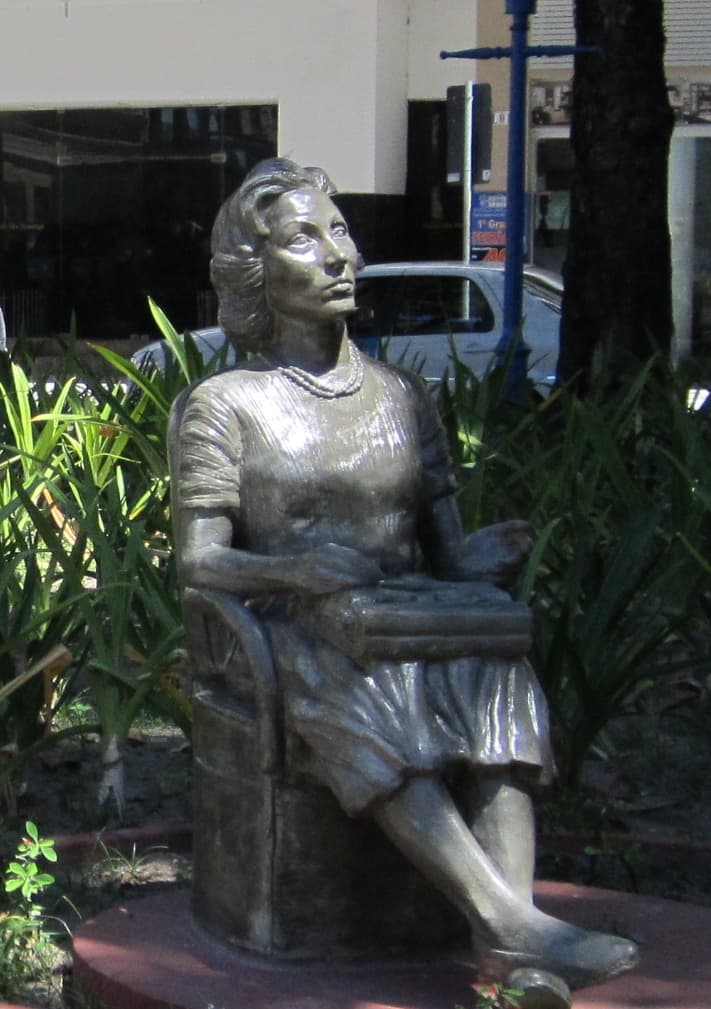
Rio de Janeiro, an evening in the late 1960s. In her apartment in Leme, overlooking the sea at Copacabana, Clarice Lispector receives a visitor between wisps of cigarette smoke, the typewriter still warm on the table. She speaks slowly, her gaze elsewhere, as if each sentence must first cross a long silence before reaching us.
—Do you remember how your family arrived in Brazil?
I have no memory of it, and that is precisely what haunts me. I was born in Tchetchelnik, a village in Ukraine that I never saw with my waking eyes, into a Jewish family fleeing the pogroms, those organized attacks against our people. They put me on a boat when I was only two months old, an infant who knew nothing of exile but already carried it in her blood. We landed in Recife, in the Northeast, and there I learned Portuguese as one adopts a child not one's own: with love, but knowing it comes from elsewhere. That language became my flesh, and yet I still handle it like a cautious stranger, touching each word before trusting it.
I learned Portuguese as one adopts a child not one's own: with love, but knowing it comes from elsewhere.
—What does that feeling of being a stranger, even in your own country, mean to you?
There is a word that pursues me: interior exile. It's not the exile of borders, it's the one you carry inside, the strangeness to yourself as much as to the world around. I grew up in the heat and violent light of Recife, among a popular culture that was not quite mine, and later I followed my diplomat husband from Berne to Washington, uprooted again. But true exile never needed a passport. It is in that sensation of not coinciding with things, of watching my own life from behind a window. It is uncomfortable, and it is also my only way of writing: from that gap, from that distance that makes everything foreign to me, and therefore visible.
—They say you published your first novel on the very day of your wedding. How do you remember that?
It was in 1943, I was twenty-three, and life gave me two births on the same day. On one hand, Perto do Coração Selvagem, my first novel, coming off the press; on the other, my marriage to Maury Gurgel Valente, that diplomat who would take me far away. I no longer know which of those two nuptials frightened me more. The book began with my father sitting at the table, reading, a quiet man who sometimes sighed and looked up from his book, while little Joana played on the floor between the chairs. The critics were stunned; I was immediately compared to writers I barely knew; I was awarded the Prêmio Graça Aranha. But that day, I trembled above all before the unknown of becoming a wife and a writer at the same time.
Life gave me two births on the same day, and I no longer know which of those two nuptials frightened me more.
—Why this way of writing so close to inner thought?
They called it stream of consciousness, that continuous parade of thoughts without apparent order, and I was immediately compared to Virginia Woolf, whose books I had indeed read. But I didn't choose a technique; I had no theory under my arm. I simply refused to tell things from the outside, like a journalist describing an accident. What interests me is the moment when an ordinary woman, peeling an orange or watching a blind man on the street, is struck by an epiphany — a sudden truth, banal in appearance, that makes her whole life waver. The realistic prose of my time seemed to me to miss the essential. So I dove where no one was looking: into the silence that precedes thought.
—How did the fire in your apartment change your life?
December 1966. I fell asleep right here, in Leme, with a cigarette still burning between my fingers — me, who smokes so much, who always smoked while working. The fire caught. When they pulled me from the flames, my right hand was devoured, my writer's hand, the one that strikes the keys. I spent weeks in the hospital; they talked about amputating it. Imagine: losing the hand that writes is like asking someone to breathe without lungs. It stayed with me, damaged, painful for the rest of my days, but it stayed. And I kept typing on my old Olivetti despite the burn, because stopping writing would have killed me more surely than the fire.
Losing the hand that writes is like asking someone to breathe without lungs.

—You started painting after that accident. What do you seek in painting?
Yes, after the fire, I began to paint in oils, almost as therapy for that injured hand. But it became much more than finger rehabilitation. Painting is another language, a wordless language to reach what words always miss. When I write, I must go through the sentence, through grammar that orders and betrays; when I paint, I touch matter directly, color, the pure instant. Later, in Água Viva, I wanted to write as one paints, to seize the present that slips through the fingers before it becomes memory. The canvas and the page pursue the same prey: that invisible that stands just behind the visible, which neither quite captures.
—What are your writing nights like?
The day doesn't really belong to me. I get up late, read the newspapers with a very strong black coffee, write my columns for the Jornal do Brasil. But at night I become myself. When the city falls silent, I sit down at my machine, here in Leme, facing the sea that you hear more than you see in the darkness, and I often work until dawn. One cigarette, then another. No one around, an almost total solitude that is not sadness but a necessary condition, like the rarefied air of high altitudes. In that nocturnal silence, the sentences come from further away, from deeper. Morning returns me to the world of the living; night returns me to writing.
Morning returns me to the world of the living; night returns me to writing.
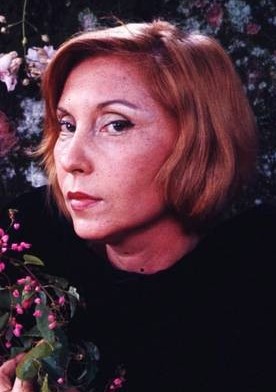
—What drives you to write, despite fear and pain?
You ask me for a reason, and I don't really have one, or rather I have one that can't be explained. "I don't write to be read. I write because I can't help it. It's like breathing." There, it's as simple and as brutal as that. And yet writing has never been easy for me, quite the contrary. I have always thought that "writing is a way of having courage. You must always be afraid of writing, but you must do it anyway." That fear has never left me; on every blank page it returns intact. But fleeing it would be like stopping breathing. So I sit down, I tremble a little, and I begin.
—Tell us about Macabéa, the heroine of your last novel.
Macabéa is a young girl from the Northeast, a migrant from that dry, poor region I knew as a child in Recife, stranded in Rio de Janeiro with no future, no beauty, not even knowing she is unhappy. In A Hora da Estrela, I wanted to tell the story of the one no one sees, the invisible among the invisible. Everything in the world began with a yes, I wrote to open that book: a molecule said yes to another molecule, and life was born. Even that poor Macabéa carries that spark. But what right do I, a settled writer, have to speak in her name? That question tortured me. Writing about misery without betraying it, without making a pretty spectacle of it — that is the true vertigo of this last book.
I wanted to tell the story of the one no one sees, the invisible among the invisible.
—What does finishing this book toward the end of your life mean to you?
There are works you write as you draw a last breath. A Hora da Estrela is one of them. I put into it what I knew about the responsibility of the one who holds the pen toward those who have no voice — the Macabéas of the Northeast, thrown into big cities like dead leaves. This book is both funny and heartbreaking, because life is too, without our having the right to choose. I feel I finally said something just about social invisibility, about those existences that the Brazil of the dictatorship preferred not to see. If I had to leave only one of my books in the hands of a future reader, perhaps I would hand them this one, because it speaks for those who are silent.
This imaginary interview was generated by artificial intelligence from sources documented in Clarice Lispector's profile. It dramatises what the figure might have said based on what we know about them, but does not constitute attested historical testimony. For primary sources and factual documentation, refer to the full profile.