Kids interview Clarice Lispector
by Charactorium · Clarice Lispector (1920 — 1977) · Literature · 5 min read
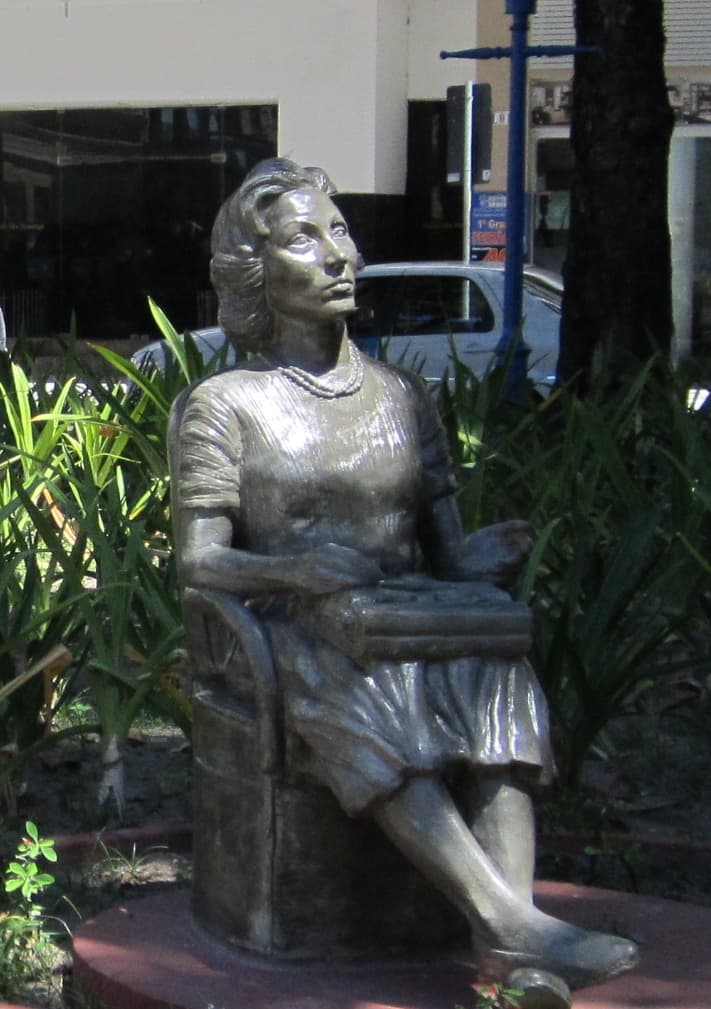
That morning, two students from a discovery class push open the door of a Rio apartment facing the sea. An elegant lady, cigarette in hand, greets them with a shy smile. Her name is Clarice Lispector, and she has agreed to answer all their questions.
—Were you really born so far from Brazil? Where exactly was it?
You know, my child, I was born very far from here, in a small Ukrainian village, Tchetchelnik, in 1920. My family was Jewish, and we were fleeing terrible violence, the pogroms — organized attacks against Jews. Imagine a family packing everything they own into a few suitcases and setting sail for an unknown country. I was only two months old! We landed in Brazil, in Recife, in the Northeast, that warm and bright region. I have no memory of Ukraine. But this idea of having come from elsewhere never left me.
—Was Portuguese your real language then, or not really?
I learned Portuguese as a little child in Recife. It became my language, my real home. And yet... I always felt I held it at arm's length, like a precious object you look at from afar. Do you know what inner exile is? It's feeling a bit of a stranger everywhere, even at home, even in your own language. I think that's why I wrote differently from others. I didn't take words for granted. Every sentence, I touched as if it were brand new. Coming from elsewhere gave me different eyes.
I felt a bit of a stranger everywhere, even in my own language.
—Is it true you published your first book on your wedding day?
Ah, 1943, what a crazy year! I was 23. On the same day, my first novel, Perto do Coração Selvagem, hit the bookstores, and I married Maury, a young diplomat. Imagine: your book arrives at the shops, and in the evening, you get married. The critics were stunned. They couldn't understand where this unknown young woman who wrote like no one else had come from. I had invented a way of following thoughts as they race through the mind, without order — it's called stream of consciousness. It earned me a major prize, the Graça Aranha Prize. I was terrified and happy at the same time.
—People compared you to famous writers. Did that please you?
You know, critics liked to compare me to two great writers, the Englishwoman Virginia Woolf and the Irishman James Joyce. They too tried to write the inside of people, their secret thoughts. I was flattered, of course — I had a book by Woolf that I loved. But deep down, I didn't want to imitate anyone. Imagine being told: “You sing like such and such famous singer.” It's nice, but you want your own voice, don't you? I was searching for my own music. And writing takes courage. You always have to be a little afraid, and do it anyway.
Writing is a way of having courage.
—Did you write every day in a newspaper, like a job?
For six years, from 1967 to 1973, I wrote a short piece every week for a major daily, the Jornal do Brasil. It's called a column: a short note mixing a memory, a thought, something seen in the street. Imagine keeping a secret diary, and once a week, the whole country can read it. It was delightful and a little frightening. I could be light, funny, or very serious. And above all, it allowed me to reach people who would never have opened my novels, which were considered difficult. I often wrote in the afternoon, watching life go by.

—And what did your own day look like?
You know, I wasn't a morning person! I got up late because I often wrote a good part of the night. In the morning, I read the newspapers, drank a very strong black coffee — I couldn't do without that — and always, a cigarette. In the afternoon, I sometimes received writer friends, or I worked on my columns. My apartment in Leme, Copacabana, was full of books and plants, facing the sea. It was both my refuge and a bit of a gilded cage. I loved that silence where I could finally listen to my own thoughts.
—Is it true that one day there was a fire at your place? What happened?
Oh, that... it's a night I'll never forget. In December 1966, I fell asleep in my bed with a still-lit cigarette. You can guess the rest? Fire broke out. My apartment in Leme, facing the sea, burned. And I, in panic, tried to put out the flames with my hands. My right hand — my writing hand! — was terribly burned. I spent weeks in the hospital, they almost amputated it. I was very scared. But you know what? I kept writing despite the pain.
You don't stop someone who has to write so easily.
—And after that, you took up painting? Why?
Yes! After the fire, my hand hurt, and I needed something else. So I started painting, in oil. Imagine colors spread sometimes with fingers, without trying to make it 'pretty.' It wasn't to become a famous painter. It was like a healing, a way to repair myself. And for me, painting and writing were the same quest: trying to capture the invisible, what we feel without being able to say it. In one of my books, Água Viva, I talk precisely about the pure instant, and painting as writing. Two languages for one thing.
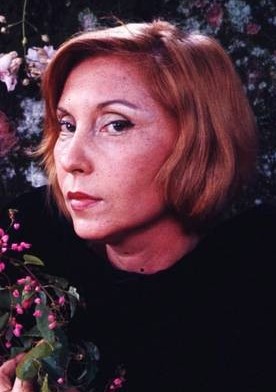
—I heard one of your books is about a cockroach. Isn't that weird?
That's a funny story! In my book A Paixão Segundo G.H., a woman goes alone into a room and comes face to face with... a cockroach. Yes, a simple insect! And then everything inside her shifts. She starts thinking about life, God, disgust, what she really is. You'll say: all that for a little creature? But that's exactly what I liked to show: the greatest inner storms happen in the most banal moments. These moments are called epiphanies — sudden revelations. She says this moving line: “Eu me tornei desnecessária para mim mesma” — I became unnecessary to myself.
—Your last book is about a poor girl, right? Why her?
My last novel, A Hora da Estrela, I wrote when I was already ill, in 1977. It tells the story of Macabéa, a young girl from the Northeast who comes to try her luck in Rio. She is poor, clumsy, and no one ever looks at her. She has neither future nor beauty, as people cruelly say. And I wondered: who writes for these people, the invisible ones? What is my responsibility, I who hold a pen? Imagine someone you pass a thousand times without ever really seeing. I wanted, just once, for them to be seen. The book opens with a line I love: “Tudo no mundo começou com um sim” — everything in the world began with a yes.
—Deep down, why did you write so much? What did it bring you?
Why did I write? I once said I didn't write to be read, but because I couldn't help it — it was like breathing. You see, it wasn't a job, it was a need. I would sit down in the evening at my old typewriter, an Olivetti, often until dawn, in the silence. If I can leave you with one thing, my child, it's this: look closely at the small things, ordinary people, tiny moments. That's where the immense often hides. And never be afraid to write what you feel, even if your hand trembles a little.
Look closely at the small things: that's where the immense hides.
This imaginary interview was generated by artificial intelligence from sources documented in Clarice Lispector's profile. It dramatises what the figure might have said based on what we know about them, but does not constitute attested historical testimony. For primary sources and factual documentation, refer to the full profile.