Imaginary dialogue between Roman Jakobson and Claude Lévi-Strauss
by Charactorium · Claude Lévi-Strauss (1908 — 2009) · Philosophy · Sciences · 5 min read
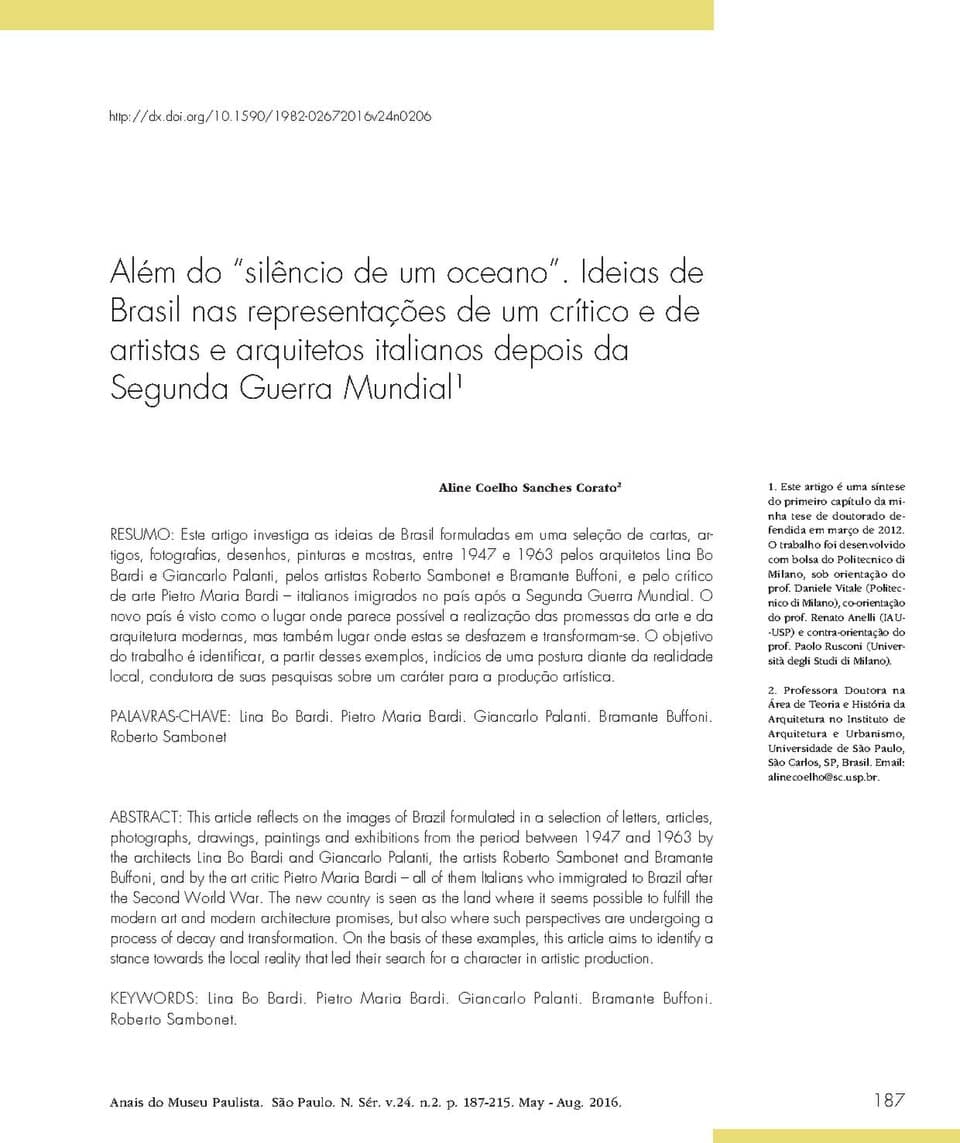
It is in the cluttered office of index cards and books at the Collège de France, a gray afternoon in the autumn of 1976, that Roman Jakobson meets his old comrade. On the table, an unlit pipe, musical scores, and the volumes of the Mythologiques lined up like organ pipes. The two men have never quite parted since New York, since those years of exile when the phonology of one had shaken the ethnology of the other. Jakobson has come, as a linguist and a friend, to reopen the file of this friendship that changed a science.
—Claude, do you remember our afternoons at the New York Public Library, in 1941? What did you take away from my phonology courses?
You who were there, Roman, know better than I. I had arrived from Brazil with a mass of facts that overwhelmed me, kinship systems I could not organize. And I listened to you break down sounds into oppositions, into distinctive features — showing that a language is not a heap of words but a system of differences. That day, I understood that kinship could be read the same way: not as accumulated customs, but as a play of oppositions and exchanges. You gave me a grammar for things I thought were formless. Without phonology, The Elementary Structures would have been nothing but a herbarium. You taught me to seek the rule beneath the abundance.
You gave me a grammar for things I thought were formless.
—On the cargo ship that took you into exile, you traveled with André Breton. What did you debate so fiercely, between decks?
Ah, that Capitaine-Paul-Lemerle, overloaded with refugees like an ark! Breton and I spent the crossing writing notes to each other and gently quarreling. He defended art as revelation, the bursting forth of the unexpected, convulsive beauty. I was already seeking the opposite: not revelation, but the unveiling of a hidden order, a structure that the patient observer eventually brings to light. We agreed on one point: beneath appearances, there is something else. But he wanted to invoke it, and I wanted to dismantle it. Curiously, we both spoke of wild objects, masks, primitive art. That dispute at sea, I believe, helped me know what I was not.
Breton wanted to invoke mystery; I wanted to dismantle it.
—Before exile, there was the Mato Grosso. They say you nearly died of hunger among the Nambikwara — is it true, my friend?
True, and less heroic than one might think. In 1938, during that season when game was scarce, we endured weeks of famine. I ate grilled grasshoppers, spiders that the Nambikwara cooked without ceremony — and which, I admit, were not bad. But the essential was not the hunger. It was seeing a society reduced to a few dozen souls, naked, with almost nothing, yet rich in social life, tenderness among beings, subtle organization. I filled my notebooks in the evening, by firelight, I drew their villages. I understood then that material destitution has nothing to do with poverty of spirit.
Material destitution has nothing to do with poverty of spirit.
—You write in Tristes Tropiques that you hate travel. Yet your field notebooks overflow with it. How do you reconcile the two?
You touch on my contradiction, and you smile at it, I see. Yes, I hate travel and explorers — adventure for adventure's sake, the complacent tale of hardships endured, all that picturesque that masks the essential. What I loved was not traveling: it was having traveled. It is the return, the table, the index cards, the moment when the chaos of observations finally lets itself be ordered. Fieldwork, that prolonged stay we owe to Malinowski, is a necessary but thankless ordeal. Photography, notebooks — they are not memories, they are materials. The real journey begins when you return, and you search in your notes for the law that was hidden there.
I did not love traveling: I loved having traveled.
—You once confided to me that you had three 'intellectual mistresses.' You who speak so little of yourself, which ones, and why those?
You have a good memory, Roman. Geology, Marxism, and psychoanalysis. Three disciplines that seem foreign, and that taught me the same lesson: that the truth of a phenomenon is not read on its surface. The geologist sees, in a confused landscape, the order of layers and folds. Marx seeks, beneath economic appearances, the hidden relation that commands them. Freud, beneath conscious discourse, the structure of desire. All three taught me to distrust the immediate given, to move from the sensible to the intelligible. It is from there, much more than from a vocation as an ethnologist, that my method was born. I merely applied to human societies this conviction: that underneath, there is an order to be uncovered.
Geology, Marx, Freud: all three taught me to distrust the immediate given.
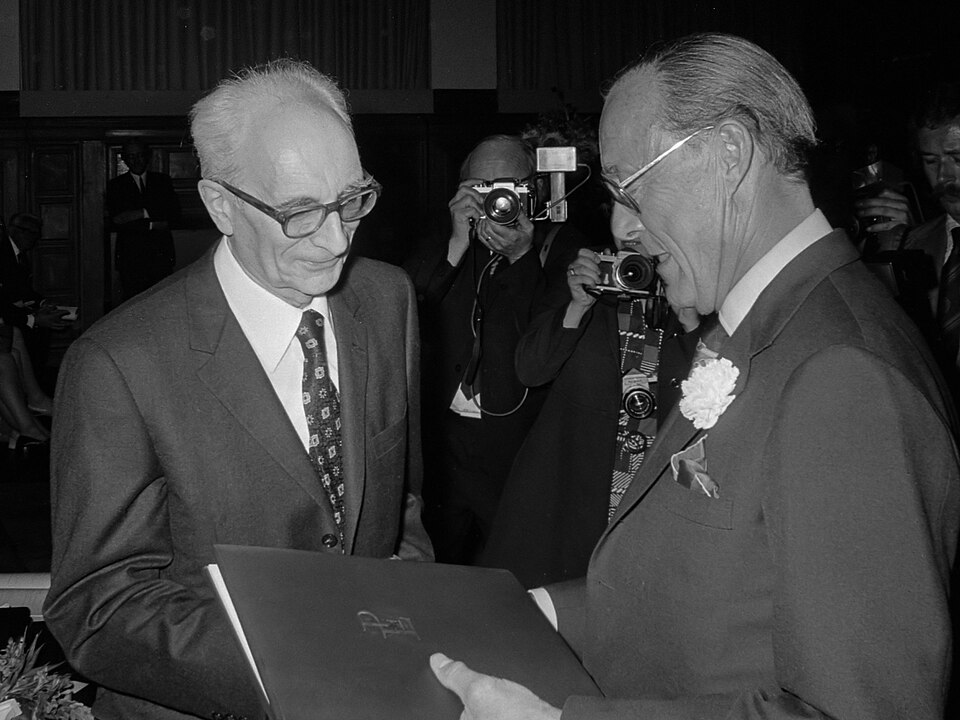
—You write that the goal of the human sciences is not to constitute man, but to dissolve him. Is that not a cruel formula?
It frightens, I know, and I have been reproached for it. But to dissolve man is not to deny him — it is to reintegrate him. The philosopher places man at the center, makes him the measure of all things, as if consciousness were our starting point. I propose the opposite: to reinscribe culture in life, life in its physico-chemical conditions, and man in the whole of nature. What I call structure is not an invention of the mind; it is something the mind shares with the world from which it comes. To dissolve man is to stop making him a king exiled from the rest of reality. It is, at bottom, a lesson in humility — and you know how much I lack it otherwise.
To dissolve man is not to deny him: it is to stop making him a king exiled from reality.
—You structure the Mythologiques like musical scores — fugue, sonata, rondo. The linguist in me would like to understand: why music?
Because myth and music are, I believe, two sisters born of language and that have surpassed it. Both address us beyond words, both play on two axes at once: what unfolds in time, and what repeats, returns, opposes itself outside time. To read a myth, I cut it into units — I call them mythemes, as you have your phonemes — and I arrange them in columns, like an orchestral score. One reads not only from left to right, but also from top to bottom, the harmonies. The Raw and the Cooked opens with an overture, closes with an ending. Wagner, you see, was the first true analyst of myths.
Myth and music are two sisters born of language and that have surpassed it.
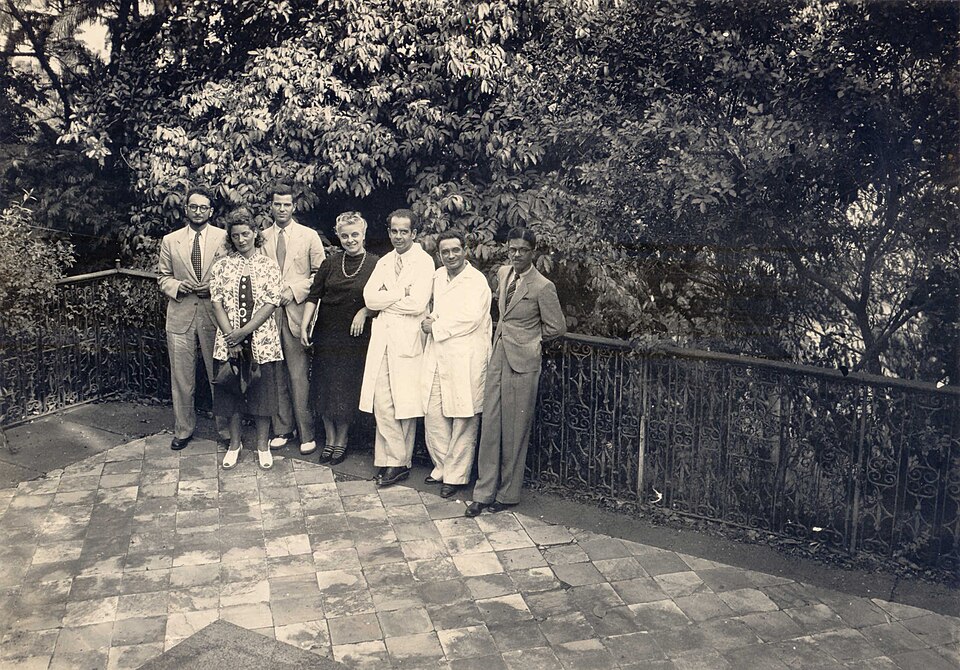
—Your office overflows with index cards. How, concretely, do you make a structure emerge from those hundreds of Amerindian myths?
Patiently, and almost manually, like a craftsman. Each variant of a myth, I note on a card: its motifs, its characters, its inversions. Then I spread out these cards, I move them, I regroup them — and little by little, as in a puzzle, oppositions reveal themselves: the raw and the cooked, the fresh and the rotten, the sky and the earth. A myth from one tribe is often only the transformation of a myth from a neighboring tribe — a term has been reversed, two functions permuted. Mythical thought proceeds as a bricoleur: it does not fabricate its tools, it rearranges what it has at hand. My work consists in rediscovering the rules of this bricolage.
Mythical thought proceeds as a bricoleur: it rearranges what it has at hand.
—UNESCO commissioned Race and History from you in 1952. What did you want to break in the idea of a hierarchy of civilizations?
The most tenacious illusion of all: that our Western civilization would be the summit toward which all others clumsily strive. That is what I call ethnocentrism — judging the other by one's own standard, and calling 'savage' what is simply not us. Yet there is no single progress in a straight line. Each culture has bet on certain human possibilities and neglected others; none is backward, they have made different wagers. What fertilizes a civilization is not its purity, but its encounter with others, the gap that separates them. The diversity of cultures is not a scandal to be reduced: it is our most precious asset. A uniform humanity would be an impoverished humanity.
No culture is backward: they have only made different wagers.
—You who have lived among peoples called 'primitive,' what do you answer to those who believe their thought inferior to ours?
That they have never looked closely. What I call savage thought is not a childish thought, a sketch of ours. It is another way, just as rigorous, of putting the world in order — but based on sensible qualities: colors, smells, animal species, rather than abstract concepts. A people that distinguishes and names three hundred plants does not think less than we; it thinks differently, with a logic of the concrete of stunning finesse. Science domesticates the world through numbers; savage thought tames it through the sensible. These are two strategies of knowledge, equally valid, both aiming to introduce order into chaos. Contempt here is nothing but ignorance.
Savage thought is not a childish thought: it is a logic of the concrete.
This imaginary interview was generated by artificial intelligence from sources documented in Claude Lévi-Strauss's profile. It dramatises what the figure might have said based on what we know about them, but does not constitute attested historical testimony. For primary sources and factual documentation, refer to the full profile.