Imaginary interview with Claude Lévi-Strauss
by Charactorium · Claude Lévi-Strauss (1908 — 2009) · Philosophy · Sciences · 7 min read
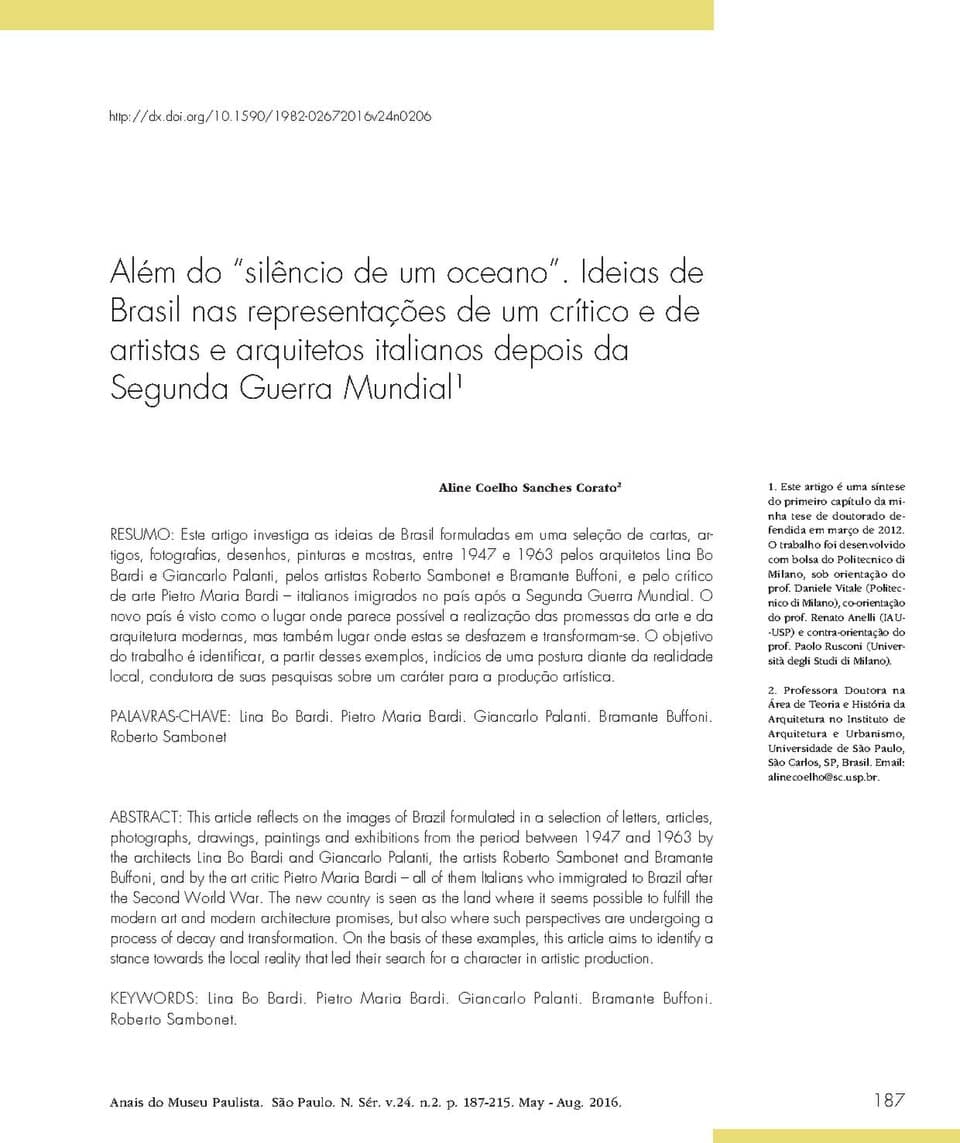
Autumn 2008. In his office at the Collège de France, lined with books up to the ceiling and a few masks from the American Northwest coast, a nearly hundred-year-old man receives visitors, his extinguished pipe resting near a set of index cards. His voice is slow, his irony intact. He agrees to retrace the thread — from the Mato Grosso to Amerindian myths.
—It is said that three disciplines shaped your outlook even before you became an ethnologist. Which ones?
I called them my three mistresses, and I stand by that. Geology first: as a child, I loved walking along a bank and reading, in the superposition of layers, an order that the surface concealed. Then Marxism, which taught me that beneath the turmoil of events, economic structures were at work. Finally, Freud's psychoanalysis, which placed another theater beneath consciousness, governed by its own laws. Three ways of distrusting the obvious, three invitations to dig deeper. Later, when I wanted to understand kinship or myths, I merely transposed this habit: never stop at the visible, seek the hidden grammar. That is where what was called structuralism was born — not from a theory, but from an old taste for what lies dormant beneath the soil.
Three ways of distrusting the obvious, three invitations to dig beneath the surface.
—Do you recall a moment when the Brazilian field nearly cost you your life?
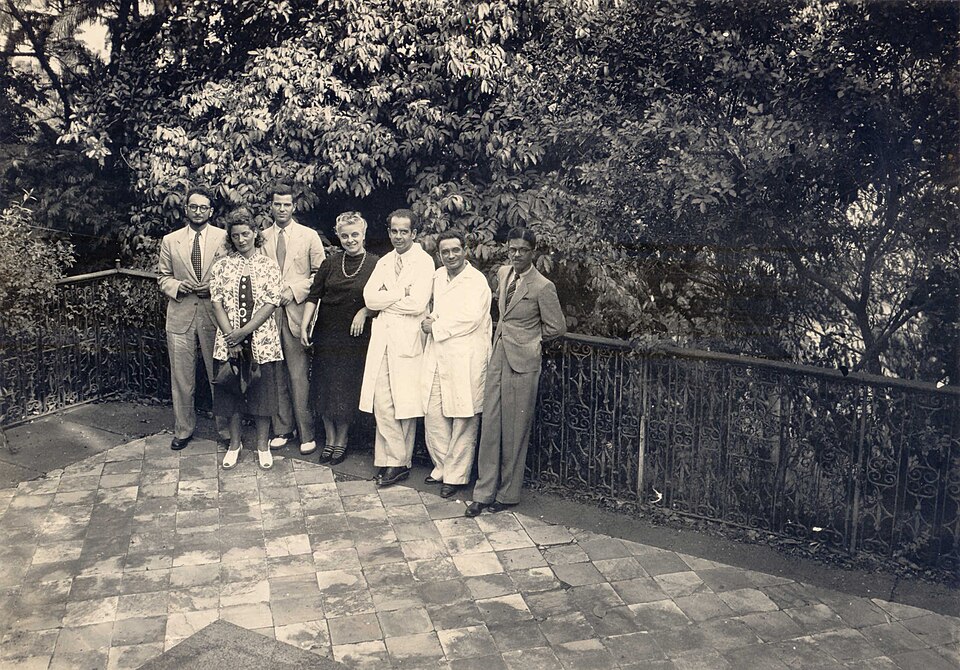
In the Mato Grosso, around 1938, among the Nambikwara. We were advancing, drained, our supplies exhausted, and the forest offered us nothing obvious to eat. There I experienced a hunger that is anything but abstract: you quickly learn that grilled grasshoppers and spiders have a taste, and that taste eventually no longer repulses you. The Nambikwara, for their part, knew how to draw sustenance from the soil and thickets where I saw only a desert. That lesson is worth all the treatises: the supposedly destitute man possessed a concrete knowledge that I, the explorer, sorely lacked. I later spoke of it with a lightness that made people smile, but the fear at the time was very real. You do not emerge unscathed from having depended, for your life, on those you had come to study from above.
—Yet your account of those journeys opens with a disconcerting sentence. Why begin a book of exploration with an admission of disgust?
Because it was true, and truth is better than posturing. I wrote, at the beginning of Tristes Tropiques: "I hate traveling and explorers. And yet here I am about to recount my expeditions." It may seem like affectation; it is precisely the opposite. I already distrusted the picturesque, the adventurer who brings back images as one brings back trophies. What mattered to me was not the exoticism of the Bororo or the Caduveo, but what they taught me about humanity as a whole, my own included. The book was born in 1955, long after the fieldwork, because it took me years to understand that I had not traveled to savages: I had traveled toward a knowledge of ourselves. The detour through the other is the surest path to oneself.
I had not traveled to savages: I had traveled toward a knowledge of ourselves.
—The war threw you onto the roads of exile. How did that flight unfold?
In 1941, I left Vichy France on a packed cargo ship bound for America. It was a refugee vessel, and chance placed me near André Breton, the pope of surrealism. We spent the crossing quarreling with delightful obstinacy: he defended art as revelation, an eruption of the marvelous, while I, more austere, sought beneath works and rites a logic, an order to unveil. We never convinced each other, which is the mark of good intellectual friendships. That crossing was, in its own way, a first school: two ways of questioning the human mind, inspiration versus structure. I arrived in New York knowing nothing yet of what awaited me, but already sharpened by those maritime jousts where, between bouts of seasickness, we debated the nature of beauty.
—You often mention a New York encounter as decisive. What did it bring you?
In New York, exiled and idle, I frequented the shelves of the great public library, and it was there that I crossed paths with Roman Jakobson. The linguist was giving lectures on phonology, that discipline which shows how a few unconscious sound oppositions suffice to organize an entire language. It was an illumination. I understood that what Jakobson did with phonemes, I could attempt with kinship systems, then with myths: break them down into minimal units, identify oppositions, uncover a structure. Anthropology finally had its method. It is sometimes said that structuralism was born from a theory; I believe rather that it was born from a friendship, in a reading room, between a Russian linguist and a French ethnologist both deprived of their country. The best ideas often grow in the soil of exile.
Structuralism was not born from a theory, but from a friendship in a reading room.
—How did you concretely work to analyze hundreds of Amerindian myths?
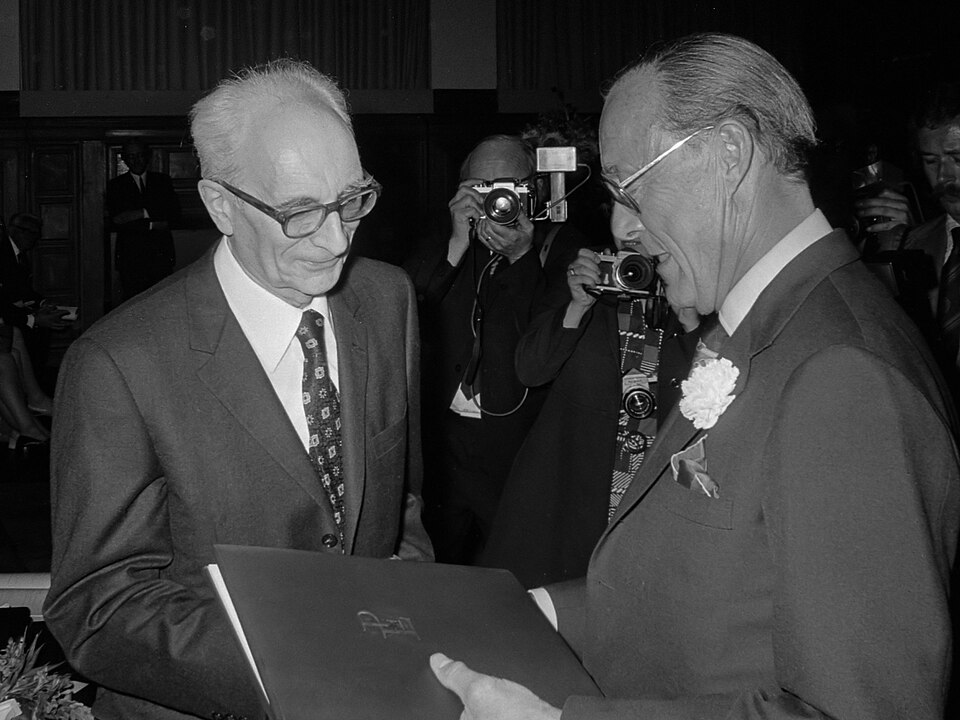
With index cards, and a lot of patience. Each variant of a myth, each motif, each episode, I broke down into its smallest meaningful unit — what I called the mytheme, by analogy with Jakobson's phoneme. Then I spread out these cards, compared them, opposed them, like a player arranging cards to see a combination emerge. A myth taken alone says nothing; it is by confronting it with its neighbors, its inversions, that one sees the transformation appear — that mechanism by which a story turns into another while keeping the same skeleton. My office looked like a watchmaker's workshop, or rather a sorting table where all the myths of America were piled up. The Mythologiques, which I undertook in 1964, are nothing other than the trace of that long classification.
—You gave these four volumes forms borrowed from music. Why this kinship with scores?
Because myth and music are cousins: both play on two axes at once, the melody that unfolds in time and the harmony that stacks sounds vertically. So I built my volumes like scores — an overture, fugues, a sonata, a finale — and the first is titled The Raw and the Cooked, which is no mere culinary coincidence. Wagner taught me, better than any theorist, how a theme returns transformed, how a few motifs suffice to build a sonic cathedral; Rameau too. In the evening, I listened to these works and found there exactly what I was tracking in Bororo or Tupi narratives: a finite number of elements, rules of combination, and an infinite richness that springs from them. Music did not illustrate my thought; it was its secret model.
Myth and music are cousins: a finite number of elements, an infinite richness that springs from them.
—What, ultimately, were you trying to demonstrate through this endless analysis of myths?
That the human mind is everywhere the same, and that the peoples called primitive think with as much rigor as our scholars. In The Savage Mind, published in 1962, I wanted to show that myth is not a poetic babble but a logical instrument, a way of thinking the world with sensory qualities — raw, cooked, rotten, fresh — instead of abstract concepts. This is what I called bricolage: mythical thought constructs meaning by rearranging the elements at hand, like a handyman making his work from the remains of other works. There is not a childish humanity and an adult humanity; there are two equally profound uses of the same intelligence. My cards served only to make this evidence visible, painstakingly, myth after myth.
—In 1952, UNESCO asked you for a text against racism. What argument did you want to make?
That nothing authorizes the ranking of civilizations. In Race and History, in 1952, I tried to patiently dismantle that old reflex I call ethnocentrism: judging the other by one's own habits and calling barbaric what is, most often, merely the barbarity of our gaze. Cultures cannot be classified like species from least evolved to most advanced; each has made choices, explored possibilities, and their very diversity is our most precious asset. I wrote that "world civilization cannot be anything other than the coalition, on a global scale, of cultures preserving each its originality." To homogenize humanity would be to impoverish it as one impoverishes a soil over-cultivated. Progress, if it exists, is born from the gap between cultures, never from their fusion.
—Do you believe this defense of cultural diversity is threatened?
Deeply, and that is my old man's melancholy. I have seen, from the Mato Grosso to my last years, the world shrink, differences erode, the societies I studied dissolve into a planetary monotony. Today's traveler brings back the same images everywhere. Yet a humanity that had only one face would cease to be able to think itself, for lack of a mirror. The savage mind is not a relic to be preserved in a museum: it is a resource, another way of inhabiting reality, which we will need when our scientific certainties show their limits. I spent my life pleading for these societies without writing, not out of nostalgia, but out of conviction that they hold a part of human truth. To let them disappear without speaking out would have been to betray everything the Nambikwara taught me.
A humanity that had only one face would cease to be able to think itself, for lack of a mirror.
—At the end of this body of work, how would you define the ultimate goal of the sciences you served?
This will surprise: "The ultimate goal of the human sciences is not to constitute man but to dissolve him." I wrote it in Structural Anthropology, in 1958, and I have often been reproached for that sentence as a cold provocation. It is not. To dissolve man is not to deny him, it is to cease placing him at the center as an idol, and to reintegrate him into the order of things — among the structures of language, matter, life. The pride of the West was to believe itself the summit and measure of all things. My whole life as a researcher, from the layers of geology I read as a child to the Amerindian myths sorted on my cards, aimed only to deflate that pride. Man is more interesting when he consents to be merely a part of the world rather than its owner.
To dissolve man is not to deny him, it is to cease placing him at the center as an idol.
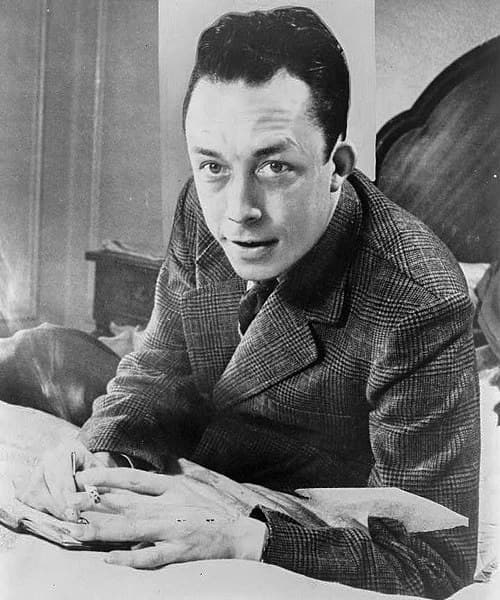
This imaginary interview was generated by artificial intelligence from sources documented in Claude Lévi-Strauss's profile. It dramatises what the figure might have said based on what we know about them, but does not constitute attested historical testimony. For primary sources and factual documentation, refer to the full profile.