Imaginary interview with Claude Monet
by Charactorium · Claude Monet (1840 — 1926) · Visual Arts · 5 min read
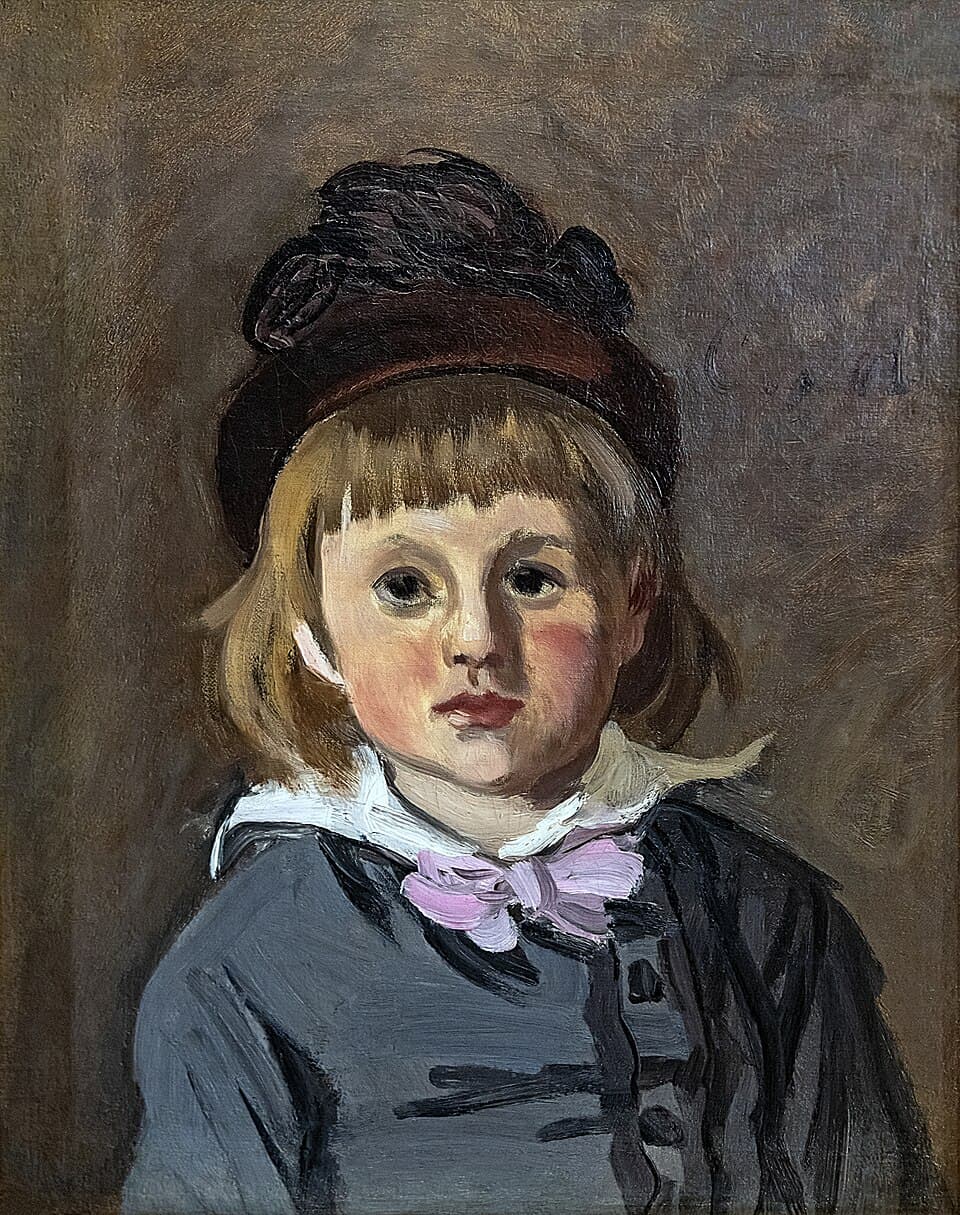
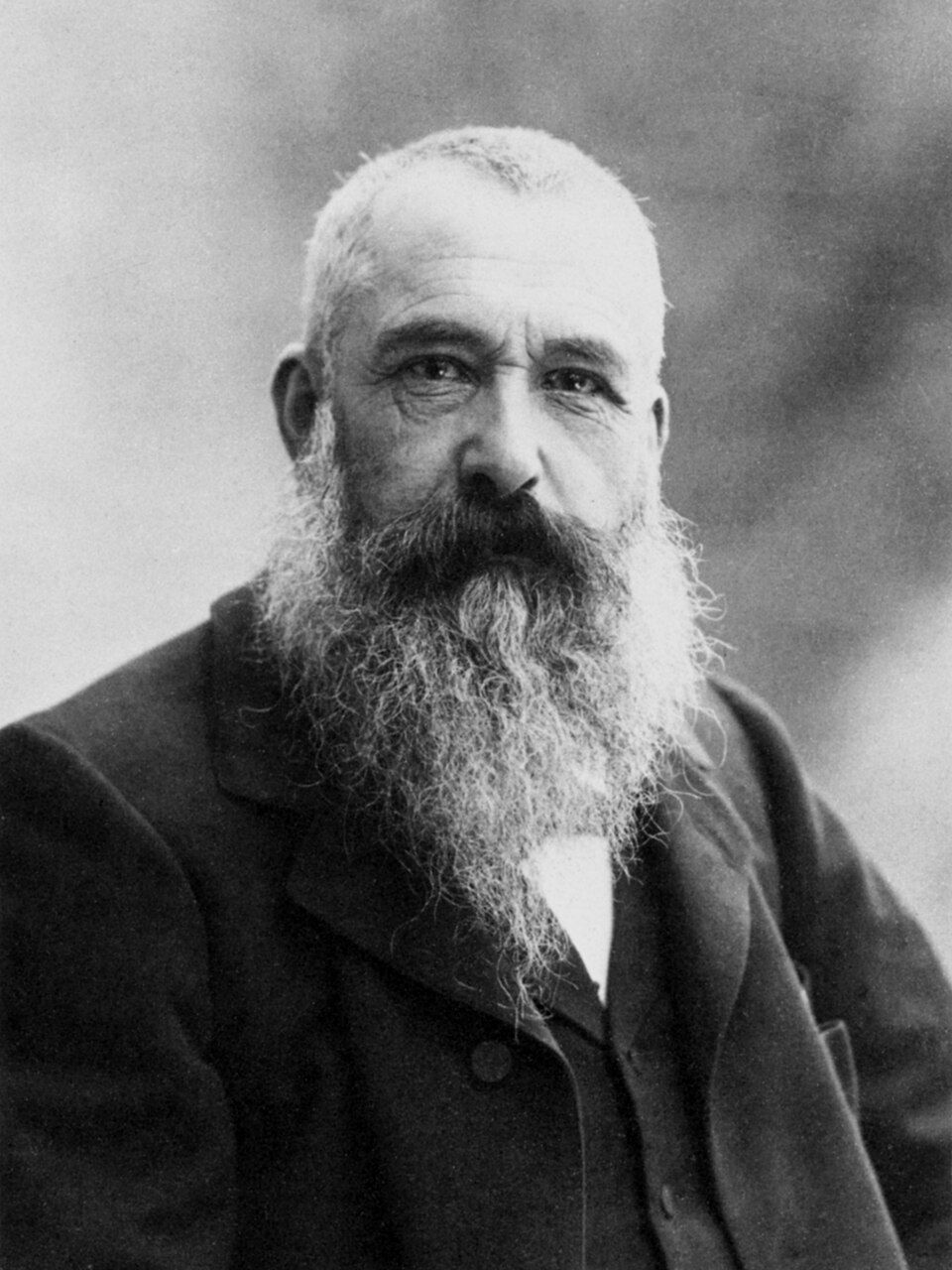
Giverny, a morning in September 1925. The master receives us under the veranda, his hands still stained with blue, his gaze turned toward the pond where his water lilies float. White beard, slow voice, he agrees to trace back the thread of a life spent chasing the light.
—How did that painting done at the port of Le Havre end up giving its name to an entire movement?
It all started with a misunderstanding, and with mist. I had before me the port of Le Havre one morning in 1872, the orange sun barely piercing the vapor, the masts more guessed than seen. When they asked me for a title for the exhibition at Nadar's, I shrugged: it wasn't a view of the port, it was an impression, I said Impression, soleil levant, and that was that. That Monsieur Leroy, in his review, thought he could overwhelm us by calling us “impressionists.” He thought he was nailing us. The nickname stuck to us like a badge of honor. See the irony: they named a revolution with a mockery.
They named a revolution with a mockery.
—Do you remember the reception of that first exhibition in 1874?
Ah, they treated us like daubers. In his article in Le Charivari, Leroy sneered: “wallpaper in its embryonic state is more finished than that seascape!” He laughed at our technique, at that freedom that scandalized him. But the bourgeois climbing the stairs of Nadar's studio on the Boulevard des Capucines didn't know they were entering something other than an exhibition of failures. We had left the official Salon and its jury that rejected us year after year. I didn't want to paint something finished, smooth, varnished. I wanted to paint the sensation, the instant when the eye receives the world before reason organizes it. They thought us incapable; we were merely ahead of our time.
—Why paint the same haystack, the same cathedral thirty times?
Because the subject is nothing, and light is everything. A haystack in a field at six in the morning has no relation to the same haystack at noon or under frost. So I got up before dawn and carried a wheelbarrow loaded with canvases into the fields. I moved from one to another as the hours passed: as soon as the light changed, I put this one down, I picked up that one. For the facade of Rouen Cathedral, between 1892 and 1894, I rented windows opposite and painted more than thirty versions. What I was pursuing was not the stone, but the envelope of air and sunlight that transforms it from moment to moment.
The subject is nothing, and light is everything.
—Did you ever feel you had grasped that quest for light?
Never, and that's what kept me on edge all my life. I wrote to my friend Geffroy around 1890: “I am in pursuit of nature without being able to reach it. What I want to reproduce is what lies between the motif and me.” Between, you understand: neither the thing nor me, but that vibrating air that separates and connects us. Light doesn't stay still for a minute. In London, I fumed — the fog lifted, I began, and everything had already changed. You never capture nature; you chase after it, out of breath, brush in hand. It's a delicious torment from which I never recovered.
—How did the idea of digging a water garden at Giverny come about?
When I settled in Giverny in 1883, I first grew flowers like composing a painting, in color masses. Then, in 1893, I bought the neighboring land and wanted water. I had a branch of the Epte diverted, a pond dug, and a little Japanese bridge thrown over it. They thought I was mad — diverting a river for aquatic flowers! I employed gardeners full-time, and one of them had only one task: every morning to wash the dust off the water lilies so they would be clean when I painted them. I had planted my own motif. I had made, with my hands and my workers, the landscape I would paint for nearly thirty years.
I had planted my own motif.
—What did that Japanese bridge, which you painted so often, represent for you?
It was through it that everything began on the water. In 1899, I set up my easel in front of that bridge and painted Le Bassin aux nymphéas, harmonie verte — the arch, the willow, and below the leaves floating like notes on a staff. At first I still painted the banks, the sky, what held the painting in place. Then, little by little, the sky disappeared from my canvases: only the water's surface remained, the reflection of clouds within it, the flowers resting on it. The motif turned inside out like a glove. I no longer looked at the horizon; I looked at my feet, and there I found infinity.
I no longer looked at the horizon; I looked at my feet, and there I found infinity.
—What drove you to undertake those immense Water Lilies panels during the war?
The war, precisely. 1914: you could almost hear the cannon from Normandy, my sons and so many young men were at the front. My old friend Clemenceau came to shake me, urged me to work, to give something to France in the midst of this disaster. So I thought big, perhaps too big: immense curved panels where one would enter as if into a pond, with no edge or horizon, nothing but water and light. I wanted to offer exhausted nerves a place of peace, a haven of meditation in a collapsing world. These Grand Decorations, I promised them to the State to be installed at the Orangerie. It was the work of my old age and my final battle.
—Your eyes betrayed you at the end. How did you keep painting?
The cataracts, yes. In the last years, I no longer saw colors as they are: everything turned red, brown, dirty yellow. I painted from memory as much as from sight, I read the names on my tubes to avoid mixing up the blues. After the operation in 1923, what a shock: the world came back to me all at once, vivid, almost too blue, as if a window fouled for ten years had been cleaned. And there I saw what I had painted in the fog of my illness — false, muddy canvases. I destroyed several, without regret. A painter who no longer sees truly has no right to let his colors lie.
A painter who no longer sees truly has no right to let his colors lie.
—What concretely allowed you to leave the studio and paint outdoors?
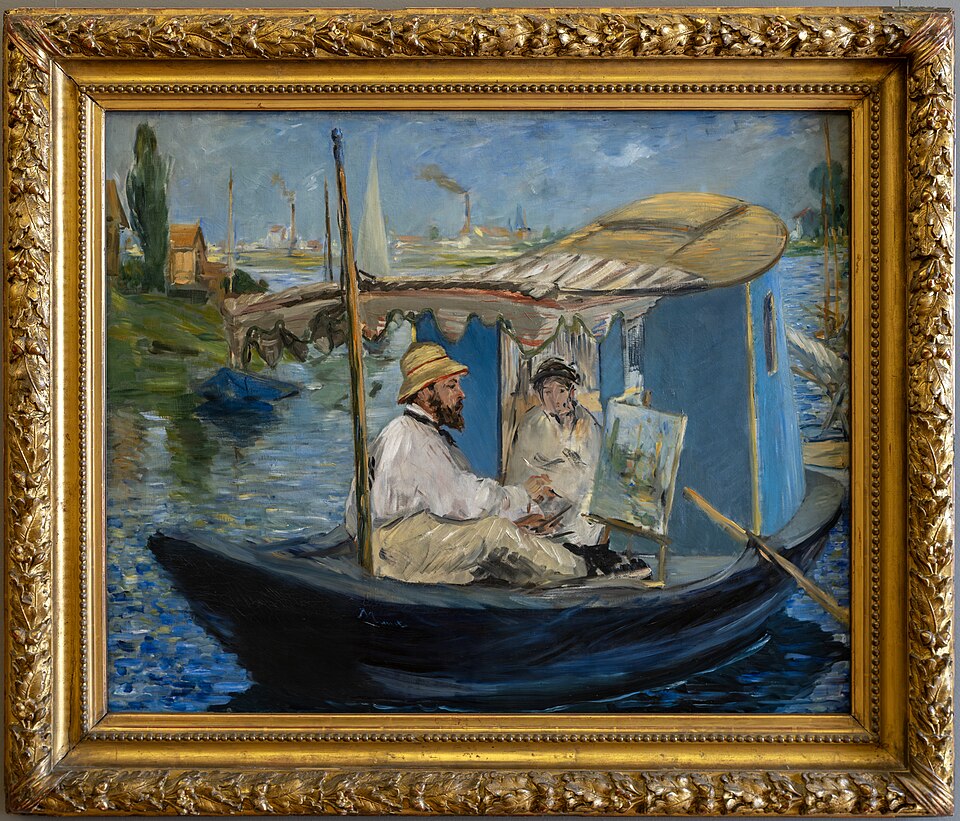
Small things, but decisive. First, the paint tube in flexible tin — before it, you had to grind and store colors in bladders that burst, impossible to carry. With the tube, you slipped your whole rainbow into a box and went out to the motif. Then the folding easel, which you set up in the grass or sand. I even had a boat converted into a floating studio, as Daubigny had done before me, to get down to water level and capture the reflections of the Seine up close. Without these modest inventions, plein air would have remained a dream. The revolution in painting was born from a bit of tinplate.
The revolution in painting was born from a bit of tinplate.
—Did your London exile in 1870 change the way you saw?
Profoundly. When war broke out in 1870, I took refuge in London, idle, worried for my family. It was there that I discovered Turner and Constable, those Englishmen who dared to dissolve contours in mist and vapor. Their audacity reassured me: you could paint the air itself, the humidity, the diffused light, and no longer just well-drawn objects. London, with its famous fog, is a perpetual lesson in instability — I returned years later to paint the Parliament and bridges drowned in smoke. That city taught me that the most ordinary subject becomes sublime as soon as the atmosphere gets involved. It gave me the eyes I kept all my life.
This imaginary interview was generated by artificial intelligence from sources documented in Claude Monet's profile. It dramatises what the figure might have said based on what we know about them, but does not constitute attested historical testimony. For primary sources and factual documentation, refer to the full profile.