Imaginary dialogue between Gustave Geffroy and Claude Monet
by Charactorium · Claude Monet (1840 — 1926) · Visual Arts · 5 min read
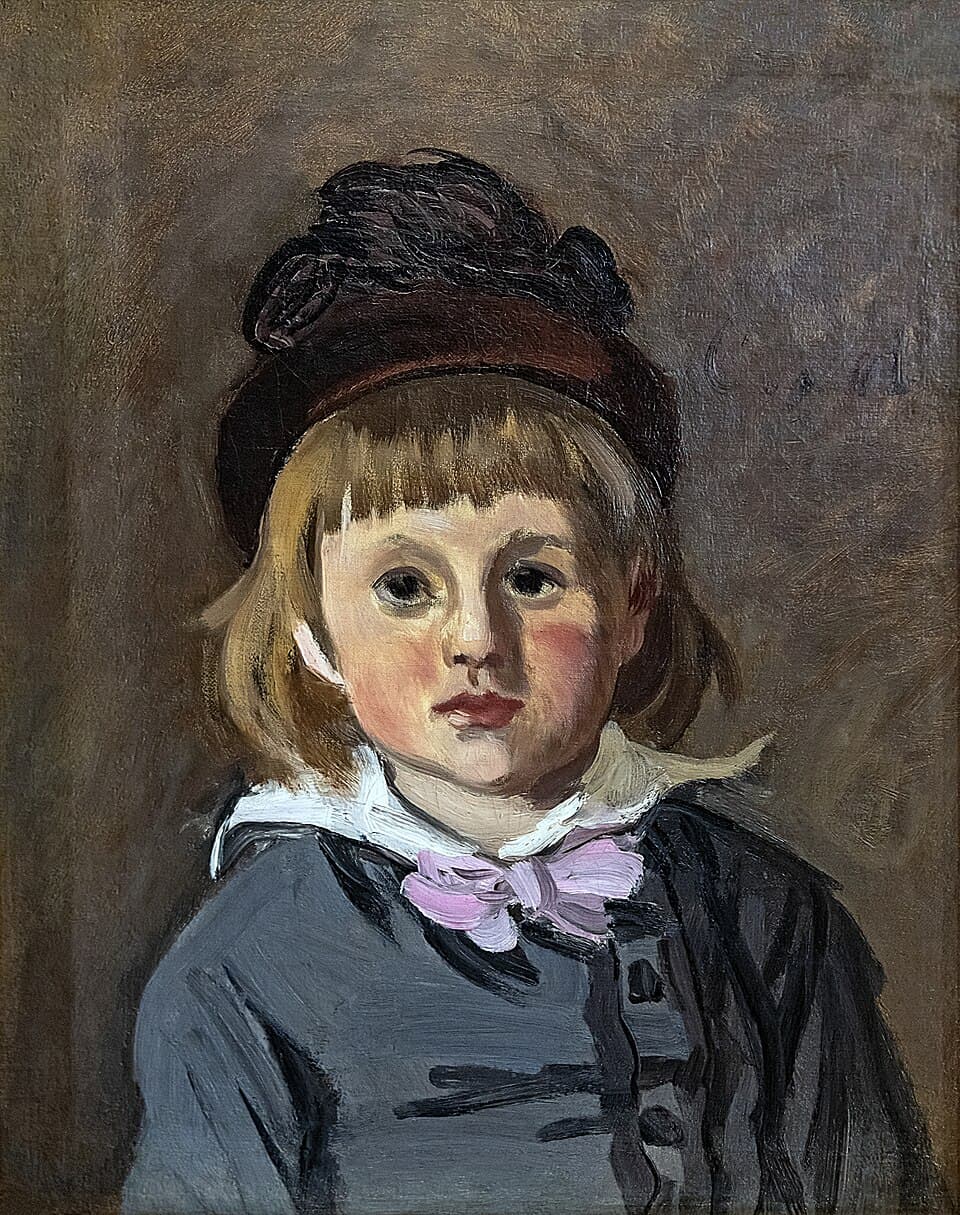
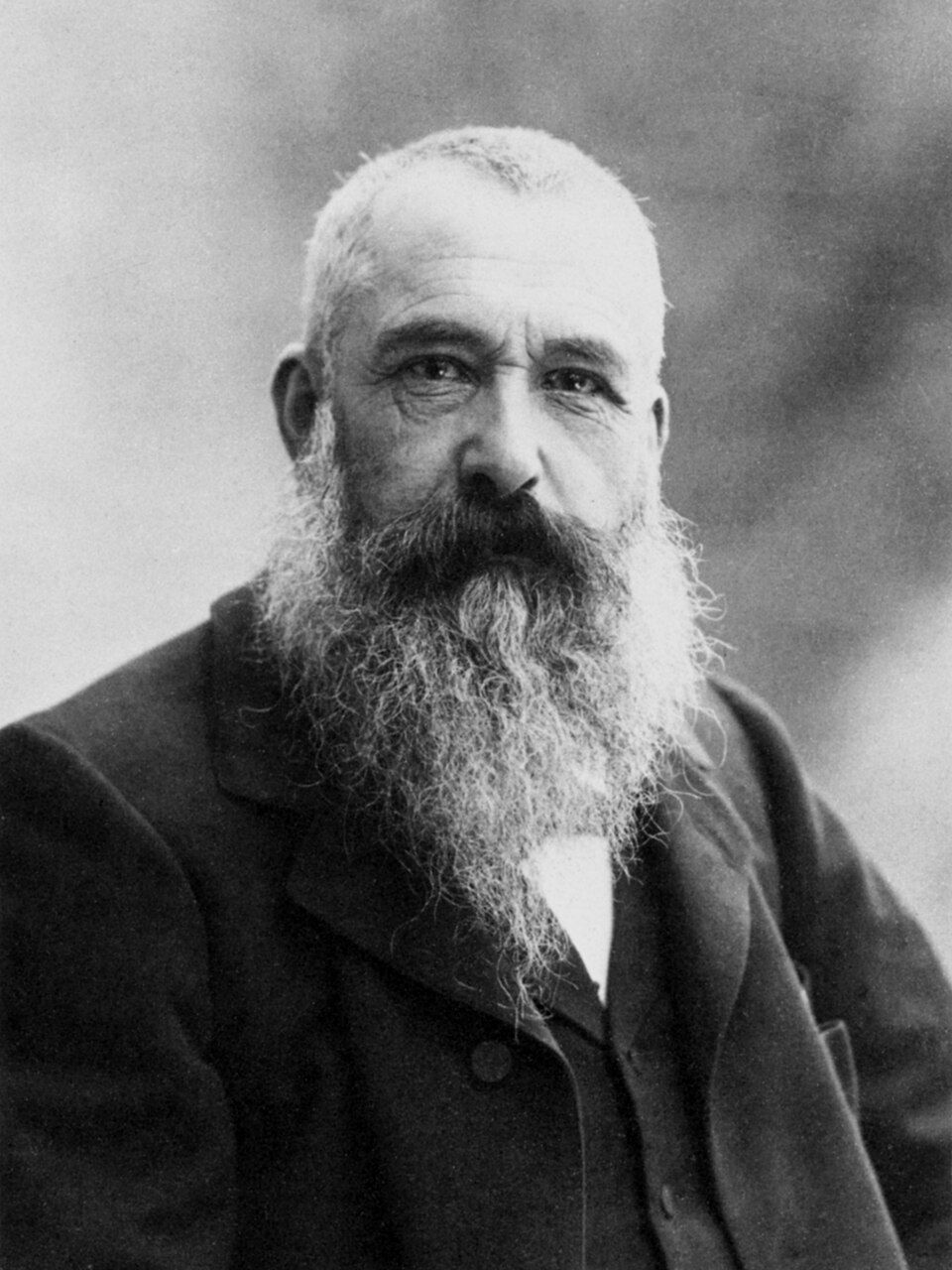
It is in the large house with green shutters in Giverny, on a September morning in 1908, that Gustave Geffroy meets Claude Monet. The smell of turpentine still lingers in the studio, and through the window one can make out the pond where the water lilies sleep. The two men have known each other for nearly twenty years, since that letter in which the painter confided that he was pursuing nature without being able to catch it. Geffroy has not come as a critic that day, but as a friend, to coax the man behind the white beard into speaking.
—Claude, do you remember that canvas from Le Havre you called Impression, Sunrise? How did that word come to you, that morning in the mist?
I had to give it a title for the catalogue, my dear Geffroy, and I could not write "View of Le Havre": I was not painting the port, but the mist, the red sun barely rising, what trembled between the water and me. So I let slip the word impression, almost out of laziness. I did not know that a certain Leroy, at Le Charivari, would seize upon it to mock us. He thought he was burying us; he baptized us. You who have read his lines know that he laughed at our "embryonic execution." Well, that laugh gave us a name we would never have dared choose.
He thought he was burying us; he baptized us.
—That word impression thrown in your faces in 1874 — did you ever regret it, or did you make it your own?
Regret it? No. At first, I wore it like a mockery sewn on my back. But the word spoke true, you see. I do not paint a thing; I paint the sensation that thing gives me at a moment that will never return. That is impression: what is already gone when you try to grasp it. The gentlemen of the Salon wanted subjects, stories, heroes. I had nothing to offer but an hour of the day, a vapor, a reflection. They thought us lazy because our touch remained visible. But that quick touch was our honesty: showing the hand that trembles before what changes.
I do not paint a thing; I paint the sensation that thing gives me.
—Before Giverny, I knew you running along the riverbanks with your gear. Tell me about those tools that allowed you to paint outdoors, on the motif.
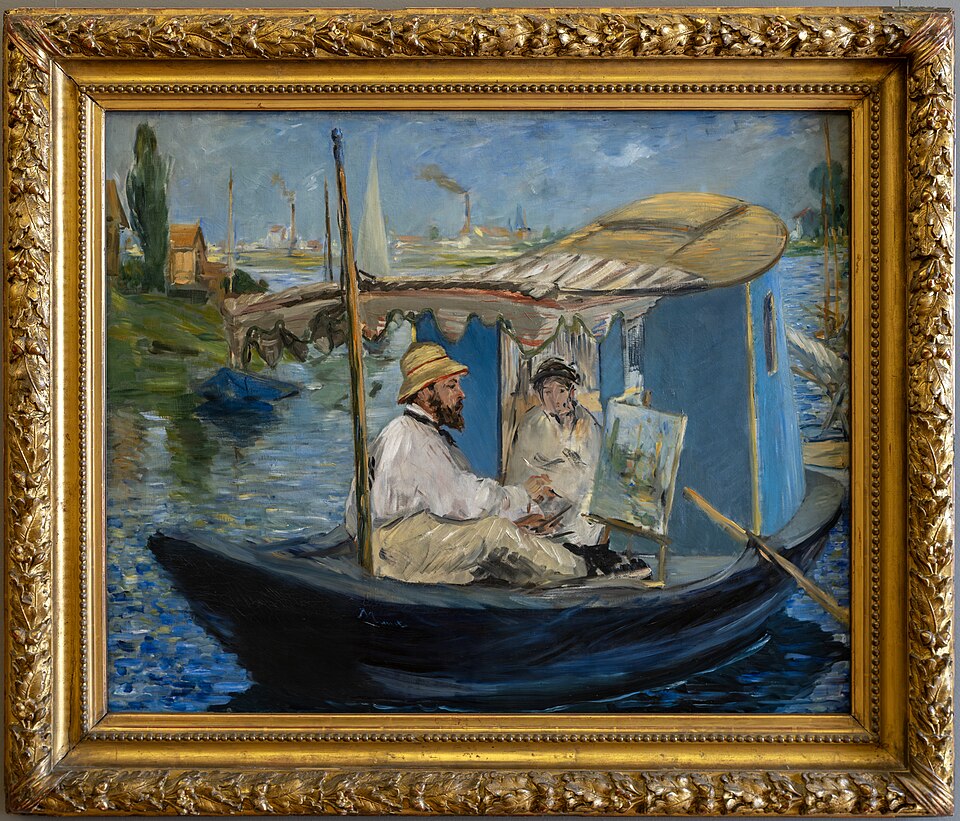
It all comes down to little things, Gustave: an easel you fold under your arm, tin tubes where the paint waits without drying. When I was young, you could not dream of working en plein air as we did: paint stayed in the studio. The metal tube changed everything; it brought the landscape within our reach. I also had my studio boat, a covered skiff I had fitted out based on old Daubigny's idea: I would slip in at water level to paint the reflections of the Seine, as if I myself were a piece of the river. Without those inventions, my friend, I would have remained shut up between four walls copying plaster casts.
The metal tube changed everything; it brought the landscape within our reach.
—When you wrote to me in 1890 that you were pursuing nature without being able to catch it, you were beginning your Haystacks. Where did you get the idea of painting the same subject endlessly?
From my powerlessness, quite simply. I set myself before those haystacks thinking one canvas would suffice. But the light moved, and with it everything changed: the haystack at five o'clock was no longer the one at noon. So I understood that I needed several canvases, and to go from one to another as the hours passed. I had a wheelbarrow loaded with stretchers brought to the field, and I turned with the sun like a sundial. The subject, you see, hardly matters. A haystack, a cathedral, what does it matter: what I am tracking is the envelope of air and light that covers them. That is what I was telling you: running after nature, and feeling it slip through your fingers.
The haystack at five o'clock was no longer the one at noon.
—And those thirty canvases of the Rouen Cathedral, painted from a window between 1892 and 1894 — was it torture or bliss?
A torment, Geffroy, I will not hide it from you, least of all from you. I was stationed at a window opposite the portal, and the stone was never the same. In the morning it was blue, at noon golden, in the evening almost pink, and every passing cloud stole my effect. I worked on ten canvases at once, running from one to another, drenched in sweat, desperate never to finish. I wept with rage. But when Durand-Ruel showed them together, I understood that I had not painted a cathedral: I had painted the day itself, from dawn to dusk, resting on an old stone façade.
I had not painted a cathedral: I had painted the day itself.
—Now you are settled in Giverny since 1883. When you first received me, the pond did not exist. How did you make this water garden spring up?
I dug it, my friend, literally! I bought the neighboring meadow, had an arm of the Epte diverted despite the protests of peasants who feared for their livestock. They took me for a fool to spend so much on water flowers. Today I employ several gardeners, and one of them has no other task than to wash the dust off the water lily leaves each morning, so that the surface remains pure when I set up. My finest masterpiece, you see, is perhaps this garden. I composed it like a palette: here the purples, there the yellows, the Japanese bridge to close the picture. I painted it before ever picking up a brush.
My finest masterpiece is perhaps this garden.
—One imagines you, Claude, with your eye glued to the canvas from morning to night. But tell me about your days here, away from the painter the public thinks it knows.
You know well that I get up before five, Gustave — you have seen me go out while you were still sleeping under my roof! I want the first light, the one that has not yet hardened. I eat a lot, I need strength, then I dash to the garden or to the motif. In the afternoon, if the light betrays me, I go back to work in the studio or I badger my gardeners with my orders. In the evening, it is family in the yellow dining room, the children, correspondence, and to bed early. They think me a hermit; I am above all a man as regular as a clockmaker, a slave to the sun. My true mistress is the passing hour.
I am above all a man as regular as a clockmaker, a slave to the sun.
—They say your table is as refined as your painting. Is it true that the gourmet in you rivals the painter?
For once, they do not lie! I love my table as much as my palette, and I believe one paints better with a contented stomach. My vegetable garden gives me its produce, the Seine its fish, my poultry yard its fowl. I keep a recipe book that I guard jealously, and I do not mind supervising the cooking myself. They are Norman dishes, simple, but they must be just right, like a color. When you come again, I will have you taste that rather than bore you with my canvases. A good meal in the yellow room, among my Japanese prints: that too is a way of composing a harmony.
I believe one paints better with a contented stomach.
—You sometimes complain about your eyes, my old friend. That light you have pursued for forty years — do you fear it will finally elude you?
It is my dread, Geffroy, and I speak of it only to those dear to me. My eyes are no longer what they were; blues seem murky, colors lose their clarity as if through a yellow veil. Imagine the torment: having spent one's life serving the light, and feeling it go out from within. I fear I no longer distinguish the tone I lay down from the tone I think I am laying. Sometimes I scrape an entire canvas, convinced I have made a mistake. You who know my relentlessness can guess my anguish: what will become of me, a painter, the day I no longer see correctly? But as long as I have a glimmer left, I want to give it to my great water panels.
Having spent one's life serving the light, and feeling it go out from within.
—Precisely, these great water lily panels you dream of aloud — what meaning do you give to this monumental work you are undertaking late in life?
It is the work of an old man who does not want to die entirely, that is the truth. I dream of immense panels, without horizon, without shore, where the visitor would enter as into the water itself and forget the world. No more ground, no more sky: nothing but the surface of the pond, the reflections, the floating flowers. I would like to offer tired eyes a place of rest, a tranquil water in which to let oneself be rocked. If my strength and my eyes hold out, I will work on it until my last day. Perhaps you will be there, Gustave, to say whether old Monet kept his promise, or whether he drowned in his own pond.
The visitor would enter as into the water itself and forget the world.
This imaginary interview was generated by artificial intelligence from sources documented in Claude Monet's profile. It dramatises what the figure might have said based on what we know about them, but does not constitute attested historical testimony. For primary sources and factual documentation, refer to the full profile.