Kids interview Claude Monet
by Charactorium · Claude Monet (1840 — 1926) · Visual Arts · 5 min read
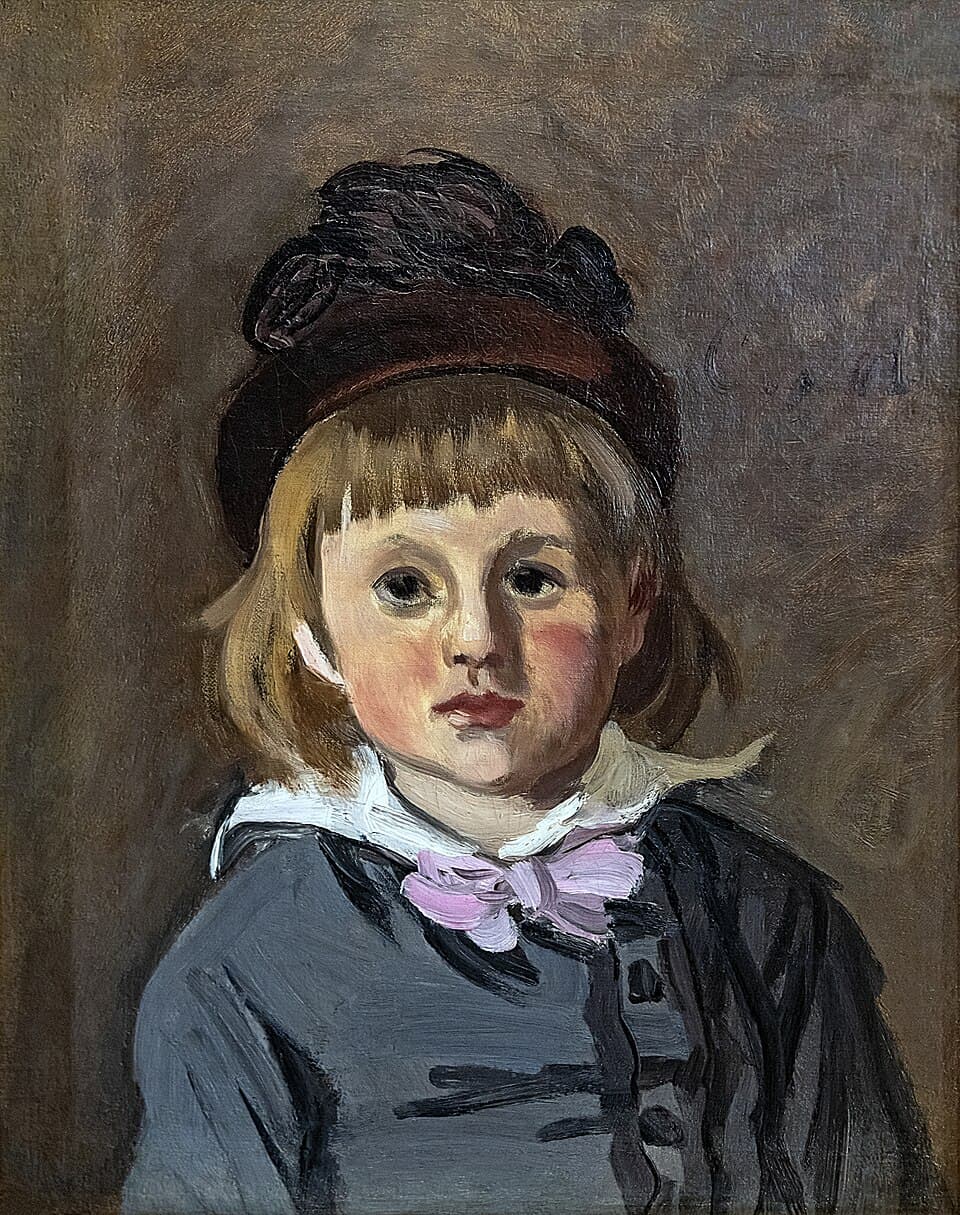
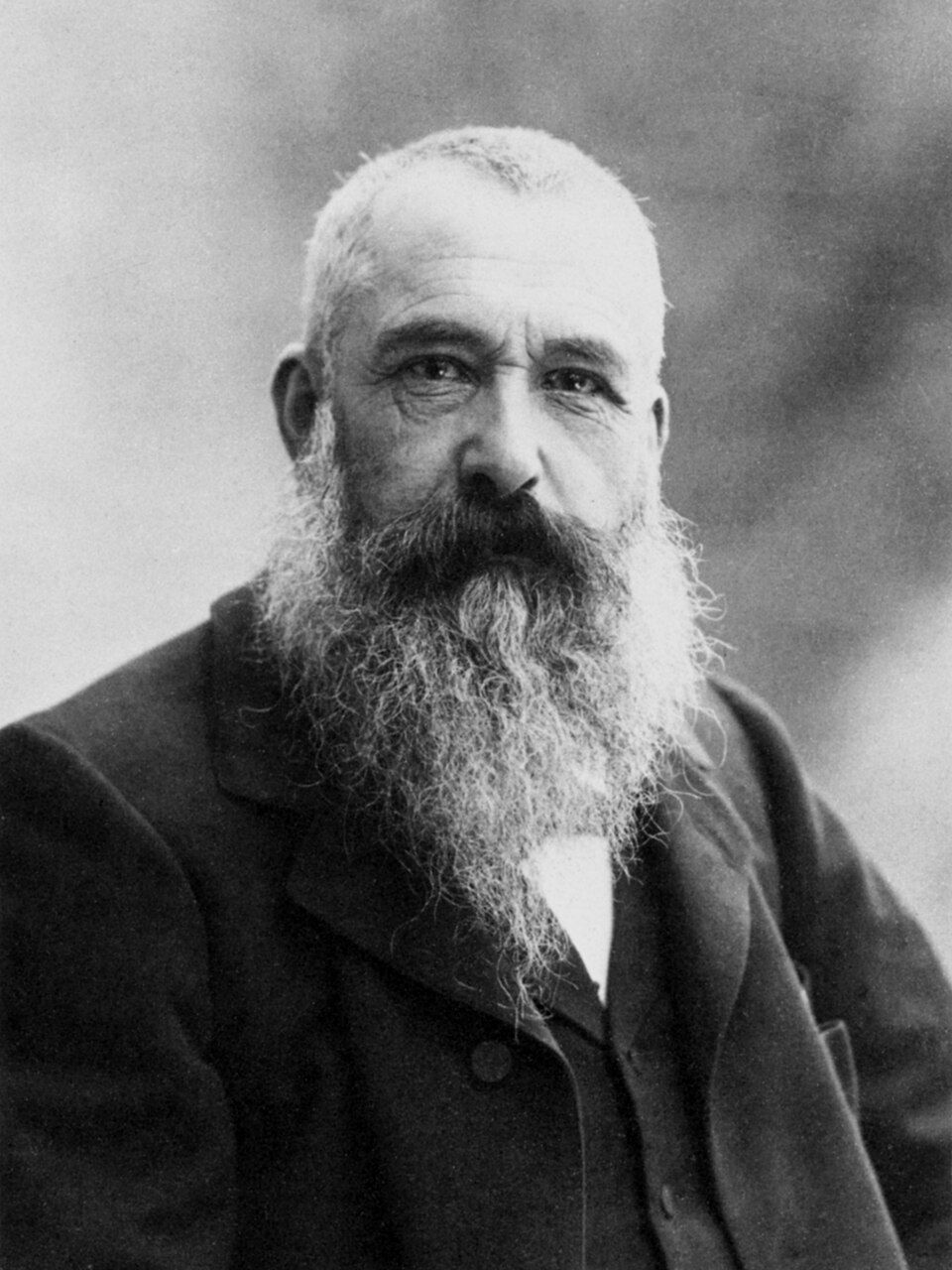
That morning, two young visitors on a school trip push open the gate of a house with green shutters in Giverny. An old gentleman with a long white beard waits for them near a pond covered in flowers. He puts down his brush, smiles, and invites them to sit down.
—What were your very first paintings like, when you were little in Le Havre?
You know, my child, I grew up by the sea, in Le Havre. There, the sky and the water change every minute. Very young, I learned one thing: you had to paint outdoors, facing the real landscape, not shut up in a studio. We called that going sur le motif — the motif is the subject you see before you. Imagine a large folding easel I carried on my back, like a peddler. I would set up on the beach, the wind in the canvas. The sun moved, and I ran after it with my brush. That's where it all began, in Le Havre.
You had to paint outdoors, facing the real landscape.
—Is it true that a man made fun of you and that gave you a famous name?
Yes! It's a funny story. In 1872, I painted the port of Le Havre in the morning mist. I didn't know what to call it, so I wrote Impression, soleil levant. Two years later, we exhibited our paintings at a photographer's, Nadar, on Boulevard des Capucines in Paris. A critic named Louis Leroy found them awful. To mock us, he called us 'Impressionists,' as if we were dauber. Imagine someone laughing at your drawing and everyone repeating the insult! Well, that mocking nickname became our pride, and the name of a great movement.
The mocking nickname became our pride.
—How did it feel when they made fun of your painting?
At first, it stings, I won't lie. Leroy wrote in his newspaper, Le Charivari, that unfinished wallpaper was better than my seascape. Can you imagine? You work for months, and they say that in one line. But we were a band of painter friends, and we stuck together. The official Salon, the big exhibition of the Academy gentlemen, rejected our canvases because they were too new. So we held our own exhibition. Deep down, my child, when they mock you, it means you disturb. And disturbing sometimes means you're a little right before others.
When they mock you, it often means you disturb.
—Why did you paint several pictures at the same time?
Because light never stays still, you see! When I painted the Haystacks in the fields around 1890, I understood something: the same haystack is never the same. In the morning it's golden, in the evening it turns violet, and in winter it turns blue in the snow. So I would take a wheelbarrow full of canvases. As soon as the light changed, hop, I put down one canvas and took another! Imagine a juggler moving from plate to plate, except my plates were paintings. I wasn't painting the haystack. I was painting the light on it.
I wasn't painting the haystack, I was painting the light on it.
—What time did you get up to paint?
Before the sun, my child! Often before five in the morning. I ate a big breakfast, then rushed off with my canvases. For my Rouen Cathedral series, I set up at a window opposite it, and painted its facade hour after hour. At each time of day, the stone changed color, as if alive. One day I wrote to a friend that I was pursuing nature without ever catching it. What I was after, I said, was 'what lies between the motif and me.' That air, that light floating between my eyes and things.
I was pursuing nature without ever catching it.
—Was it hard to paint in London with all that fog?
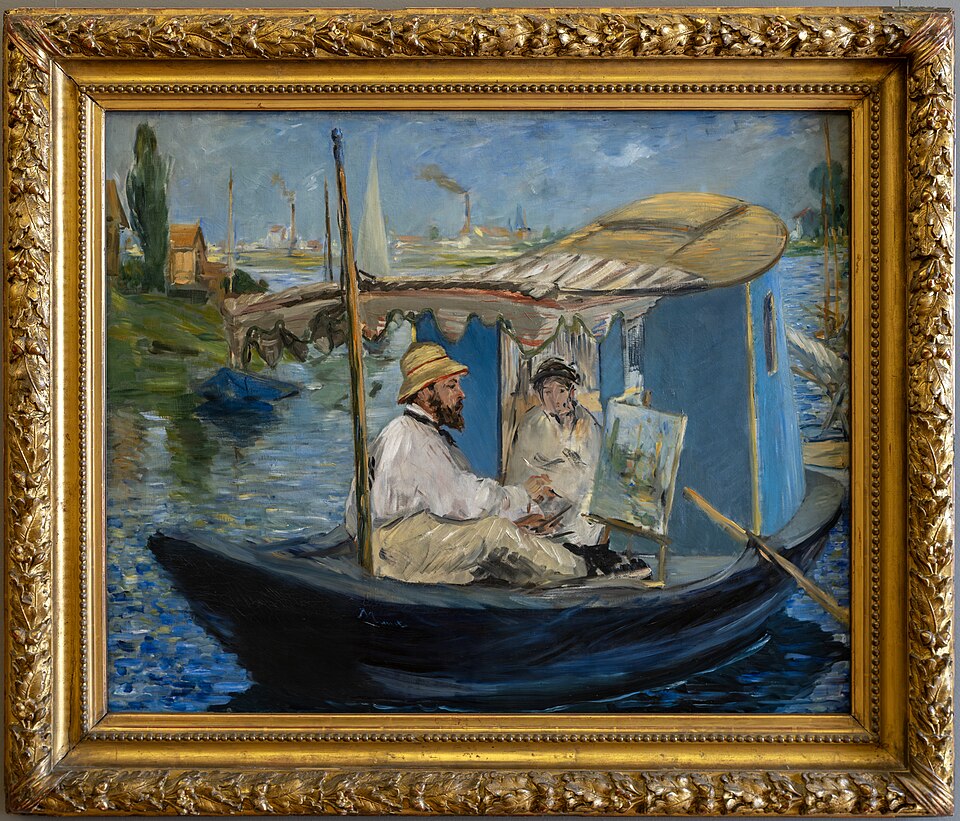
Terrible and magnificent at the same time! Around 1900, I went to London to paint Parliament and the bridges on the Thames. But there, the fog rules. I wrote to my wife Alice a letter complaining: I had barely started a canvas, everything had changed. The fog lifted, then a superb light arrived, and the next moment, nothing. Imagine trying to draw a cloud that's speeding away! But that fog, precisely, gave the stones incredible colors—pink, mauve, golden. The difficulty was also the gift.
The fog lifted, and already everything had changed.
—Is it true you dug a pond just to paint it?
Absolutely, and the villagers thought I was crazy! In Giverny, where I've lived since 1883, I diverted a small branch of the river Epte to fill a pond. I planted water lilies there—they are water flowers, like stars on the pond—and I had a pretty green Japanese bridge built. I employed several gardeners. One of them had only one job: every morning to clean the dust off my water lilies so they would be perfect! You see, I wasn't just painting my garden. I first made a garden to paint it.
I first made a garden to paint it.
—Where are your big water lily paintings now?
In a place I dreamed for them, in Paris. During World War I, my friend Clemenceau, a politician, pushed me to paint immense panels. Imagine canvases so large they go all around a room, as if you step inside the water. They are called the Grandes Décorations. I wanted to give them to France. Today you can see them at the Orangerie museum, in two oval rooms built on purpose, as I requested. You sit in the middle, and the Giverny pond surrounds you. Some say these flowers already announced the painting of tomorrow.
Canvases so large you step inside the water.
—Is it true your eyes became sick at the end?
Alas, yes, my child. As I aged, I got an eye disease called cataracts. It's like a yellowish veil placed before your sight. The worst, for a painter, is that it changes colors! I saw everything redder, browner, darker. My last canvases took on strange, almost fiery hues. Imagine wearing tinted glasses you can't remove, and you still have to choose the right color. Sometimes I painted by reading the name on my paint tubes, because I could no longer distinguish the tones very well.
A yellowish veil had settled before my sight.
—What happened after your eye operation?
In 1923, doctors operated on my eye. And then, my child, what a surprise! It was as if all the lamps were turned on at once. I rediscovered blues, greens, colors I had forgotten for years. But this joy had a bitter taste. Seeing the canvases painted during my illness, I found them awful, false, unworthy of me. So, in a fit of anger, I destroyed several. Today I might regret it. But understand me: a painter who spends his life chasing true light cannot bear to have betrayed it.
It was as if all the lamps were turned on at once.
—If someone came to see you in Giverny, what would they notice first?
Ah, the color everywhere! My house has a pink façade and green shutters, it stands out from afar. If you come in, don't be surprised: my dining room is entirely yellow, and the kitchen tiled in blue. Outside, it's an explosion of flowers I planted myself, and at the back the water garden with its bridge. You'd smell the oil paint, and the good Norman dishes, because I love good food! If one day you grow up and watch a sunset, remember old Monet. Really look at the light. It never returns the same way twice.
Really look at the light: it never returns the same way twice.
This imaginary interview was generated by artificial intelligence from sources documented in Claude Monet's profile. It dramatises what the figure might have said based on what we know about them, but does not constitute attested historical testimony. For primary sources and factual documentation, refer to the full profile.