Imaginary interview with Danton
by Charactorium · Danton (1759 — 1794) · Politics · 6 min read
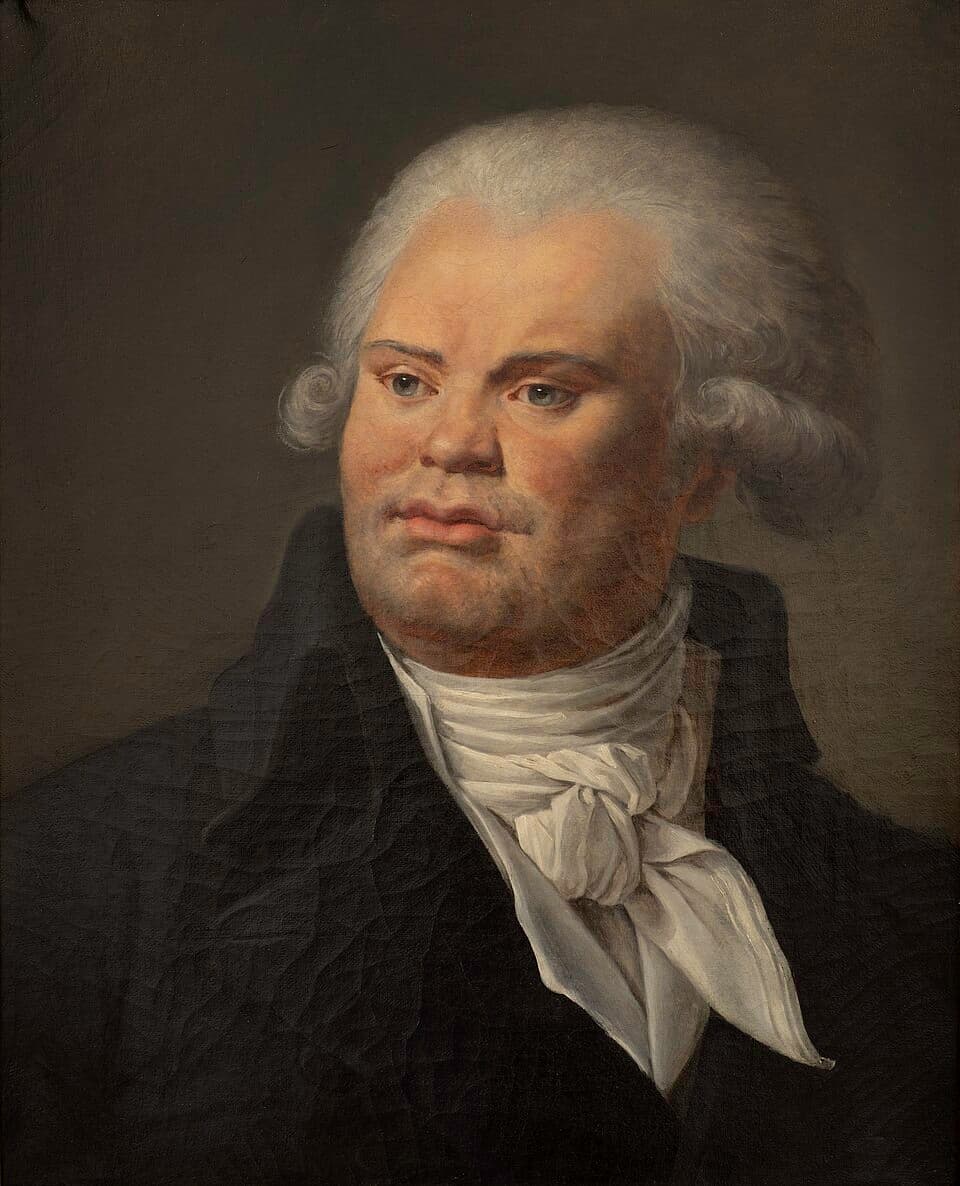
Paris, late winter 1794. In an apartment on the Cour du Commerce-Saint-André, where the fire still crackles, a massive man with a scarred face receives us between two sessions of the Convention. Georges Danton speaks loudly, laughs loudly, and already knows, perhaps, that the machine he helped build is closing in on him.
—Before the rostrum and the clubs, who was the young man from Arcis-sur-Aube?
I was born in 1759 in Arcis-sur-Aube, in the heart of Champagne, into a lower-middle-class family that never lacked bread or good wine. I kept lands there, a house where I return to breathe when Paris suffocates me, where the river and the vineyards are worth more than all the speeches. Then came 1780, and the law called me to Paris; I bought a position as a lawyer at the King's Councils in 1787. But make no mistake: beneath the black robe, I remained a man of the earth, who loves to feel the ground under his boots. They reproach me for my peasant appetite. So be it. A solid belly nourishes a solid voice.
Beneath the black robe, I remained a man of the earth.
—Your face struck all your contemporaries. How did you become this man with the physique of a storm?
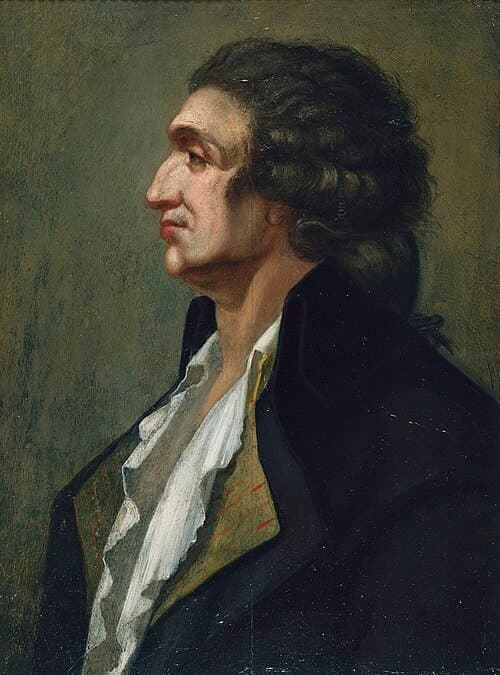
My face is a battlefield where I never fought willingly. As a child, a bull gored me, pigs trampled me, and I nearly drowned; all that remains are scars that make the delicate recoil. My adversaries find cause for laughter, they paint me as a monster of the rostrum. Let them laugh. A man whose face already tells of three battles is no longer afraid to fight a fourth. When I mount the rostrum of the Convention, it's not a smooth talker you hear, it's a build, a mug, a voice that comes from the guts. The Revolution had no use for powdered faces; it wanted men capable of shouting without blushing.
My face is a battlefield where I never fought willingly.
—September 1792: the Prussians march on Paris. What remains of that moment for you?
On September 2, 1792, fear ran through the streets like a fire. Verdun had fallen, the enemy was approaching, and many in the Assembly were already thinking of fleeing south. I, Minister of Justice since August 10, mounted the Salle du Manège and hurled in everyone's face: 'We must have audacity, still more audacity, always audacity, and France is saved!' These are not drawing-room words. They are a marching order. The entire nation had to rise, take up the pike and the musket, make every citizen a soldier. The levée en masse was not born from a cold decree: it was born from that cry, in that hall where you could already smell the gunpowder.
These are not drawing-room words. They are a marching order.
—A few weeks later, Valmy. What meaning did you give to this victory?
Valmy, in that same month of September, was less a great battle than a great refusal: our armies of sans-culottes and volunteers did not retreat before the Prussians, and that was enough to change the course of events. The next day, the Republic was proclaimed. Understand this: such a thing had never been seen, an entire nation standing up, without a king, defending not a throne but an idea. My speech of audacity found its answer on the field. I always thought the Revolution would not be saved by fine principles alone, but by cannon and the courage of ordinary men. Valmy proved it to me: fear changes sides as soon as a people decides to stop fleeing.
—In March 1793, you pushed for the creation of the Revolutionary Tribunal. Why this fearsome institution?
On March 10, 1793, war pressed us from all sides, the Vendée was ablaze, and the September massacres still weighed on our consciences. I wanted a tribunal so that the justice of the Republic would no longer be rendered by the street and the pike, but by a Revolutionary Tribunal, however imperfect. I said it bluntly: 'Let us be terrible so that the people need not be.' Better an organized terror, framed by judges, than a blind terror left to the mob. I then believed I was channeling the torrent. I did not yet imagine that this dike I was building with my own hands would one day serve to drown me myself.
I did not imagine that this dike would one day serve to drown me myself.
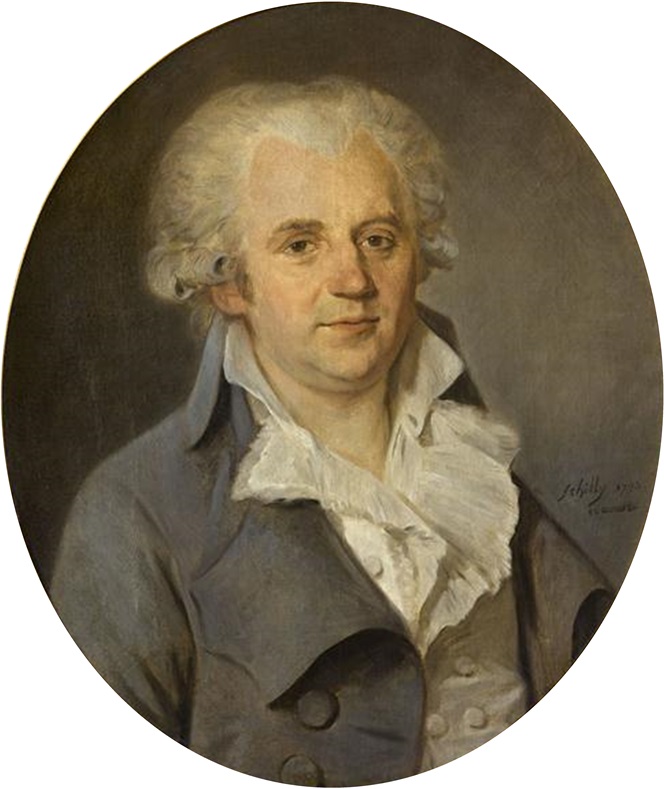
—This same institution turned against you in April 1794. How do you experience this irony?
What a lesson, isn't it, to be dragged before the Revolutionary Tribunal that I brought into the world! I presided over the first Committee of Public Safety in April 1793, I voted for the king's death, I armed the Republic — and here I am accused in my turn, locked up in the Conciergerie. The instrument I forged to strike the enemies of the fatherland now strikes its own founders. That is the fate of revolutions: they devour those who nourish them. Robespierre and his ilk removed me from the Committee as early as summer, and the rest was only a matter of time. I do not weep for myself; I only marvel that they so quickly forgot to whom they owe this terrible machine.
That is the fate of revolutions: they devour those who nourish them.
—In the winter of 1793, you demanded clemency. What drove you to that?
As heads kept falling, I felt that the Terror was no longer feeding on enemies but on itself. That winter of 1793-1794, with my old comrade Camille Desmoulins, I took the lead of those called the Indulgents. We were not asking for treason; we asked that the prisons be reopened to the innocent, that severity no longer be confused with slaughter. I had wanted a tribunal to spare the people from bloodshed without measure — not to guillotine in assembly-line fashion. A citizen has the right to live, damn it, even when the fatherland is in danger. They thought I had gone soft. I was simply weary of seeing the Revolution devour the hand that had armed it.
—Desmoulins's newspaper, Le Vieux Cordelier, was your mouthpiece. What did it represent to you?
Le Vieux Cordelier was the pen of our friendship and our cause. Camille wrote there what I thundered from the rostrum: that it was time to open a committee of clemency, to give liberty back some of its human face. We had started together at the Club des Cordeliers, in that old convent where I was an orator before becoming minister; it was fitting that we should finish the same struggle. His gazette dared to say aloud what many thought in whispers, and that is why it was found so dangerous. You do not bring down a newspaper, you bring down those who write it and those who inspire it. Camille will mount the same tumbril as I; our friendships, like our audacities, are paid at the same price.
Our friendships, like our audacities, are paid at the same price.
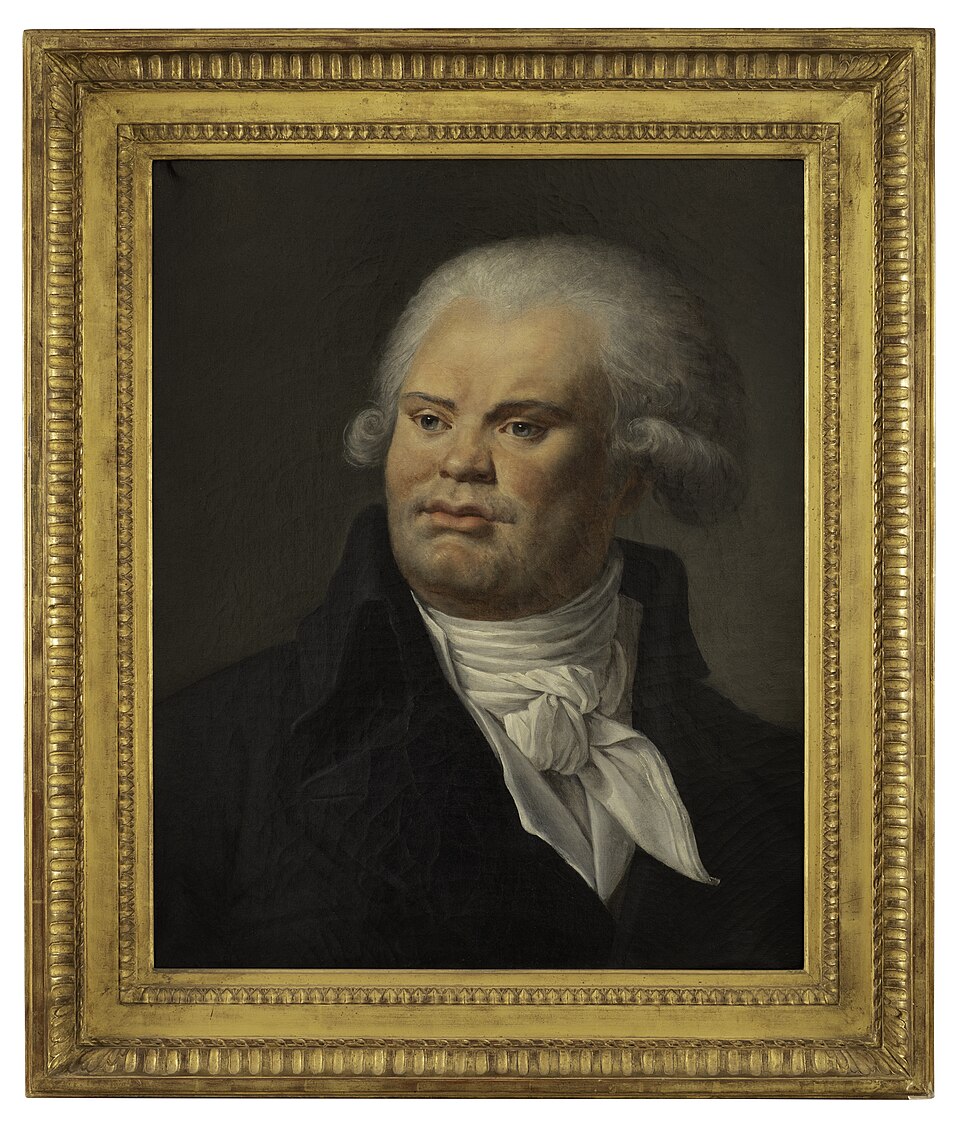
—They say your evenings were worth your speeches. What were these suppers at the Palais-Royal like?
Ah, my suppers! In the evening, when the Convention had exhausted its bile, I gathered my friends — Camille Desmoulins, Fabre d'Églantine — in the cafés of the Palais-Royal or at my home, Cour du Commerce-Saint-André. Roasted meats, pâtés, cheeses were served, and the Champagne wine from my region flowed without counting. My enemies see proof of my corruption; I see the table of living men. You don't build a Republic with green-faced ascetics. Between laughs, we plotted the next day's strategy, weighed the forces of the Montagnards and the Girondins. A man who knows how to enjoy life also knows why he risks it. Robespierre dined alone; see where clear water leads.
—During your trial, your voice carried, it is said, to the quays. What were you trying to say?
Before the Revolutionary Tribunal, in April 1794, I had only my voice as a weapon, and I hurled it like a last charge. I flung at them: 'I am Danton, well known in the Revolution. I am thirty-four years old. My dwelling will soon be nothingness, but my name will live in the Pantheon of history.' They say I was heard as far as the quays of the Seine. This frightened them so much that they had to pass a decree to silence me — because an accused who defends himself too well becomes a judge. They condemned me by gagging me. What justice is that which fears the words of the man it wants to kill!
An accused who defends himself too well becomes a judge.
—On the tumbril that takes you to the scaffold, what remains to be said?
On April 5, 1794, the tumbril carries me to the Place de la Révolution, through a crowd I have so often stirred. I do not tremble: a man gored by a bull in childhood will not pale before a blade. To the executioner Sanson, I will say to show my head to the people — 'it is worth it' — because this battered face, so often mocked, deserves a last look. Camille will fall beside me, and all the Indulgents with us. I leave without repentance: I gave audacity to France when she lacked it. If my head rolls today, it is because it dared to the end. Let them remember that.
A man gored by a bull in childhood will not pale before a blade.
Read further
This imaginary interview was generated by artificial intelligence from sources documented in Danton's profile. It dramatises what the figure might have said based on what we know about them, but does not constitute attested historical testimony. For primary sources and factual documentation, refer to the full profile.