Kids interview Danton
by Charactorium · Danton (1759 — 1794) · Politics · 5 min read
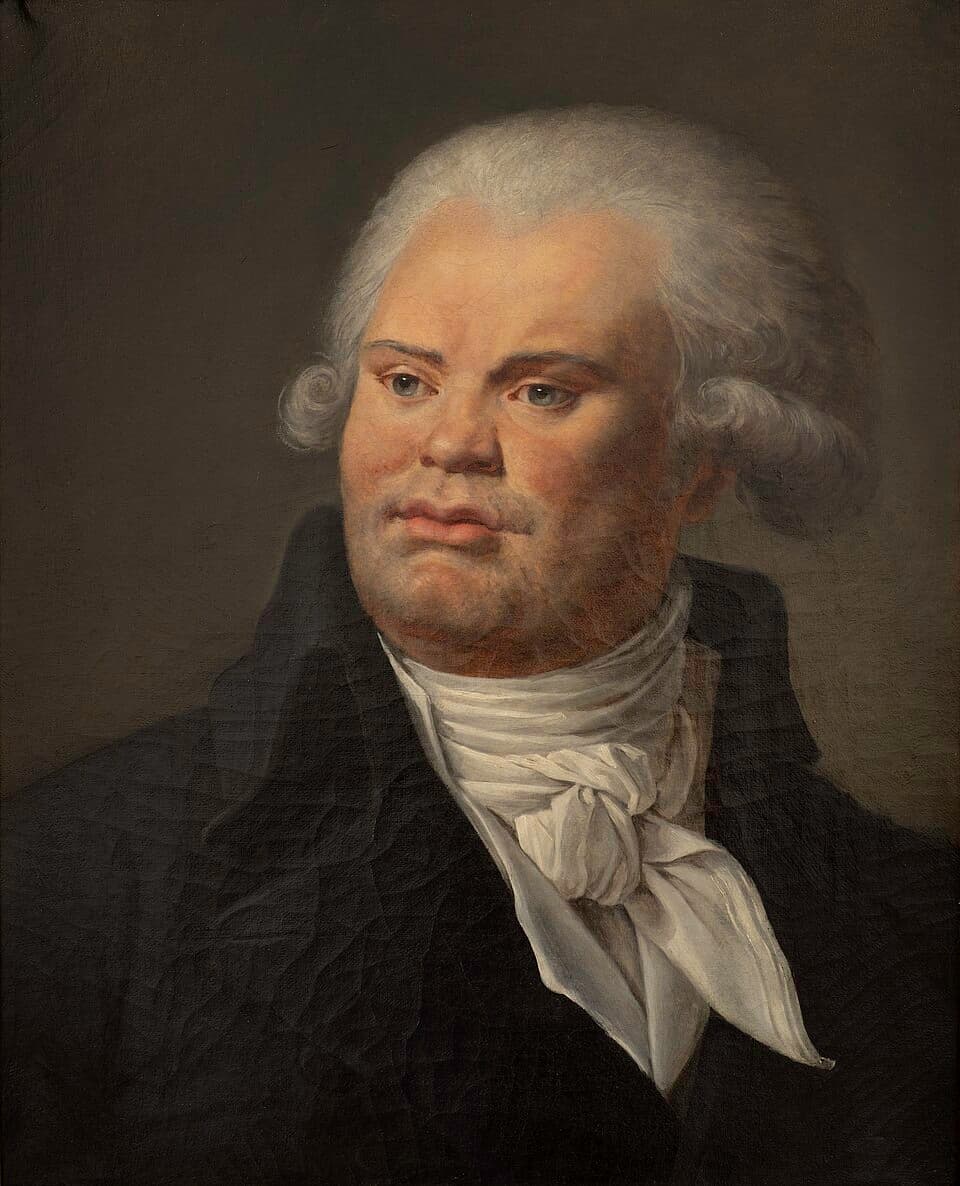
That morning, two students from a discovery class pushed open the door of an old room full of murmurs. A man with a marked face waited for them, his voice deep and warm. "Come closer, my little ones, don't be afraid of this battered head."
—Why was your face so damaged? It's a bit scary when we see you.
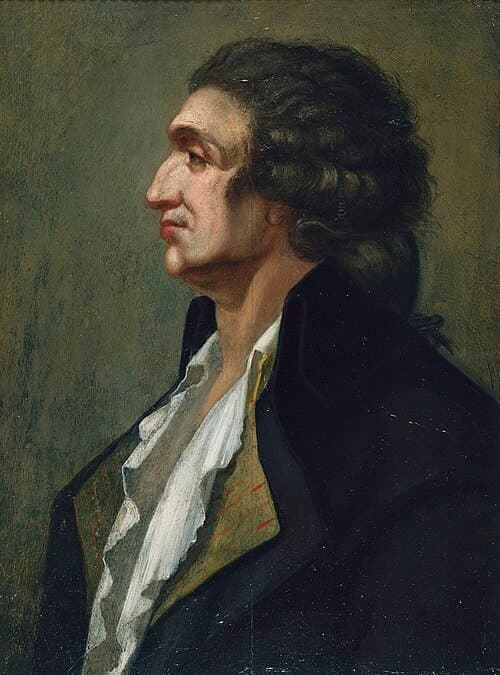
You're right to notice, my child, and it doesn't bother me. When I was very small, in Arcis-sur-Aube, I had a brutal childhood. Imagine a country boy, in the midst of animals. A bull gored my face. Later, pigs trampled me. And I even nearly drowned once. My face kept all those scars. My enemies mocked me, they said I was as ugly as a monster. But you know what? I learned to use it. When I climbed to the rostrum and roared, that broken face made the hall tremble. My ugliness became my strength.
My ugliness became my strength.
—You were a lawyer before the Revolution. How did you become a leader?
Yes, I had bought a position as a lawyer to the King's Councils in 1787. A fine black robe, files, trials. But imagine the city catching fire all around. When the Bastille fell in 1789, I lived in a Paris neighborhood called the Cordeliers. It was an old convent where common people gathered to talk politics. I had a loud voice that carried far. So I stepped up, I spoke, I shouted what others thought in whispers. Very quickly, people listened to me. I was no longer the lawyer of the rich: I became the orator of the district. That's how you become a leader, my child. You don't decide it. People push you forward.
—And one day you became a minister. What was your job?
On August 10, 1792, the people attacked the king's palace. The monarchy fell. I was appointed Minister of Justice. Imagine, my child: the son of Arcis-sur-Aube received the great seal of the Republic! That seal was a big stamp pressed into wax to sign laws in the name of all French people. It was a tremendous honor and a terrible burden. France was invaded, fear everywhere in the streets of Paris. A minister is not a man who rests. He is a man who no longer sleeps. Every decision could save or lose lives. I held the seal in one hand and the country on my shoulders.
—Is it true that you said 'boldness'? What exactly does it mean?
Yes, it's true, and it's probably my most famous phrase. It was September 2, 1792. The Prussian armies were marching on Paris, do you hear? Foreign soldiers who wanted to crush France. Everyone was trembling. So I climbed to the rostrum and declared: "We must have boldness, more boldness, always boldness, and France is saved!" Boldness, my child, is the courage to dare when you are afraid. I couldn't give guns to everyone. But I could give heart. A nation that dares does not let itself be invaded. A few weeks later, at Valmy, we stopped the Prussians.
Boldness is the courage to dare when you are afraid.
—Were you afraid too when the enemies approached Paris?
Of course I was afraid! Whoever tells you they are never afraid is lying, my child. Imagine an entire city holding its breath. No engines, no noise but the horses' hooves and the soldiers' footsteps. The Prussians had threatened to burn everything if the king was touched. Many wanted to flee. I thought one simple thing: if the leaders flee, the people are lost. So I decided to stay and speak loudly, precisely because I was afraid. I transformed my fear into energy to give to others. After Valmy, we proclaimed the Republic. That day, I understood that courage is shared like bread.
Courage is shared like bread.
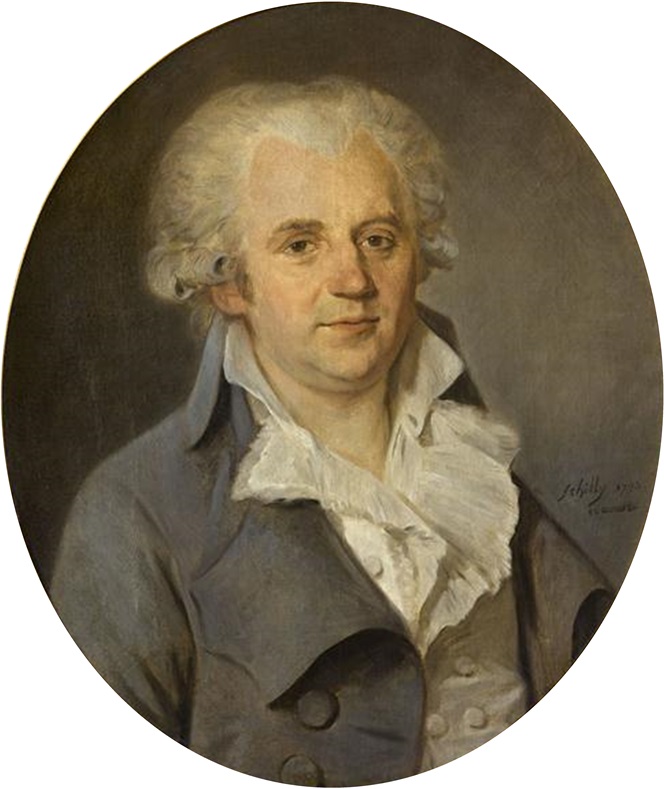
—I heard you created a tribunal that later killed you. Is that true?
Alas, it is entirely true, and it is the great irony of my life. On March 10, 1793, I helped create the Revolutionary Tribunal. It was a special court to judge enemies of the Republic, in wartime. I even said we must be terrible to prevent the people from taking revenge themselves in the streets. You see, I wanted justice rather than massacres. But imagine a tool you make to protect yourself, and one day it turns against you. A year later, that same tribunal condemned me to death. I had built the machine that would crush me. That is why you must think before creating powerful things.
I built the machine that would crush me.
—At your trial, is it true they prevented you from speaking? That's not fair!
You have a great sense of justice, and you are right to be outraged. At my trial, in April 1794, I defended myself with all my strength. I had that enormous voice, remember? They say it carried all the way to the banks of the Seine! The judges grew afraid. They saw the crowd beginning to listen to me, to doubt. So they quickly passed a special law to silence me. Imagine: you are condemned, but forbidden to defend yourself to the end. It wasn't fair, no. But it proved one thing: they feared my words more than my sword.
They feared my words more than my sword.
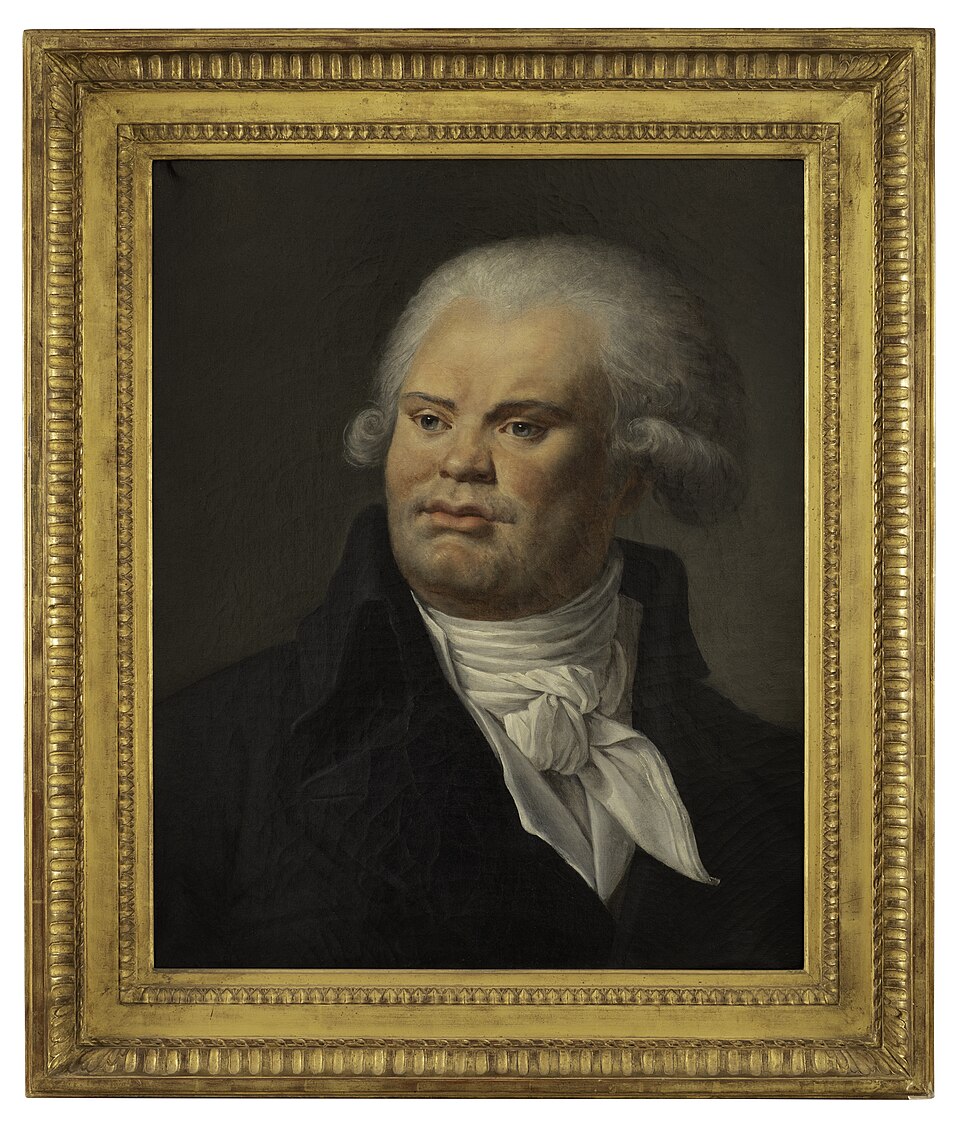
—You wanted to stop the Terror. What was the Terror really like?
The Terror, my child, was a time when heads were chopped off almost every day to defend the Republic. At first, I accepted the harshness, because the country was in danger. But at some point, I stopped and said to myself: enough, we kill too much, we kill out of fear. With my friend Camille Desmoulins, we asked for clemency. We were called the Indulgents: those who demand pity and forgiveness. Camille wrote a little newspaper, Le Vieux Cordelier, to say that the prisons should be opened. Imagine two friends shouting 'stop the blood!' amid terrified people. It was courageous, and it cost us our lives.
We killed too much, we killed out of fear.
—Were you friends with Camille Desmoulins? What did you do together in the evening?
Yes, Camille was a very dear friend, almost a restless little brother. In the evenings, after long sessions, I liked to receive my friends or dine near the Palais-Royal. Imagine a large table, roasted meats, cheese, good Champagne wine from my region. I had quite an appetite, you know! We laughed, we discussed France for hours. Camille wrote, got excited, doubted. Those suppers were not just parties: that's where we invented our ideas, where we gave each other courage. And together, on April 5, 1794, we climbed onto the same cart. We lived as friends, we died as friends.
We lived as friends, we died as friends.
—And just before dying, did you really say something to the executioner?
Yes, my child, and I will tell you softly. On April 5, 1794, I was taken on the cart to the Place de la Révolution, where so many heads fell. The executioner was named Sanson. I no longer had my friends, my voice in court, nothing. But I still had my pride and my courage. So I said to him: "You will show my head to the people, it is worth it." You see this head battered by bulls and pigs? Even in the last moment, I wanted it to be looked at without shame. This is what I leave you, you and your classmate: they can take everything from you, never your dignity.
They can take everything from you, never your dignity.
Read further
This imaginary interview was generated by artificial intelligence from sources documented in Danton's profile. It dramatises what the figure might have said based on what we know about them, but does not constitute attested historical testimony. For primary sources and factual documentation, refer to the full profile.