Kids interview Daedalus and Icarus
by Charactorium · Daedalus and Icarus · Mythology · 5 min read
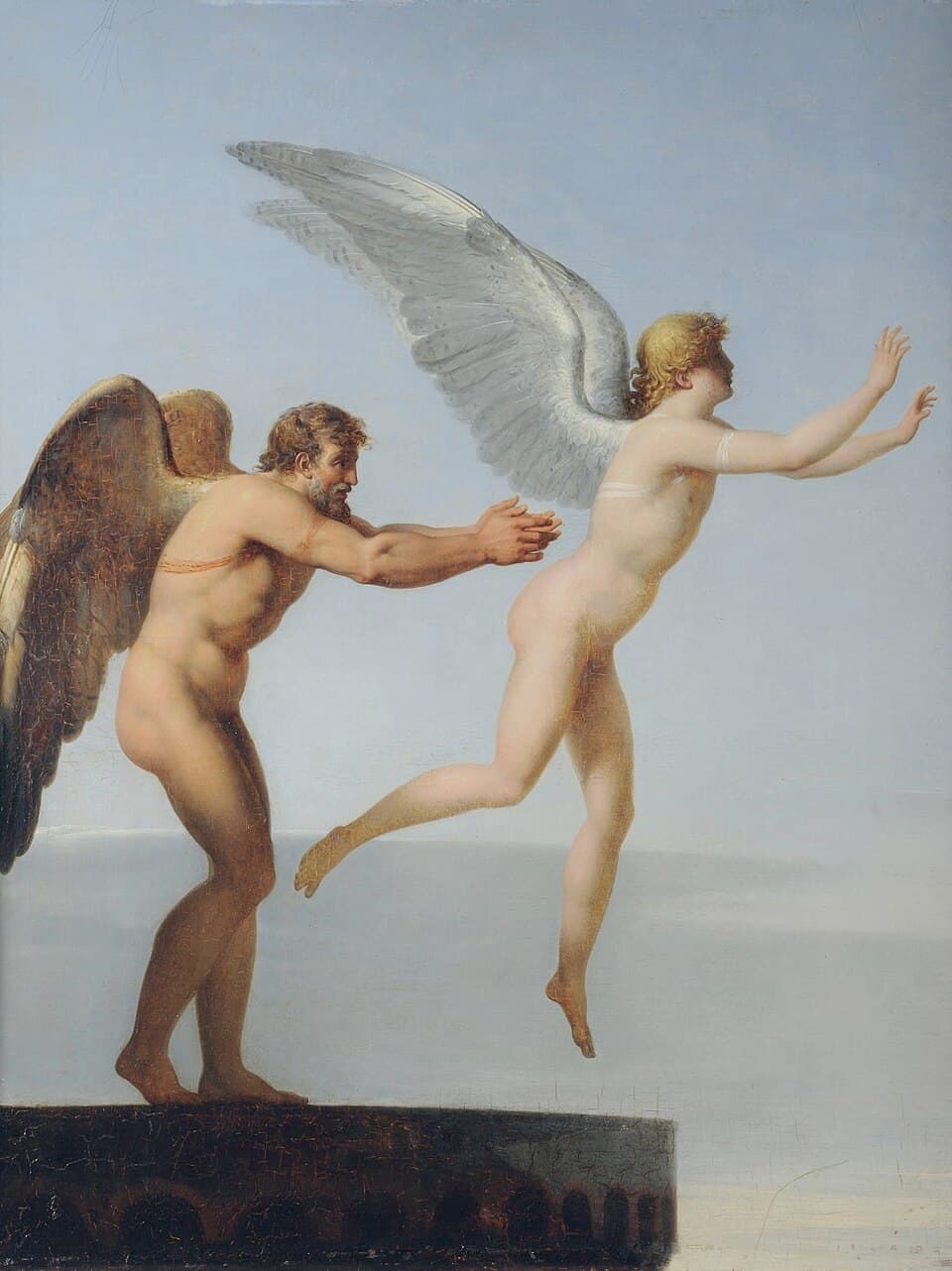
Two twelve-year-old visitors, on a school trip, pushed open the door of an old workshop full of wood dust. There, bent over his tools, a weary-eyed craftsman was waiting for them. It was Daedalus, the builder of the Labyrinth, the father of Icarus. He beckons them closer.
—What exactly is the Labyrinth you built?
Come closer, my child, I'll explain. King Minos of Crete asked me for a prison without bars. A prison made of corridors. Imagine a house with a thousand corridors that cross, turn, all look alike. You enter, you walk, and you never find the exit. That's a Labyrinth. I built it to imprison the Minotaur, a creature half-man, half-bull. And you know the funniest thing? My work was so perfect that I myself, its creator, almost got lost in it. I had trapped the monster, but I had also trapped my own mind a little.
I had built a prison so perfect that even I couldn't get out.
—They say you made statues that moved. Is that true?
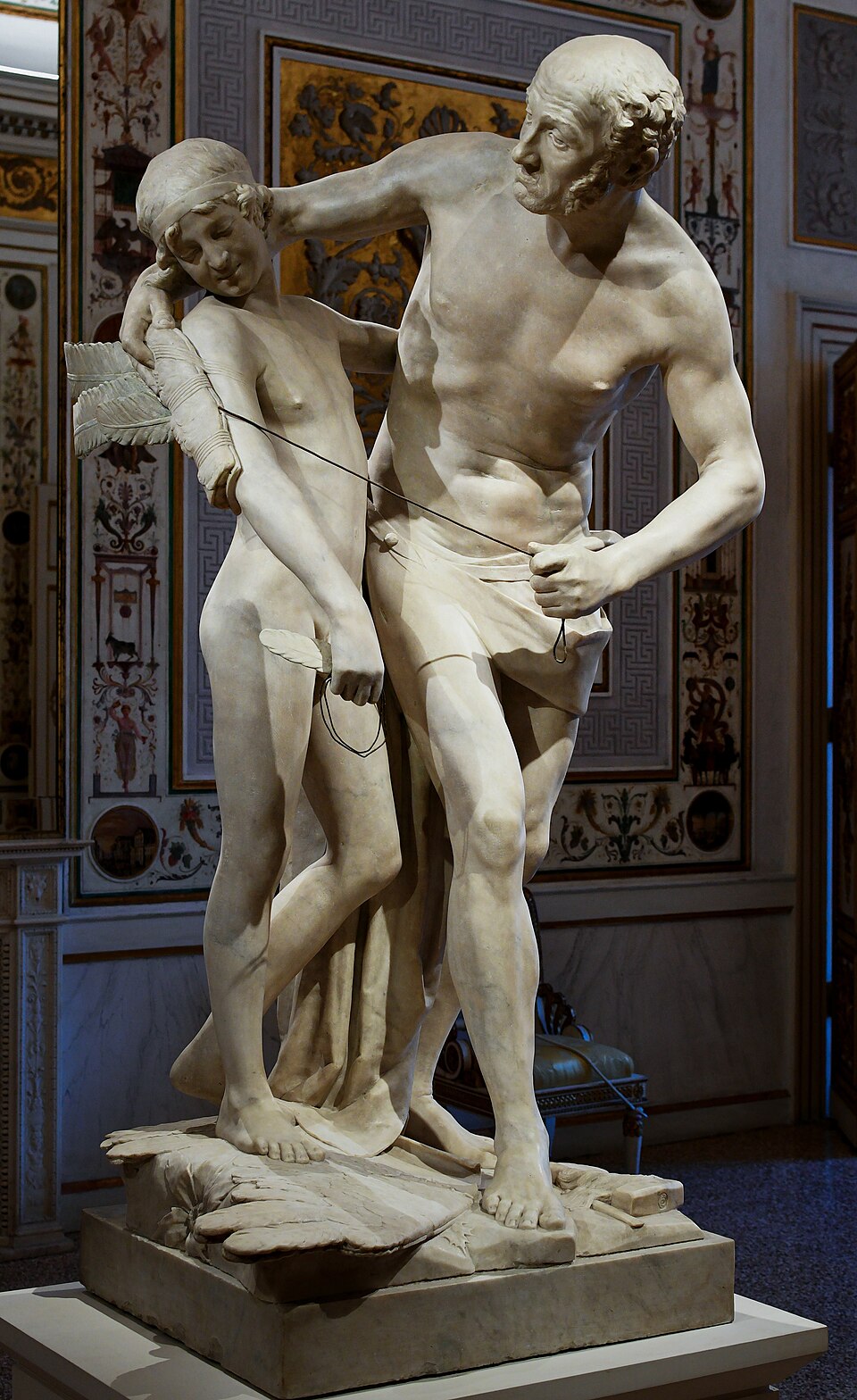
You've heard those stories? They're true. In my time, they thought I was a bit of a magician. In truth, I was just a very patient craftsman. My tools—the saw, the compass, the hammer—never left me. With them, I carved statues so lifelike that people swore they saw them breathe. In Crete, they said you had to tie them down so they wouldn't run away! Of course, they didn't really walk. But imagine a bronze face so well made you think it's about to speak. Genius, my child, is just a lot of work and a lot of love for detail.
They thought I was a magician; I was just a very patient craftsman.
—Why did you work for King Minos if he imprisoned you?
Ah, that's a tough question, my child. At first, serving a king was an honor. I lived in his palace, I had a workshop, a stone roof, barley bread and cheese every morning. But a king can be your friend in the morning and your jailer by evening. I had helped Queen Pasiphaë in an affair that greatly displeased Minos. So he punished me: he locked me and my son Icarus in the Labyrinth I had built with my own hands. You see, it's sad: my greatest masterpiece became my cage.
A king can be your friend in the morning and your jailer by evening.
—How did you get the idea to make wings to escape?
Listen closely. Minos watched the whole sea. No ship could leave Crete without his knowledge. I was a prisoner on an entire island. Then, one morning, I watched the birds pass over the Labyrinth. An idea came to me, simple and crazy. As the poet Ovid wrote: 'Minos may close all roads, but he cannot close the air.' So I gathered feathers, from the largest to the smallest. I assembled them with beeswax, that soft substance that hardens. I made two pairs of wings. Freedom, my child, was above our heads.
Minos could close all roads, but he could not close the air.
—Were you afraid when you jumped into the void with your wings?
Very afraid, yes. Imagine yourself standing on a cliff, arms laden with feathers, the sea below crashing against the rocks. My heart beat like a drum. Before leaving, I took Icarus by the shoulders. I gave him one piece of advice, the most important of my life. 'Don't fly too low,' I told him, 'the sea's moisture will weigh down your feathers. And don't fly too high, the sun's heat will melt the wax.' Stay in the middle, always in the middle. Then we jumped. And for one wonderful moment, we flew side by side, like two birds.
Stay in the middle, my son, always in the middle.
—What happened to Icarus up there in the sky?
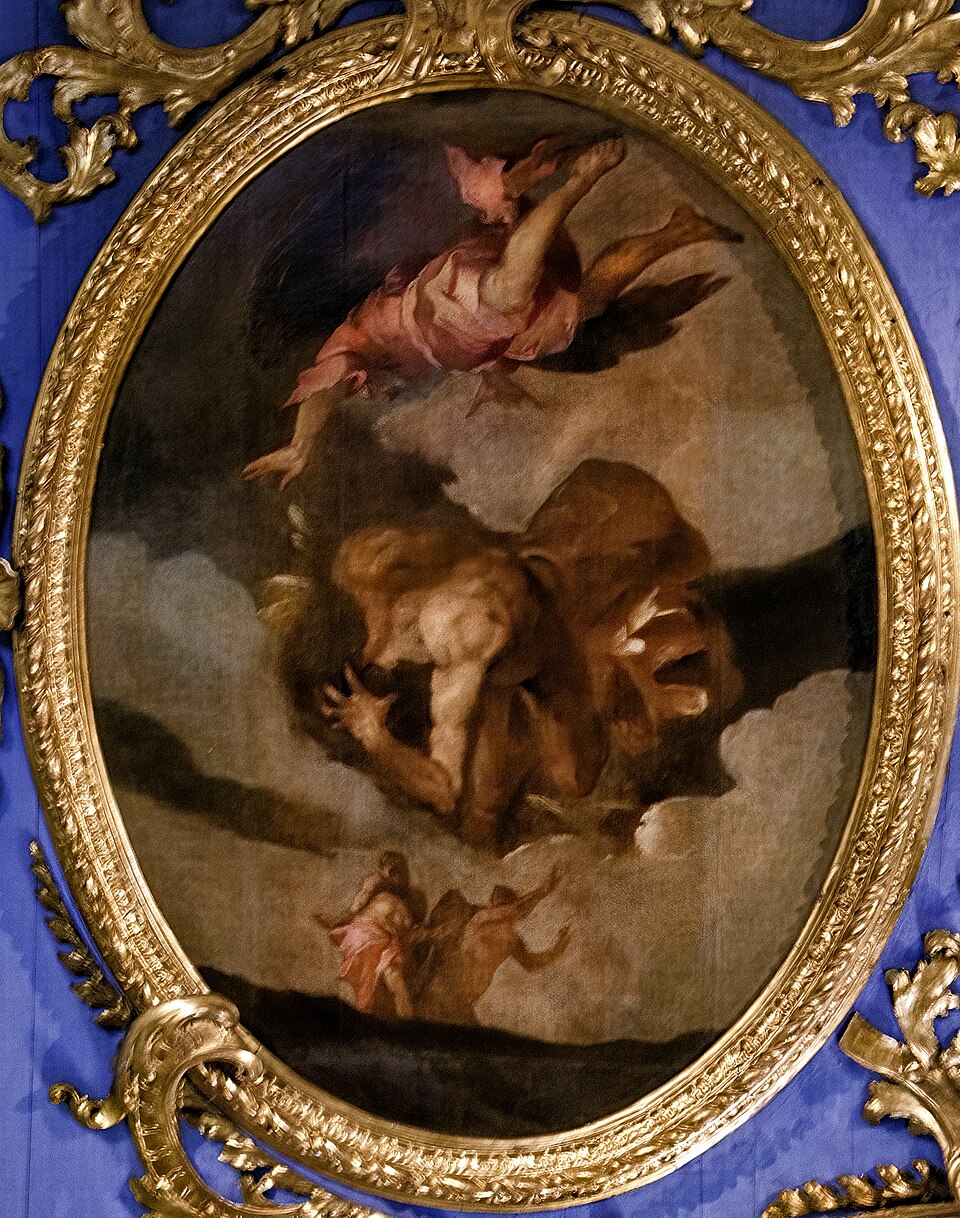
That's the hardest part to tell, my child. Forgive me if my voice trembles. At first, Icarus was as scared as I was. Then flying went to his head. He laughed, he climbed, he played with the wind. He forgot my words. He climbed, climbed, ever closer to the sun. And the wax began to melt. Drop by drop, the feathers came loose. He flailed his arms in the void, but there were no more wings. He fell into the Aegean Sea. Since that day, they call that place the Icarian Sea. The sea bears my child's name.
Flying went to his head, and he forgot his father's words.
—Why did Icarus disobey when you had warned him?
You know, I've asked myself that question every day since. Icarus wasn't a bad boy. He was young. And flying is so intoxicating that you think you're stronger than everything. The Greeks have a word for that: hubris. It's the pride that makes you forget you're only human. When you think you're the sun's equal, the sun reminds you. It's not really disobedience, my child. It's the intoxication of feeling free. But a father will always tell you: the strongest wings are worthless if you forget you can fall.
When you think you're the sun's equal, the sun reminds you.
—Why do people still tell your story after all this time?
Because it's about you too, my child. About each of us. The wise Greeks, much later, like the philosopher Plato, used my story to teach a lesson. Flying is wonderful. Inventing, dreaming, pushing your limits—that's what makes man great. But you must know where to stop. My son wanted to touch the sky, and he lost everything. This isn't a story against dreams. It's a story that says: dream, yes, but keep your eyes open. Wax melts. Wings break. Courage is flying anyway, but with caution.
Dream, yes, but always keep your eyes open.
—What did you do after your son's death?
I kept flying, alone, with a broken heart. It's terrible to outlive your child. I landed far from Crete, in Sicily, at the court of a king named Cocalus. There, they loved my inventions, my statues, my machines. They protected me, they fed me. But grief never left me. Imagine a man who succeeded at everything with his hands—the Labyrinth, the wings, the automatons—and couldn't save the only thing that mattered: his son. All my skill was useless that day. That is my greatest pain.
I had succeeded at everything with my hands, except saving my son.
—Did King Minos find you in Sicily?
He pursued me to the end, yes! Minos was as stubborn as a bull. He wanted to drag me back by force. He arrived in Sicily on his ships. But King Cocalus had very cunning daughters who adored my creations. They didn't want me to leave. So they set a trap. While Minos was taking a bath to rest, they poured boiling water. And the great king of Crete, the one who had imprisoned me, died scalded in his tub. Fate, my child, always catches up with those who think they are all-powerful.
Fate always catches up with those who think they are all-powerful.
—What were your days like in the workshop?
Simple and beautiful, my child. I rose at dawn. The first thing I did was examine my tools, one by one, like greeting old friends. The air smelled of wood dust and hot metal. Icarus, still small, came along to learn. In the afternoon, we worked hard, without speaking, just the sound of hammers. In the evening, we ate barley bread, olives, a little fish, and wine cut with water for me. Then I passed on my knowledge before sleeping. Those were my finest days. A workshop, a son learning: what more could you ask for?
A workshop, a son learning: what more could you ask for?
This imaginary interview was generated by artificial intelligence from sources documented in Daedalus and Icarus's profile. It dramatises what the figure might have said based on what we know about them, but does not constitute attested historical testimony. For primary sources and factual documentation, refer to the full profile.