Kids interview Diane Nash
by Charactorium · Diane Nash (1938 — ?) · Society · Politics · 5 min read
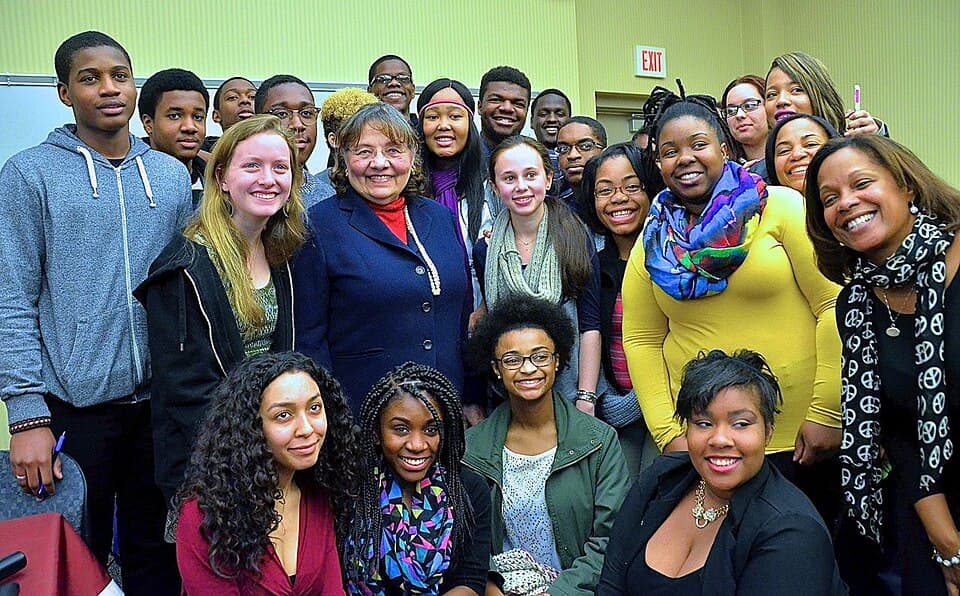
That morning, two fifth-graders on a field trip push open the door to a quiet room. A woman is waiting for them, smiling, her hands resting on the table. Long ago, she organized the first Nashville sit-ins. The children sit down, a little intimidated, and begin to ask their questions.
—Where did you grow up when you were little like us?
I grew up in Chicago, in the North. A quiet, Catholic, fairly well-off neighborhood. You know, at home, we didn't talk much about skin color. I played, I went to school, I dreamed of simple things. Imagine a little girl who thinks the world is pretty much fair everywhere. That was me. No one had told me that a few hours away by train, in the South, a water fountain could bear the sign Colored. I was completely unaware. That sheltered childhood is important: it made the later shock even stronger. You never rebel as well as when you suddenly discover an injustice you had never seen.
You rebel best when you suddenly discover what you had never seen.
—And what was the moment when you realized it was unfair?
I was twenty. I had arrived at Fisk University in Nashville in 1959, almost by chance, for a beauty pageant. And there, everything hit me in the face. Restrooms marked White Only. Fountains marked Colored. Two worlds separated by a word painted on a wall. Imagine not being able to drink from the same fountain as your classmate, just because of your skin. I felt sick to my stomach. I told myself: this is not normal, and I can't pretend not to see it. That day, the girl who wanted a quiet life disappeared. Another was born, determined to remain silent no more.
Two worlds separated by a single word painted on a wall.
—What was a sit-in? How did it work?
A sit-in is very simple, and that's why it's powerful. In the South, department store lunch counters served food — but not to Black people. So we sat down anyway on those stools, politely, well-dressed, and refused to leave. We waited to be served. Imagine sitting calmly and not moving, even if you're insulted. In Nashville in 1960, I organized dozens of students at the Woolworth counter. We rotated, group after group, day after day. In less than three months, the restaurants gave in. Sitting still, without shouting, without hitting: that was our strongest weapon.
Sitting still, without shouting, without hitting: that was our strongest weapon.
—Is it true that you made the mayor say 'yes' in front of everyone?
Yes, and it's one of my fondest memories. There were hundreds of us, in April 1960, marching toward Nashville City Hall. The mayor, Ben West, came out to speak to us. So I asked him a single question, very simple, looking him straight in the eye: did he personally think that segregation in restaurants was unfair? There was a silence. And he answered 'yes'. A Southern mayor, in front of the crowd! The next day, the counters opened to everyone. You see, sometimes you don't need armies. You need an honest question asked at the right moment, forcing someone to face their conscience.
Sometimes you don't need armies, just an honest question at the right moment.
—But how do you learn not to defend yourself when you're hit?
It's learned, my child, and believe me, it's very hard. Before each action, I made the students rehearse. Some played the racists: they shouted insults, spilled food, shoved, sometimes even hit their comrades. And the others had to stay seated, dignified, without responding. Again and again. Imagine being yelled at and having to keep your hands on your knees, your gaze calm. It was a training of body and heart. I relied on the Bible and on the ideas of Gandhi, who said that you can resist without ever raising your hand. The one who hits shows his weakness. The one who stays calm shows his strength.
The one who hits shows his weakness; the one who stays calm shows his strength.
—For you, was nonviolence just a trick to win?
No, and it's very important that you understand that. For me, it wasn't a gimmick, a calculation. It was a whole way of life. I said it one day before American senators: 'Nonviolence is not a tactic, it's a way of life.' That means you refuse hatred even in your heart, even toward the one who hurts you. Imagine deciding never to strike back, not with your fists, not even with mean words. It's a demanding path. But I believe you don't build a just world with the weapons of injustice. You build it with quiet courage.
You don't build a just world with the weapons of injustice.
—What were the Freedom Rides, and why did you want to continue?
The Freedom Rides were bus trips through the South, with Black and white people sitting together, to prove we had the right. In 1961, in Alabama, activists were beaten, and a bus was set on fire. Everyone said: stop, it's too dangerous. I was 23 years old. I said no. Because if we stopped out of fear, we would be proving violence right. We would be teaching it that it works. So I organized a second wave of riders, all the way to New Orleans. Imagine having to tell friends: go, even if you risk everything. It was terrible. But backing down would have killed the movement far more surely.
If we stop because of fear, we teach violence that it wins.
—Weren't you afraid for them and for yourself?
Of course I was. Fear never really left me. Sending young people onto those Greyhound buses, knowing some could be hurt, or worse, was the heaviest burden of my life. I wrote everything down in my notebooks: who was leaving, at what time, which lawyers to call if they were arrested. I organized like preparing for a battle, but without weapons. You know, courage isn't not having fear. It's being very afraid and moving forward anyway, because what you're defending is bigger than you. Every time a bus left, my heart went with it.
Courage isn't not having fear; it's moving forward anyway.
—Is it true that they put you in prison when you were about to have a baby?
Yes. In 1961, I was expecting my first child. I was arrested in Mississippi, in Jackson, because I was teaching young Black people to disobey unjust laws. I was sentenced to two years. And then, they offered to let me pay a fine to go free. I refused. Because paying would be saying: 'Okay, your law is just.' But it wasn't. I chose prison. I told the court that I did not want my child to be born in a country where being Black was treated as a crime. Imagine choosing a cell over freedom, out of faithfulness to what you believe. That was my fight.
Paying the fine would be saying their unjust law was just. I refused.
—And you wrote a letter to the head of the state, didn't you?
Yes, I wrote to the governor of Mississippi, Ross Barnett, in 1962. I wanted him to understand that I was not lost or crazy. I explained that I chose to serve my sentence, without paying, without appealing. Not out of stubbornness, but out of conviction. You see, when they accused us of being thugs, a calm, clear letter said the opposite: we acted according to our conscience. Writing to the one in power, with respect but without bending, is also a form of resistance. Paper and ink can sometimes stand up to those who command prisons.
A calm letter can stand up to the one who commands prisons.
—If we want to change something unfair today, what would you tell us?
I would tell you: start small, but start. In Nashville, we didn't change the country in a day. We sat at one lunch counter, just one, and refused to leave. Then others joined us. One day I told a historian: Nashville taught us that we could change things. It's true. All it takes is enough determined people in the same place, and something eventually gives. You are young, as I was. Never believe you are too small to matter. Look around you at what is unfair. And ask, too, the right question at the right moment.
Never believe you are too small to matter.
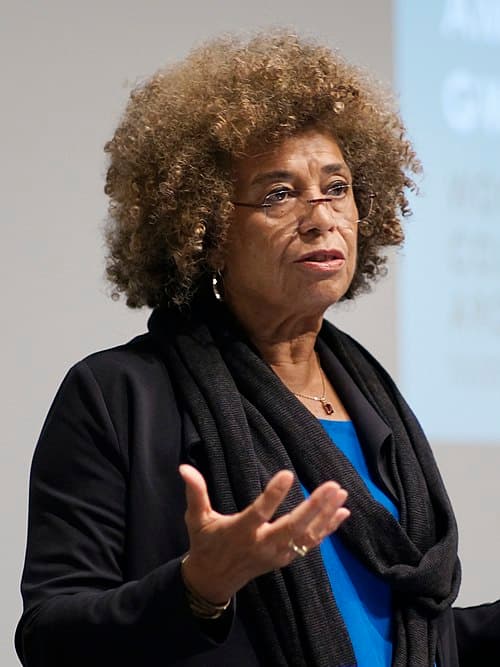
This imaginary interview was generated by artificial intelligence from sources documented in Diane Nash's profile. It dramatises what the figure might have said based on what we know about them, but does not constitute attested historical testimony. For primary sources and factual documentation, refer to the full profile.