Imaginary interview with Dorothy Day
by Charactorium · Dorothy Day (1897 — 1980) · Society · Spirituality · 6 min read

Late afternoon at 55 East Third Street, at Maryhouse, in the Lower East Side. An old woman in a dark dress, a shawl on her shoulders, heats water for tea while, behind the door, the line of the homeless is already growing. Dorothy Day sits near the window, a rosary between her fingers, and agrees to look back on sixty years of newspapers, prisons, and soup kitchens.
—Before the faith, there was Greenwich Village. How did this young woman from the bohemian cafés become a Catholic?
I was one of those nights in Greenwich Village where we remade the world between drinks, and where Eugene O'Neill recited The Hound of Heaven by heart, that hound of Heaven that pursues the soul relentlessly. I thought I was elusive. Then my daughter Tamar was born, in 1926, in my little beach house on Staten Island, and a joy overwhelmed me, too great to be addressed to anyone. That gratitude had to go somewhere. I wanted to have her baptized, then I took the step myself the following year — at the cost of breaking with her father, who could not bear religion. I was told I was betraying the workers. I wrote an entire book to answer that.
That joy was too great to be addressed to anyone — it had to go somewhere.
—That book, From Union Square to Rome, is addressed to your brother. Why this form of a letter to a loved one?
Because a brother is not paid off with fine phrases. In From Union Square to Rome, in 1938, I write for those who, like him, believed that becoming Catholic meant deserting the cause of the poor. I opened the book with this confession: "I write this book because I am a Catholic, and because you believe I have betrayed you, and the cause of the workers, by becoming one." Nothing is more false. I had not left Union Square for Rome as one changes sides; I had returned there with an additional fire. Faith did not pull me out of the ranks of the workers; it planted me there for good, feet in the mud and eyes raised.
—On May 1, 1933, on Union Square, a newspaper sold for a penny was born. What did you want to put in it?
That May day, in the midst of the Great Depression, Peter Maurin and I sold the first issue of The Catholic Worker in the middle of the crowd on Union Square, a penny a copy — a price that has never changed since. I insisted it be cheaper than a communist pamphlet. The editorial said it all: "This little paper is published for those who, sitting on park benches in this cold season, believe that society has forgotten them." I wanted a shivering man on a park bench to know that Catholics were working for him, and not only praying for his soul. A newspaper warms no one. But it can tell a frozen man that he is not alone.
A newspaper warms no one — but it can tell a frozen man that he is not alone.
—Very quickly, the newspaper was no longer enough: the houses of hospitality came. How did it start?
Words call for deeds, otherwise they rot on paper. As early as 1936, our office in the Lower East Side began to overflow: people came to read The Catholic Worker, stayed because they were hungry. So we brought out the big pot, put the soup on to heat, opened the beds. That was it, a house of hospitality: shelter, food, and dignity, without a questionnaire or sermon. Peter spoke of the works of mercy — feeding, clothing, sheltering — not as a theory, but as something to be done that very evening, with what you have. The soup pot is our true altar table. There we serve Christ disguised as a tramp, and above all we must not ask him for his papers.
—Your first arrest dates from 1917, at age twenty, in front of the White House. Do you remember it?
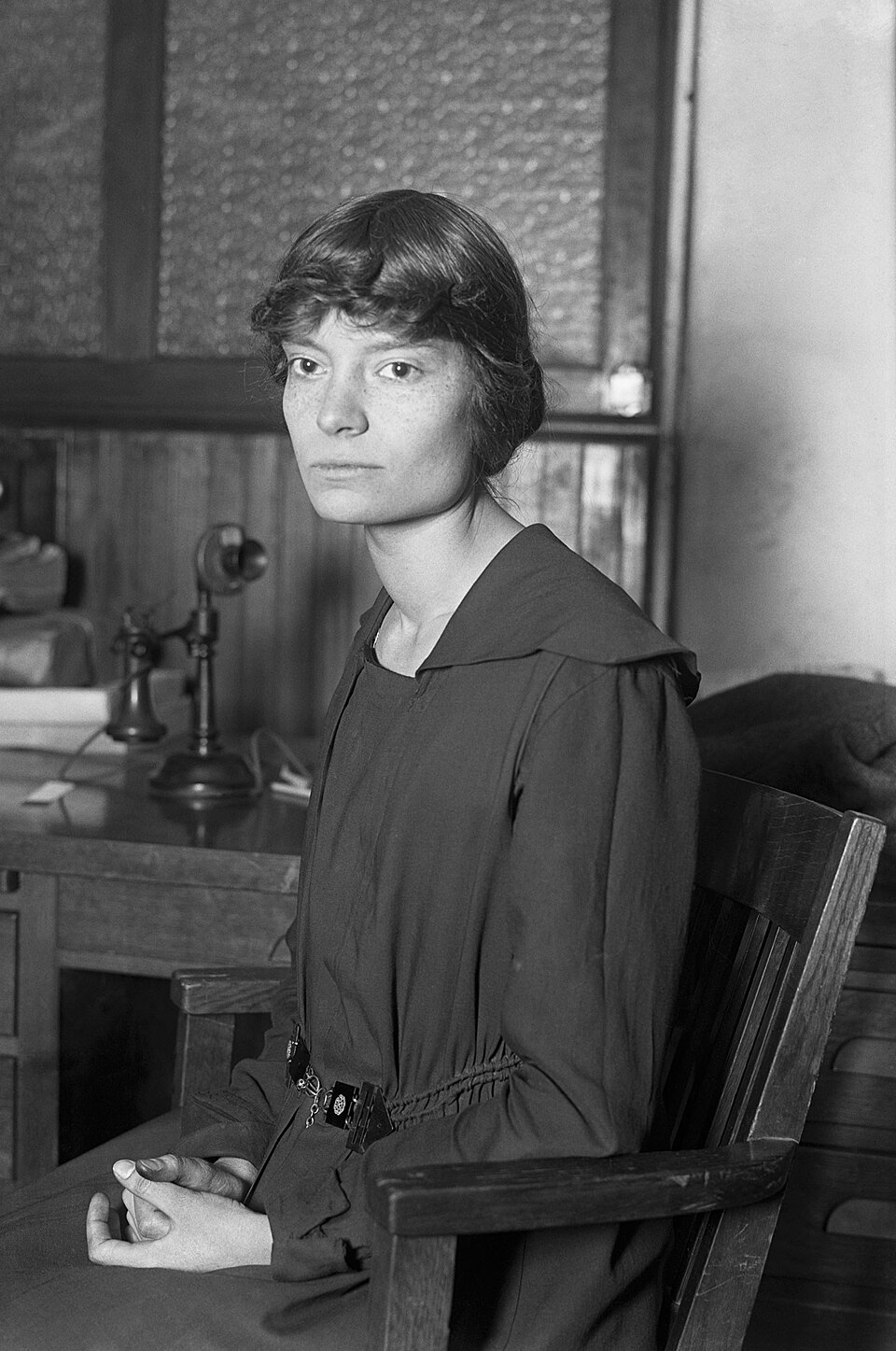
As if it were yesterday. November 1917: I was twenty years old, and I was demonstrating for women's suffrage when they took us away. At Occoquan prison, in Virginia, we demanded the status of political prisoners and refused to eat — my first hunger strike. There I discovered voluntary hunger, the kind one chooses, so different from the kind one suffers. Lying on that cot, I read the Psalms a guard had left me, and I felt united with all the prisoners of the world, the just and the brigands together. I did not know it yet, but that cell was my first lesson: you only understand the poor by sharing, even a little, their confinement.
There I discovered voluntary hunger, so different from the kind one suffers.
—And the last one, in 1973, alongside César Chávez? Fifty-six years separate those two prisons.
In 1973, in California, I was seventy-five years old and I sat down in a field with the farm workers of César Chávez, on strike for a living wage. The police surrounded me; I was photographed there, an old woman on her folding chair in the middle of uniforms. That picture went around the country, and I still laugh about it: it took me growing old and slow for them to finally find me photogenic. Between Occoquan and that grape field, nothing has really changed: there are still men treated like things, and a law that must be gently disobeyed. Civil disobedience is not rebellion. It is faithfulness.
It took me growing old and slow for them to finally find me photogenic.
—Your pacifism cost you dearly, especially when war broke out in 1939. Do you regret that intransigence?
From 1939, when the whole country was preparing for war, I maintained in the newspaper that we would bless no gun. Many readers left us, bishops frowned, and our sales collapsed. But the Gospel knows no patriotic exception: "thou shalt not kill" has no footnote for wartime. I was called naive, dangerous. I preferred to lose subscribers than to lose the Gospel. Later, in the fifties, I refused the civil defense drills, those rehearsals for apocalypse where we pretended to hide from an atomic bomb. I was arrested several times for that. To take shelter from such madness was still to accept it.
"Thou shalt not kill" has no footnote for wartime.
—In 1963, the encyclical Pacem in Terris was published. What did it mean for you, after so many years against the tide?
An immense relief, I admit. For decades, my pacifism had seemed a whim, almost an insubordination to the Church itself. Then, in 1963, Pope John XXIII published Pacem in Terris, and there Rome spoke of peace as I had been struggling to do since Union Square. I did not feel triumph — I do not like that word. I rather felt that the thin thread I had held for thirty years was suddenly connected to something larger than myself. An old activist learns to do without approval. But to hear the Church say aloud what one had whispered in the cold warms as much as a bowl of soup.
—You chose to live poor among the poor, never owning a home. What was an ordinary day like?
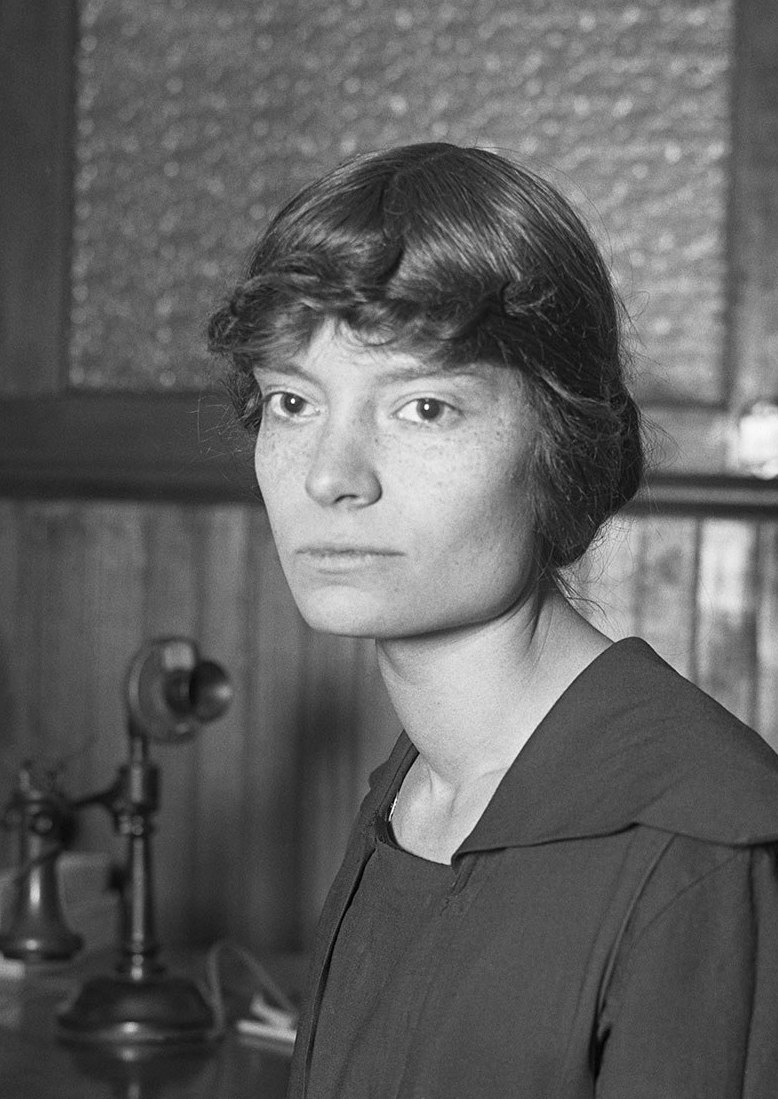
It began before dawn, with Mass and the rosary — without those two, I would not last an hour. The afternoon flew by between writing for The Catholic Worker, welcoming visitors, and the very concrete work of beds and meals. I received in the same room a professor come to debate and a drunk come to sleep, and I assure you it was not always easy to tell which of the two was the more unbearable. In the evening, I read — the Gospel, Dostoevsky, the lives of saints — and answered an endless stream of mail. I never had a house of my own, never any property. My room was a cell in the house of others, and that suited me.
—You are already called "Servant of God." How do you receive the idea that one day you might be made a saint?
For heaven's sake, do not turn me into a plaster statue. Making someone a saint is sometimes a convenient way to put them on a shelf so as not to have to imitate them. My voluntary poverty, my rosary, my soup pot are nothing heroic: they are the ordinary gestures the Gospel asks of anyone. What I have tried to hold all my life is this, which I wrote one day: "the greatest challenge of our time is to implement the means of a revolution of the heart, a revolution that must begin in each of us." A saint would be a woman who has achieved that revolution. I begin it again every morning, and every morning I fail a little.
Making someone a saint is sometimes putting them on a shelf so as not to have to imitate them.
—Your autobiography is titled The Long Loneliness. A strange title for a woman surrounded by crowds. Why?
Because the crowd does not cure loneliness — it only makes it more glaring. All my life, I saw men alone in the midst of others, on park benches, in our crowded dormitories, and I knew that abyss myself. I ended The Long Loneliness, in 1952, with the only thing I am sure of: "we have all known the long loneliness, and we have learned that the only solution is love, and that love comes from community." That is why the houses of hospitality exist. Not to distribute soup — soup is only a pretext — but so that a man, sitting down at table, may cease for a moment to be alone. That, and nothing else, is what I have tried to do.
The crowd does not cure loneliness — it only makes it more glaring.
This imaginary interview was generated by artificial intelligence from sources documented in Dorothy Day's profile. It dramatises what the figure might have said based on what we know about them, but does not constitute attested historical testimony. For primary sources and factual documentation, refer to the full profile.