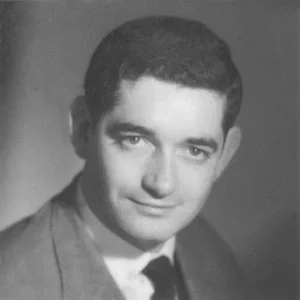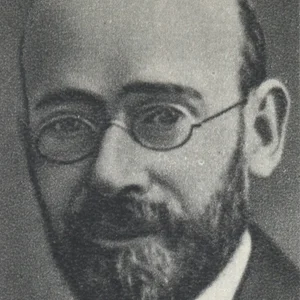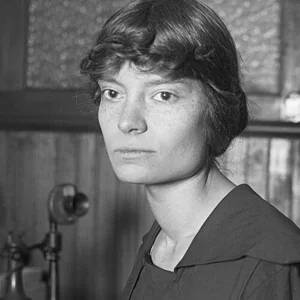

An American Catholic journalist and activist, in 1933 she co-founded the Catholic Worker Movement, which combines spiritual commitment, social justice, and pacifism. A major figure of charity and nonviolence, she devoted her life to the poor and the marginalized.
Dorothy Day(1897 — 1980)
Dorothy Day
États-Unis
6 min read
Frequently asked questions
Famous Quotes
« Don't call me a saint. I don't want to be dismissed so easily.»
Key Facts
- Born on November 8, 1897, in Brooklyn (New York).
- Converted to Catholicism in 1927 after a bohemian and activist youth.
- Co-founded in May 1933, with Peter Maurin, the newspaper and then the movement The Catholic Worker, in the midst of the Great Depression.
- Opened “houses of hospitality” welcoming the poor and championed absolute pacifism, including during the Second World War.
- Died on November 29, 1980; her cause for beatification was opened by the Catholic Church in 2000.
Works & Achievements
A movement combining spirituality, social justice and pacifism, still active today through its houses of hospitality all over the world.
An activist newspaper sold for a penny that became an influential voice of American social Catholicism.
An account of her journey from communist activism to the Catholic faith, addressed to her brother.
Her major autobiography, regarded as a classic of twentieth-century American spiritual literature.
An intimate history of the Catholic Worker Movement and its houses of hospitality, told from the inside.
A network of shelters offering food, lodging and dignity to the most destitute, a model of direct and personal charity.
Anecdotes
In November 1917, at just 20 years old, Dorothy Day was arrested in front of the White House during a demonstration for women's right to vote. Imprisoned at the Occoquan Workhouse in Virginia, she joined a hunger strike with other suffragists to demand status as political prisoners.
Before her conversion, Dorothy frequented the bohemian circles of Greenwich Village in New York. The playwright Eugene O'Neill, whom she met in the bars, recited from memory the long religious poem “The Hound of Heaven,” which left a lasting impression on her.
It was the birth of her daughter Tamar, in 1926, that brought on her conversion to Catholicism. Overwhelmed with joy, she wanted to have her child baptized, then took the step herself in 1927 — at the cost of breaking with Tamar's father, who was opposed to religion.
On May 1, 1933, in the midst of the Great Depression, Dorothy Day and Peter Maurin sold the first issue of the newspaper “The Catholic Worker” in Union Square, New York. The price: one cent a copy, a rate that has never changed.
In 1973, at the age of 75, she was arrested for the last time in California alongside the farm workers of César Chávez, for having supported their strike. This photograph of an elderly woman seated, surrounded by police officers, became a famous image of pacifist activism.
Primary Sources
We have all known the long loneliness, and we have learned that the only solution is love and that love comes with community.
This little paper is published for those who, sitting on park benches in this cold season, believe that society has forgotten them. It is meant to let them know that some Catholics are working for them.
I am writing this book because I am a Catholic, and because you believe that in becoming one I betrayed you and the cause of the workers.
The greatest challenge of our time is to bring about a revolution of the heart, a revolution that has to start with each one of us.
Key Places
Neighborhood where Dorothy Day was born in 1897, into a family of journalists.
Bohemian neighborhood where the young Day led the life of a journalist and artist, mingling with writers and radicals before her conversion.
House of correction where Day was imprisoned in 1917 after a demonstration for women's voting rights; there she went on a hunger strike.
Island where Day owned a small beach cottage; it was there, after the birth of her daughter, that her conversion to Catholicism took shape.
Working-class neighborhood of Manhattan where the Catholic Worker houses of hospitality were established, the heart of Day's work among the poor.
House of hospitality on the Lower East Side where Dorothy Day spent her final years and died in 1980.
Typical Objects

A monthly paper founded in 1933, sold for one cent a copy to keep it affordable for everyone. It spreads the movement's ideas of social justice, pacifism and charity.

A Catholic prayer object that accompanied Dorothy Day every day after her conversion. She told its beads during her many journeys and even in prison.

The large pot of the “soup kitchen” served every day to the poor in the movement's houses. A concrete symbol of the everyday charity championed by Day.

The journalist's essential working tool, on which she wrote articles, editorials and her famous column “On Pilgrimage.”
📷 Domaine public · Wikimedia Commons ↗
The medium for the pacifist and social protests Day took part in over six decades, from women's suffrage to the rights of farm workers.
School Curriculum
Vocabulary & Tags
Key Vocabulary
Tags
Daily Life
Morning
Dorothy Day's day begins early with Mass and prayer, the pillars of her life after her conversion. She attends the daily service before joining the house of hospitality.
Afternoon
Her afternoons are divided between writing articles for The Catholic Worker, welcoming visitors, and the practical work of managing meals and beds. She receives intellectuals and homeless people alike.
Evening
In the evening, she reads a great deal — the Gospel, Dostoevsky, the lives of saints — and writes her abundant correspondence. She sometimes leads discussions on social justice and nonviolence.
Food
Day shares the simple, frugal food served to the poor: soup, bread, and inexpensive stews. She refuses any material comfort that would set her apart from those she welcomes.
Clothing
She dresses modestly, often in clothing donated to the movement. Scarves, worn coats, and plain dresses reflect her choice of voluntary poverty.
Housing
She lives in the houses of hospitality themselves, sharing the cramped quarters of the Lower East Side with the destitute. She never owned a home of her own or any personal possessions.
Historical Timeline
Period Vocabulary
Liens externes & ressources
Références
Œuvres
Fondation du Catholic Worker Movement
1933
The Catholic Worker (journal)
1933
From Union Square to Rome
1938
The Long Loneliness
1952
Loaves and Fishes
1963
Les maisons d'hospitalité
1936