Imaginary dialogue between Alphonse VI de Castille et León and El Cid
by Charactorium · El Cid · Mythology · 5 min read
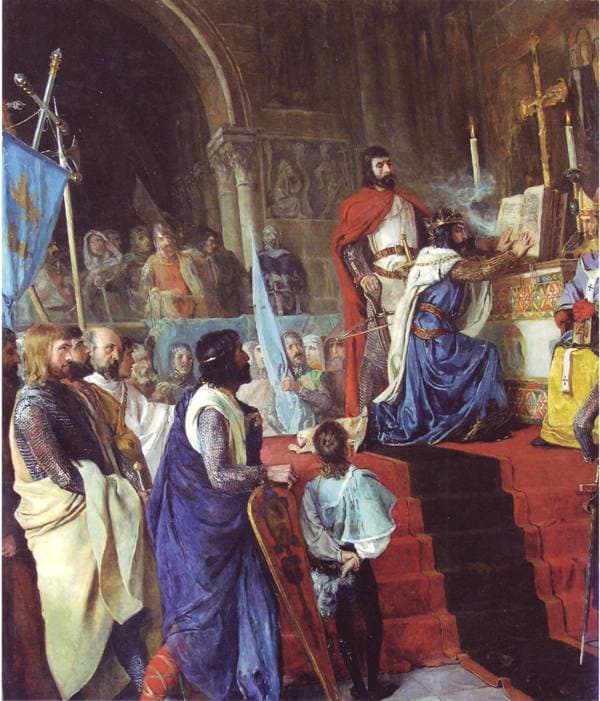
It is in the great hall of the palace of Burgos, on a freezing winter morning in 1098, that King Alfonso VI summons the man he has alternately banished and recalled. On the oak table lie sealed charters, and the pale light of a torch catches the pommel of a sword resting near the lord of Valencia. The two men have known each other for thirty years — since the court of Ferdinand, since broken oaths, since exiles. The king comes without escort, with the curiosity of a suzerain who has never truly known how to hold his most feared vassal.
—Rodrigo, here you are before me in Burgos, where as a child you received the sword. From your village of Vivar, what do you still keep deep inside you?
My king, Vivar was just a handful of houses near the río Ubierna, but it was there that my father taught me that a man is worth as much as his word. In Burgos, within these walls where we speak, I learned the lance, the horse, the service of a lord — and it was here that your father Ferdinand singled me out. Before each campaign, I would take Ximena and my daughters to the monastery of San Pedro de Cardeña, to entrust them to the monks while I went off to war. You know this, you who blessed our wedding: a knight without roots is but a wandering wolf. Mine are from Castile, and no conquered land in the south will make me forget them.
A man is worth as much as his word — my father from Vivar taught me that before the sword.
—Remember 1081: I banished you for your unauthorized raid toward Toledo. Why then did you carry your sword to the Moorish king of Zaragoza?
My king, your banishment left me without land or bread, with a retinue to feed. Al-Muqtadir of Zaragoza opened his gates to me, and I served his house as I would have served yours — with loyalty as long as the oath lasted. I fought for him against other princes, Christian as well as Moor, because in this century the borders are not those of faith but those of the given word. Do you think I betrayed the Cross? No. I kept my honor when my king withdrew his grace. An exiled knight does not cease to be a knight: he merely seeks a lord worthy of his steel.
In this century, the borders are not those of faith, but those of the given word.
—It is whispered that you fought the Almoravids but also for Muslim lords. How does a man serve the Crescent without renouncing his faith?
My king, I never denied Christ or missed mass before dawn. But serving a Moorish prince of Zaragoza meant fighting his rivals — other Moors, and sometimes even Christian counts who defied you yourself. When the Almoravids from Africa landed at Sagrajas in 1086, I understood that these were not lords with whom to make pacts: they came to erase our kingdoms, the taifas as well as ours. The nickname the Moors gave me, as-sayyid, 'the lord,' they did not grant out of flattery. They respected me because I kept my word, even toward the enemy. That is what you have not always wanted to see, Alfonso.
The Almoravids did not come to make pacts: they came to erase our kingdoms, the taifas as well as ours.
—In 1094, you took Valencia and rule there as a prince. Tell me frankly, Rodrigo: do you govern this city in my name, or in your own?
My king, I hold Valencia by siege and by blood shed, after months when hunger gnawed at its walls. I govern it as a lord should govern: by dispensing justice to Christians and Moors alike who submit. That same year, at Cuarte, I crushed the Almoravid army that came to retake it — they who had never known defeat in Hispania. Do you ask if I rule in your name? I have never ceased to call myself your vassal. But a city conquered at the point of Tizona, no one gave me as a fief: I tore it away alone. Let me hold it, and it will be a bulwark of Christendom against Africa.
A city conquered at the point of Tizona, no one gave me as a fief: I tore it away alone.
—The victory at Cuarte against the undefeated Almoravids stunned all Iberia. How did you defeat an army that was said to be unbeatable?
My king, the enemy thought they would besiege me like taking a hare from its burrow. But I feigned weakness, let them settle, sure of their numbers. Then, at the hour they least expected me, I came out through a hidden gate and struck their camp from the flank, cavalry in the lead. Panic did the rest: a surprised camp is worth less than a drawn-up troop. You have seen me maneuver before; you know I never give battle where the enemy wishes it. At Cuarte, I proved that these warrior-monks from Africa bleed like others. And Valencia remained mine, and fear changed sides.
I never give battle where the enemy wishes it: at Cuarte, fear changed sides.
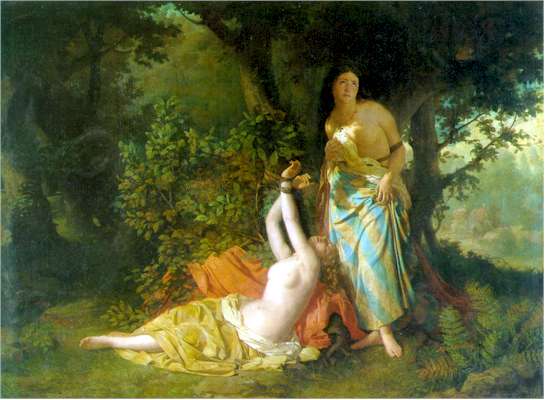
—This sword at your side, Tizona, makes the Moors tremble at its very name. What does it mean to you, more than just a blade?
My king, Tizona is not merely well-tempered steel. It is the witness of every oath kept, every city taken, every man I had to cut down for my own. They say enemies fear it as if they feared their own end — and it is true, I have seen entire lines break at the mere sight of it. Such a sword is not gained at birth: it is earned blow after blow. You who wear a crown know that an object of power has strength only through the hand that bears it. When I am gone, I want it to remain a sign for Castile: that honor, at least, does not rust.
Such a sword is not gained at birth: it is earned blow after blow.
—You already speak of your end, Rodrigo. What would become of Valencia if death came to take you before the Almoravids gave up?
My king, no knight is unaware that death rides at his side. If it takes me in besieged Valencia, I want no sign of weakness shown to the enemy. Let them dress my body in my armor, prop me on my horse, and let my men ride out as if I still led them — for the fear I inspire alive must serve even in death. Ximena will hold the city as long as she can, I know; her courage equals that of many counts. But without relief, Valencia will fall. I harbor no illusions: what I built alone can alone also crumble. What remains is honor, and the name that will be sung.
Let them prop me on my horse: the fear I inspire alive must serve even in death.
—In the evenings, I hear that your jongleurs already sing your exploits at your table. Are you not afraid they will embellish the man until he is unrecognizable?
My king, when the meal ends and the watered wine goes around, the jongleurs recount my campaigns before my men-at-arms. They embroider, certainly — the raid becomes a battle, and the battle becomes a miracle. But these songs nourish the courage of those who will tomorrow storm the walls with me. I am not fooled: the man from Vivar and the hero they shape are not quite the same. What does it matter to me, if the legend serves Castile better than my sword alone? You who fear court rumors know that a well-sung name sometimes weighs more than an army. Let them sing: I am not ashamed of what they will say.
The man from Vivar and the hero they shape are not quite the same.
—If a poet were to fix your life in writing, for centuries to come, what beginning would you give him — you who wept so much in exile?
My king, if a beginning is needed, let it start from the day I left my home, the doors open and the perches empty, without a falcon or a servant. That day, banished by you, I turned my head toward my abandoned hearth and wept — not from weakness, but from the pain of a man torn from his land without having failed. A hero is not one who never weeps; it is one who sets out again despite the tears. Let the poet show that: the exile who has nothing, and who by his loyalty alone reconquers everything. The rest — Valencia, the battles, the glory — is only the sequel to that first morning of sorrow.
A hero is not one who never weeps; it is one who sets out again despite the tears.
—One last thing, Rodrigo. Between us, after so many exiles and recalls, where do you want your remains to one day rest — in Valencia or in Castile?
My king, Valencia is my conquest, but Castile is my mother. When my hour comes, let them bring me back to Burgos, to Cardeña where so many of my own already sleep, where Ximena prayed while I waged war. A land taken from the enemy can be lost; the soil where one is born, never. You banished me, then recalled me, and despite our broken oaths I have never ceased to feel Castilian to the marrow. Let my tomb be at home, in the kingdom I served even when it denied me. It is there, and nowhere else, that a man from Vivar should sleep forever.
A land taken from the enemy can be lost; the soil where one is born, never.
Read further
This imaginary interview was generated by artificial intelligence from sources documented in El Cid's profile. It dramatises what the figure might have said based on what we know about them, but does not constitute attested historical testimony. For primary sources and factual documentation, refer to the full profile.