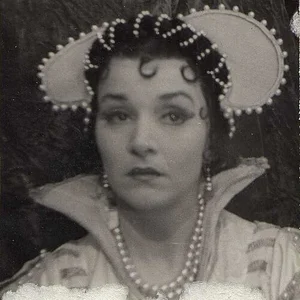

Ximena Díaz was the wife of Rodrigo Díaz de Vivar, known as El Cid. A semi-legendary figure of medieval Spanish literature, she was immortalized in the 'Cantar de mio Cid' and later in Corneille's 'Le Cid' (1637), where she embodies the conflict between love and honor.
Ximena
Ximena
6 min read
Frequently asked questions
Key Facts
- Wife of Rodrigo Díaz de Vivar (El Cid), a historical figure of the 11th century (circa 1043–1099)
- Central character of the 'Cantar de mio Cid', a Castilian epic (circa 1200)
- Becomes 'Chimène' in Pierre Corneille's 'Le Cid' (1637)
- Embodies the Cornelian dilemma between her love for Rodrigue and family honor
Works & Achievements
Ximena's historical achievement: after El Cid's death, she governed and defended the city of Valencia for nearly three years.
The oldest surviving Castilian epic poem, in which Ximena embodies the faithful wife and noble matriarch.
A Spanish drama that reinvents the character and serves as the direct source for Corneille.
A major French tragicomedy in which Ximena becomes Chimène, torn between her love for Rodrigue and her father's honor.
An opera premiered in Paris in which Chimène is one of the great roles of the Romantic operatic repertoire.
A sweeping cinematic epic in which Sophia Loren plays Chimène alongside Charlton Heston.
Anecdotes
Ximena (Jimena Díaz in Spanish) is not merely a fictional character: she was a very real woman of the 11th century. A document dated 19 July 1074, the 'carta de arras', preserves a record of the property Rodrigo gave her upon their marriage. This parchment is one of the few written proofs of her existence.
After the Cid's death in 1099, Ximena did not simply mourn her husband: she took charge of the government of Valencia and held the besieged city for nearly three years against the Almoravids. In 1102, forced to give up the stronghold, she had the city burned so as to leave nothing for the enemy before withdrawing to Castile.
In Corneille's tragicomedy (1637), Ximena becomes Chimène, and the story is entirely reworked: Rodrigue kills Chimène's father in a duel to avenge his own father's honor. The young woman must then demand from the king the head of the man she loves — hence the famous tension between love and duty.
The success of Corneille's 'Le Cid' set off a fierce controversy in 1637-1638, the 'Querelle du Cid' (Quarrel of Le Cid). The newly founded Académie française reproached the play for failing to respect the rules of theater and judged it scandalous that Chimène could even consider marrying her father's murderer.
The remains of Ximena and the Cid travelled after their deaths. Long buried at the monastery of San Pedro de Cardeña, near Burgos, their remains were finally moved in 1921 to Burgos Cathedral, where the two spouses lie side by side beneath the transept.
Primary Sources
Deed of donation by which Rodrigo Díaz guarantees his wife Jimena lands and goods on the occasion of their marriage — the oldest document attesting to the real existence of Ximena.
“Llorando de los ojos, que non viestes atal, / assís parten unos d'otros commo la uña de la carne.” (Weeping bitterly as was never seen before, they part from one another like the fingernail from the flesh.) — farewell of the Cid and Ximena at the monastery of Cardeña.
Latin chronicle recounting the life of Rodrigo Díaz, which mentions his wife Ximena as descended from a noble lineage related to the royal house of León.
Chimène to Rodrigue: “Go, I do not hate you.” — a restrained admission in which love breaks through despite the duty of vengeance (act III, scene 4).
Key Places
Village near Burgos, birthplace of Rodrigo Díaz de Vivar and the couple's first home.
City conquered by the Cid where Ximena lived, and which she then governed alone from 1099 to 1102 before abandoning it to the Almoravids.
Abbey near Burgos where the Cid and later Ximena were buried, and the setting of the farewell scene in the 'Cantar'.
Since 1921, the final resting place of Ximena and the Cid, reunited beneath the transept of the Gothic building.
City in Spain where Corneille sets the action of 'The Cid' and where Chimène's drama unfolds.
Typical Objects

Document by which El Cid guaranteed Ximena lands and property upon their marriage; it is the main written proof of her historical existence.

Veil and headdress covering the hair of noblewomen, often associated with the image of Ximena in mourning after El Cid's death.

Symbols of the power she genuinely held while governing the city of Valencia from 1099 to 1102.

Rodrigo's famous sword, preserved as a relic; Ximena watched over her husband's memory and legacy.

Burial site in the Castilian monastery where Ximena and El Cid long rested before their transfer to Burgos Cathedral.

Medieval copy of the epic poem (the Per Abbat manuscript) that fixed the literary image of Ximena for centuries.

Weapon with which Rodrigue kills Chimène's father; a symbolic object of the conflict between love and honor in the play.
School Curriculum
Vocabulary & Tags
Key Vocabulary
Daily Life
Morning
A lady of the high Castilian nobility, Ximena awakens in the apartments of a castle or an alcázar. The morning begins with prayer and Mass in the chapel, followed by overseeing the household and the servants.
Afternoon
The afternoon is devoted to managing the estate while the lord is away at war: receiving the stewards, keeping watch over the harvests and the accounts. She also takes charge of educating her children and the young nobles entrusted to her care.
Evening
The evening brings the family and vassals together for a meal in the great hall, sometimes enlivened by a minstrel reciting chansons de geste. Ximena then withdraws for prayer and needlework by candlelight.
Food
The noble diet combines wheat bread, meats (mutton, pork, game) and fish on fast days. To these are added cheeses, dried pulses, fruit, honey, as well as wine and olive oil, both plentiful in Iberian lands.
Clothing
Ximena wears long gowns (briales) of fine wool or silk, cinched at the waist and covered by a mantle. A linen toca veils her head and neck, as befits a married woman of high rank; the fabrics bear witness to trade with al-Andalus.
Housing
She lives in fortified dwellings: a Castilian castle with thick walls, then the alcázar of Valencia with its courtyards and gardens of Muslim influence. The rooms are furnished with chests, hangings and carpets, signs of wealth and prestige.
Historical Timeline
Period Vocabulary
Liens externes & ressources
Références
Œuvres
Gouvernement de Valence
1099-1102
Cantar de mio Cid
vers 1200
Las Mocedades del Cid (Guillén de Castro)
1618
Le Cid (Pierre Corneille)
1637