Imaginary dialogue between Marie-Antoinette and Élisabeth Vigée Le Brun
by Charactorium · Élisabeth Vigée Le Brun (1755 — 1842) · Visual Arts · 5 min read
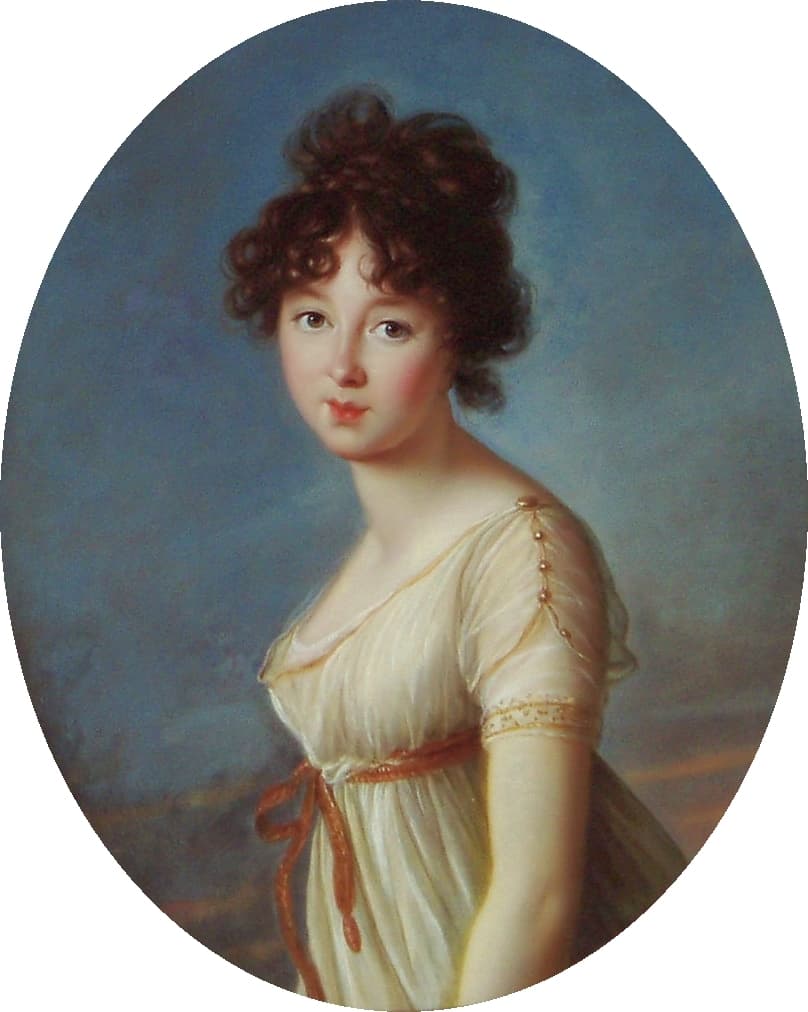
It is at Louveciennes, in the studio bathed in afternoon light, that the elderly Élisabeth Vigée Le Brun looks up from her palette. The scent of oil and ground pigments fills the room, and suddenly the face she painted more than any other returns to her: that of Marie Antoinette, her sovereign and her friend, as she once posed at Versailles. Some twenty portraits had bound them together between 1778 and 1789; and now, in thought, the queen returns, gentle and grave, to question her about all that was — and about all that followed their separation.
—My dear Le Brun, do you remember that muslin dress you dressed me in in 1783? Why did it cause such a scandal?
Madame, how could I forget? I had portrayed you in that white muslin dress, without pannier or pomp, as neoclassical taste demanded — natural, simple, alive. But no sooner was the canvas exhibited at the Salon of 1783 than the outcry arose: it was claimed that the Queen of France had had herself painted in a chemise, like a bourgeois woman, or worse. The painting had to be withdrawn and hastily replaced by the Portrait with a Rose, where I restored to you all the majesty that was demanded. I had wanted to show you as you were in private; they saw only an outrage. That was the day I understood how much your image, already, no longer belonged to you.
—And when you painted me with my children in 1787, did you know how much the people judged me? What did you want to show of me?
I knew it, yes — the libels overwhelmed you, and they already called you by that ugly word I dare not repeat. My large painting, Marie Antoinette and Her Children, was meant to answer that. I painted you not as a distant sovereign, but as a mother, surrounded by your own, the cradle close by. It was a state portrait in its dimensions and pomp, certainly, but its soul was quite different: to reveal the heart of a woman. I hoped that by seeing you thus, the people would forget their grievances. Alas, the canvas was hung and they murmured still. Images, Madame, do not heal what times have made ill.
—Everyone praises the brilliance of your flesh tones. What was that secret you kept at the tip of your brushes?
Ah, that so-called secret! It came down to little, and yet to a lifetime of observation. I never used pure black, which extinguishes flesh and makes it dead; I preferred warm tones, subdued reds, transparencies. I prepared my mixtures in advance, on a well-ordered palette, so as never to hesitate with brush in hand. And above all, I painted faces only in the morning, in the frank light of day — that is why I received you so early, Madame, do you remember? The skin of a face is a living thing: it breathes, it flushes, it pales. My art was, all my life, to capture that quiver.
Never pure black: it extinguishes flesh and makes it dead.
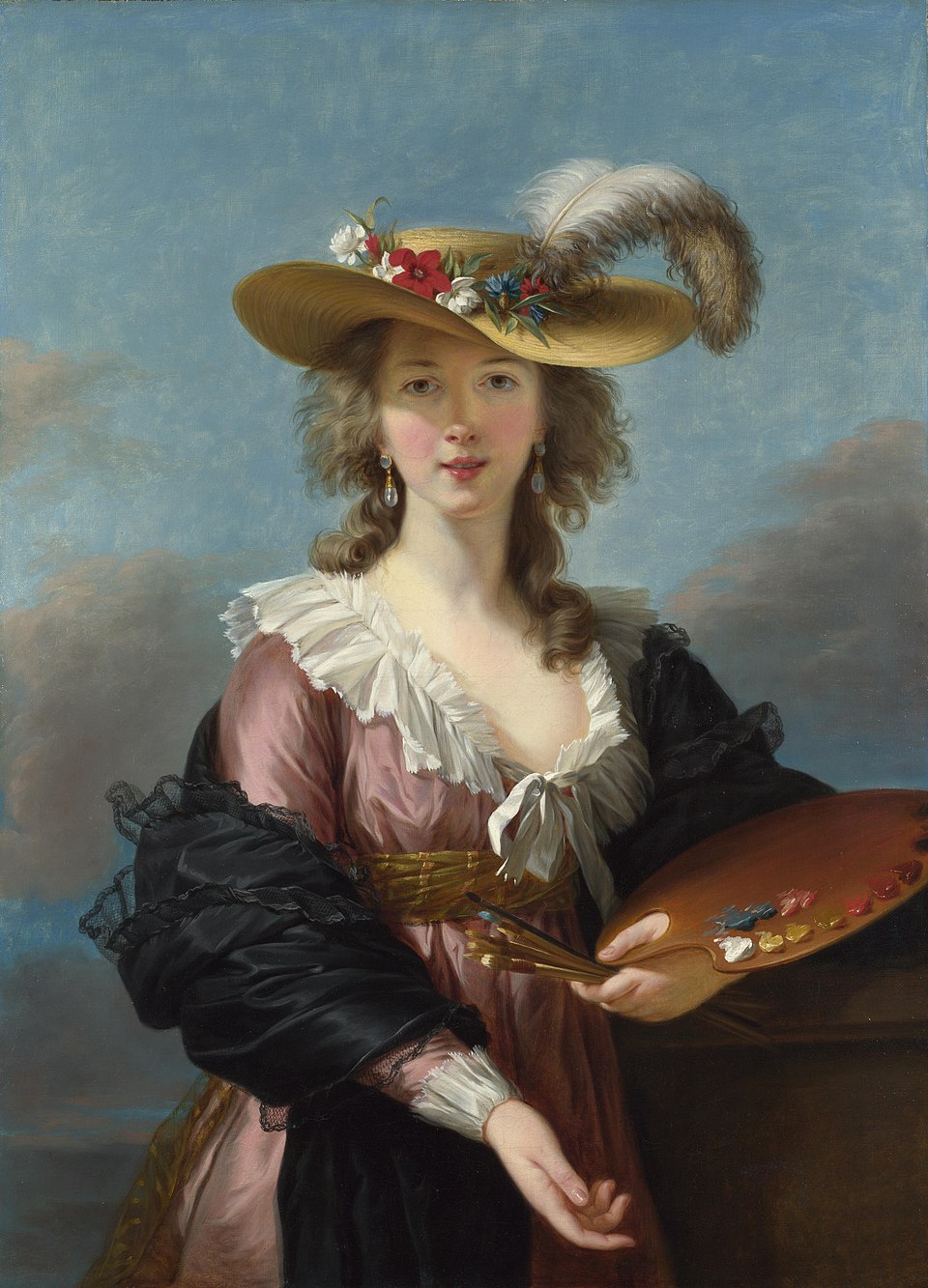
—And that self-portrait of yours, wearing a straw hat — why did you show yourself like that, palette in hand?
I painted it in 1782, and I confess it is dearer to my heart than any other. I had admired in the Netherlands a work by Rubens, that Straw Hat whose light had dazzled me — the sun played on the face as no painter had dared. I wanted to measure myself against it. I depicted myself with a smile on my lips, my palette and brushes in hand, without hiding anything of my craft. A woman, a painter, showing herself for what she is: that too was audacity in those days. People praised the freshness of the work, and I was as proud of it as of a victory won over the old masters.
—The day you were received at the Academy, I knew people whispered that I had imposed you. Did that hurt you?
Hurt? No, Madame — overjoyed, but clear-eyed. I was received on 31 May 1783, the same day as Adélaïde Labille-Guiard, my rival. Two women admitted together: that was too much for those gentlemen, who tolerated only four and kept count with jealousy. People whispered that I owed my place to your kindness more than to my brush. So I had presented an ambitious piece, Peace Bringing Back Abundance, an allegorical and noble subject, to prove that I could paint something other than faces. I wanted to be received for my art, not for my friendships. But I will never deny what I owe you: without your favor, would those doors have even been opened to me?
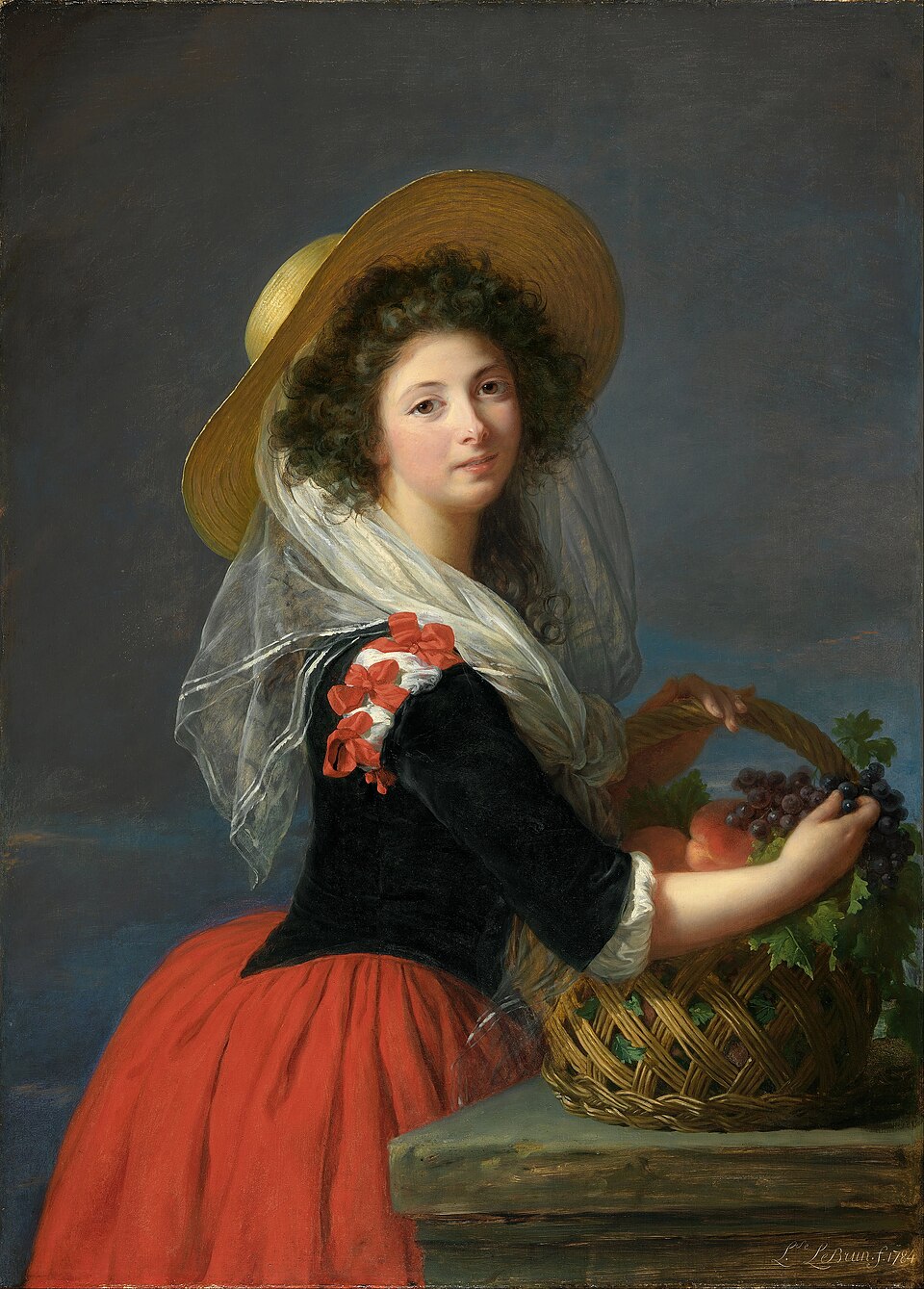
—I was told about that Greek supper given on the Rue du Gros-Chenet, on the very evening Paris was in flames. Was it imprudent?
Imprudent, I have been reproached enough for it since! That evening, I had invited a few friends to a Greek-style supper on the Rue du Gros-Chenet: tunics, flower crowns, antique vases, an entertainment for artists enamored of antiquity. We were unaware, or chose to ignore, that Paris was rumbling outside. Later, the affair was blown up into a fable — a ruinous feast, the insolent luxury of a friend of the court. The truth was far more modest, but no matter: they needed a grievance against me, and they found one. That innocent meal became one of the pieces of evidence brought against me. I learned that day that, in times of fury, even gaiety becomes a crime.
—When you left Paris in October, without my being able to protect you, what did you take of us?
In October 1789, Madame, I took the night coach with my little Julie, two trunks, and a broken heart. I carried neither gold nor titles — only my colors, a few sketches, and your face engraved in me forever. Soon I was placed on the list of émigrés, those exiles whose property was seized and who could return only when erased from the infamous register. For twelve years, I wandered from court to court. I did not know, as I crossed the barrier, that I would never see you or the France of before again. What I carried of us, my queen, no decree could confiscate: it was the memory of our sittings, of your voice, of your patience in posing.
I carried neither gold nor titles — only my colors and your face engraved in me.
—Tell me, my dear Élisabeth, those foreign courts you feared — did they welcome you, far from ours?
They welcomed me, Madame, beyond all I feared. In Rome first, where people crowded into my studio and the Academy of Saint Luke opened its ranks to me; then Naples, Vienna, everywhere commissions and honors. My name had preceded me, and with it yours, I believe — for having painted the Queen of France was a glory that foreign princesses envied me. Exile, which I thought a fall, was a strange consecration: I worked more than ever, and nowhere was a door closed to me. And yet, amid all this splendor, I always missed the only court I had truly loved — ours, Madame, that of Versailles.
—And that distant Russia, the Tsarina and her commissions — did you find there something of the court we had lost?
Russia was my longest stop: six years in Saint Petersburg, from 1795 to 1801. The imperial court showered me with favors — I painted the high nobility there, and the Imperial Academy of Fine Arts received me among its members, a rare distinction for a woman and rarer still for a foreigner. I painted the Portrait of Countess Golovine there, of which I remained proud: that gaze, that shawl drawn over the shoulder... Yes, Madame, I found there something of the lost splendor, lively conversations, a taste for beautiful things. But it was only a reflection, not the flame. They treated me as a queen of my art; I lacked having a queen to serve.
They treated me as a queen of my art; I lacked having a queen to serve.
—Through so many years of exile and trials, my dear friend, what kept you standing?
What kept me? My art, Madame, nothing but my art. In my old age, I wrote my Souvenirs, and I recorded there this simple truth: “I had such a passion for my art that, often, when beginning a portrait, I did not give myself time to eat. I worked from morning to evening without noticing that the hours were passing.” That is what carried me through kingdoms and upheavals. As long as I had a face to paint, a light to capture, I was not quite exiled — I was at home, before my easel. The rest, honors and disgraces, passed as the day passes.
As long as I had a face to paint, I was not quite exiled.
Read further
This imaginary interview was generated by artificial intelligence from sources documented in Élisabeth Vigée Le Brun's profile. It dramatises what the figure might have said based on what we know about them, but does not constitute attested historical testimony. For primary sources and factual documentation, refer to the full profile.