Kids interview Élisabeth Vigée Le Brun
by Charactorium · Élisabeth Vigée Le Brun (1755 — 1842) · Visual Arts · 4 min read
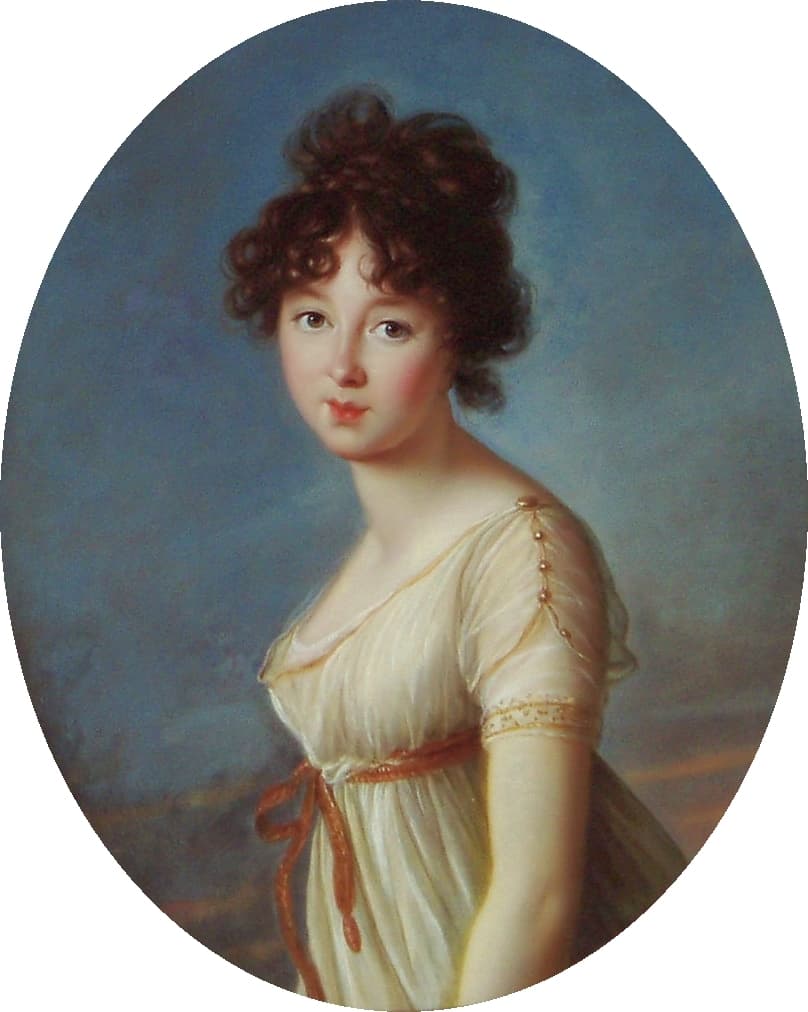
That morning, two young visitors on a school trip push open the door of a studio with tall windows. An elderly lady awaits them, palette in hand, eyes bright. Her name is Élisabeth Vigée Le Brun, and she painted a queen.
—What was it like to actually paint a queen?
You know, my child, I was barely twenty the first time. Marie Antoinette would come to pose at Versailles, and imagine my hand trembling a bit! But she was cheerful, she even sang during the sittings. I had to paint her about twenty times. The hardest part wasn't her face—it was the people around. Everyone watched, judged, counted every brushstroke. A queen, you see, is never just another model. When I painted her, I also painted all of France watching her.
Painting a queen is painting an entire country watching her.
—Why did one of your paintings cause a scandal?
Ah, that one! In 1783, I painted the queen in a simple white muslin dress, light as a cloud. Imagine a very fine fabric, without the big stiff panniers of the court. I thought it was natural, true, pretty. But at the Salon—the big exhibition where the public came to see our works—people cried scandal! They said, “The queen is having herself painted in her chemise!” What an uproar. I had to withdraw the painting and do another, Marie Antoinette with a Rose, more proper. I learned that day that a dress can make a court tremble.
I learned that a simple dress can make a court tremble.
—What was your secret for making skin look alive?
Come closer, I'll tell you my secret. I prepared all my color mixtures in advance, neatly arranged on my palette, before the model even arrived. And above all: never pure black! Black, you see, deadens skin, makes it look lifeless. I preferred warm tones, golden, rosy. That's how a cheek looks warm, as if you could feel the blood beneath. I always worked in the morning, to have true daylight. In the evening, candlelight lies about colors.
Never pure black: black deadens skin instead of bringing it to life.
—Did you forget to eat when you were painting?
Yes, that often happened, believe it or not! When a portrait absorbed me, I no longer saw the hours pass. I would start in the morning and suddenly it was evening without my having touched my meal. Yet at my table there were good things: roasts, fine pastries, Burgundy wine. But painting was stronger than hunger. I wrote that much later, as an old lady, in my Souvenirs. When you truly love something, my child, you forget your own stomach.
When you truly love something, you forget your own stomach.
—Is it true you threw a big party on the day everything changed?
Alas, yes. On the evening of July 14, 1789, I hosted a supper at my home on Rue du Gros-Chenet. A costume party in Greek style, with white tunics and leaf crowns, like in antiquity. We laughed, we were carefree. And meanwhile, outside, the people were storming the Bastille! Later, I was reproached for that feast as proof that I was too close to the powerful. Imagine: a single evening of gaiety held against you for the rest of your days. That party cost me dearly.
A single evening of gaiety held against me for the rest of my days.
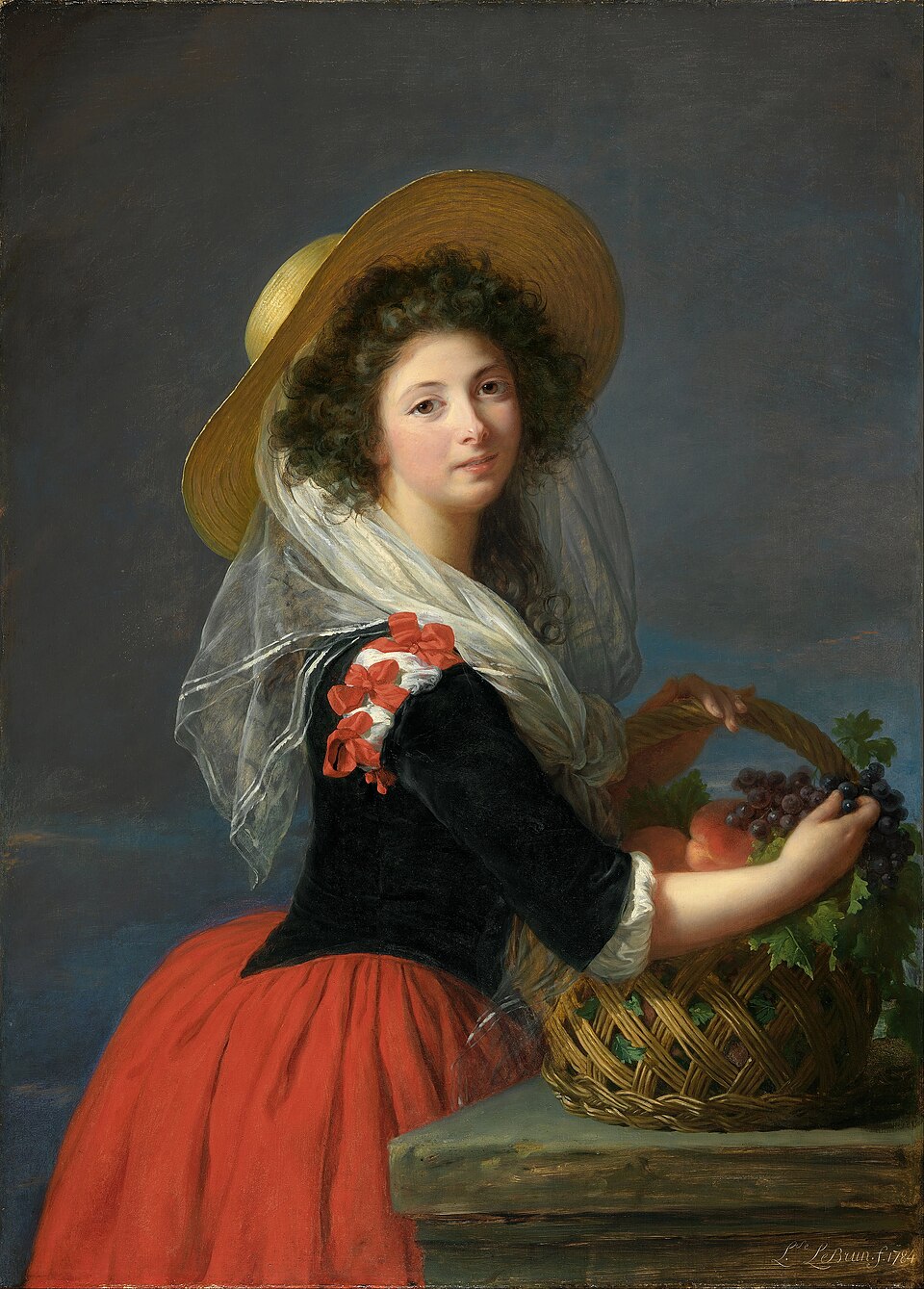
—Were you afraid when you had to flee France?
Yes, I was afraid, I won't lie to you. In October 1789, I left with my little daughter Julie. Imagine: you leave your home, your city, your friends, without knowing if you'll ever return. I was put on the list of émigrés—those who had fled the Revolution, and whose property was confiscated. I stayed away for twelve years. Twelve years, my child! Heavy-hearted, but with my brushes in my luggage. As long as I could paint, I knew I would never be entirely lost.
As long as I could paint, I was never entirely lost.
—And in other countries, did they like you?
Oh, I was received everywhere like a princess! In Rome, Vienna, London, and especially in Saint Petersburg, Russia. I stayed there six years, in the cold and snow, painting the greatest families. The tsarina herself summoned me, and I was elected to the Imperial Academy—a very rare thing for a woman, and a foreigner at that! I kept notebooks where I noted everything: faces, landscapes, customs of each court. My exile, you see, became a great journey. Misfortune sometimes opens the whole world to you.
Misfortune sometimes opens the whole world to you.
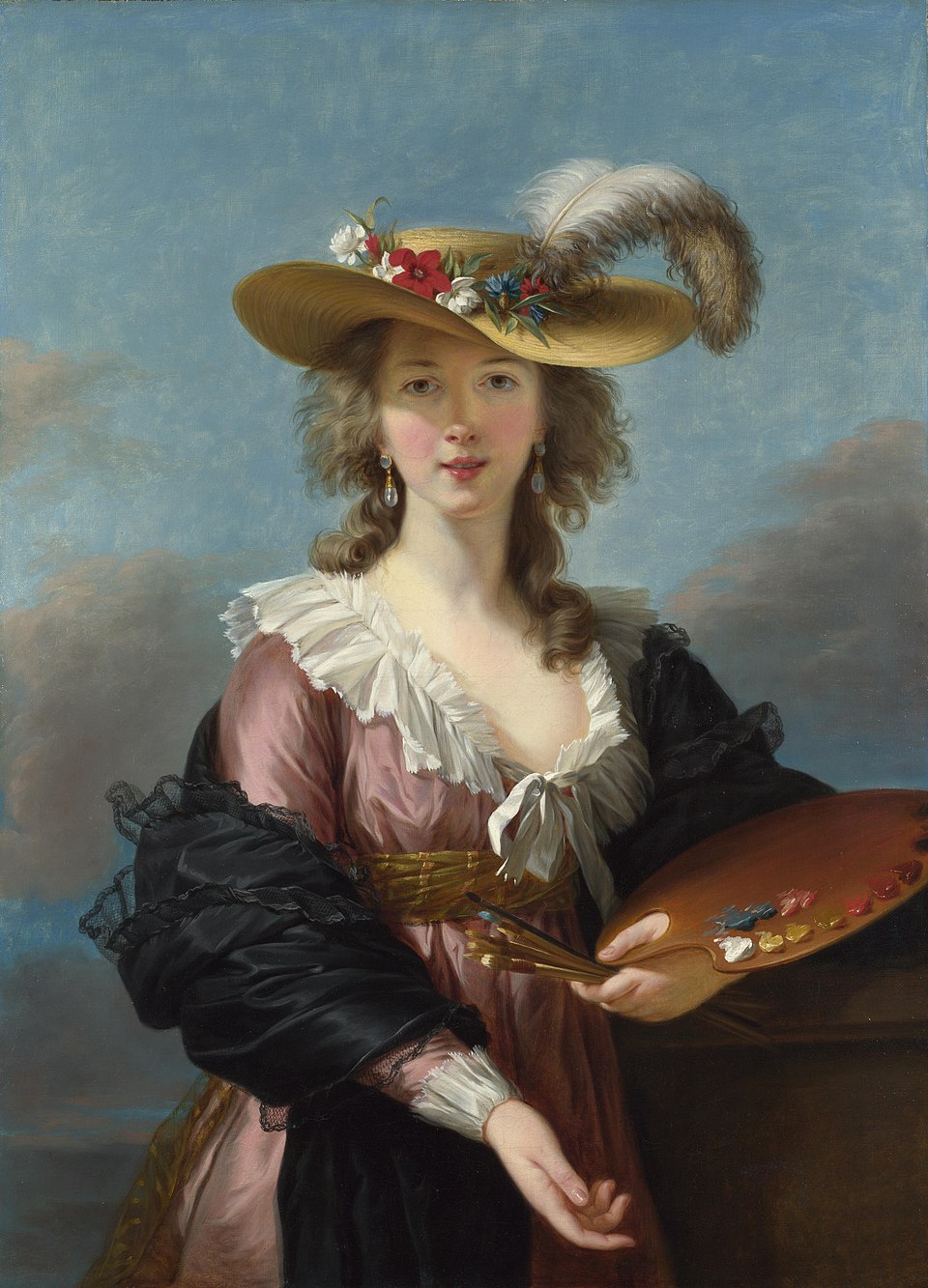
—What did you paint during all that time in Russia?
Portraits, always portraits, my child! The Russian nobility flocked to my studio. I painted there the Countess Golovine, a lady with a mysterious gaze whom I love very much. Imagine: I was asked for faces from morning to night, and each one wanted to be the most beautiful. I continued my method, my warm flesh tones, my daylight. These people spoke a different language, ate different dishes—I tried Russian cuisine and loved it. But in front of the canvas, you see, a smile is still a smile, everywhere on earth.
In front of the canvas, a smile is still a smile, everywhere on earth.
—Was it hard being a woman painter in your time?
Harder than you think. In 1783, I was finally admitted to the Royal Academy of Painting—the institution that decided who was a true artist. I entered on the same day as another woman, Adélaïde Labille-Guiard. And then some gentlemen protested! They said our talent was exaggerated because we knew people at court. Only four women were accepted in total, imagine? As if painting were reserved for men. I only answered with my paintings. That's the best reply to those who doubt you.
To those who doubted me, I answered only with my paintings.
—Is it true you started painting very young?
Very young, yes! My father, Louis Vigée, was also a painter, in pastel—those soft colored sticks you blend with your fingertip. He put crayons in my hand when I was very small. But he died when I was twelve, the age you might be. So to help my family, I began selling my own portraits. Imagine a child already earning a living with her drawings! I learned everything by watching, trying, starting over. Grief made me work early, and work saved me.
Grief made me work early, and work saved me.
Read further
This imaginary interview was generated by artificial intelligence from sources documented in Élisabeth Vigée Le Brun's profile. It dramatises what the figure might have said based on what we know about them, but does not constitute attested historical testimony. For primary sources and factual documentation, refer to the full profile.