Imaginary dialogue between Paul Cézanne and Émile Zola
by Charactorium · Émile Zola (1840 — 1902) · Literature · 6 min read
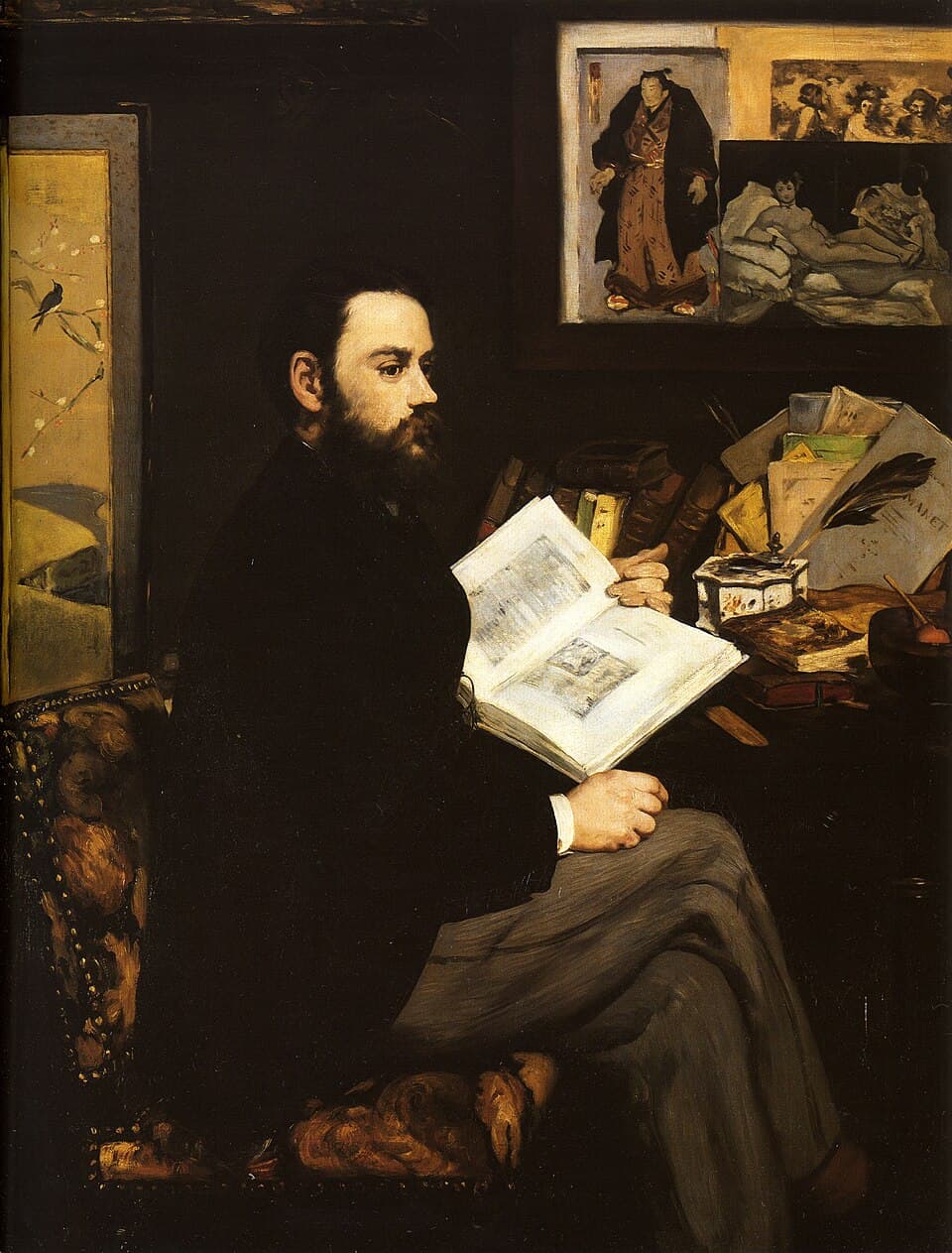
It is in the large study at Médan, in the autumn of 1885, that Paul Cézanne comes to find his childhood friend, shortly after the publication of Germinal. The light falls obliquely on the piled-up notebooks, and the smell of ink mingles with that of freshly developed photographs. The two men have known each other since the Bourbon college in Aix-en-Provence, since those summers when they declaimed verses on the banks of the Arc. The painter, taciturn and already moody, has come to see what has become of the shy boy he used to defend in the schoolyard.
—Émile, do you remember our swims in the Arc, in Aix, when we shouted Musset at the top of our lungs? What remains in you of that kid?
You who were there, Paul, you know well that I was only a little Parisian transplant, mocked for my accent, my father dead too soon, and poverty around the corner. Without you, without your stature and your gruff friendship, they would have devoured me at the Bourbon college. It is from those summers that I hold everything: the need to look things straight in the eye, without dressing them up. When I go down today into the pit of a novel, it is still the kid from Aix who wants to understand how the world is made. You were already painting, I was already rhyming; we both wanted to tear the truth from nature. The rest—glory, money, this house—is only a backdrop. The core hasn't budged an inch.
It is still the kid from Aix who wants to understand how the world is made.
—Here you are, lord of Médan, far from our youthful garret. How do you spend your mornings in this château that L'Assommoir paid for?
Don't mock my château too much, Paul—you who saw me eat dry bread on the rue Soufflot! I get up around six, breakfast on almost nothing, and sit down at my inkwell. I impose my pages each morning, rain or weary: not a line less. It is a worker's discipline, you see, not an inspired one. Nulla dies sine linea—not a day without a line. In the afternoon, I run to the markets, the train stations, the mines, my notebooks under my arm. And in the evening, when my friends come up here on Thursdays, I put away my sentences and become a man again. I also have my cameras, my true madness: thousands of photos, my family, my gardens. You should let me take your portrait one of these days.
It is a worker's discipline, you see, not an inspired one: not a day without a line.
—You who draw up family trees like a scientist his tables, explain to me: why want to make the novel a laboratory affair?
Because our century is that of science, Paul, and literature cannot remain behind. I read Claude Bernard, his experimental medicine, and I found my method there. The novelist is made up of an observer and an experimenter: the observer gives the facts, the experimenter places his characters in a milieu and watches what heredity does with them. That is why I drew the tree of the Rougon-Macquart before writing a line: twenty volumes, one family, a flaw that is passed down from branch to branch under the Second Empire. They reproach me for treating man like a beast. But painting man in his milieu—isn't that exactly what you seek, you, with your apples and your mountain?
The novelist is made up of an observer and an experimenter.
—They say that for Germinal, which I have just read, you went down into the mine yourself. Is it true, or is it a legend you let circulate?
It is the exact truth, Paul, and I take no glory from it—it was necessary. In February 1884, I went to Anzin, in the North, during the strike. I slept in the miners' homes, shared their thin soup, and I went down into the galleries, more than six hundred meters beneath the earth. Imagine: the cage dropping into the dark, the heat, the seeping water, the firedamp they dread at every pick strike. I saw the hewers cutting coal lying in the seam, half-naked, and children not yet ten years old. You don't invent that at your desk. Without that descent, Germinal would have been nothing but a well-written lie. The miner's lamp I kept, I still look at it when I doubt my craft.
You don't invent that at your desk: without that descent, Germinal would have been nothing but a lie.
—That world of the mines, so far from our sunny Provence, what squeezed your heart the most, down there, in the dark?
The children, Paul, without hesitation. And the animals. Down there are horses that are brought down once and never see daylight again, going blind from so much darkness. I thought of our hills in Aix, of that light you cannot do without to paint, and I measured the abyss: these men live in a night that never ends. What squeezed my heart was not only the misery—it was the resignation, then suddenly the anger rising, like a seed germinating. Hence the title. I did not want to make the bourgeois weep: I wanted him to hear, beneath his feet, that dull rumble that will eventually crack everything.
These men live in a night that never ends.
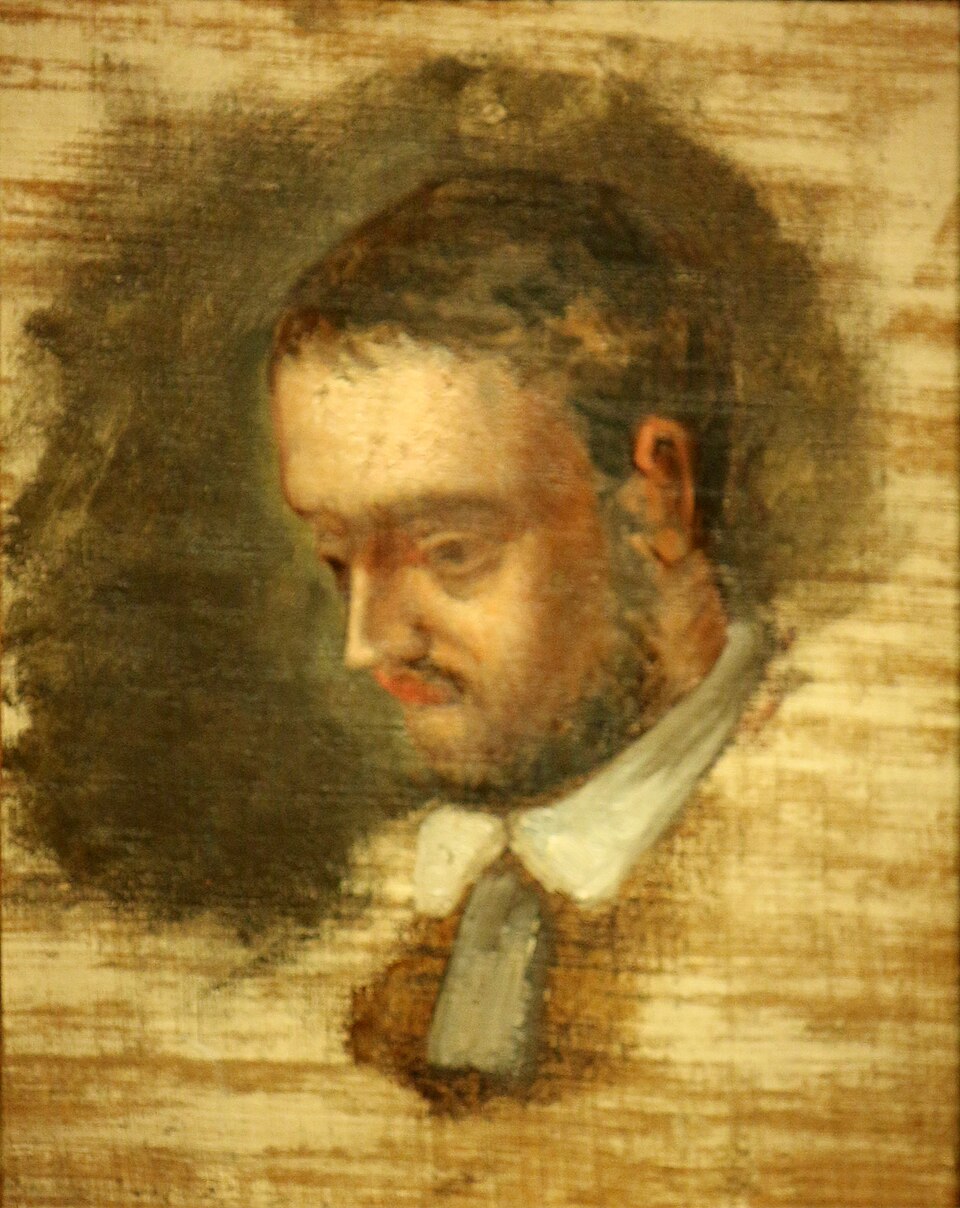
—You paint with a pen, you say; I with colors. But this mania for photography, these thousands of shots—what do you seek in them?
The same thing as you before your easel, Paul: to capture the truth before it escapes. You know how much I care about looking at things; well, the camera extends my eye. I photograph my family, my gardens at Médan, the Seine, the streets of Paris, festivals. Thousands of plates, which I develop myself in my darkroom, here, a few steps from my desk. It is not a rich man's toy: it is one more notebook, but one that does not lie, that does not flatter. The light on a face, the instant of a gesture—that is what the sentence sometimes struggles to render. You who spend days fixing a mountain to paint it a hundred times, you should understand me better than anyone.
The camera extends my eye: it is one more notebook, but one that does not lie.
—In the evening, at your table in Médan, you entertain writers and artists. But between us—do you still eat as much as in the old days, you glutton?
Alas, Paul, my stoutness answers you before I do! I endured poverty against my will; now that I can put butter on my bread, I do not deprive myself. A good pot-au-feu, meats in sauce, cheeses, fruits from my vegetable garden—I confess my gluttony like a sin I have no desire to correct. On Thursdays, my friends come up here, we talk painting and novels until nightfall, we argue about art as we did at twenty. Then I go to bed early, because tomorrow's quota awaits me. You see, I have kept two things from our hungry youth: appetite for work and appetite for the table. You have remained more sober, more secretive. We never aged the same way.
I confess my gluttony like a sin I have no desire to correct.
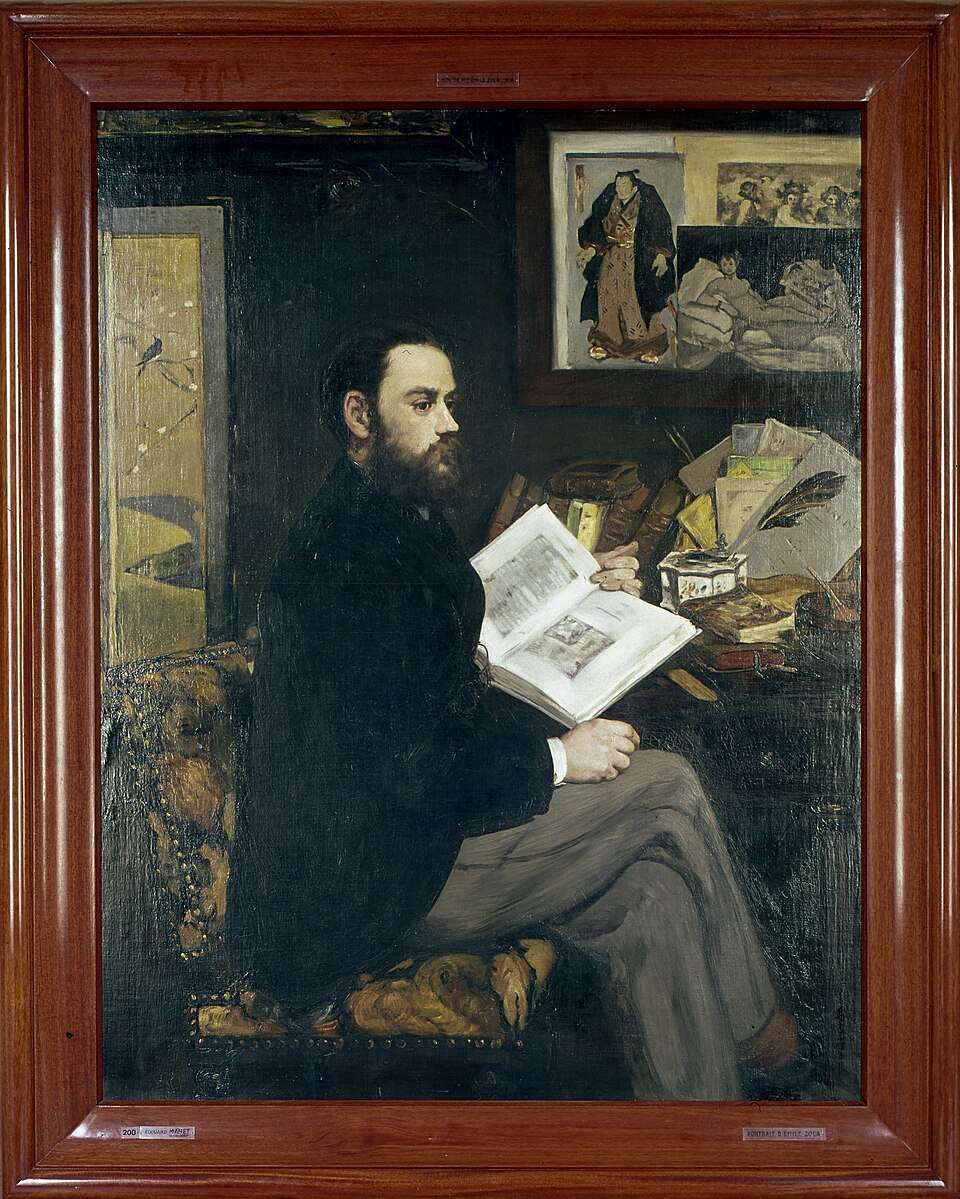
—They accuse you of dirtying the people, of showing only filth and the drunkard. What do you say to those who cry scandal over L'Assommoir?
I answer, Paul, that it is a work of truth, the first novel about the common people that does not lie and that has the smell of the people. They howled that I was slandering them; they understood nothing. My characters are not evil—they are ignorant and spoiled by their environment, by the Assommoir at the corner of the street where they drown their wages in cheap liquor. To show the wound, is that to love it? The doctor who describes the disease does not wish for it. I want people to look these lives in the face, to stop painting them rosy as in old novels. If the bourgeoisie holds its nose, so much the better: it means they have recognized a smell they prefer not to smell. The truth always ends up disturbing those who dine well.
To show the wound, is that to love it? The doctor who describes the disease does not wish for it.
—You who plan twenty volumes like a general his campaign, aren't you afraid of locking your characters into your theory, of draining life from them?
That is the great fear, Paul, and you put your finger on it. Theory is only scaffolding: once the house is built, you remove it, and the house must stand on its own. Heredity, milieu, documentation—all that gives me solid ground for my characters to walk on. But if they do not walk on their own, if I do not feel their blood beat, I have failed. Do you think Gervaise or the miners of Montsou are mere theorems? When I write, I see them, I hear them, sometimes they escape me, and that is when they are alive. Science gives me the framework; the rest is passion, the same fire that makes you redo your mountain a hundred times. Without it, I would be nothing but a clerk.
Theory is only scaffolding: once the house is built, it must stand on its own.
—Émile, I know you stubborn to the bone. If one day a glaring injustice appeared before your eyes, would you go so far as to risk everything you have built here?
You know me too well, Paul—you know I cannot keep silent. I hope never to have to prove it, but yes: if a glaring injustice cried out, I believe I could not remain silent and continue to dine in peace. What would be the use of all this glory, this house, these books, if I turned my eyes away when a man is crushed? A writer is not just a maker of sentences; he has a voice, and a voice that falls silent before iniquity dishonors itself. I am nothing but a passion, that of light, in the name of humanity which has suffered so much. When the day comes, I would risk my tranquility without hesitation, even if I were to lose my friends and my peace. Better a man standing in the storm than a bourgeois sitting in his lie.
A voice that falls silent before iniquity dishonors itself.
This imaginary interview was generated by artificial intelligence from sources documented in Émile Zola's profile. It dramatises what the figure might have said based on what we know about them, but does not constitute attested historical testimony. For primary sources and factual documentation, refer to the full profile.