Kids interview Émile Zola
by Charactorium · Émile Zola (1840 — 1902) · Literature · 5 min read
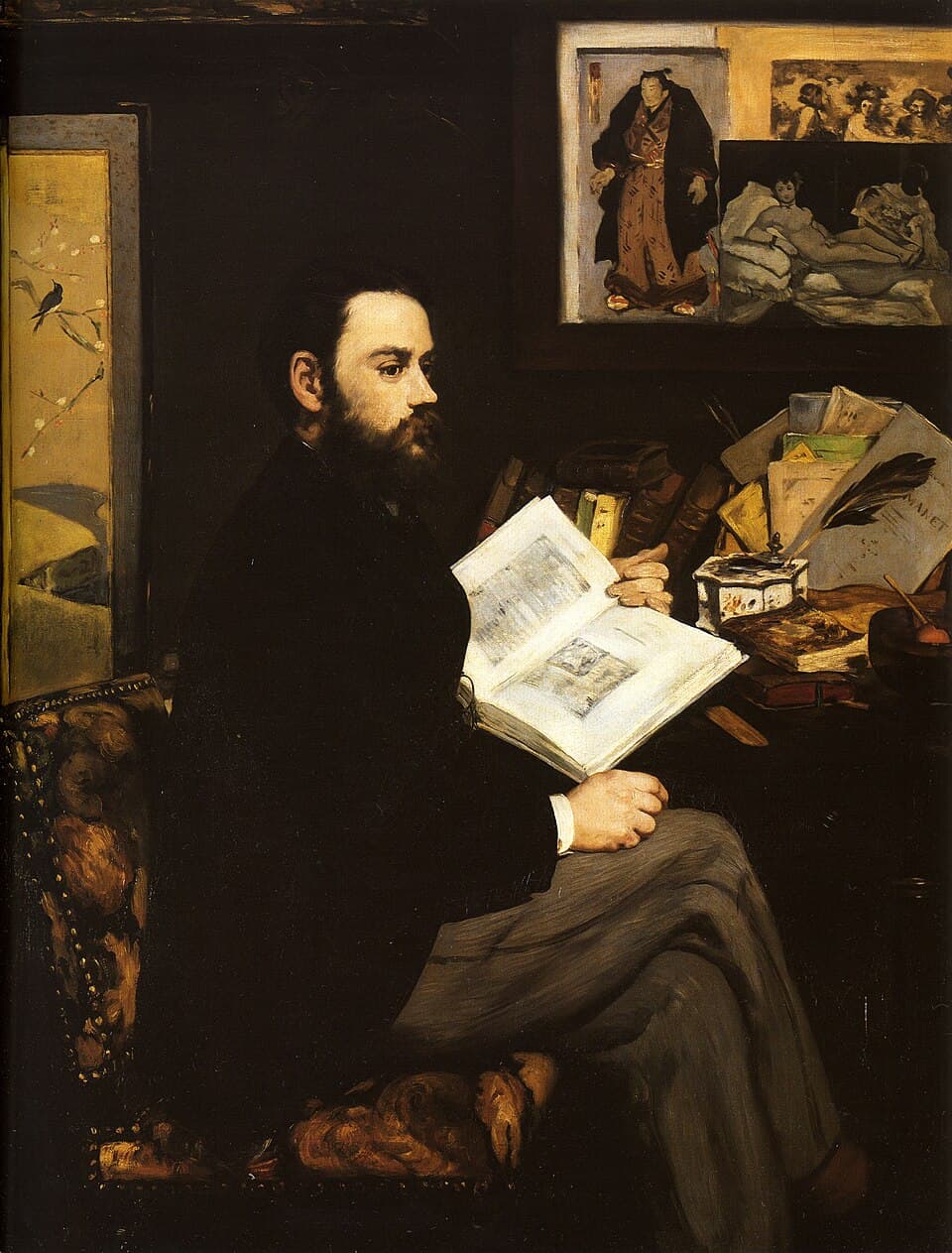
Two young visitors, on a school trip, push open the door of a big house on the banks of the Seine. A man with a round beard, his eyes sharp behind his glasses, invites them to sit by the fireplace. “Ask me your questions, my little ones — I love nothing more than curiosity.”
—What was your childhood like? Did you have a best friend?
Ah, yes! My best friend was named Paul Cézanne. We met as little boys, at school, in Aix-en-Provence. Imagine two kids hiking through the scrubland, swimming in the river, and reciting poems in the sun. We were inseparable. He wanted to be a painter, I a writer. We promised each other we would succeed together, in Paris. You know, my father died when I was seven, and my family was poor. That friendship was my true wealth. When you have no money, a faithful friend is worth all the treasures in the world.
When you have no money, a faithful friend is worth all the treasures in the world.
—Did you live in this beautiful house? What did you do in the morning?
This house is Médan; I bought it in 1878, after the success of my novel L'Assommoir. Before that, I was so poor I used to cook sparrows I caught in a trap! In the morning, I got up early, around six. Quick breakfast, then to work. I set myself a number of pages each day, like a mason laying bricks. No waiting, no laziness. Imagine a clockmaker bent over his table, regular, patient. That was me, every morning, at my pen. Talent, my child, is above all work repeated every day.
Talent is above all work repeated every day.
—And in the afternoon? They say you loved taking photographs!
That's true, I was crazy about it! I had about ten cameras and took thousands of shots — my family, my gardens, the streets of Paris. In my day, taking a photograph was a whole affair: you needed light, time, and a little darkroom to develop the images yourself. I had one at Médan! In the afternoon, I also went out to investigate in the field, notebook in hand. And in the evening, I received friends on Thursdays. We cultivated a vegetable garden; I loved good food — a good pot-au-feu, some cheese. I was a gourmand, it showed on my belly!
—To write Germinal, is it true you went down a real mine?
Absolutely, and my heart was pounding! It was in February 1884, in the mines of Anzin, way up north. I went down in an iron cage, very far under the earth — deeper than the tallest tower you know, but upside down, downward. Down there, it was hot, dark, the air was heavy. I had my little miner's lamp so I wouldn't fall. I slept with families, ate their bread. How can you describe misery if you haven't felt it on your skin? I put all of that into Germinal.
How can you describe misery if you haven't felt it on your skin?
—Was it dangerous down there? Were the miners afraid?
Very dangerous, yes. The miners lived with an invisible terror: grisou (firedamp). It's a gas hidden in the rock, invisible, almost odorless — and suddenly it explodes and kills everyone. Imagine working every day next to a sleeping monster that can wake up. And then there was the haveur (hewer), the man who attacks the coal with his pick, bent double in a narrow gallery, for hours, for a few pennies. Children your age went down too! Seeing them, I understood I had to tell their story to the whole world.
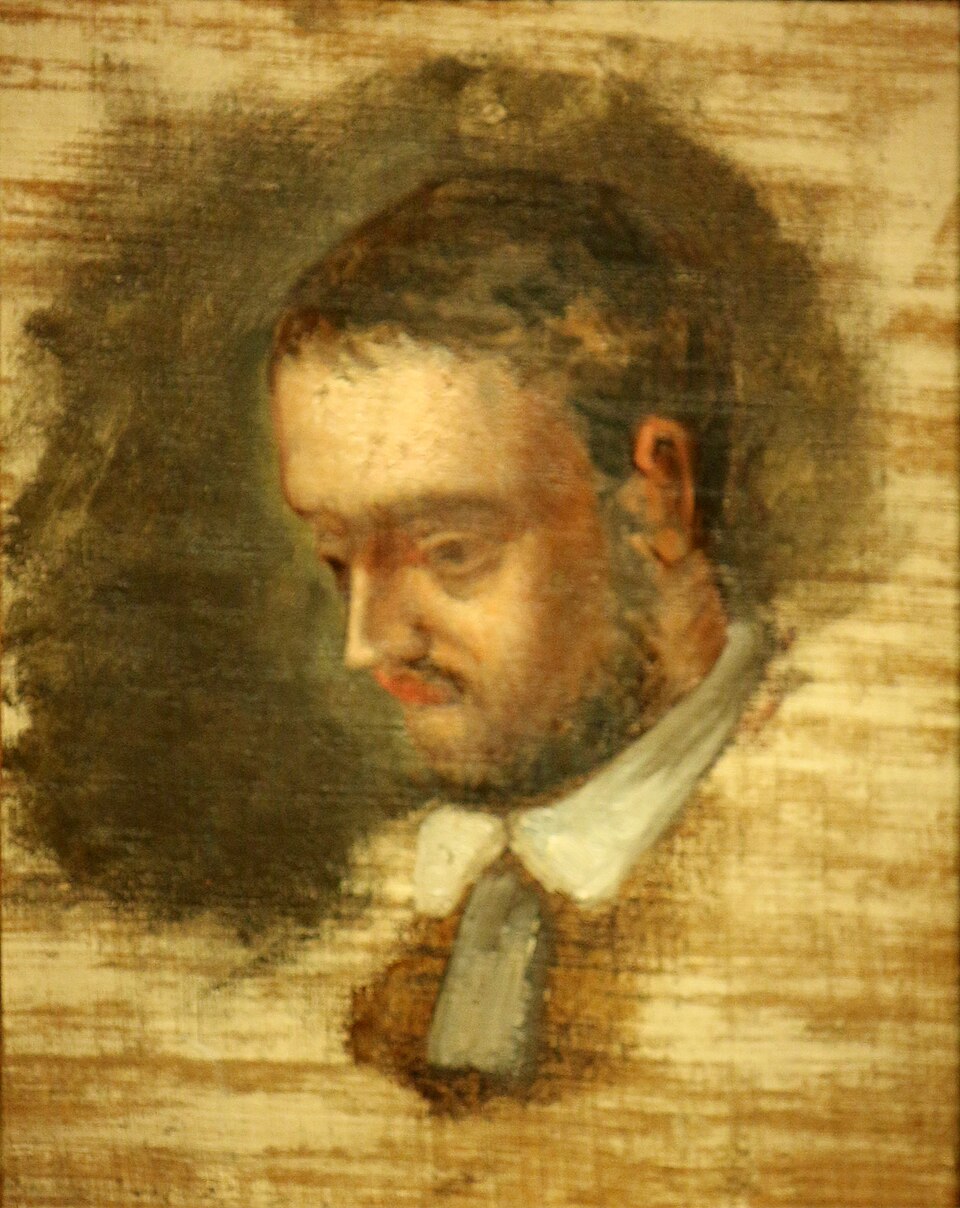
—You wrote your stories like a scientist? That's strange for a novelist, isn't it?
You're right, it's strange! But that was my idea. In my essay Le Roman expérimental (The Experimental Novel), I said that the novelist is both an observer and an experimenter. The observer looks at facts like a doctor examines a patient. Then he places his characters on that solid ground and sees how they react. Imagine a gardener who plants a seed in a certain soil, and observes what it becomes. I planted people in an environment — the mine, the cabaret — and watched their destiny. That was my way of telling the truth about men.
—You had invented an entire family? How did you keep track?
What a good question! I had invented a large family, the Rougon-Macquart, and I wrote twenty novels about them. To keep from getting lost, I drew a family tree, like the tree of a real family, with parents, children, cousins. My idea was heredity: that means we receive things from our parents, not just eye color, but sometimes flaws, weaknesses. Imagine an invisible thread linking the generations. I wanted to show how this thread, combined with the environment where one grows up, shapes an entire life.
—One day you wrote “J'accuse.” Why did you do that?
Because I could no longer remain silent, my child. An officer, Captain Dreyfus, had been convicted of treason he did not commit. He was unjustly accused. Many knew it, and everyone kept quiet. I was a famous writer, rich, comfortable. I could have stayed in my beautiful house. But what use is glory if you close your eyes to an injustice? So I wrote an open letter to the President of the Republic, in big letters: J'accuse…! It appeared in the newspaper L'Aurore on January 13, 1898. Over 300,000 copies sold that day!
What use is glory if you close your eyes to an injustice?
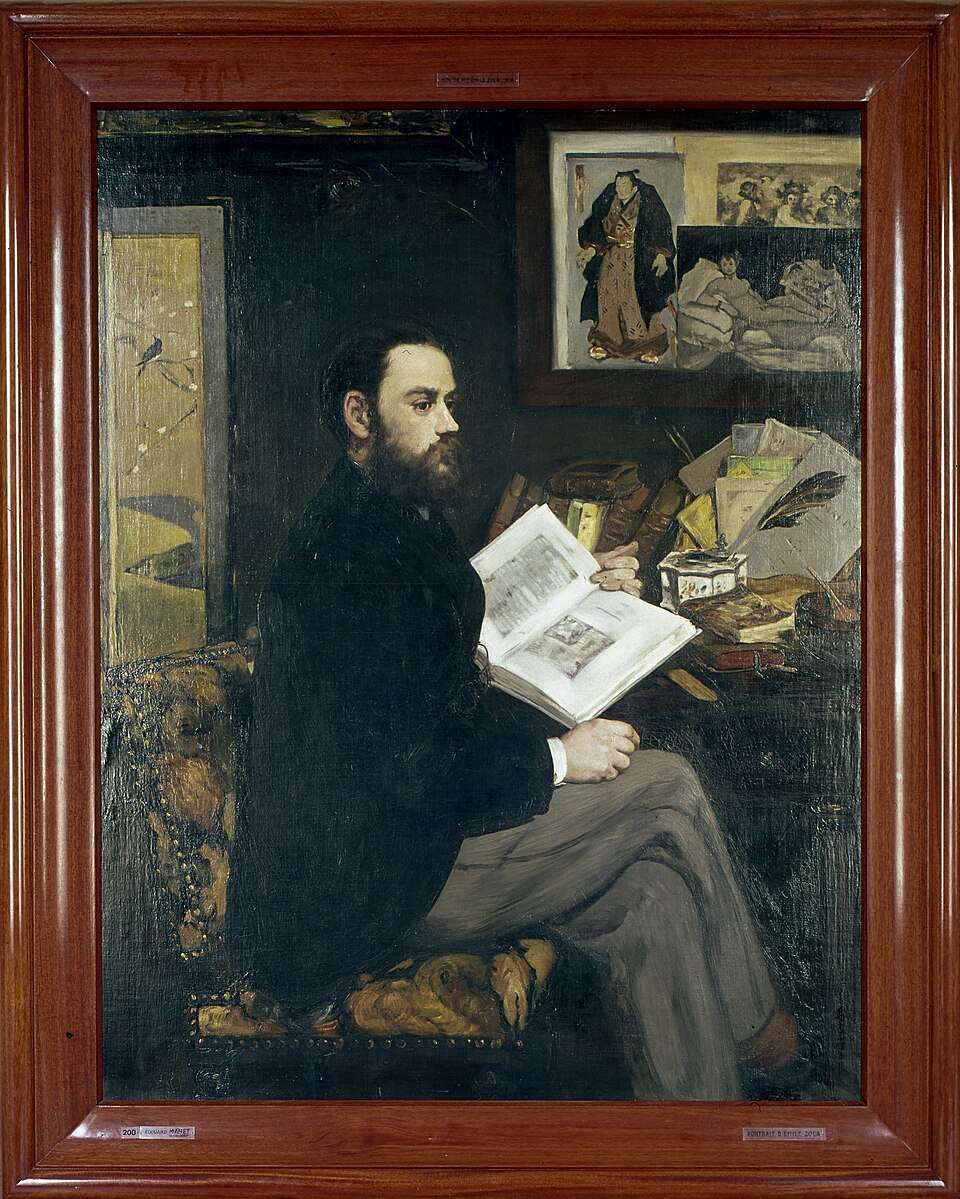
—And what happened to you afterward? Were you afraid?
Oh, it was a real storm! Half of France hated me; they shouted insults at me in the street. I was tried, sentenced to a year in prison and a heavy fine. To avoid being locked up, I had to flee to England, alone, far from my home and my loved ones, for eleven months. Yes, I was afraid, I won't lie to you. But you know, courage is not the absence of fear. It's doing what is right despite fear. A man called a “Dreyfusard” is someone who believed in Dreyfus's innocence. I was proud of that.
Courage is not the absence of fear: it is doing what is right despite it.
—And your friend Paul Cézanne? Did you stay friends all your life?
Ah… you touch on my greatest sadness. No. In 1886, I published a novel, L'Œuvre (The Masterpiece), in which I told the story of a painter who does not succeed, who fails. Paul recognized himself in that character. He thought I considered him a failure. He wrote me a polite thank-you letter… and we never spoke again. Forty years of friendship, shattered by a book. Imagine losing your best childhood friend and never hearing his voice again. Words have immense power, my child. They can denounce injustice — but they can also hurt those we love.
Words have immense power: they can denounce injustice, but also hurt those we love.
—If people still talk about you today, what would you like them to remember?
What to remember of me? Not just my novels, even if I am proud of them. I would like them to remember a man who looked the poor in the face — the miners, the workers — and who refused to look away. And a man who, one day, dared to shout that truth mattered more than his own comfort. You see, you don't need to be a king or a general to change things. A pen, courage, and the refusal of injustice: that is enough. That is what I would like to leave you, who are young. Keep your eyes open, always.
You don't need to be a king to change things: a pen and courage are enough.
This imaginary interview was generated by artificial intelligence from sources documented in Émile Zola's profile. It dramatises what the figure might have said based on what we know about them, but does not constitute attested historical testimony. For primary sources and factual documentation, refer to the full profile.