Imaginary interview with Enheduanna
by Charactorium · Enheduanna (2300 av. J.-C. — 2300 av. J.-C.) · Literature · Spirituality · 5 min read
At the top of the ziggurat of Nanna in Ur, the crescent moon has just risen over the marshes and the evening libation is finishing its smoke. Enheduanna, high priestess and daughter of Sargon of Akkad, sets down the lyre the singers were holding and agrees to speak. Her voice is the first in history to dare engrave her own name on the reverse of a song offered to the gods.
—They say you are the first whose name has come down to us. How did you come to sign your songs?
Before me, the reed pressed into clay counted the measures of barley, the heads of cattle, the jars of oil in the temple of Nanna. The cuneiform tablet served the granaries, not the heart. When I dictated my hymns to Inanna, I had my name carved into the clay, like a seal rolled upon the world: Enheduanna. No one before me had dared to say 'here is who speaks' on the reverse of a song destined for Heaven. I am the daughter of Sargon, priestess at the top of the ziggurat — my name was not vanity but an oath: she who sings answers for her song before Heaven and Earth.
Carving my name into the clay, like a seal rolled upon the world.
—Your hymns sometimes open with yourself before the goddess. Why begin by saying who you are?
When distress seized me, I did not open my song with praise but with confession: 'I am Enheduanna. I am the high priestess of Inanna.' To say I was to risk being erased — for who am I before the one who holds the me, the divine rules of the world? And yet I let my lament mingle with the hymn: the lyre of lamentation laid on the ground, the month completed without answer. My successors will bear my title for centuries; but this trembling I, I believe, will remain mine. A song that does not say who suffers is merely a scribe's formula.
—You devoted your work to Inanna. What goddess is she, for you who sing her?
Inanna is not a peaceful goddess: she is love and war housed in the same breath, the evening star and the storm. She guards the me, those divine rules without which there would be neither kingship, nor weaving, nor writing, nor song. In the Exaltation of Inanna, I hailed her as 'Queen of all divine rules, radiant light, woman clothed in divine light.' My father united the cities under a single hand; I wanted Inanna the Sumerian and the Ishtar of the Akkadians to become one single Lady above the empire. One serves the moon-god Nanna out of duty; Inanna, one serves out of terror and fire.
Inanna, one serves out of terror and fire.
—People speak of three great hymns forming a cycle. What were you trying to say by composing them?
People speak of three songs, like three steps of the same ziggurat. In the first, the Inninsagurra, I supplicate; in the Ninmesarra, I confess my smallness as a human priestess before her omnipotence; in the Inninmehusa, the Lady of the burning heart, I sing her warlike and creative strength. Together, they depict a complete goddess — she who destroys and she who founds. I did not separate theology from my own voice: praising Inanna and confessing my distress were the same gesture. This is how, I believe, I became not only her priestess, but the one who fixed her face for the edubba to come.
—You also composed a hymn for each of the great temples of the land. What purpose drove you?
Forty-two temples, from Nippur to Eridu, each with its hymn — I wanted to lay down in clay the sacred map of the whole land. For Ur, I sang: 'O dwelling of Ur, founded in a pure place, ziggurat whose summit touches the sky.' Each sanctuary had its god, its adornment, its own song; to gather them in a single collection was to make my father's empire fit into a roll of tablets. The old Sumerian cults and the power of Akkad now breathed under the same roof of words. A king unites lands by the lance; his daughter unites them by the hymn.
A king unites lands by the lance; his daughter unites them by the hymn.
—Your texts were copied long after you. Did you imagine such survival?
I composed for the gods, but it was the children of the edubba, the houses of tablets, who kept my words alive. There, young scribes copied my hymns onto fresh clay, again and again, as exercise and as model. At Nippur, in the scribes' libraries, they piled up copies of my songs. I would not have imagined that a child's hand, generations after my last breath, would trace my name while learning to write. If one thing of mine were to endure, I would not have bet on limestone or gold, but on that reed which presses soft clay in the courtyard of a school.
—A man seized Ur and drove you from the temple. What happened that night?
A man named Lugal-Ane rose against the order of things. He took Ur, and he tore me from the gipar, my residence adjoining the sanctuary, where I ruled over the granaries, the herds, and the songs. One does not drive out a high priestess like a servant: it is the moon-god himself who is insulted. Wandering, stripped of my headdress, I experienced what no scribe had written before me — injustice in one's own flesh. The hand that poured the libation at the top of the ziggurat now held out an empty palm. From that night was born my most burning hymn.
—How did you get through that exile, and what finally brought you back to the temple?
Stripped, I did what no one had done: I brought my complaint not to men but to Inanna, in writing, in the Exaltation of Inanna. I begged her to restore my office and turn her wrath against the usurper. Understand me: this was not a learned prayer; it was my exile stitched into the hymn, line after line. And the Lady heard me — when the armies of Akkad retook Ur, I ascended again to the gipar and the ziggurat of Nanna. But I believe what truly saved me was turning my distress into song. A misfortune that one can name ceases to be merely a misfortune.
A misfortune that one can name ceases to be merely a misfortune.
—You had a stone disk carved with your likeness. What did you want to inscribe on it?
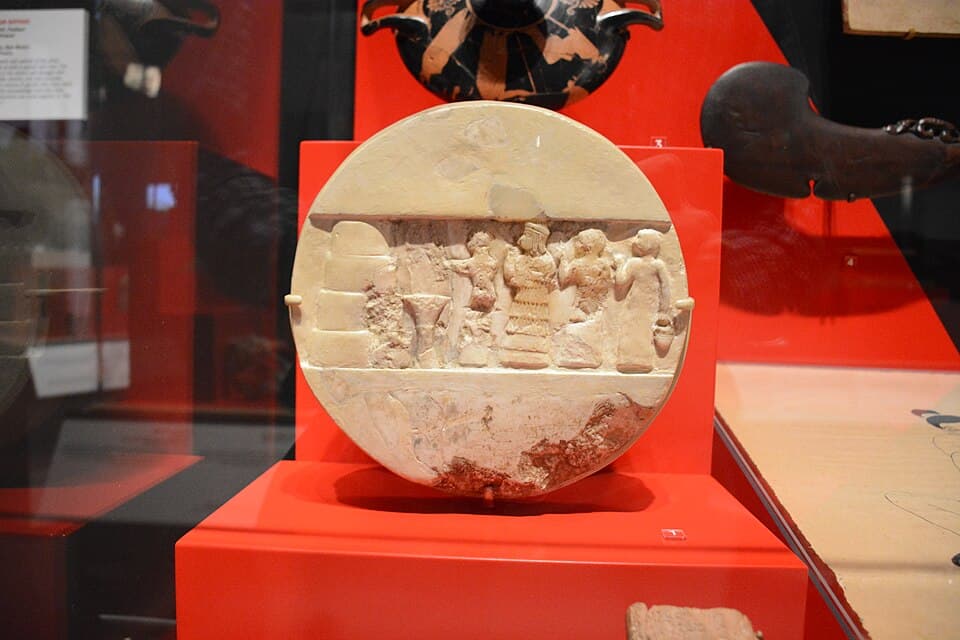
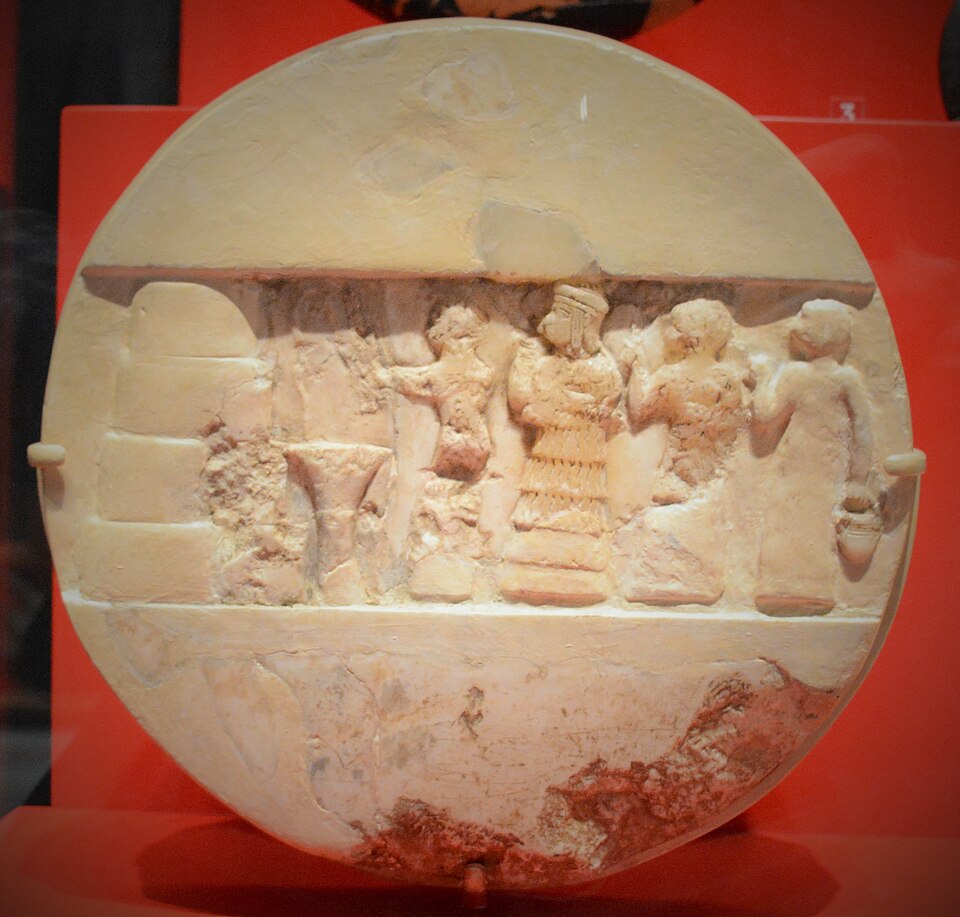
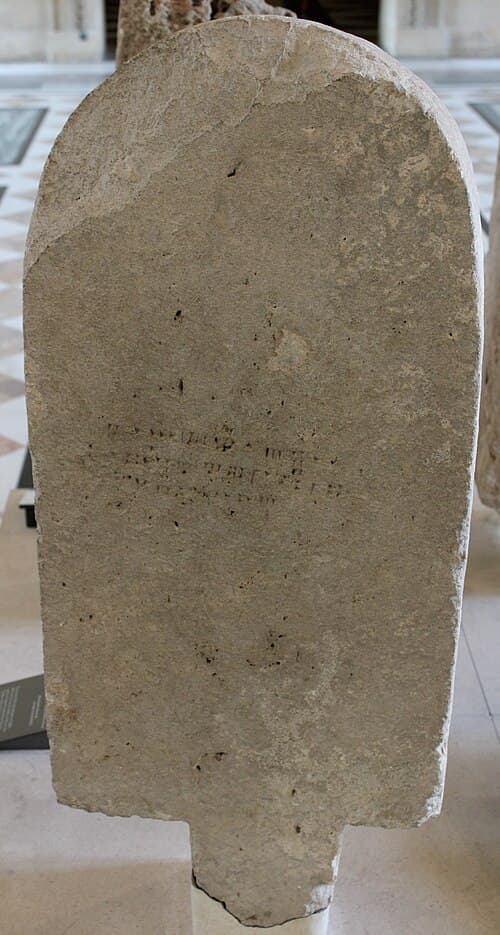
I had a limestone disk cut for the temple — a round plaque where I am seen officiating, conducting the libation before the altar, surrounded by my priests. On the reverse, I had engraved who I was: 'Enheduanna, high priestess of Nanna, wife of the god Nanna, daughter of Sargon, king of Akkad.' You see, again I sign. On stone as on clay, I refuse to be an anonymous silhouette among the offering figures. Let it be known, looking at this woman with the cylindrical headdress pouring the sacred beer, that she had a name, a voice, and a father who ruled over the first of empires.
—On that disk, your attire is very distinctive. What do these ornaments say about your role?
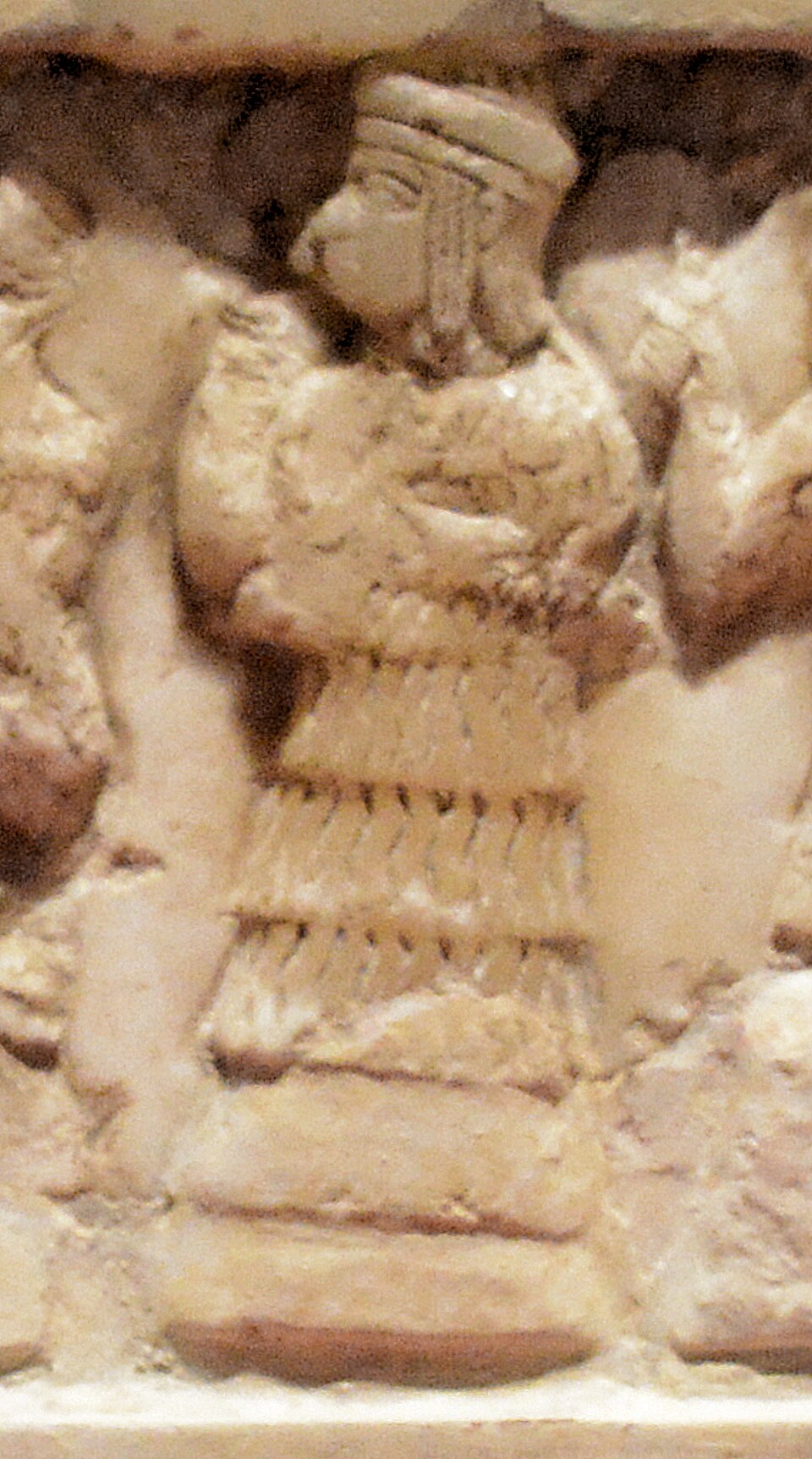
On that disk I wear the tiered fringed robe, the kaunakès of curly wool, and the golden cylindrical headdress — the polos — which declares my rank to those who cannot read. These ornaments are not decoration: the headdress is almost divine, it marks the one who stands between the gods and the people. I raise my hand toward the top of the ziggurat, in the gesture of libation that I repeat each dawn to greet Nanna. Many gods and kings were carved before me; but a named woman, with her face and function fixed — that, I believe, the stone had not yet recorded.
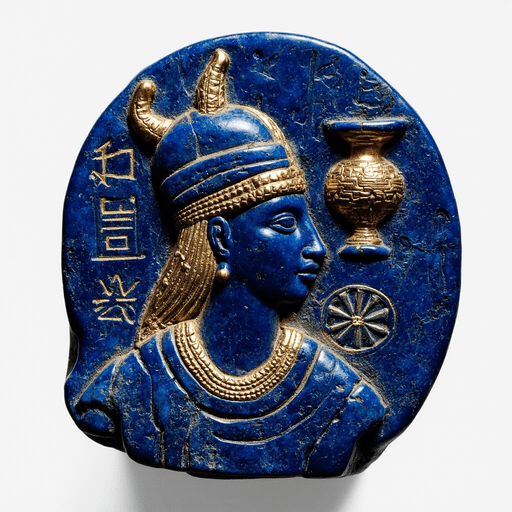
This imaginary interview was generated by artificial intelligence from sources documented in Enheduanna's profile. It dramatises what the figure might have said based on what we know about them, but does not constitute attested historical testimony. For primary sources and factual documentation, refer to the full profile.