Kids interview Enheduanna
by Charactorium · Enheduanna (2300 av. J.-C. — 2300 av. J.-C.) · Literature · Spirituality · 5 min read
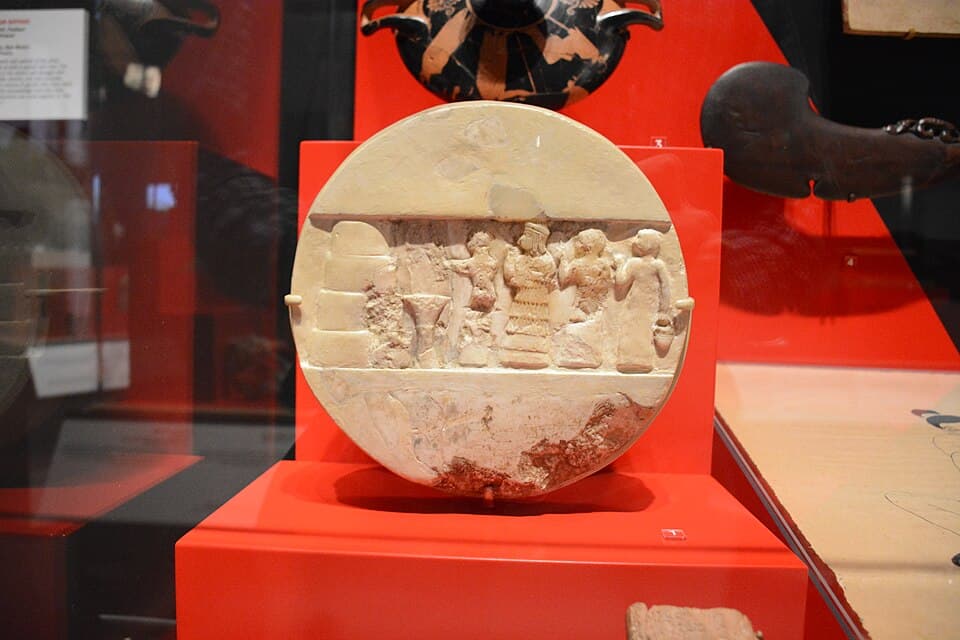
Two twelve-year-old visitors push open the door of a room where a carved stone disk rests. A gentle voice greets them, like that of a grandmother from the depths of time. It is Enheduanna, high priestess of Ur, who agrees to answer their questions.
—Is that you, the face on this stone disk? How do we know it's you?
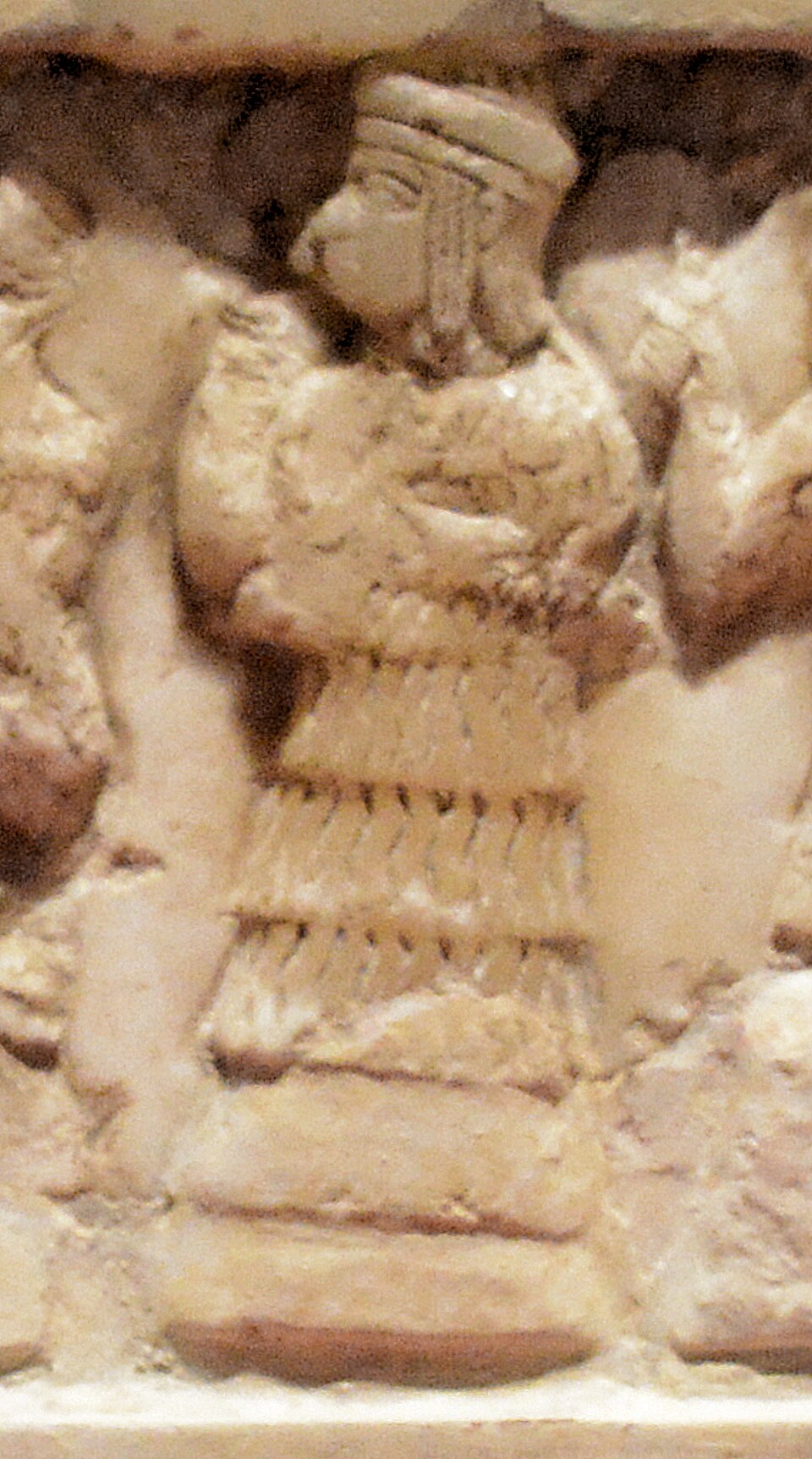
Yes, my child, it is indeed me. Imagine a round plaque of light stone, as wide as a large plate. I am shown standing, pouring an offering to the gods. Behind me, priests follow. For thousands of years, no one knew who I was. Then an excavator named Leonard Woolley found this disk at Ur, in 1927. And on the back, my name was carved: Enheduanna, daughter of Sargon, king of Akkad. Can you imagine? Time can erase a face, but a carved name crosses centuries.
Time can erase a face, but a carved name crosses centuries.
—They say you are the first person to sign what they wrote. Is that true?
It is true, and it still moves me. You know, in my time, people who knew how to trace signs in clay mostly used them to count. How many sacks of barley, how many sheep. No one said I, me. I, in my poems, wrote these words: I am Enheduanna. I am the high priestess of Inanna. Imagine the first time a voice says "I" in a text. It was like lighting a lamp in a dark room. Before me, songs had no face. After me, people knew a human being had carried them.
Before me, songs had no face.
—What did you do in the morning when you woke up?
My days began before the sun. I climbed to the very top of the ziggurat — it's a great stepped temple, whose summit seems to touch the sky. Up there, I greeted the return of Nanna, the moon god. I poured thick beer and perfumed oil as an offering: we call that a libation. Around me, singers called the nar made my hymns resound. Imagine the sky still violet, the scent of oil, and those voices rising. That was my work, my child: keeping the god's house, every day the moon returned.
—And what did you eat? What did your home smell like?
Ah, you ask a lovely question! I lived in the gipar, the house reserved for the high priestess, right next to the temple. Walls of mud brick, storerooms full, kitchens smoking. In the morning, there was barley bread, dates, figs, sometimes dried fish from the river. Lamb meat? Only on great feast days. Imagine the smell of warm bread mixed with that of sesame oil and the wool of my robes. I wore a long fringed robe, the kaunakès, and a golden headdress. Everything smelled of stone, smoke, and incense.
—Is it true you wrote poems for forty-two different temples?
Forty-two, yes! One for every great temple in the land. Imagine writing a little song for each city you know, saying what makes it beautiful and sacred. End to end, my poems formed a kind of map of the whole country. They were copied for centuries in the schools. But it wasn't just a poet's game, my child. My father Sargon had just united peoples who did not know each other. By singing all their temples in a single collection, I linked them together. Words, you see, can bring together what borders separate.
Words can bring together what borders separate.
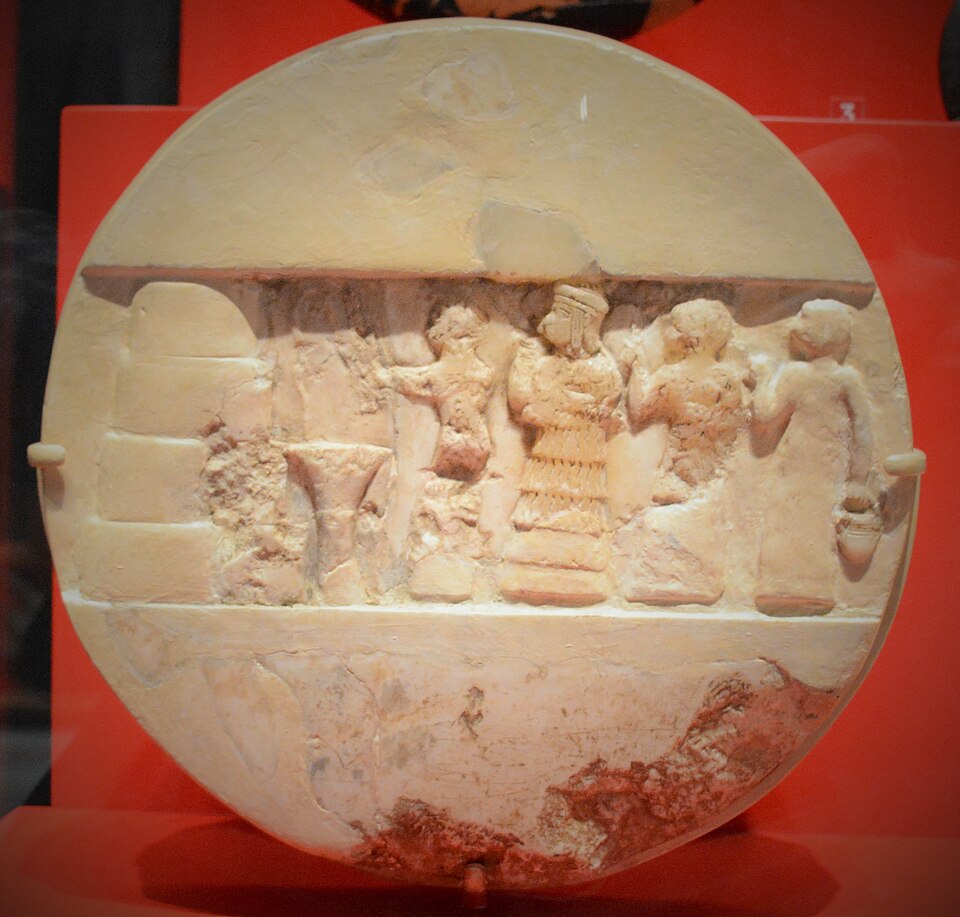
—Why did your father, the king, choose you for such an important job?
My father Sargon had founded a vast empire, the very first in history. But conquering cities is not enough: people must also pray together, feel they belong to one world. So he appointed me high priestess of Nanna, at Ur, around 2300 BCE. It was a southern city, with its own traditions. By placing me there, my father united two peoples: his own, the Akkadians, and the ancient Sumerians of the south. I was a bridge, in a way. A king's daughter who prays for all is a bond that weapons cannot forge.
—I was told a wicked man drove you from your temple. How did that happen?
It is one of the greatest sorrows of my life. A man named Lugal-Ane seized Ur by force. He drove me from my temple, from my gipar, from everything that was my life. Imagine being torn from your home and the only work you know how to do. I experienced exile, fear, injustice. But I had no army. I had my words. So I did the only thing I knew how to do: I wrote. I begged my goddess Inanna to restore my place. And one day, I was reinstated. Words had brought me home.
I had no army. I had my words.
—And is that sadness what you put into a poem? What exactly did you write?
Yes. That poem is called The Exaltation of Inanna. One hundred fifty-three lines in which I tell my misfortune and beg the goddess. It is likely the first time in history that a person wrote their own pain, saying I suffer, help me. Before, people sang of the gods from afar, like a crowd. I spoke to Inanna as one speaks to someone one loves and waits for. Imagine a letter written at night, in the dark, calling for help. That was my poem. And perhaps that is why it is still read: the pain of a heart never ages.
The pain of a heart never ages.
—Did children learn your poems at school like we do?
Yes, and that makes me very proud! In my country, the school was called the edubba, which means "the house of tablets." Students learned to write by copying texts onto soft clay, with a cut reed. Well, my hymns were among their models. Imagine: hundreds of years after my death, children like you traced my words to learn to write. My 42 temple hymns were used as a textbook. You see, my child, I had immense luck: not only was I read, but I was copied, again and again. That is how a name survives.
—If we could meet you today, what would you want us to remember about you?
I would like you to remember one simple thing. You do not need an army or a crown to leave a mark. I was a priestess, I prayed, I was driven out, I was afraid. But I took a reed, I wrote in clay, and I signed: Enheduanna. Four thousand years later, two children come to ask me questions. That is the miracle of words. A clay tablet lasts longer than a palace. So if one day you feel something strongly, write it down. Put your name. Who knows what voice will hear it, long after you.
A clay tablet lasts longer than a palace.
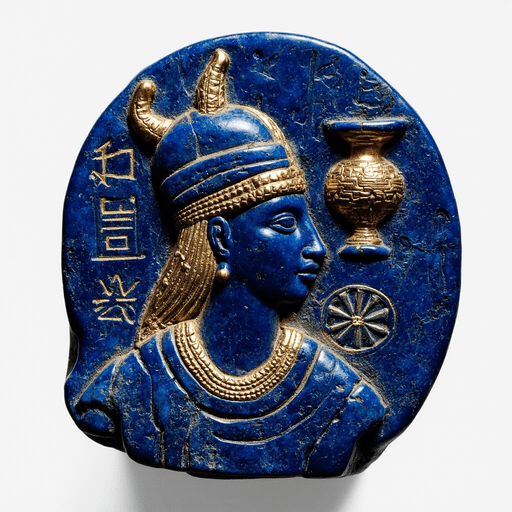
This imaginary interview was generated by artificial intelligence from sources documented in Enheduanna's profile. It dramatises what the figure might have said based on what we know about them, but does not constitute attested historical testimony. For primary sources and factual documentation, refer to the full profile.