Imaginary dialogue between Sargon d'Akkad and Enheduanna
by Charactorium · Enheduanna (2300 av. J.-C. — 2300 av. J.-C.) · Literature · Spirituality · 5 min read
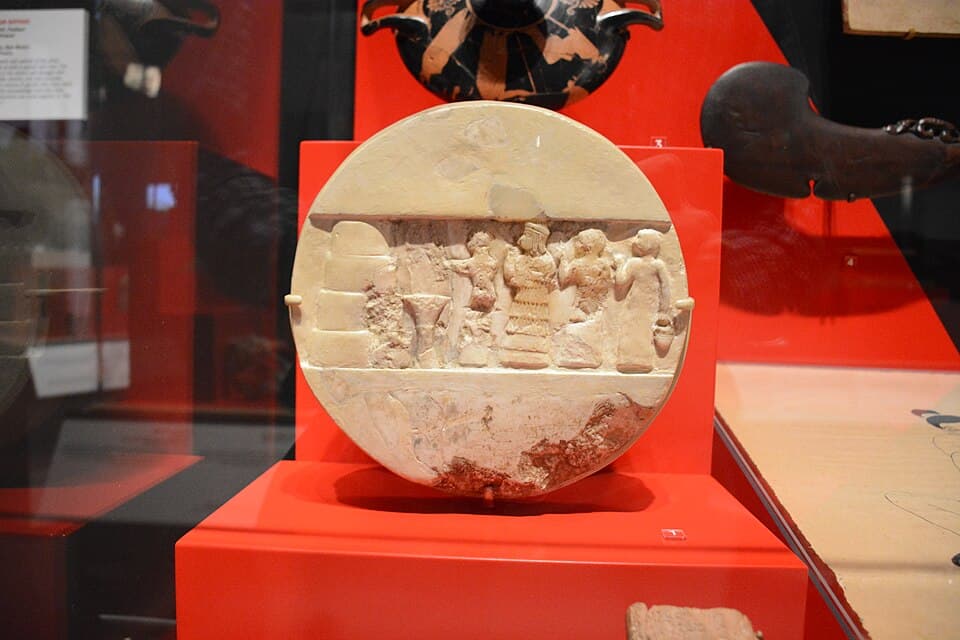
It is at the top of the Ziggurat of Nanna, in Ur, around 2255 BCE, that Sargon of Akkad climbs the baked-brick steps to find his daughter Enheduanna, just reinstated as high priestess. The air still smells of libation oil and the smoke of the morning offerings; below, the river glistens between the reeds. The king who unified the Sumerian cities comes to the one he placed here to bind the gods of two peoples — he comes as a father, as much as a sovereign. Between them, the memory of the recent exile and the weight of the hymns she has set into clay.
—My daughter, when the rebel Lugal-Ane drove you from this temple where I had placed you, I was far away and powerless. How did you live through those days of exile?
Father, you had given me to Nanna as his earthly bride, and then a man tore me from my gipar like a discarded servant. I wandered far from Ur, my forehead covered in dust, and I felt that the goddess herself had turned away from me. But I did not weep in silence: I dictated my lament into clay, I begged Inanna to restore me to my altar. You who retook the city by arms, know that I reconquered it by prayer. The Exaltation of Inanna was born that night, when the lyre of lamentation lay on the ground.
You who retook the city by arms, I reconquered it by prayer.
—You did something no scribe in my empire had dared: you placed your own name on your tablets. Why this gesture, when clay was used only for accounts?
Father, in your granaries the scribes record measures of barley and heads of cattle, and no one asks who holds the stylus. But I was not counting sacks: I was speaking to a goddess, and she needed to know who was imploring her. So I wrote: I am Enheduanna, high priestess of Inanna. My name is not pride, it is a vow — it binds the one who prays. And in the edubba, the houses of tablets, my words will be copied by hands I will never see. The clay you think mute, Father, I made it sing and remember.
The clay you think mute, I made it sing and remember.
—You gave Inanna three great songs. Why that formidable and changeable goddess, rather than the calm moon-god whose priestess you are?
Father, I serve Nanna with my body and my rites, but Inanna I sang with my soul. She is the one who holds the me, the divine decrees on which all civilization depends: the kingship you bear, the writing of my styluses, the music of my temples. She is light and storm, love and war — like the empire you built. In praising her, I describe her all-powerful in heaven, yet I entrust to her my woman's distress. My three hymns are but one supplication: that the keeper of divine decrees not abandon her servant. This is how I gave a face to her cult.
She is light and storm, love and war — like the empire you built.
—You know how hard I struggled to hold Sumer and Akkad together under one hand. Your 42 Temple Hymns, how do they serve this purpose that was mine?
Father, you united the cities through your garrisons and governors; I united them through their gods. I composed a song for each of the great temples of the land, from Ur to Nippur, from Eridu to the northern sanctuaries. Put end to end, these poems draw a sacred map of your empire, where each divine dwelling finds its place in a single order. A Sumerian and an Akkadian recognize their altars side by side, under the same crown. What your sword gathered, my hymns make sacred — and in the scribal schools they will be copied long after us.
What your sword gathered, my hymns make sacred.
—When I came up this morning, I saw you pouring oil at dawn, wearing the golden polos. Describe to me what your days are like in the service of Nanna.
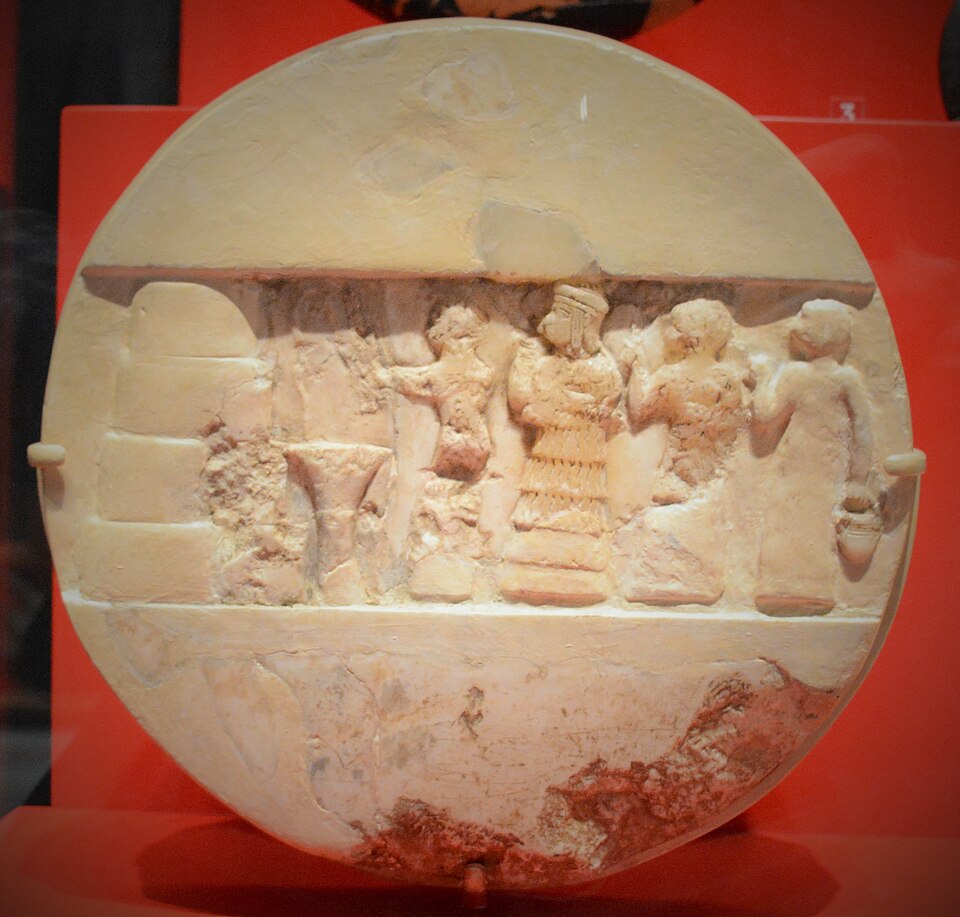
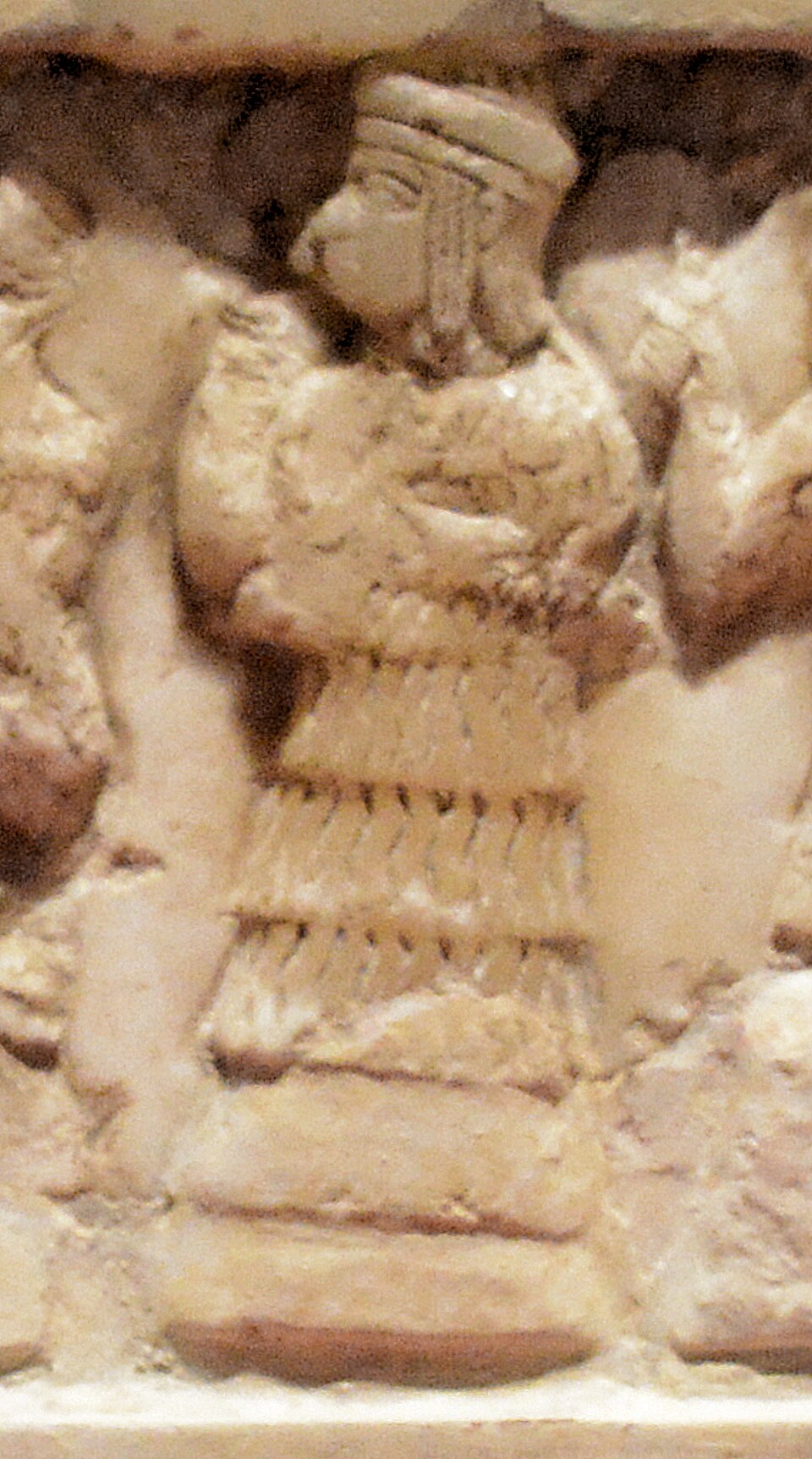
Father, at daybreak I greet Nanna when his crescent pales in the sky: I pour beer and perfumed oil, and the singers, the nar, raise my hymns atop the ziggurat. In the afternoon, I am no longer only priestess but steward — I manage the temple lands, granaries, herds, weavers' workshops, and dictate my texts to scribes. In the evening, I watch for the rising moon and lead the sunset rites. I wear the fringed kaunakès and the cylindrical headdress you see, a sign that I am the god's bride. A carver has fixed this image on a stone disk, so that none forget who officiated here.
I greet Nanna when his crescent pales in the sky, and the singers raise my hymns.
—You are restored to your altar after the reconquest. But tell me truly, my daughter: do you still fear being torn from this temple again?
Father, I have known the fall, and one who has fallen once never again walks without watching the ground. Inanna heard me and brought me back to my gipar, but I now know that the favor of gods, like that of kings, can withdraw in a single night. That is why I wrote: as long as clay endures, my prayer will stand before the goddess, even when my body is no longer there to utter it. My successors will bear my title, but my words will remain mine. You can drive a priestess from her temple; you cannot drive a hymn from a tablet.
You can drive a priestess from her temple; you cannot drive a hymn from a tablet.
—In your hymn you write 'I am Enheduanna' and confess your pain as a human priestess. A king does not show weakness — why do you show yours?
Father, you must appear unshakable before your armies, and I understand that: a king who doubts makes his empire tremble. But before Inanna, feigning strength would be a lie, and the goddess is not deceived. So I speak my distress, the month ending in pain, the lyre of lamentation laid on the ground. By admitting weakness I become true, and it is this truth that touches the goddess. Strange thing, Father: what you must hide to rule, I must confess to pray. And those who copy my words will see not a queen, but a soul.
What you must hide to rule, I must confess to pray.
—A carver has fixed your face on this limestone disk, showing you officiating at a libation. What should one read, in your opinion, in this stone?
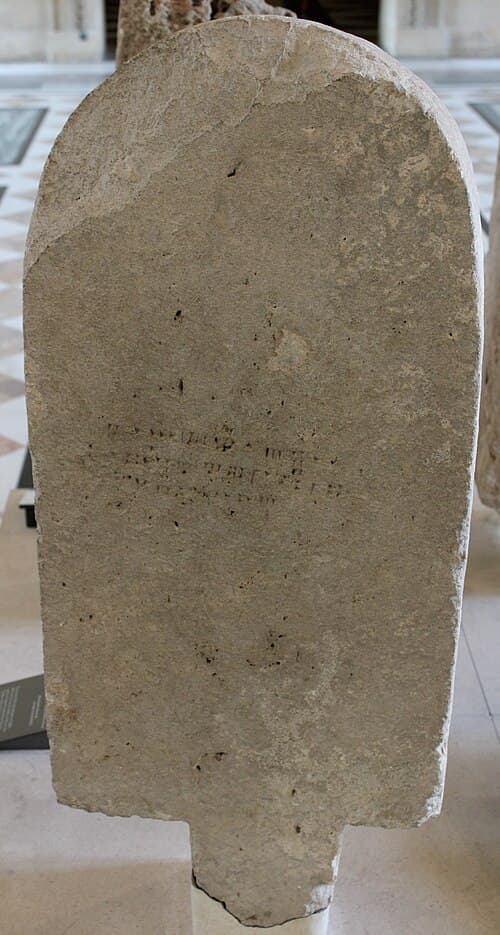
Father, on this plaque I am shown standing, hand raised toward the altar, surrounded by my priests, the headdress on my brow. On the back, my name is engraved: high priestess of Nanna, daughter of Sargon, king of Akkad. Thus no one can say that this woman was without name or father. But what the stone shows is not my pride: it is the moment when heaven and earth touch through my hands, when I pour the offering. You gave me to this god; this disk says I fulfilled my office. May the stone outlast my flesh, and may it speak for me.
What the stone shows is the moment when heaven and earth touch through my hands.
—You who sing Inanna, keeper of the me, tell me: among all these divine decrees, which seems most precious to you for our empire?
Father, the me are countless — kingship, priesthood, justice, music, weaving, even the art of war that you know so well. But if I had to choose one, I would choose writing, the stylus and the tablet. For kingship dies with the king, and victory fades with the next battle; but what is written endures. Without it, neither your laws nor my hymns would cross a single generation. Inanna holds all decrees in her hand, but it is through writing that they are transmitted to humans. That is why I do not count barley: I engrave what must survive.
Kingship dies with the king, victory fades; but what is written endures.
—When I led you here and named you high priestess, I saw a political act. What did you see that day when I entrusted Ur to you?
Father, that day you saw a bridge between Akkad and Sumer, a daughter placed like a seal on the conquered cities — and you were right, I was that. But I, setting foot in this temple, saw something else: a god to serve and a voice to find. You gave me an office; I made it a work. From your royal decision was born a priestess, but also a mouth that sings Inanna and Nanna in the same sacred tongue. You sought to unite peoples; without knowing it, you gave me words. What you sowed by calculation, Father, I turned into an offering.
You gave me an office; I made it a work.
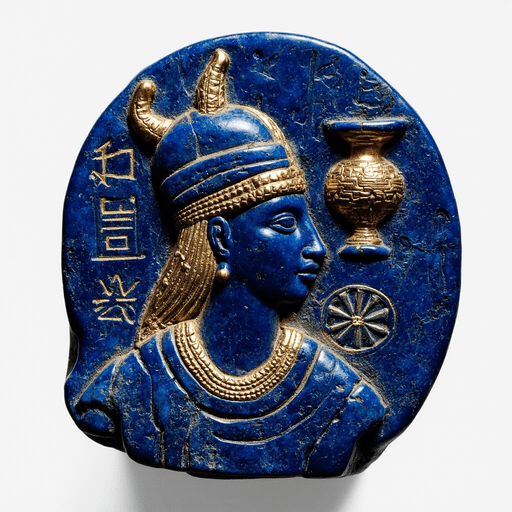
This imaginary interview was generated by artificial intelligence from sources documented in Enheduanna's profile. It dramatises what the figure might have said based on what we know about them, but does not constitute attested historical testimony. For primary sources and factual documentation, refer to the full profile.