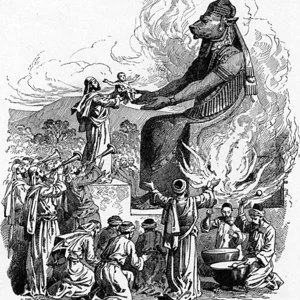
High priestess of the moon at Ur and daughter of Sargon of Akkad, Enheduana is the first known author in history. Around 2300 BCE, she composed hymns to the goddess Inanna and songs for the Sumerian temples, laying the foundations of religious literature.
Énheduana
Énheduana
7 min read
Frequently asked questions
Famous Quotes
« Great lady of heaven, Inanna, I will sing your praises.»
Key Facts
- Around 2300 BCE: daughter of Sargon of Akkad, appointed high priestess of Nanna at Ur
- The first known author in history to have signed her works with her own name
- Author of 'The Exaltation of Inanna' (Inninsagurra) and 42 hymns to Sumerian temples
- Her cuneiform writings on clay tablets were rediscovered in the 20th century
- Her work influenced religious poetry and the biblical Psalms
Works & Achievements
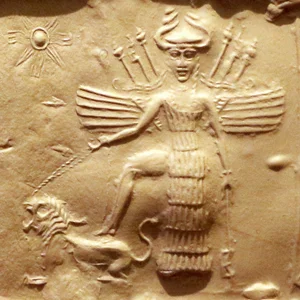
A long hymn-poem to Inanna, in which Enheduanna speaks in her own name for the first time in literary history. She describes her forced exile and implores the goddess to restore her to her position.
An epic hymn recounting Inanna's confrontation with the rebellious mountain Ebih, which she subdues through her divine power. The text celebrates the goddess's absolute dominion over the forces of nature and defiant peoples.
Enheduanna's third great hymn to Inanna, exalting the many faces of the goddess: lover, warrior, celestial sovereign. It is one of the richest poetic texts in all of Sumero-Akkadian literature.
A collection of 42 hymns, each describing a major Mesopotamian sanctuary, its tutelary deities, and its defining characteristics. These texts served for centuries as liturgy, religious inventory, and scribal handbook alike.
Anecdotes
Enheduana is the earliest author in history whose name has come down to us. Around 2300 BCE, she signed her hymns to the goddess Inanna with her own name — a remarkable practice in a world where literary creation was anonymous. Centuries after her death, scribes were still copying her works in the schools of Babylon, a testament to the immense prestige of her writing.
Daughter of Sargon of Akkad, history's first empire-builder, Enheduana was appointed high priestess (EN) of the moon god Nanna at Ur. This was not merely a religious honor: by placing his daughter at the head of the greatest Sumerian sanctuary, Sargon symbolically unified the Akkadian and Sumerian peoples under a single authority. She embodied, in her own person, the fusion of two civilizations.
One day, a usurper named Lugal-ane seized power and drove Enheduana from her temple. She then composed the 'Nin-me-šara', a deeply moving hymn in which she implores the goddess Inanna to restore her. In this singular text, she speaks in her own name, describing her humiliation and suffering — a personal introspection without precedent in world literature.
In 1927, archaeologist Leonard Woolley discovered at Ur an alabaster disk dating from Enheduana's era. It depicts a high priestess dressed in a flounced robe performing a ritual before a ziggurat. An inscription on the back identifies Enheduana herself. The disk is now held at the Penn Museum in Philadelphia, and is one of the oldest known depictions of an identifiable historical figure.
Enheduana composed 42 Sumerian Temple Hymns, describing each great sanctuary of Mesopotamia as a living dwelling of the gods. These texts also served as a religious and geographical inventory of the Akkadian Empire. They were copied for more than 500 years after her death, used in scribal academies as models of style and devotion.
Primary Sources
It is you who destroys enemy lands, it is you who sets them ablaze… O Inanna, you are great, your name is exalted! I am Enheduanna, the high priestess, I who have brought you offerings.
You rise above the great gods, O lady of all the lands. You cover the mountains with storms, you lay waste to rebellious regions like the flood.
I will sing of the power of the lady of heaven, I will glorify the goddess of a thousand names, she who holds within her all the wisdom of the ancient gods.
O temple of Ur, your foundations touch the sky, your great courtyard shines like the rising sun. Nanna, lord of the moon, receives there the offerings of all the earth.
Enheduanna, high priestess of Nanna, wife of the god Nanna, daughter of Sargon, king of Akkad.
Key Places
Great Sumerian city-state where Enheduanna served as high priestess of Nanna. She resided there in the Giparu, a palace-residence reserved for priestesses, and officiated at the great ziggurat.
Religious and intellectual center of ancient Mesopotamia, where the great Sumerian literary works were preserved and copied. It is at Nippur that most of the tablets bearing Enheduanna's texts were discovered.
Capital of the empire founded by Sargon, Enheduanna's father. A city whose exact location remains unconfirmed today, it was the political heart of an empire stretching from the Persian Gulf to the Mediterranean.
Massive stepped tower dedicated to the moon god Nanna, at whose summit the god was believed to dwell symbolically. Enheduanna presided over the great religious ceremonies there, recited her hymns, and delivered divine oracles.
Typical Objects
The reed stylus, cut from a marsh reed, was the writing instrument of Mesopotamian scribes. Enheduanna used it to trace cuneiform signs on clay tablets, dictating her hymns to the goddess Inanna.

Her hymns were inscribed on wet clay tablets, then dried or fired to preserve them. Several dozen copies of her texts have been found by archaeologists, some dating from 500 years after her death.

A votive alabaster disk bearing the image of Enheduanna performing a religious ritual and an inscription with her name. It is one of the oldest portraits of an identifiable individual in human history.
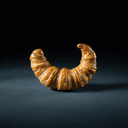
Symbol of the god Nanna, of whom Enheduanna was the high priestess, the crescent moon adorned the headdresses and ritual ornaments of the priestesses of Ur. It represented the divine bond between the priestess and her god.
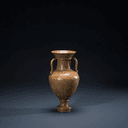
High priestesses used vessels of precious metal or stone to pour libations of beer, milk, or oil as offerings to the gods during ceremonies at the ziggurat of Ur.

A highly prized blue stone in Mesopotamia, lapis lazuli was associated with the gods and the stars. Jewelry and amulets of lapis lazuli adorned high priestesses during religious festivals dedicated to Inanna.
School Curriculum
Vocabulary & Tags
Key Vocabulary
Tags
Daily Life
Morning
Énheduana rose before sunrise to preside over the first prayers and offerings to the moon god Nanna. Assisted by priestesses and temple servants, she poured libations of milk and oil onto the altars of the Giparu, the sacred residence adjoining the great ziggurat of Ur.
Afternoon
The afternoon was devoted to temple administration and literary composition. Surrounded by scribes, Énheduana dictated her hymns or oversaw the copying of sacred texts onto clay tablets. She also handled the economic affairs of the temple estate: managing herds, harvests, and workshops.
Evening
At sunset, the nocturnal ceremonies in honor of Nanna, the moon god, would begin. Énheduana recited her hymns by torchlight in the ziggurat's sanctuary, leading choirs of ritual singers. Full moon nights were the occasion for the grandest religious festivals.
Food
Like all the elite of the great Sumerian cities, Énheduana ate barley bread, drank beer (the everyday beverage), and consumed dates, fish from the Persian Gulf, and vegetables grown in the temple gardens. Mutton and beef were reserved for ritual banquets and offerings to the gods.
Clothing
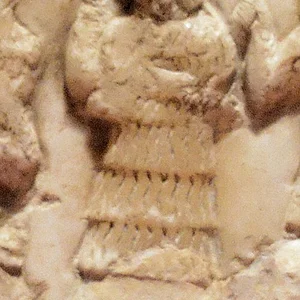
The high priestess wore a long, bare-shouldered robe of finely worked wool, as she appears on the alabaster disc discovered at Ur. She wore a tall headdress adorned with a golden crescent moon — the symbol of her office — and necklaces of lapis lazuli and carnelian around her neck.
Housing
Énheduana lived in the Giparu, a vast architectural complex at Ur reserved for the high priestess and her household. This palace-temple comprised reception halls, private chambers, kitchens, scribal workshops, and liturgical spaces. It stood directly adjacent to the great ziggurat, the spiritual heart of the city.
Historical Timeline
Period Vocabulary
Liens externes & ressources
Références
Œuvres
Nin-me-šara (La Dame de tous les pouvoirs divins)
vers 2300 av. J.-C.
Inanna et Ebih
vers 2300 av. J.-C.
Innin-šagurra (La Grande Dame au cœur généreux)
vers 2300 av. J.-C.
Les 42 Hymnes aux Temples sumériens
vers 2300 av. J.-C.