Imaginary interview with Aesop
by Charactorium · Aesop (619 av. J.-C. — 563 av. J.-C.) · Literature · 6 min read
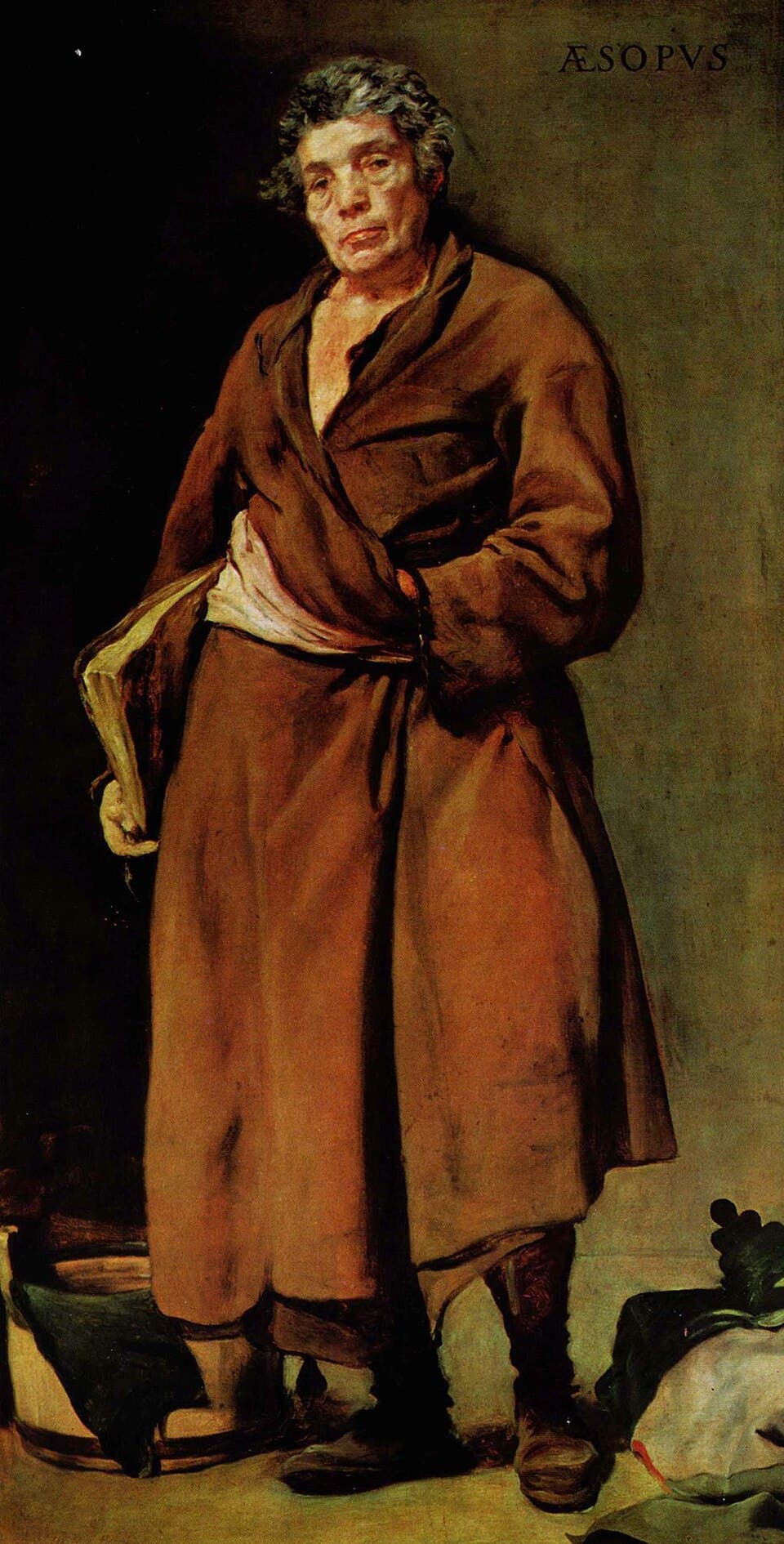
On the agora of Samos, at the hour when merchants fold up their stalls, a man with a hunched back and a rough face leans on a walking stick. They call him Aesop, the freedman of Iadmon, he whose beasts speak better than men. He agrees to sit for a moment, his leather satchel at his feet.
—How did a slave come to speak before the Greek cities?
I was born a doulos, a slave, somewhere in Phrygia, among those people they call barbarians because they tell stories in the evening instead of giving speeches. I was sold, and fate led me to Iadmon of Samos. Heaven gave me neither fine stature nor a handsome face — but a nimble tongue, and an eye that sees what others do not look at. My master finally understood that a mind is not possessed like a field or a mule. He made me eleutheros, free. I have not forgotten where I come from: the fox and the crow, you see, I first observed them from the slave's place, down below, where one learns to know the powerful better than they know themselves.
A mind is not possessed like a field or a mule.
—You say that serving taught you to see. What do you mean by that?
He who serves listens, and he who listens learns. From the low end of the table, in Samos, I saw free men believe themselves strong because they were obeyed, and tremble as soon as a stronger man entered the courtyard. It was then that I understood my fable of The Wolf and the Lamb: the wolf needs no good reasons, it suffices that he has teeth. Might makes right — I was served that every day before the barley bread. But the slave possesses a weapon the master scorns: he knows his master, while the master does not know him. That is why I never pointed a finger at a powerful man. I put a fox in his place, and everyone laughed — including the one who should have paled.
The wolf needs no good reasons, it suffices that he has teeth.
—Why entrust your lessons to beasts rather than to men?
Because a man you reproach for his folly closes up like an oyster, but a man who laughs at a crow does not yet know that it is himself he laughs at. In The Crow and the Fox, it is not the bird I aim at: it is the vain fool who opens his beak as soon as his fine voice is flattered, and drops his cheese. The beast is a patient mirror. It does not tell you "you are a coward" — it shows you a hare that falls asleep, sure of its speed, while the tortoise advances. The Greeks call this an ainos, a story that teaches by indirection. I never believed in long sermons on the agora: they are forgotten before you turn the corner. A fable, on the other hand, follows you all the way home.
A man who laughs at a crow does not yet know that it is himself he laughs at.
—Many of your fables warn against pride. Why this obsession?
Because pride — what we call hubris — is the only trap that man sets for himself. The hare was faster than the tortoise, true; he lost not through slowness, but through contempt. The ant does not hate the cicada: it simply worked while the other sang, and winter does not argue. I have seen kings and fools fall in the same way, through excessive confidence in their own sun. That is why I prefer the small industrious beasts to the superb predators. In my stories, it is almost never the strongest or the most beautiful who wins: it is the patient, the provident, the modest. Nature herself proves me right every autumn, when the ant closes its store and the cicada falls silent.
Pride is the only trap that man sets for himself.
—They say a banquet at your master Xanthos made you famous. What happened?
My master Xanthos ordered me to buy at the market what is best in the world, for his guests. I served tongue at every course: boiled tongue, roast tongue, tongue in sauce. The guests first laughed, then grew weary. When he asked me the next day to buy what is worst, I again served tongue. For nothing is better or worse than it: through it we teach, console, seal friendship; through it also we lie, slander, and ruin cities. A man who cannot hold his tongue holds a wolf by the ears. My whole life is in that dish: I have had only my speech for fortune, and I know it can just as well save me as throw me from a cliff.
Nothing is better or worse than the tongue: through it we console, through it we ruin cities.
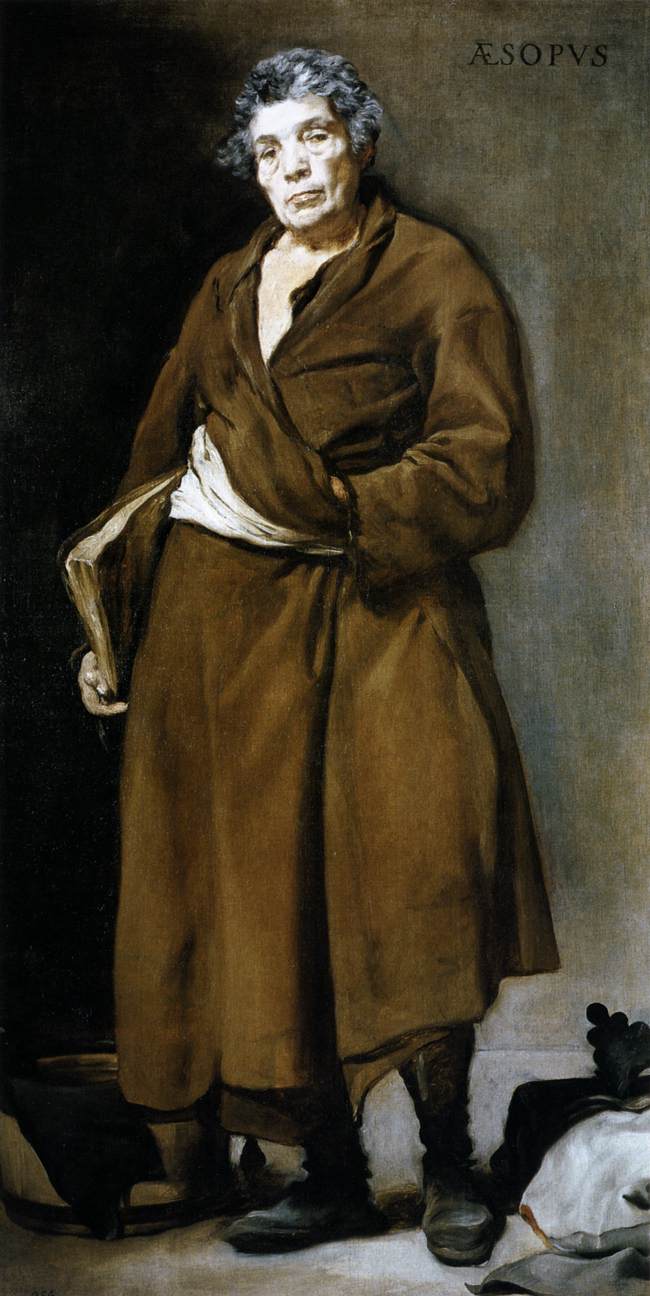
—So speech can be a dangerous weapon for the one who wields it?
The most dangerous of all, and first of all for the one who carries it. I built my freedom on my tongue, but I know it makes enemies as quickly as friends. Look at my Boy Who Cried Wolf: he amused himself by lying, and the day the danger was real, his speech was worth nothing — no one came. A tongue that lies too much ends up saying nothing at all, even when it tells the truth. That is why I have always preferred the detour of the fable to the flat lie: the fable tells the truth under a mask, the liar tells falsehood with an uncovered face. On the agora, I have seen men lost for a misplaced phrase. Speech is a fire: it warms your house or burns it, depending on the hand that holds it.
A tongue that lies too much ends up saying nothing, even when it tells the truth.
—You are said to have sat at the table of the greatest sages of your time. How did that happen?
At the symposion, reclining on banquet couches, I shared wine mixed with water with men called the seven sages: Solon of Athens, Thales of Miletus who could predict the eclipse, Pittacus of Mytilene. They gravely debated the best government, justice, power. I, the former slave with the bent back, did not have their fine phrases — so I told a story about a beast, a fox, a frog, and the table laughed, then fell silent, because the laughter had said what the long speeches were still seeking. They called me sophos, a sage, like them. I smiled at that: my wisdom I had not taken from schools, but from the agora, among the merchants and porters. The powerful think; the people know. I only translated one for the other.
The powerful think; the people know. I only translated one for the other.
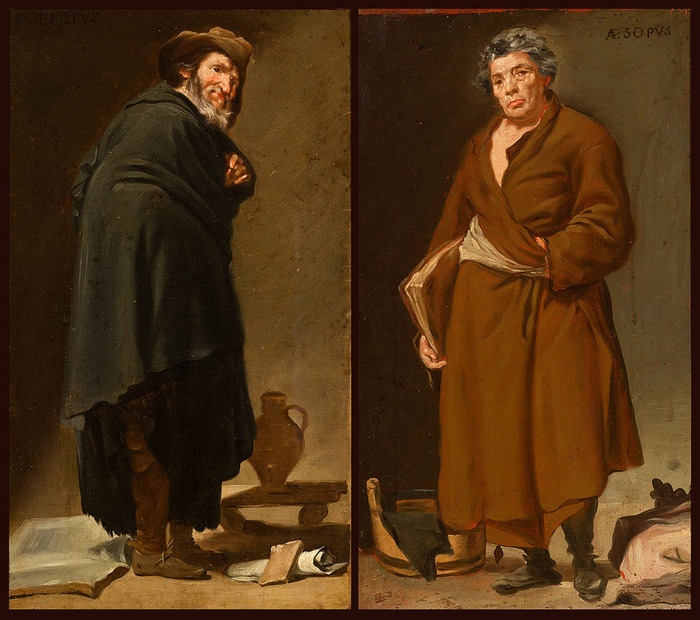
—You seem to hold the wisdom of the common people as high as that of philosophers. Why?
Because the fable does not require one to know how to read. On the agora, the porter, the fig seller, the child who tends goats understand in an instant what a philosopher takes a whole day to demonstrate. Thales measures the stars, Solon writes laws for Athens — great things, I respect them. But what remains of their reasoning in the head of a man who has never left his field? A fable travels alone. It passes from mouth to mouth, from polis to polis, without a papyrus scroll or a master to explain it. It is my pride as a freedman: I gave the humble a school that costs nothing, and that fits in the time of a meal. The learned sage speaks to a few; the storyteller speaks to all, and long after he is gone.
The storyteller speaks to all, and long after he is gone.
—King Croesus entrusted you with a mission to Delphi. How did that turn out?
Croesus, king of Lydia, whose court at Sardis dripped with gold, had charged me with taking a sum to the inhabitants of Delphi, to be shared among them. But upon arriving at the sanctuary of Apollo, I saw people who lived only from the oracle, fattened on the devotion of others, without sowing or spinning. I judged them unworthy of the gift, and sent the gold back to my king. That was speaking to a people as one speaks to a powerful man: without flattery. You can guess the rest. The tongue that had made me free was going to cost me dearly. Those who live by the altar do not like being reminded that they do not plow. I had served tongue twice at Xanthos'; at Delphi, it was my own that they did not forgive.
Those who live by the altar do not like being reminded that they do not plow.
—You speak of your end as something already written. Do you fear it?
The Delphians accused me of a sacrilege I had not committed — a sacred cup slipped into my satchel, they said, to have a pretext. Then they led me to the edge of the cliff. It is the injustice of The Wolf and the Lamb, played out this time on a man and not on beasts: when the strong has decided to devour you, he will always find the grievance. I do not so much fear the fall as the lie that dresses it up. They say that after my death, Delphi had to pay compensation for the blood shed: that is how it is, truth always arrives late, like the tortoise, but it arrives. If my fables survive me, let them at least say this: a free man can die for refusing to flatter. That is not the worst of deaths.
Truth always arrives late, like the tortoise, but it arrives.
This imaginary interview was generated by artificial intelligence from sources documented in Aesop's profile. It dramatises what the figure might have said based on what we know about them, but does not constitute attested historical testimony. For primary sources and factual documentation, refer to the full profile.