Kids interview Aesop
by Charactorium · Aesop (619 av. J.-C. — 563 av. J.-C.) · Literature · 5 min read
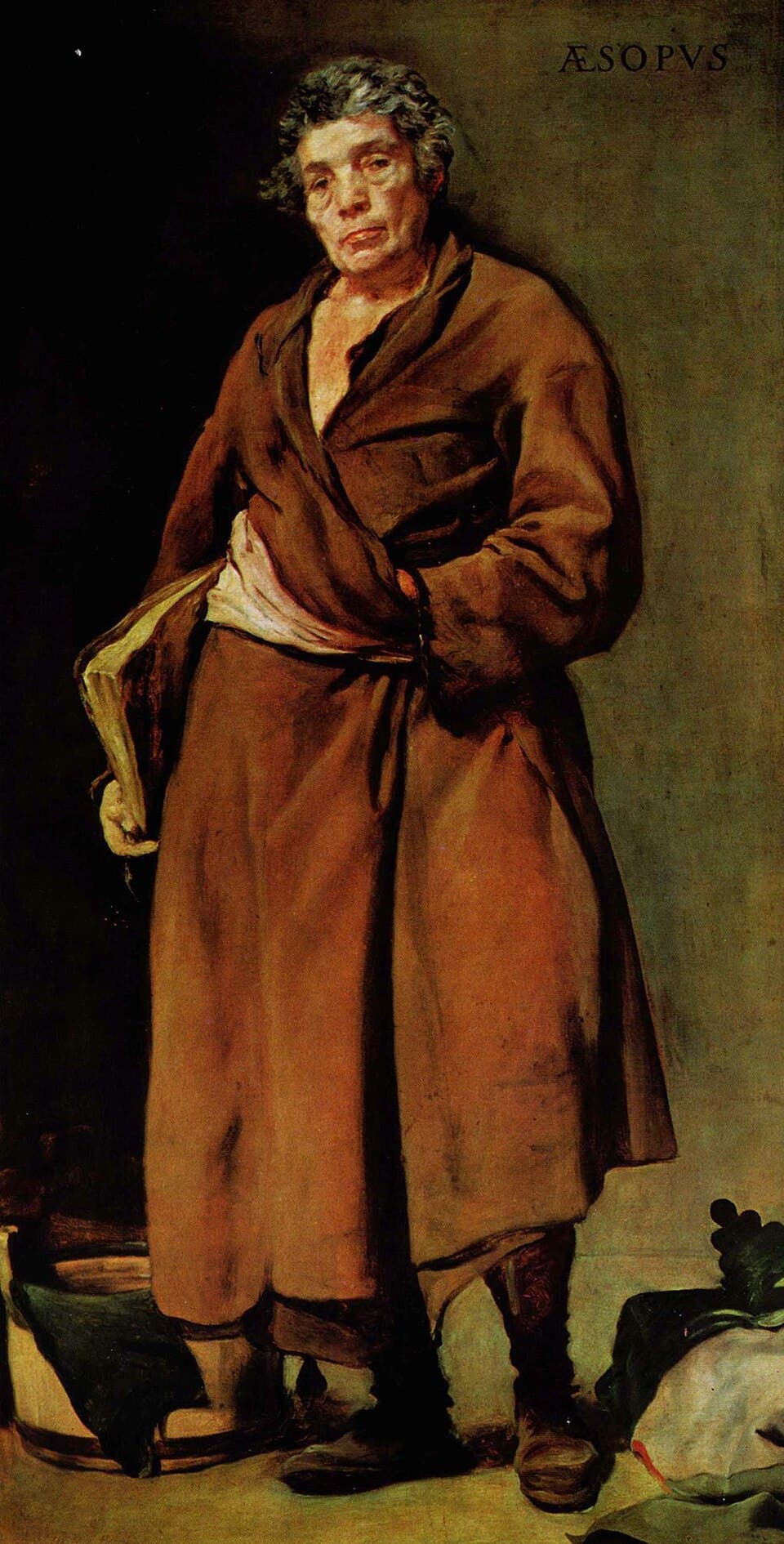
Two students from a discovery class push open the door of a mud-brick house, somewhere near the agora. An old man with a hunched back waits for them, a walking stick leaning against the wall. He smiles: no one ever asks him about his story.
—Is it true you were a slave when you were little?
Yes, my child, it's true. I was born in Phrygia, a land far from here, and very young I became a doulos — that's the Greek word for a slave, someone who doesn't belong to themselves. People found me ugly, with a twisted back. Imagine a child looked down upon because he isn't pretty and has no right to leave. But I had one thing they couldn't take away: my mind. My master Iadmon, on the island of Samos, saw that mind. And one day, he freed me. I became eleutheros, a free man.
They could chain my feet, but never my spirit.
—What did it feel like the day you became free?
You know, at first I thought I was dreaming. A doulos becoming eleutheros almost never happened. Iadmon didn't free me because I was strong or handsome — I was neither. He did it for my mind. That day, I understood a simple thing: what you have in your head is worth more than what you have on your face. I took a stick, a leather bag with almost nothing in it, and I set out on the dusty roads. Free to speak. Free to tell stories. It's the best gift anyone ever gave me.
Talent doesn't ask permission to be born on the right side.
—Why did you tell stories about animals and not people?
Ah, good question! Listen. If I go to the agora — the great square where everyone gathers — and I say, "You, the rich man, you're a liar," they chase me away, or worse. But if I tell a fox flattering a crow to steal his cheese, everyone laughs. And each thinks, "Well, I know someone like that fox..." Beasts speak of men without naming them. My Wolf and the Lamb shows that the strong always invent an excuse to crush the weak. Children understand, kings too. That's my trick.
Make a beast speak, and you can tell the whole truth to men.
—Which is your favorite fable?
If I had to keep one... maybe The Hare and the Tortoise. Imagine a tortoise, slow, heavy, moving step by step. And a swift hare, so sure of winning that he stops to take a nap. In the end, who crosses the line? The tortoise. The Greeks have a word, hubris: it's the pride of someone who thinks himself too strong. The hare is full of it. I've been a tortoise all my life, my child. Born a slave, with nothing. And I moved forward, step by step. That's why I love this fable.
It's not the fastest who arrives, it's the one who never gives up.
—What's that story about a meal made entirely of tongues?
Ha! You already know that one? My master Xanthos told me: "Aesop, go to the market and buy the best thing in the world." So I served an entire meal made of tongues. Only tongues! He asked me why. I replied: the tongue teaches, it consoles, it gives thanks. The next day, he said: "Buy the worst." And I served tongues again. Because the same tongue lies, insults, betrays. Logos, speech, is the most beautiful and most dangerous tool in the world. It all depends on who uses it.
The tongue is the best and worst of dishes.
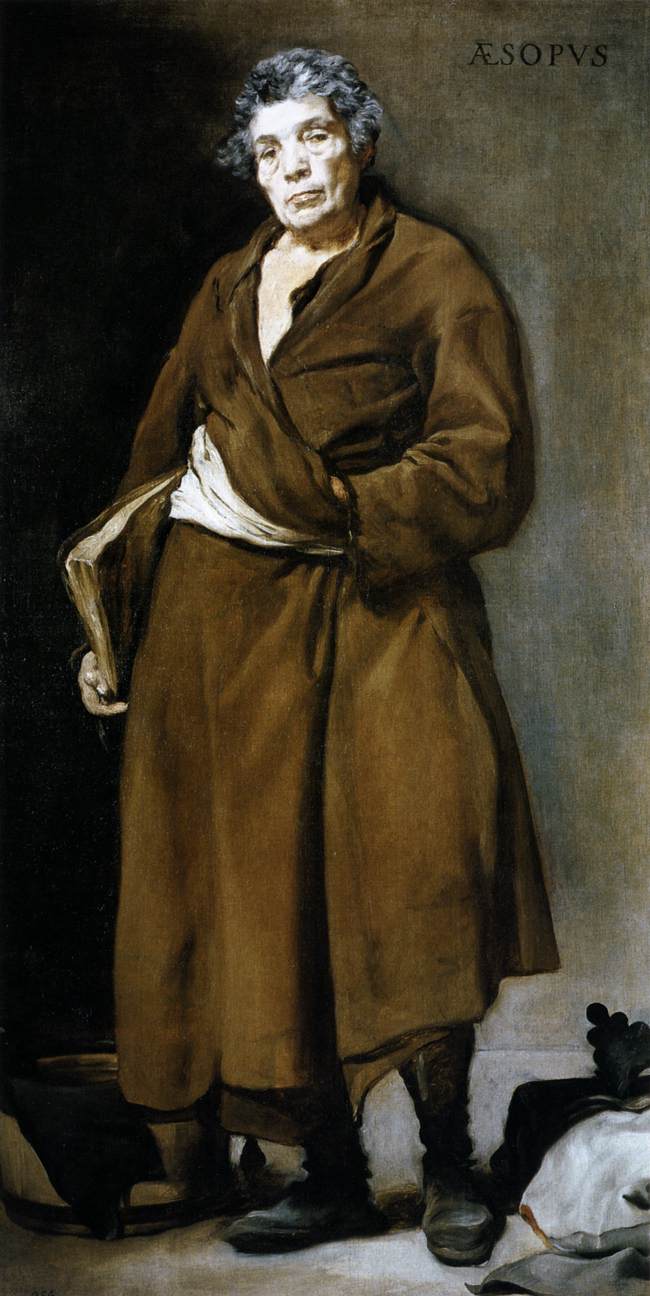
—So did you watch what you said?
Always, my child. But watching doesn't mean staying silent. A fable is clever speech: it tells the truth while remaining gentle. The Greeks called me sophos, a sage — even though a sage is usually a great scholar in a robe, not a former slave with a twisted back. I earned that word with my tongue, not my sword. But that same tongue, misused, can lead to the worst. I know... because it also brought me enemies. Choose your words as you choose your steps on a slippery path.
—Why did King Croesus send you to Delphi?
King Croesus of wealthy Lydia liked me. He entrusted me with gold to distribute to the inhabitants of Delphi, the sacred city of Apollo. But upon arriving, I found them greedy, unworthy of this gift. So — stubborn as I was — I sent the gold back to Croesus. Imagine the anger of the Delphians! A mountain of gold snatched from under their noses. They never forgave me. You see, my child, saying no to the powerful is courageous. But it's sometimes dangerous. That day, I sealed my troubles without knowing it.
—And then what happened to you at Delphi?
This is the saddest story of my life, so I'll tell it gently. The furious Delphians accused me of a crime I didn't commit: a false sacrilege. And they condemned me to be thrown from the top of a cliff. The stronger had invented a pretext against the weaker... exactly like in my fable of The Wolf and the Lamb. The historian Herodotus recounts that afterwards, the Delphians had to pay compensation, so wrong they had been. Too late for me. But you see, my death proved that my fables spoke the truth about injustice.
I lived my fables, and one of them cost me my life.
—Did you really dine with the great sages of Greece?
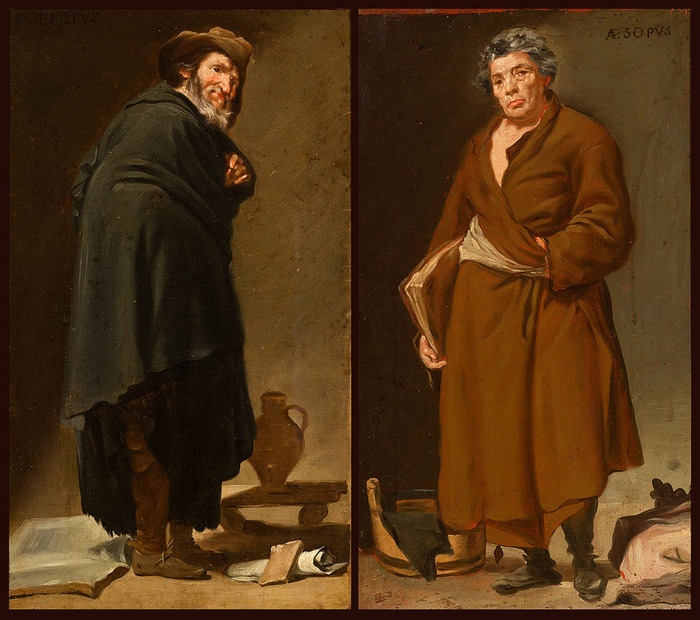
Yes, and it's a memory that warms my heart! It is said that I was invited to a great banquet, a symposion, with the Seven Sages: Solon, Thales, Pittacus — the greatest minds of Greece. Picture the scene: them reclining on couches, discussing justice and power. And me, the ugly former slave, in their midst. Was I intimidated? A little. But I told them my fables, and they laughed, and they reflected. That evening, no one looked at my twisted back. They listened to my stories.
At the table of sages, it's the mind that is served, not the face.
—How do you know everyone was talking about you?
Because I heard it, in the agoras, in the streets! In Athens especially, my fables spread from mouth to mouth. Later, the poet Aristophanes even quoted me in his comedy The Wasps: he says that a cultured Athenian ought to know my stories. Can you imagine? A former slave whose tales everyone repeats. I left no palaces, no golden statues. I left little stories that children still learn. And that, you see, is more durable than bronze.
—And today, what would you like people to remember about you?
That you don't need to be rich, or handsome, or born on the right side to leave something to the world. I was a doulos, a slave from Phrygia, considered ugly. And yet, centuries later, two children like you still come to listen to me. My fables were born on the roads, in the dust, told by the light of a small oil lamp. They required neither gold nor palaces. Just an ear that listens. So remember this: a good story well told travels farther and longer than an army.
A true story travels farther than an army.
This imaginary interview was generated by artificial intelligence from sources documented in Aesop's profile. It dramatises what the figure might have said based on what we know about them, but does not constitute attested historical testimony. For primary sources and factual documentation, refer to the full profile.