Imaginary dialogue between Crésus, roi de Lydie and Aesop
by Charactorium · Aesop (619 av. J.-C. — 563 av. J.-C.) · Literature · 6 min read
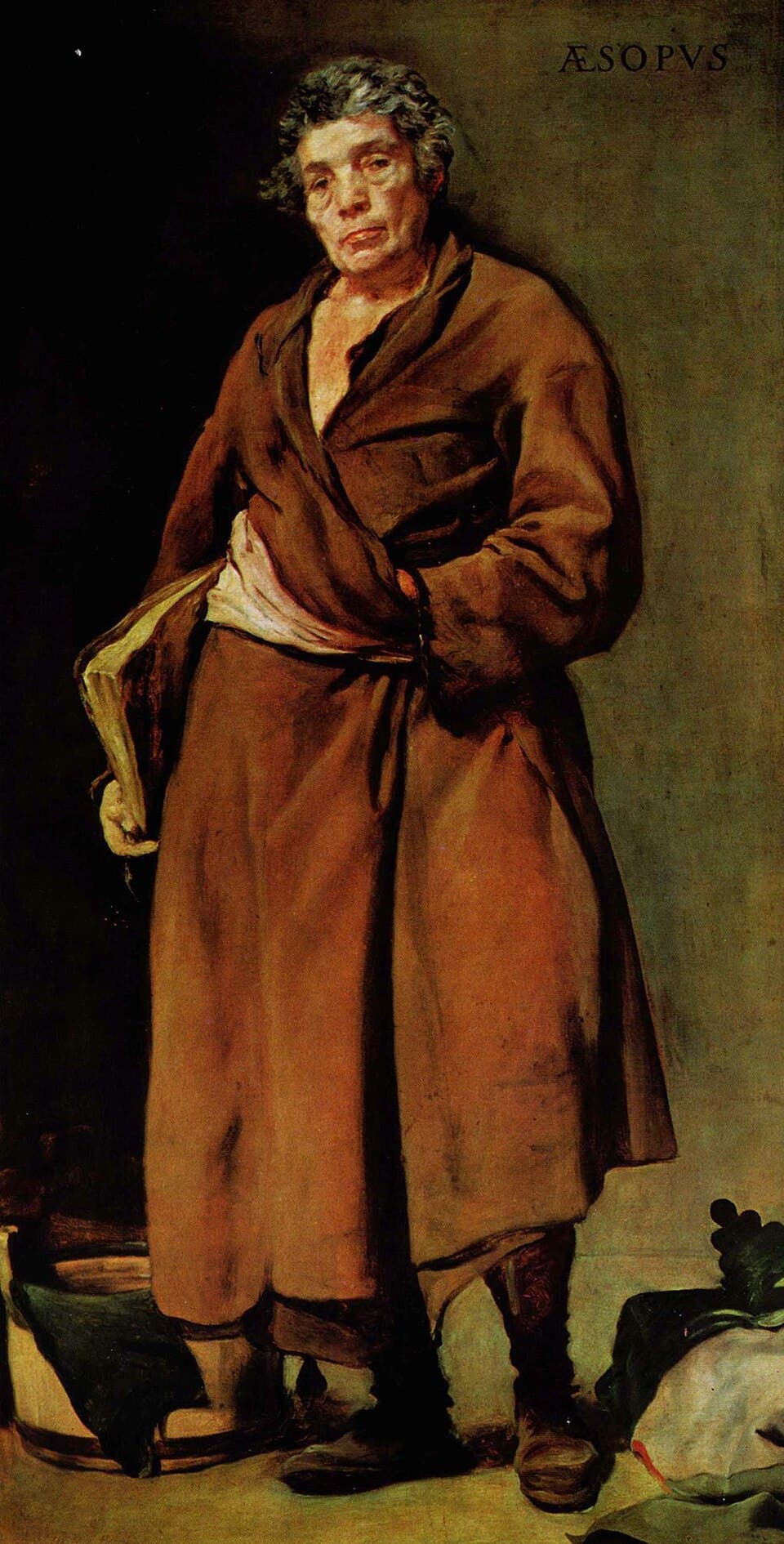
It is in the columned hall of the palace of Sardis, capital of Lydia, that one spring evening around 560 BC King Croesus summons his guest, the fabulist Aesop. Bronze braziers cast a coppery glow over the purple tapestries, and in the distance one hears the murmur of the Pactolus River carrying its gold. The richest king in the Greek world knows well this former slave with a disfigured body, whom he keeps close for his formidable tongue. Tonight, dismissing his counselors, he wants to hear the man behind the fables.
—Aesop, since you have lived at my court, I know that you were once a slave before me. Tell me how a doulos could become free.
You are right to start there, Croesus, for a man is only understood from his chain. I was born a slave, probably in Phrygia or Thrace, with a twisted body and the face you see. I was bought for my arms, kept for my mind. My master Iadmon of Samos understood that a doulos could think more clearly than a free man, and he freed me. You see, servitude taught me everything: a slave observes, he keeps silent, he guesses what the master wants before it is said. That is where my fables are born, in that gaze from below fixed upon the powerful. You who have never bowed your head cannot know how silence sharpens the ear.
Servitude taught me everything: a slave observes, he keeps silent, he guesses what the master wants before it is said.
—They say that one day your master Xanthos ordered you to serve what was best, then what was worst. What did you do, and why?
Ah, that story pleases you, I see it in your smile. Xanthos wanted to dazzle his guests; he told me to buy at market what was best in the world. I brought tongues, and served only tongues, for every course. The next day, he demanded the worst: I brought tongues again. For the tongue is a double instrument, Croesus: it teaches, it persuades, it praises the gods—and it lies, it slanders, it drives kings to war. Nothing more precious, nothing more deadly. You who govern through the words of your heralds and seers know better than anyone that a well-placed word builds a kingdom, and one word too many overthrows it.
The tongue teaches, persuades, praises the gods—and it lies, slanders, drives kings to war.
—What difference do you see between the slave you were, the doulos, and the eleutheros free man you have become under my roof?
The difference is not where one thinks, my king. The slave speaks low and bends; the eleutheros speaks loud and walks straight. But emancipation did not give me the rarest freedom: that of telling truth to the powerful without perishing. That, no master confers; one seizes it oneself, fable after fable. When I slip in a story of a fox or a lion, I tell the tyrant his truth without him being able to nail me to the pillory: it is not I who speak, it is the beast. That is my true freedom, won by cunning. A free-born man never needed that cunning—he is free without knowing its price.
—Why the devil do you put foxes and crows on stage, rather than speaking of men frankly, as a counselor should?
Because man cannot bear to have his face shown to him, Croesus, but he willingly laughs at a donkey or a wolf. If I told you to your face that a courtier flatters his master to steal his favor, you would be angry. But if I tell of the fox who flatters the crow to steal his cheese, you laugh—and in the evening, you wonder which of your courtiers is that fox. The beast is a mirror one dares to look into. The hare, the tortoise, the ant, the cicada: each carries a human flaw without the burden of shame. I have seen kings harder than you accept from a frog the lesson they would have cut from the mouth of a sage.
The beast is a mirror one dares to look into.
—Your fable of The Wolf and the Lamb says that might makes right. Is that not a bold thing to say before a king?
Bold, yes—but that is why you keep me, is it not? The wolf in my fable invents grievances to devour the lamb: you have muddied my water, he says, though the lamb drinks downstream. Justice matters little; the wolf is hungry and the lamb is weak. I do not say it is good, Croesus: I say it is so, and a wise king must know it so as not to become that wolf. The powerful always find a pretext; the danger is not being unjust, it is believing oneself just while being so. My fable does not absolve the strong—it warns them. The day the lamb has no shepherd, the whole flock learns to fear the wolf, and the wolf ends up alone.
The danger is not being unjust, it is believing oneself just while being so.
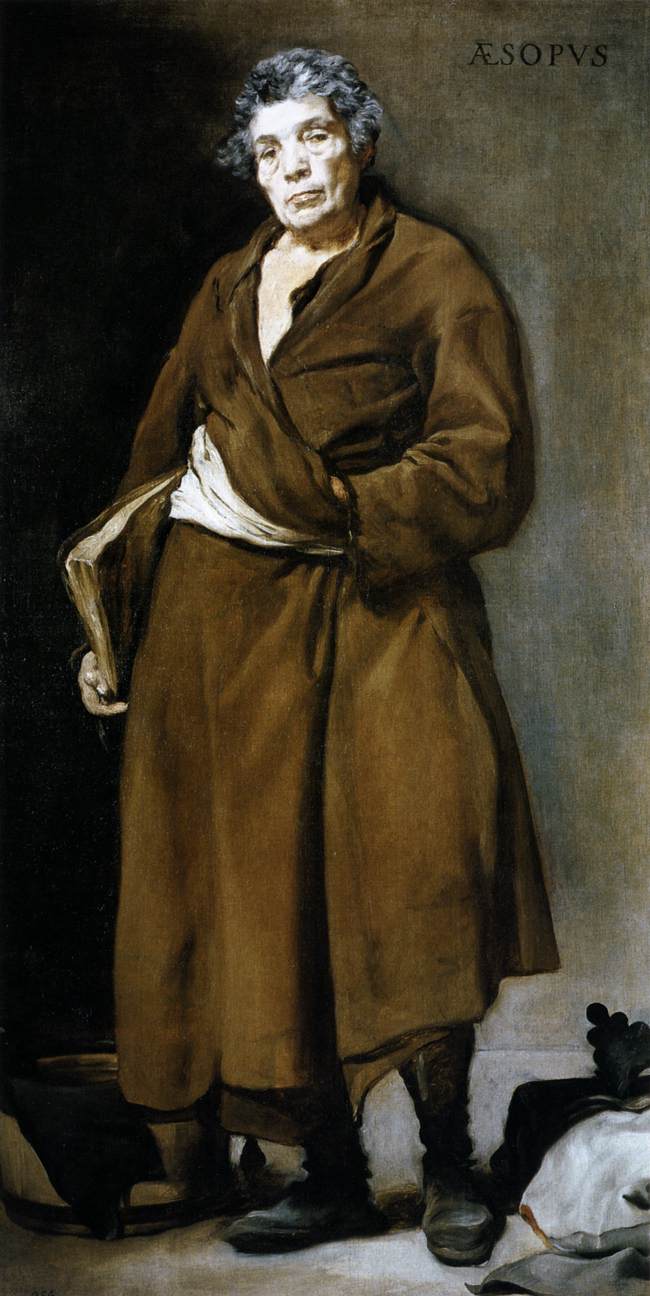
—You often speak of hubris, that excessive pride. Is your hare, defeated by a tortoise, an example of it?
Precisely. The hare is fast, he knows it, and that knowledge undoes him: he falls asleep, sure of winning, while the tortoise plods on without rest. That is hubris, my king—not strength, but the certainty of strength. The gods never strike down the weak who crawl; they watch for the one who believes himself above his station. I see this excess everywhere: in the athlete who scorns training, in the rich man who thinks his fortune eternal, in the king who believes his power makes him invulnerable. The tortoise does not win because she is strong; she wins because she never thinks she has arrived. Beware of the hares in your court, Croesus, but beware even more of the hare that sleeps in every prosperous man.
The gods watch for the one who believes himself above his station.
—They say that in Athens, even on the agora, the people repeat your fables. How does a former slave become the voice of the city?
Because I do not speak the language of the schools, Croesus, but that of the marketplace. On the agora, the porter and the potter understand a story of a dog and a bone far better than a discourse on justice. I never sought the porticoes of philosophers; I go where the people are, among the stalls and the dust. That is where my fables are born and where they return, from mouth to mouth, without my name attached. A court sage speaks to ten men; the storyteller of the agora speaks to the whole city. They call me sophos, wise, but I am only a man who made truth small enough to fit in a child's memory.
I made truth small enough to fit in a child's memory.
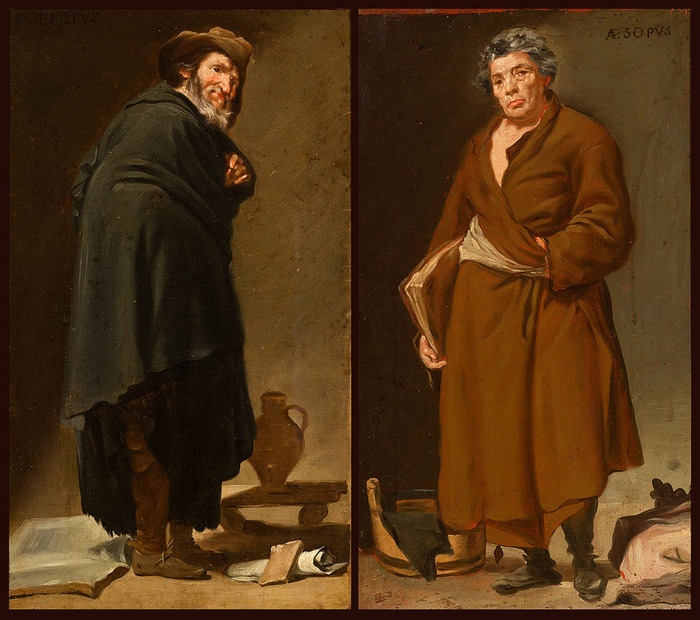
—It is whispered that you were invited to the banquet where Solon, Thales, and the other sages sat. Were you not intimidated among those great minds?
Intimidated? At the symposion, reclining near Solon and Thales, I was the only one with neither illustrious city nor birth to boast. But know this: while they gravely debated the best government, I served them a fable, and the room laughed before reflecting. The wisdom of the Seven is tall as a column; mine is round as a pebble one slips into a pocket. Solon himself told me that my beasts sometimes taught more than his laws—and you, Croesus, know Solon, that old man who refuses to call a man happy before his death. He and I know the same thing by two paths: that no one is safe from reversal, neither the sage nor the king.
The wisdom of the Seven is tall as a column; mine is round as a pebble one slips into a pocket.
—When I received you here, in Sardis, and made you my counselor, many were surprised that a king would listen to a fabulist. What do you expect from this position with me?
What do I expect? To be able to tell you what your flatterers hide from you, Croesus, and to be useful enough that you do not silence me. You have given me a place I never hoped for, a Thracian slave with a deformed face, at the court of the richest king on earth. But I did not come to fatten myself on your gold. A counselor who only knows how to praise is worth less than a guard dog that barks. I want to slip into your audiences a fable at the right moment, like slipping a thorn under the sandal of a man too sure of his step. You will send me to negotiate in the Greek cities, you say; I will do it. But remember that the most faithful ambassador is the one who contradicts you before the enemy does.
The most faithful ambassador is the one who contradicts you before the enemy does.
—I want to entrust you with a mission to Delphi: to carry my gold to the sanctuary of Apollo and distribute it to the inhabitants. What does your instinct tell you about that city?
Your gold, Croesus, is a fine gift—but gifts reveal those who receive them. At Delphi, they live off the god, off pilgrims, off the offerings of kings like you. I will carry your gold, I promised you, and I will distribute it to the Delphians if they prove worthy. But allow your old counselor this frankness: the greed of a sanctuary is more dangerous than that of a merchant, for it cloaks itself in the voice of Apollo. If I find these people unworthy of your generosity, I would rather send your gold back than water their avarice. My duty is not to please them, but to serve you honestly—even at the cost of earning their resentment. A man who says no to the powerful never wins their love.
The greed of a sanctuary is more dangerous than that of a merchant: it cloaks itself in the voice of a god.
This imaginary interview was generated by artificial intelligence from sources documented in Aesop's profile. It dramatises what the figure might have said based on what we know about them, but does not constitute attested historical testimony. For primary sources and factual documentation, refer to the full profile.