Imaginary interview with Etty Hillesum
by Charactorium · Etty Hillesum (1914 — 1943) · Spirituality · Literature · 7 min read
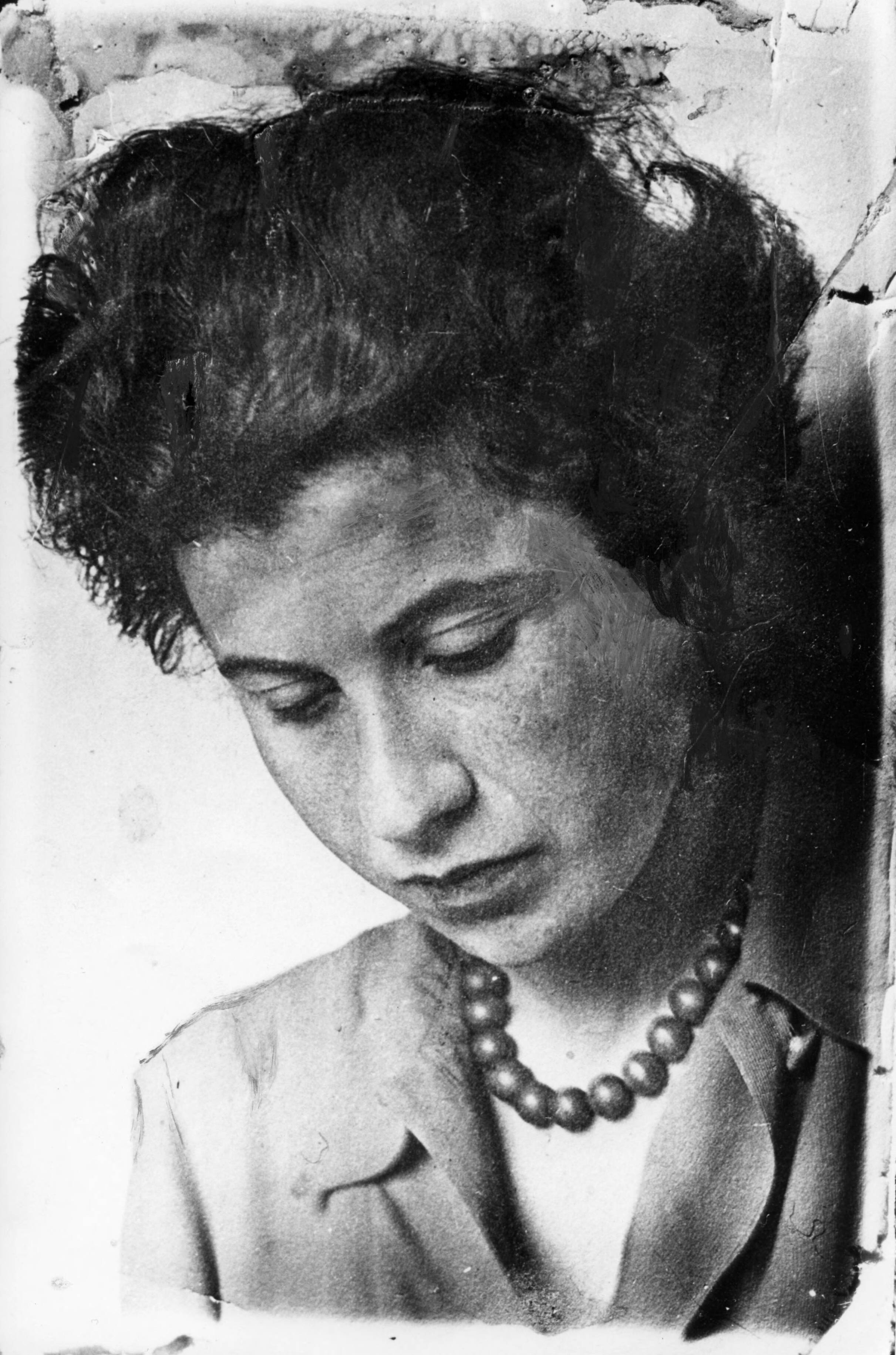
Amsterdam, autumn 1942. In a room on Gabriël Metsustraat cluttered with books and school notebooks, a twenty-eight-year-old woman receives us, her fountain pen still in hand. Outside, the Occupation tightens its grip; here, in the time of an imaginary conversation, Etty Hillesum speaks of what cannot be occupied—the inner self.
—How did you come to keep this diary that you fill every day?
It was in March 1941. Julius Spier—that chirologist from Germany, a disciple of Jung, who claimed to read souls in the palm of the hand—had suggested I write to sort out the chaos lodged inside me. I sat down in my room on Gabriël Metsustraat, my fountain pen between my fingers, and opened the first of those school notebooks. I didn't think I was creating a work; I thought I was tidying up inside myself. The first pages are clumsy, cluttered with my moods, my complicated loves, my disorder. But something began to breathe in there. Writing was like placing a lamp in a room I dared not look at.
—What are you really looking for in these notebooks?
At bottom, I'm looking for a place to stand upright. In the morning, before the day carries me away, I write to see clearly, like opening the shutters. Gradually my notebooks became the only place where I could dig a well—that's the image that comes back to me—deep enough to find God at the bottom of myself. Not the God of sermons: a presence I speak to, whom I sometimes have to help, for it seems to me that it is up to us to defend Him, within us. I also record love, my clumsiness, my zest for life. Eight notebooks already, written without knowing if anyone will ever read them. My friend Maria Tuinzing will keep them, in case I don't come back.
—You were offered more than once to hide. Why did you refuse?
Because hiding would have been losing myself. I was offered addresses, attics, escape routes to the border. I said no. On July 3, 1942, I wrote in my diary without mincing words: “I do not want to run away. I cannot. If I hid, I would lose my reason for being. I must stay where I am and share the fate of those who have the same destiny as me.” How could I live hidden while others were taken away by the thousands? I don't see myself as a heroine or a martyr—that would be grotesque. Simply, I don't want to be spared as if by chance, on the right side of a list. My yellow star, I wear it sewn on my coat; it binds me to a whole people, and I refuse to secretly unpick it.
I don't want to be spared as if by chance, on the right side of a list.
—You could have stayed protected in Amsterdam. What drove you to Westerbork?
First I worked as an employee of the Jewish Council in Amsterdam—an ambiguous task, I don't hide it: this administration kept the lists, distributed the Sperre, those temporary exemptions that hung by a thread. Very quickly, I asked to go to Westerbork, there, on the heath of Drenthe. People didn't understand: why voluntarily join the camp from which the trains depart? But that's where my people were, crowded into the barracks, and I wanted to be a thinking heart in the midst of that barracks, a comforting presence where comfort seemed impossible. I went there as one goes to a post, not a sacrifice. Helping to carry a suitcase, listening to an old woman, mending a little dignity: that's what I could do, and it was immense.
—How can one even speak of beauty behind barbed wire?
I know it may seem scandalous. And yet: “In spite of everything, I find this life beautiful and I find the meaning of this life. Yes, even here, now, at this moment.” I wrote that from Westerbork, surrounded by wire. Beauty is not in the barbed wire, obviously; it is in that piece of sky they cannot fence in, in a child's face, in a lupine growing at the edge of the heath. They cannot take away my inner self. I wrote to my friend Maria that I feel free inside, even surrounded by barbed wire—and that is the barest truth I know. Misfortune can take everything except the way I choose to go through it. That, no guard can confiscate.
They cannot take away my inner self.
—What books accompany you in this ordeal?
Two companions never leave me. The Bible, first—especially the Psalms, which I read like drinking from a spring; Saint Matthew has also become very dear to me. And then Rainer Maria Rilke, his Letters to a Young Poet, which I reread until I know them almost by heart. Rilke taught me not to flee difficulty, to let questions without answers ripen inside me, like fruit. Strange fate: it is a poet of the German language who keeps me standing while other Germans want me dead. I carry these pages everywhere, even to the camp, slipped against my wool blanket. When the barracks fall asleep, I read stealthily. These books do not distract me from suffering; they teach me to inhabit it without becoming hard.
—Tell us about the Tuesdays at Westerbork.
Tuesday at Westerbork is a day that has no equivalent in other languages. Dinsdag. The night before, the lists are posted; we learn who will be doorgestuurd—“sent further,” as the bureaucratic language says, as if it were a package. At dawn, the convoy is there, that long snake of cattle cars, and they pack men, women, infants toward a destination from which no one returns. Those who hold a Sperre breathe one more week; the others board. I have seen mothers rocking their children on the platform. I decided to be the eyes and ears of this distress, to look without turning away, so that at least one witness remains standing. Each Tuesday, a part of me leaves with the train, and another remains to tell of it.
—Your letters circulate in secret to Amsterdam. What do you hope they say?
From Westerbork, I write to my friends in Amsterdam, and I know my letters travel beyond their recipients. They are copied, passed under the cloak; resistance circles read them in hushed voices. I do not write to create literature or to be pitied. I write so that someone outside knows exactly what is happening on this heath: the mud, the Dinsdag, the greatness and baseness of men mixed together in the same barracks. If I were to disappear, I would want these pages to remain like a heart that continues to think when the mouth has fallen silent. That is my task, the only one the occupier has not taken from me: to bear witness. As long as my hand holds the fountain pen, I am not entirely reduced to a number.
—You write a lot about death. How does one tame it at twenty-eight?
I do not see it as an enemy. I wrote: “One must accept death in order to live fully. And if one accepts death, then life becomes more precious and not less precious.” It is not courage, it is a discovery. By making a small place for death in my existence, instead of constantly pushing it away, I stopped being afraid—and everything else began to shine more brightly: a crust of bread, a burst of laughter in the barracks, a received letter. Life is not diminished by the fact that it will end; it becomes denser. My notebooks, I believe, say nothing other than that, page after page: learning to die is learning to live without avarice.
Learning to die is learning to live without avarice.
—You know your turn will come. How do you live with this waiting?
My turn will come, I know it; the Sperre of the Jewish Council will not protect me forever, and I do not wish it. My parents are there, my brother Mischa too; we will probably leave together, toward that East whose name—Auschwitz—circulates as a rumor without anyone knowing exactly what it covers. I do not wait as one waits in anguish, counting the days. I try to remain a whole being to the end, not to let myself be eaten away by hatred, for hating would already be giving them reason, already becoming a little like them. I want to board that cattle car keeping my soul intact. That is my only possible victory, and no one can take it from me: to leave without bitterness, my heart still capable of blessing.
—If a last word were to come out of the cattle car, what would you want it to say?
I would want it to say the truest and most unbelievable thing: that we left singing. I already have a postcard ready, which can be thrown through the slit of the car; perhaps a peasant will pick it up on the ballast and mail it, like a message entrusted to the chance of the wind. Let no one imagine a convoy of silent defeated: there is, even in horror, a dignity that sings. I do not know what awaits me there, and I do not want to know in advance. But I leave, I believe, without having renounced life or the sky above the heath. May my notebooks one day tell those who were not yet born: one can go through the darkest night without ceasing to be a thinking heart.
There is, even in horror, a dignity that sings.
This imaginary interview was generated by artificial intelligence from sources documented in Etty Hillesum's profile. It dramatises what the figure might have said based on what we know about them, but does not constitute attested historical testimony. For primary sources and factual documentation, refer to the full profile.