Imaginary dialogue between Julius Spier and Etty Hillesum
by Charactorium · Etty Hillesum (1914 — 1943) · Spirituality · Literature · 5 min read
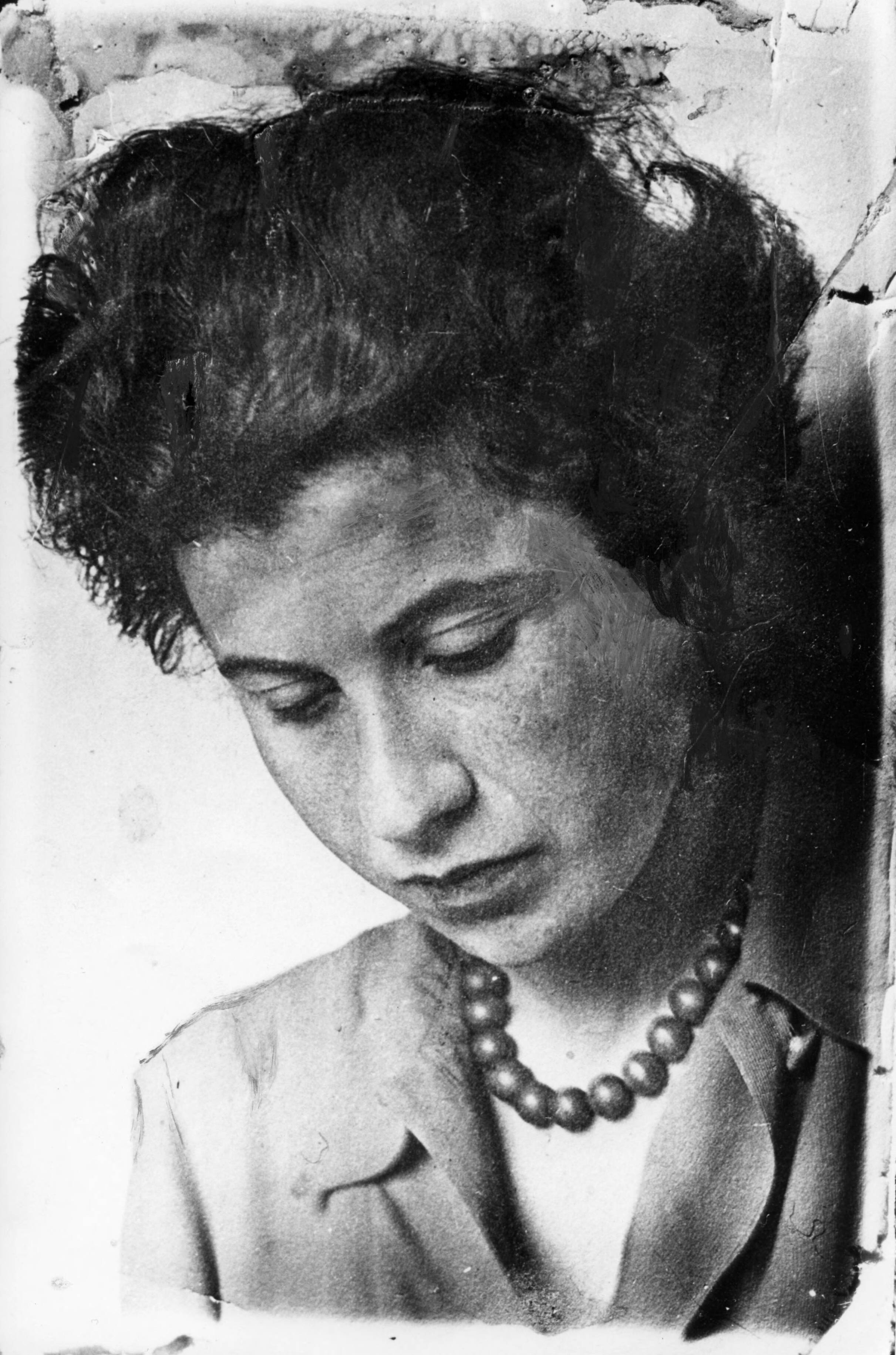
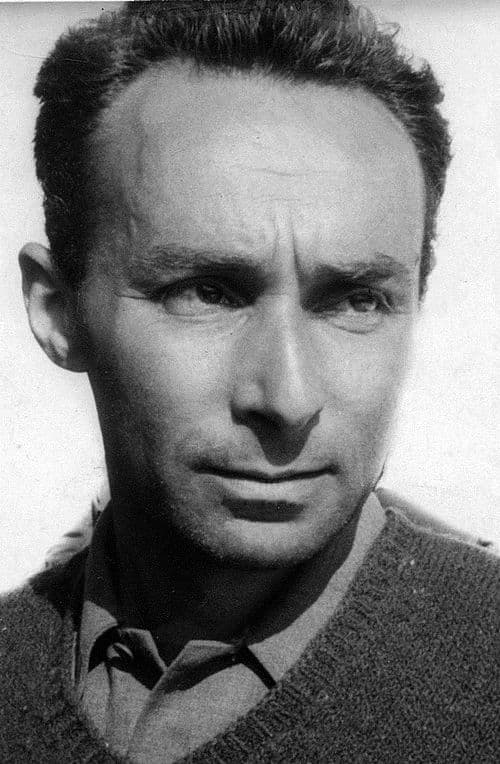
It is in the grand living room of 27 Gabriël Metsustraat, in Amsterdam, on a spring afternoon in 1942, that Julius Spier meets Etty between two chirology consultations. The light falls on the school notebooks stacked near the inkwell, and the smell of cooled tea still lingers. They have known each other since she came to consult him a year earlier, her heart in disarray—it was he who suggested she keep a diary. Today he comes not as a therapist, but as a witness to what he has seen born in her.
—Etty, when you came to consult me and I advised you to keep a diary to know yourself, did you imagine where it would lead you?
No, Julius, never. I came to you as one goes to a doctor of the soul, with my chaos, my moods, this intelligence spinning in emptiness. You told me to write, simply write, to bring order to the tumult. I took a school notebook and a pen, and I began last March without expecting anything. But here it is: as I wrote, I was no longer content to just look at myself; I began to listen to something greater than myself. You, who placed your hands on mine to read my character, know well that this gesture was only a beginning.
I came to you as one goes to a doctor of the soul, with my chaos.
—You read the Bible and Rilke's Letters to a Young Poet almost every day. What do you seek in those pages, you who doubted God so much?
I seek a support for what grows within me without a name. The Psalms give me words I do not yet have: a way to kneel inwardly, even when I do not believe as the devout believe. And Rilke—Rilke teaches me patience, to live the questions themselves instead of demanding answers. Do you remember, Julius, when you spoke to me of that God who is not outside but at the deepest point of the inner well? Since then, I dig that well every morning. I begin to unearth God in myself, and sometimes also to unearth Him in others, even in those who frighten me.
Rilke teaches me to live the questions themselves instead of demanding answers.
—Describe your days here, in this house. What peace remains between Russian lessons and the tightening threat outside?
In the morning, I write before the world awakens, in the kitchen, with bread and tea. In the afternoon, I give my Russian lessons to earn a living, I read Dostoevsky, I sometimes receive your patients. In the evening, I meet my friends to talk, or I return to my notebooks. But beneath every hour there is now a dull vigilance, an ear strained toward the street. One may sew the star onto one's coat, but one continues to live, to love, to think. And that is my discovery: beauty does not ask permission from circumstances. It is there, in the light on your cup, even today.
Beauty does not ask permission from circumstances.
—I am told that friends offer to hide you, to flee the Netherlands. Why do you refuse what others beg to obtain?
Because to run away, Julius, would be to lose myself. I noted this in my diary recently: I do not want to hide, I cannot, for then I would lose my reason for being. If I save myself alone while my people board the trains, what good will it do to have saved this body? I prefer to share the fate of those who share the same destiny. This is neither heroism nor despair—it is a faithfulness. You who taught me not to flee my own inner darkness, do you understand that I cannot flee that of my people either?
If I save myself alone while my people board the trains, what good will it do to have saved this body?
—You plan to join the Jewish Council, then the camp at Westerbork. Is that not walking into danger of your own accord?
It is walking toward those who suffer, and danger comes with it, yes. The Jewish Council is a troubled place, I have no illusions: there one manages lists, exemptions, one breathes an atmosphere of anguish and snatched privileges. But from there, I can request to go to Westerbork as an assistant, to be with people when they most need a presence. I do not want to be among those who watch from the window as the train pulls away. If I must go through this, let it be with open hands, helping, and not curled up in an attic waiting to be found.
I do not want to be among those who watch from the window as the train pulls away.
—If you go there, behind the barbed wire, do you fear losing that inner freedom we sought together?
That is precisely where I want to test it, Julius. A freedom that holds only as long as the doors remain open is not worth much. I believe—and you helped me to believe—that one can feel free inside even surrounded by barbed wire, because that freedom no one can confiscate. The barracks will be overcrowded, the cold will bite, we will sleep on bunks crammed together. And yet I tell myself that I will still be able to write, to look at the sky above the fence, to keep this heart that thinks. The body will be a prisoner; what truly matters will not be.
A freedom that holds only as long as the doors remain open is not worth much.
—Your letters from the camp will circulate in secret, it is said, read by resistance circles. What do you hope to convey to those in Amsterdam?
I want them to know. Not numbers, not statistics, but the face of each day: an old woman looking for her glasses before boarding the wagon, a child still laughing in the mud. I want to write with enough clarity that no one, later, can say they did not know, and with enough humanity that one does not forget they were human beings and not numbers. If my letters pass from hand to hand under the coat, then my pen will have served some purpose. The thinking heart of the barracks—that is what I would like to be: a witness who looks without turning away.
To write with enough clarity that no one can say they did not know.
—There, they speak of Dinsdag, the Tuesday of the convoys. How do you live with this mechanism that decides each week who will leave for the East?
Tuesday has become a word of terror, Julius. Every Monday evening, the lists fall, and one knows that the next day a freight train will set off toward what they call the Lager, there, in the East. There are the Sperre, those precarious exemptions that people scramble for, revocable with a stroke of the pen, and doorsturen, that bureaucratic word so clean, 'to transfer,' so as not to say deport to death. One learns to live from Tuesday to Tuesday. And the most terrible thing is not the visible cruelty, it is the administrative coldness, those stamps, those lines, that way of treating fates like mail to be forwarded further on.
The most terrible thing is not the visible cruelty, it is the administrative coldness.
—You who studied law, how do you bear seeing all this wrapped in paperwork, regulations, polite words?
That is precisely what chills me most. I believed in law as a dyke against barbarism, and today I see that one can organize inhumanity with proper forms. The Joodse Raad, the Jewish Council, is a painful example: men forced to administer the misfortune of their own, to check off names, in the hope of saving a few. No one in all this is entirely innocent nor entirely guilty. Yet I refuse to hate, even the executioners, for hatred also deforms the one who carries it. If I let barbarism enter my heart, then it will have won twice.
One can organize inhumanity with proper forms.
—You once told me that one must accept death to live fully. Does that thought still hold you, now that the East draws nearer?
More than ever, Julius. I have understood that if one banishes death from one's life, one has only half a life, fearful and stunted; but if one makes room for it, then life expands and every hour becomes precious. I do not know what awaits me in the East, in those sealed wagons. But I believe that I will be able to leave without hatred, perhaps even singing, because I will have said yes to everything that is, joy and terror mingled. If a card thrown from a train could one day carry my last word, I would want it to say not misfortune, but that I found this life beautiful to the very end.
If one banishes death from one's life, one has only half a life, fearful and stunted.
This imaginary interview was generated by artificial intelligence from sources documented in Etty Hillesum's profile. It dramatises what the figure might have said based on what we know about them, but does not constitute attested historical testimony. For primary sources and factual documentation, refer to the full profile.