Imaginary dialogue between Ptolémée Ier Sôter and Euclid
by Charactorium · Euclid (333 av. J.-C. — 284 av. J.-C.) · Sciences · 5 min read
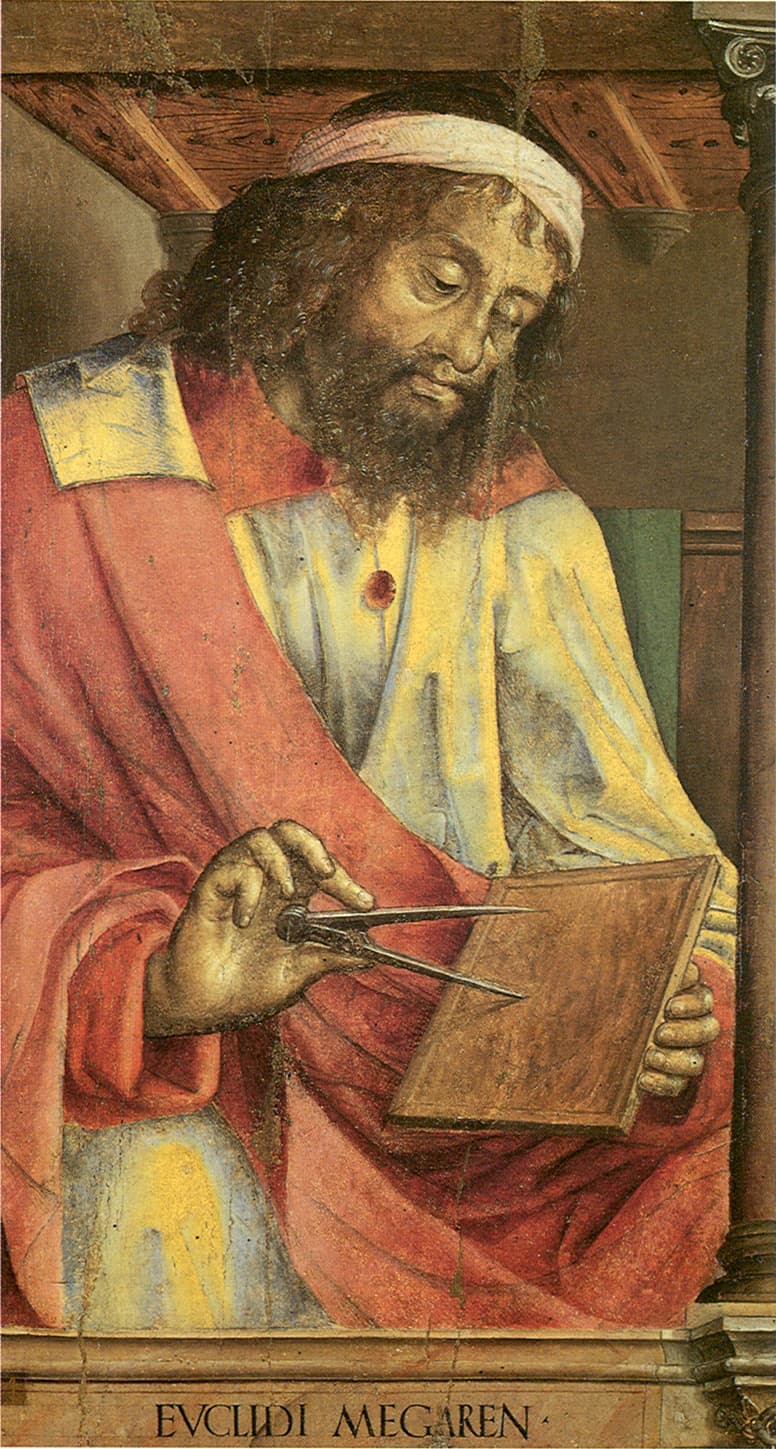
It is in a cool room of the Mouseîon of Alexandria, in the year -300, that Ptolemy I Soter visits Euclid, between two papyrus rolls still damp with ink. Through the high window comes the murmur of the port and the smell of Nile silt. The king, who founded this temple of the Muses and protects its scholars, knows well the exacting geometer who once rebuked him. He comes this morning without escort, as a friend, to understand the man behind the Elements.
—Euclid, I built this Mouseîon to gather the minds of the world. Do you remember the day you set down your first rolls here?
I remember it like a clear morning, Ptolemy. You had just gathered here geometers, astronomers, grammarians, and you entrusted me with students as one entrusts a vine to a vintner. I found shelves for my papyri, patient scribes, and above all the peace needed to think. Before Alexandria, Greek knowledge was scattered from city to city; here, under your protection, it resides in a single house. Each morning, after a little bread and olives, I meet my disciples and we draw figures on wax. What you founded is not just another library; it is a workshop where geometry is passed from hand to hand.
You entrusted me with students as one entrusts a vine to a vintner.
—I am told your great work comprises thirteen books. How did you decide the order, from the first theorem to the last?
Everything starts from almost nothing, my king. I begin with what cannot be demonstrated: that a point is that which has no part, that a line is a breadthless length. From these definitions and a few granted requests, I derive the first proposition, then the second, which rests on the first. Nothing is admitted that has not been established before. The Στοιχεῖα, the "Elements," is that: an edifice where each stone rests on the one below. First I have plane geometry, then proportions, then numbers, and finally solids in space. One cannot move a book without everything collapsing. It is slow to build, but once standing, it never falls.
An edifice where each stone rests on the one below.
—You use words my courtiers do not know: axiom, postulate, theorem. What difference do you make between them?
It is a matter of degree of trust, Ptolemy. The axiom, what I call a common notion, is so evident that every man grants it: the whole is greater than the part. The postulate, the αἴτημα, is a request specific to geometry: I beg you to grant that one can draw a straight line from any point to any other. The theorem, on the other hand, is not requested; it is earned. One demonstrates it, step by step, until one can write ὅπερ ἔδει δεῖξαι, what was to be proved. A king governs by decree; a geometer has no right to decree anything. He possesses only what he has proven.
A king governs by decree; a geometer has no right to decree anything.
—Among your requests, it is whispered that one, the fifth, gives you trouble. That of parallel lines. Is it true?
You have a keen ear, my king. Yes, this fifth postulate weighs on me more than the others. The first four are said in a breath, the eye accepts them at once. But the one about parallels is long, convoluted; it asserts that two lines will eventually meet if certain angles are not right. I set it down because without it I cannot prove anything solid about figures — but I set it down with regret, like leaning on a crutch one wishes to do without. I long sought to prove it from the others, without success. Perhaps a mind, in a thousand years, will see what eludes me. I preferred to admit it as a request rather than disguise it as self-evident.
I set it down with regret, like leaning on a crutch one wishes to do without.
—You remember, I imagine, the day I asked you if there was not a shorter path than your Elements to learn your science?
How could I forget it, Ptolemy? You were in a hurry, like a king who has an empire to run and few hours for geometry. I answered you that there is no royal road to geometry. Do not take it as insolence: it was the truest truth I could offer you. The crown opens the gates of cities and ports to you, but before a demonstration, you are a man like any other. One must climb each proposition on one's own legs. No birth, no fortune exempts one from this effort. That is perhaps what is most just about geometry: it spares no one.
There is no royal road to geometry.
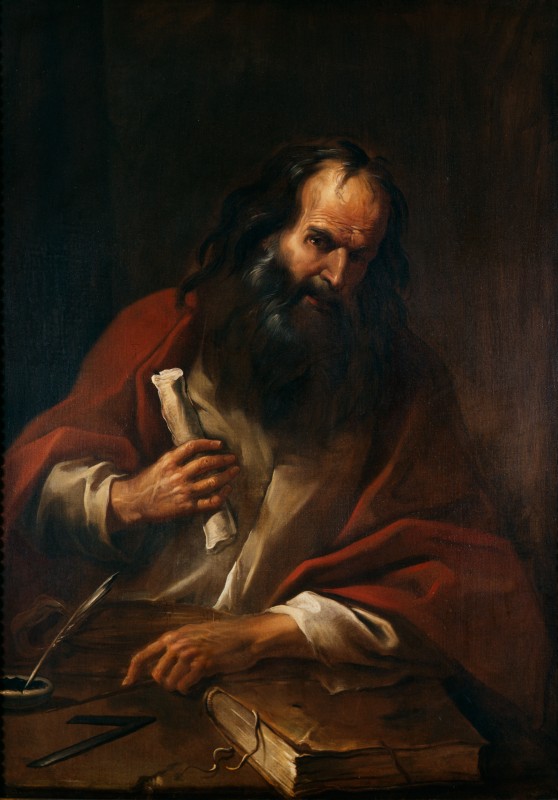
—Are you not afraid that such rigor discourages those who wish to learn? A king can impose; a teacher must seduce.
I do not seek to discourage, but not to lie, my king. If I promised a shortcut, I would deceive the student and sully science. Geometry is not taken like a city by surprise; it is earned line by line. But see, this very difficulty is a promise: what one has understood by oneself, one possesses forever. I have never seen a man forget a truth he had demonstrated with his own hand. The shortcut fades; the climbed path remains engraved. That is why I refuse to shorten: I want my students to carry away their knowledge, not borrow it.
The shortcut fades; the climbed path remains engraved.
—It is reported that one of your students asked you what profit he would gain from your lessons. What did you do, you who so despise commerce?
Ah, that one! He had just learned the first proposition and already demanded his gain, like a merchant at market. So I called my slave and told him to give three obols to that boy, since he must indeed derive profit from what he learns. You smile, Ptolemy, but it was not merely mockery. He who studies geometry only for profit has understood nothing of what it is. One does not contemplate a theorem to get rich; one contemplates it because it is true and beautiful. Let that student take his coins and go: geometry has no use for souls who count their money before thinking.
Give him three obols, since he must profit from what he learns.
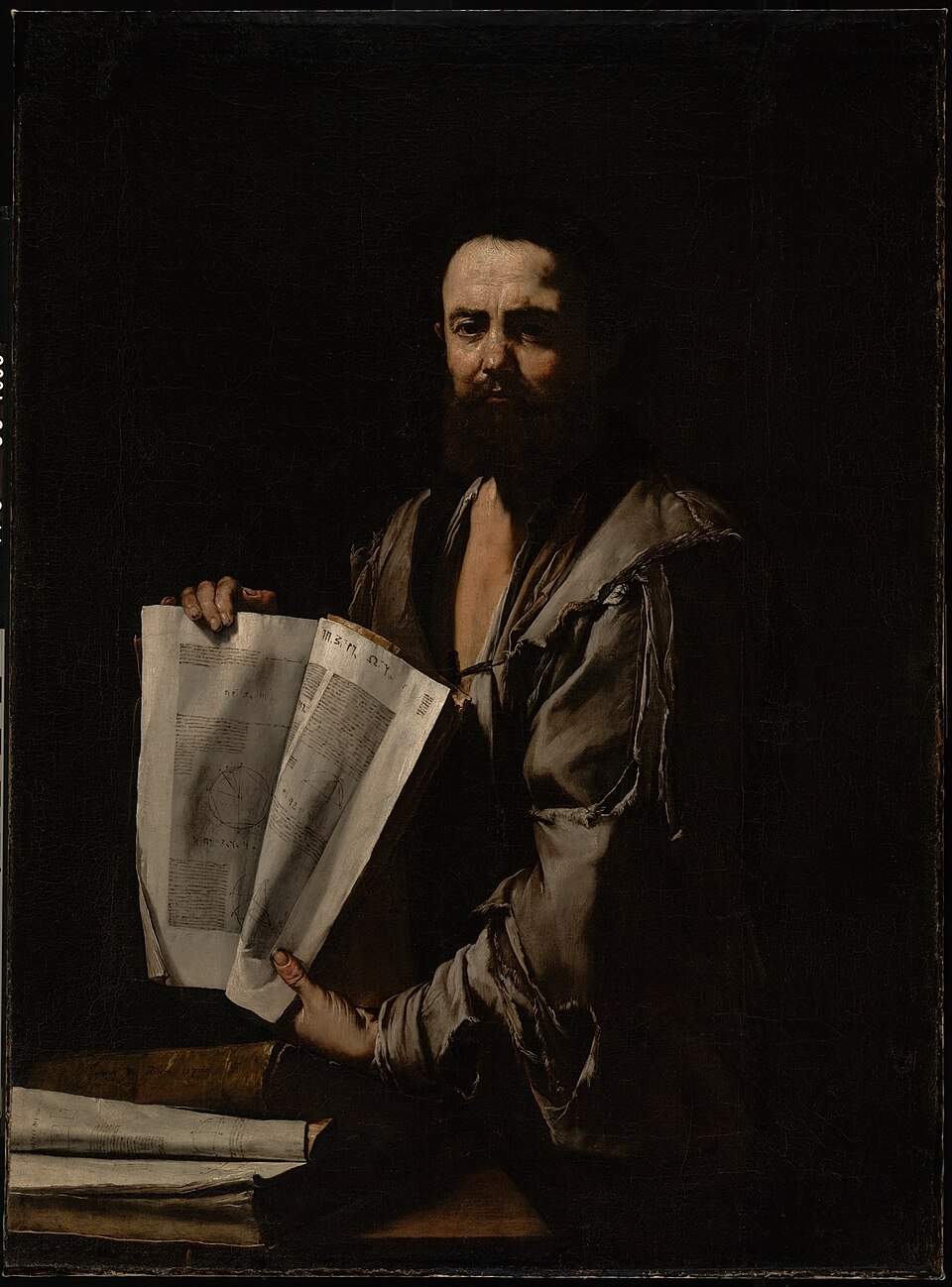
—You who disdain profit, yet you live on the benefactions of my court. Is there not some contradiction there, my friend?
The question is fair, and I take no offense coming from you. But distinguish well: I never taught for gold, and that is the whole difference. That you give me a roof, barley bread, and scribes, I accept with gratitude, for it leaves me free to think instead of begging my time. Your generosity does not pay for my theorems; it spares me from having to sell them. Do you see the nuance? A scholar who speculates on his science corrupts it; a king who protects a scholar elevates him. Without you, I might still be drawing my figures in the dust of a poor city. With you, I engrave them for centuries. That is not profit: it is an alliance.
A scholar who speculates on his science corrupts it; a king who protects a scholar elevates him.
—When I walk through the halls I had built, I see you surrounded by young men. What do you want to transmit to them, beyond the figures?
More than figures, Ptolemy, I want to transmit to them a way of standing upright in thought. In the morning, we draw triangles on wax; but what I truly teach them is to accept nothing without proof, to distrust what shines without demonstrating. Some of these boys will surpass me — that is my dearest wish. I founded a school here so that geometry does not die with me, so that it passes from hand to hand like a flame passed on without extinguishing. Your Mouseîon is the hearth; my students will be the bearers. When I am gone, they will make Alexandria the heart of knowledge.
I want to transmit to them a way of standing upright in thought.
—One last thing troubles me, Euclid. You build everything on requests you consider fragile. What if one of them were proven false one day?
Then the edifice would still stand, my king, and that is my secret pride. I took care to state what I assume and what I demonstrate, never confusing them. If some future mind challenges my fifth postulate, he will not catch me in flagrant falsehood: he will find my request displayed in broad daylight, free to accept or replace it. An honest geometry does not fear being questioned; it has laid everything on the table. That is why I am so keen to separate the evident from the proven. The day one builds differently, one will start from my stones, not my ruins. I wrote the Elements so that they could be discussed, not merely believed.
I wrote the Elements so that they could be discussed, not merely believed.
Read further
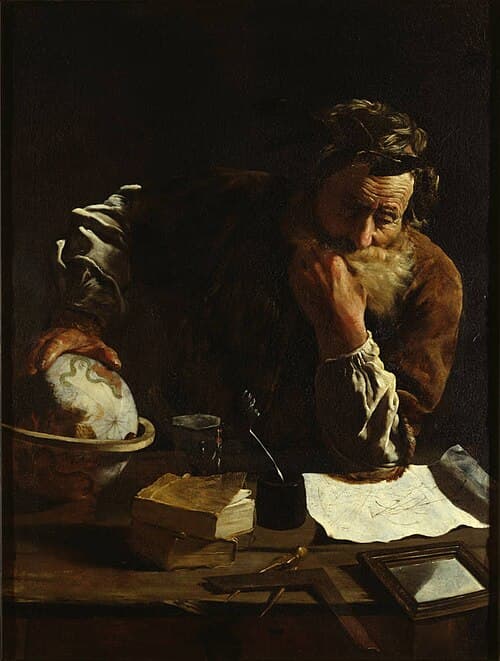
This imaginary interview was generated by artificial intelligence from sources documented in Euclid's profile. It dramatises what the figure might have said based on what we know about them, but does not constitute attested historical testimony. For primary sources and factual documentation, refer to the full profile.