Imaginary dialogue between Juan Perón and Eva Perón
by Charactorium · Eva Perón (1919 — 1952) · Politics · 5 min read
It is in the hushed calm of the Olivos residence, in this winter of 1952, that Juan Perón comes to sit beside Eva, already consumed by illness but refusing to let go of the files piled on her blanket. The pale light of a June afternoon glides over her undone bun, and in the distance the murmur of a radio can be heard. They have known each other since that gala for the victims of San Juan, in January 1944, and that day he comes not as president but as a husband — so that she may say, in a low voice, what she has never confided to the crowds of the Plaza de Mayo.
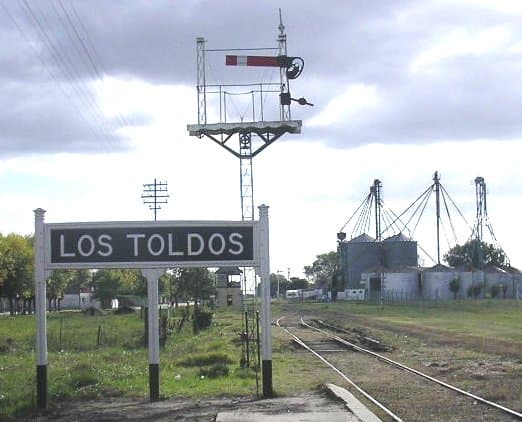
—Evita, since our meeting at the gala in San Juan, you've never really talked to me about Los Toldos. Why hide your childhood like that?
You know, Juan, that I was born in Los Toldos in 1919, the natural daughter of an estanciero who never gave us his name. In those villages of the pampas, a child like me learns very early what the contempt of the well-to-do means. I carried that wound like one carries an ember under the ash — it never goes out. At fifteen, I left for Buenos Aires with one certainty: never again lower my eyes before the oligarchy. If I kept silent, it was not out of shame for my poverty, but because that pain I turned into strength for the descamisados. Only you know the little girl from Los Toldos behind the Evita of the crowds.
—On October 17, 1945, my rivals had thrown me in prison. Do you remember those hours when the people marched to free me?
How could I forget, Juan? That October 17, 1945, when your rivals tore you from me and locked you up, I thought everything was collapsing. But the people did not abandon you. From factories, from the suburbs, they came up by the thousands toward the Plaza de Mayo, sleeves rolled up, without shirts, demanding their colonel. I ran from one union to another, heart pounding, carried by that human tide. When you appeared on the balcony of the Casa Rosada, free, I understood that Peronism would never die — because it was born from the calloused hands of the pueblo. That day, it was not the generals who governed Argentina, my love. It was the people, and only the people.
—You fought for two whole years for Law 13.010. Even I hesitated. What kept you going before that recalcitrant Congress?
Two years, Juan, two whole years of harassing that Congress that dragged its feet! The politicians found a thousand pretexts to postpone women's suffrage. But I knew that without political citizenship, social justice would remain lame. When Law 13.010 was finally passed in 1947, I said before the Assembly: Las mujeres argentinas hemos ganado el derecho a la ciudadanía. Somos iguales ante la ley. And I added immediately that we were not yet equal in action — because a law is not enough; women must seize that right. That is why I founded the Partido Peronista Femenino: so that that ballot would become a weapon in their hands, and not a paper forgotten at the bottom of a drawer.
—I'm told you receive the descamisados up to eighteen hours a day at the ministry. Why exhaust yourself like this, mi negra?
Because I cannot do otherwise, mi querido. Every morning, before dawn, they are already there, at the Ministry of Labor: a homeless mother, a laid-off worker, a sick child. How can you expect me to send them away citing office hours? I receive them one by one, I listen, and I write by hand the notes that unlock aid, a hospital bed, a sewing machine. Bureaucracy is slow and cold; I want the poor to feel that their government loves them. If I exhaust myself, it's because I burn — and I prefer to burn with them rather than fade away in comfort. Rest will come soon enough, Juan.
—The Foundation distributes thousands of packages, and the oligarchy sees it as demagoguery. What do you say to those gentlemen?
Demagoguery? Let them come and see, those gentlemen of the oligarchy! The Eva Perón Foundation that I created in 1948 is not speeches: it is hospitals that heal, schools that educate, homes for young girls alone, thousands of packages with toys and shoes. Before, the charity of the patronesses humiliated the poor by forcing them to beg. I do not give charity: I give justice. What I give, the people have a right to. I short-circuit bureaucracy because misery does not wait for stamps and committees. If they call that demagoguery, it's because they have never loved anyone but themselves.
I do not give charity: I give justice. What I give, the people have a right to.
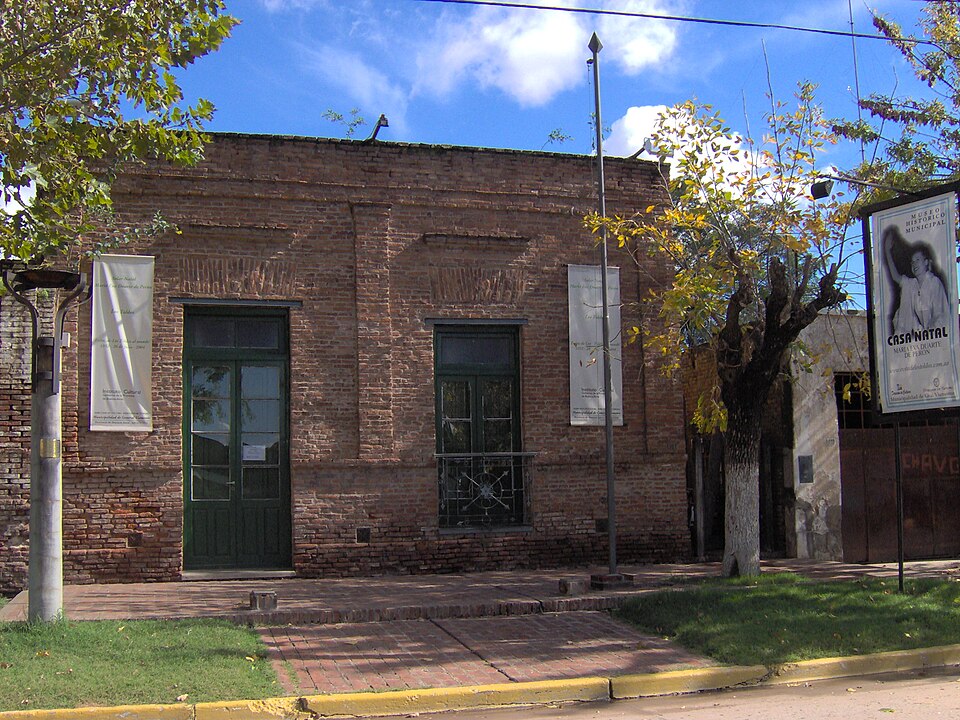
—In Madrid, you wore those Dior dresses. You were reproached for that luxury. You who come from so low, why this elegance?
Ah, my dresses! The oligarchy that kept silent while the people starved dares to lecture me about fabric. Listen to me well, Juan: when I appear in Dior or Paquin, it is not for me, it is for them. My descamisados do not want an Evita in rags; they want one of their own, risen from the mud of Los Toldos, to stand up to queens and duchesses without lowering her eyes. My platinum bun, my jewels, are their revenge as much as mine. The poor girl who was despised now receives the great of this world. Let the oligarchy rage: every dress I wear is a flag planted in their pride.
—That Gira del Arco Iris, in 1947 — Franco awarded you the Grand Cross. What reception did Spain really give you?
Spain, Juan, what a reception! In 1947, during the Gira del Arco Iris, Franco received me like a sovereign and awarded me the Grand Cross of Isabella the Catholic. The crowds of Madrid shouted my name in the streets — I felt I was carrying all of Argentina on my shoulders. In Rome, Pope Pius XII granted me an audience; I came out overwhelmed. Understand me: I did not go as a tourist, but to show the world that our country, emerging from isolation, was raising its head. Every hand I shook there was a door I opened for our justicialism. Spain, scarred by its war, and ours recognized each other as two sisters.
—And France, England? You were received more coldly there. Did our neutrality during the war follow you there?
You are right, and it hurt me. In France, the welcome was polite but icy; in England, they even found a thousand excuses to avoid me. Why? Because those governments never forgave Argentina for its neutrality during the war. They suspected us of having leaned toward the defeated, and I paid for that suspicion personally. But you see, I did not bow my head. If the Europe of the powerful snubbed me, the common people cheered me in the streets as in Madrid. That day I understood that chancelleries and peoples do not speak the same language. I have always chosen the people — everywhere, and to the end.
—On August 22, 1951, on the Plaza de Mayo, before the Cabildo Abierto, you renounced the vice presidency. Why, Eva?
That August 22, 1951, before that Cabildo Abierto, my heart was torn, Juan. A million descamisados massed on the avenue begged me to accept the vice presidency. And you, and the military... you know better than anyone the pressures of those weeks. I answered the people that my decision would be what the interests of General Perón and the Fatherland dictated, and that I would make it myself, according to my conscience. Renouncing was the greatest sacrifice of my life. But I never ran after a title or a seat. It was enough for me to be Evita, the bridge of love between you and the humble. Power I leave to men; the love of the people, no one can take from me.
I never ran after a title. It was enough for me to be Evita, the bridge of love between Perón and the humble.
—At night, I hear you still writing, despite the fever. What do you want to leave behind, Evita?
At night, when the fever keeps me from sleeping, I write, yes. A message more burning than La razón de mi vida — a call to never disarm, to push social justice to the end. I know my body is betraying me, Juan, and I no longer hide it from you. But what I want is neither a mausoleum nor honors: I want to live eternally with Perón and with my people. Promise me one thing: that my descamisados will never be betrayed, that the Foundation continues, that women vote and walk with their heads high. That my fanaticism for justice remains as their inheritance. As long as a single poor person calls me Evita, I will not truly be dead.
As long as a single poor person calls me Evita, I will not truly be dead.
This imaginary interview was generated by artificial intelligence from sources documented in Eva Perón's profile. It dramatises what the figure might have said based on what we know about them, but does not constitute attested historical testimony. For primary sources and factual documentation, refer to the full profile.