Imaginary interview with Eva Perón
by Charactorium · Eva Perón (1919 — 1952) · Politics · 6 min read
Buenos Aires, one morning in 1951, long before dawn. In her office at the Ministry of Labor, where union delegations and mothers from the provinces are already crowding in, a woman with a platinum bun pushes aside a pile of handwritten files to grant us a moment. She speaks quickly, with the fever of someone who knows time is short.
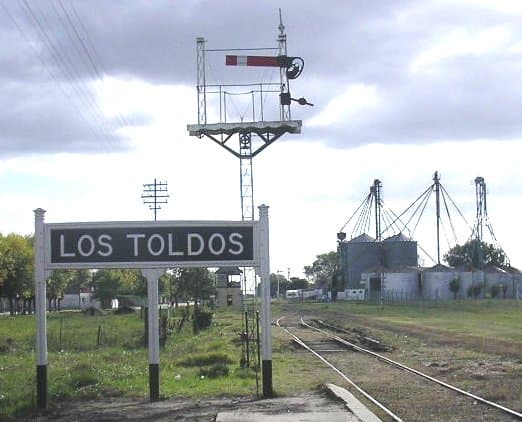
—How did the child from Los Toldos become the one the people call Evita?
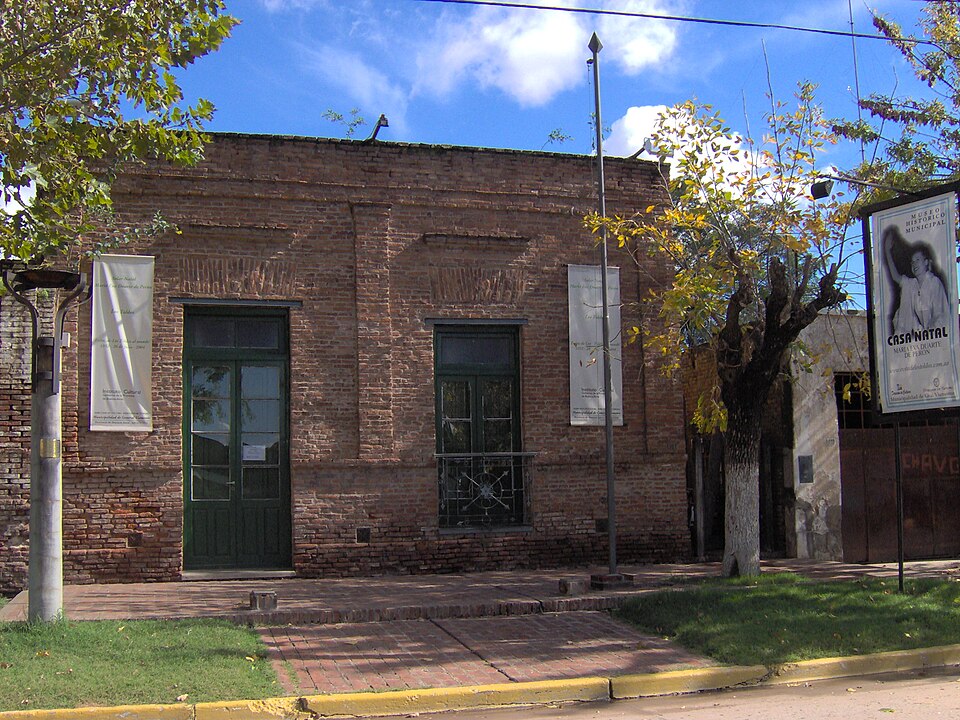
I was born in Los Toldos, in 1919, in the dust of the pampas, the illegitimate daughter of an estanciero who never gave us his name. You don't know what a childhood shame forges until you've carried it. I carried it like an ember. When you grow up on the wrong side of the fence, you learn very early who eats and who watches others eat. All my life, I fought that oligarquía that decides for you that you will remain small. People think my anger is political. It is older than politics: it was born in a poor village where a little girl already understood that you are born condemned. I did not become Evita despite Los Toldos. I became it because of Los Toldos.
When you grow up on the wrong side of the fence, you learn very early who eats and who watches others eat.
—Do you remember the day your path crossed that of Juan Perón?
At fifteen, I had left the province with only one idea: the stage. I knew the small theaters, then radio, and it was in front of a microphone that my voice found its true audience, those invisible listeners to whom I spoke as if to family. Then came January 1944. An earthquake had devastated San Juan, and a gala was organized for the victims. It was there that a colonel stepped forward: Juan Perón. People like to tell this meeting as a soap-opera love at first sight. It was something else. I recognized in him a man who looked at workers as men, not as electoral cattle. He recognized in me a voice that knew how to reach the humble. That night, two solitudes decided to serve only one cause. The rest of my life came out of that handshake.
—Why did you make women's suffrage your most relentless fight?
Because half of the Patria lived without existing. Argentine women worked, raised children, buried, prayed, and when it came time to count, they counted for nothing. I spent two whole years harassing Congress, wearing down the corridors, transforming a favor that one begs for into a right that one wrests away. Law 13.010 was passed in 1947. On voting day, I said that "las mujeres argentinas hemos ganado el derecho a la ciudadanía. Somos iguales ante la ley. Iguales ante la Patria. Pero no somos iguales en la acción." That last sentence was not modesty: it was a program. Having the right is not enough; you must learn to use it, enter the arena, speak up. The ballot is only a key. You still have to dare to push the door open.
The ballot is only a key. You still have to dare to push the door open.
—What did the founding of the Partido Peronista Femenino mean to you?
Once the key was given, we had to build the house. In 1949, I founded and directed the Partido Peronista Femenino myself. My adversaries sneered: what would these women do with politics? They turned it into a tide. We opened unidades básicas in the most forgotten neighborhoods, trained delegates who had never spoken in public, and brought up to me the miseries that no ministry saw. In the 1951 elections, these new female voters became a foundation that nothing could ignore anymore. I am accused of building a machine. So be it. But a machine at the service of those who had always been left at the door is not mechanics: it is justice set in motion.
—How would you describe the work accomplished within your Foundation?
The Fundación Eva Perón, born in 1948, was the bridge I dreamed of between the State and those it never reached. Bureaucracy invented a thousand forms to give nothing; I wanted to give first and count later. My afternoons were spent there: receiving hospital directors, opening schools, homes for young single women, and signing notes by hand to release aid that an office would have delayed for six months. I was criticized for bypassing the rules. But when a mother hands you a feverish child, you don't ask her for a triplicate certificate. I preferred the injustice of helping too quickly to the frozen justice of closed counters. Charity humiliates; we were giving what was owed.
I preferred the injustice of helping too quickly to the frozen justice of closed counters.
—What did those parcels distributed by the thousands to poor families symbolize?
Those parcels were not wrapped alms. In each one, there were toys, clothes, dulce de leche, but above all a message: you are not forgotten. The descamisados, those "shirtless ones" who were despised, received for the first time something that came not from a condescending boss, but from a movement that recognized itself in them. I remember them, on October 17, 1945, flooding the Plaza de Mayo to demand Perón's release; that day I understood that these people were only waiting for one thing, to be called by their name. The parcel extended that recognition. A poor child who opens a box and finds a new toy learns, that morning, that he is worth something. That is the real distribution: not objects, but dignity.
—How did you experience your European tour, the Gira del Arco Iris of 1947?
It was called the Gira del Arco Iris, the rainbow tour, and the name was almost too pretty for what it was: a diplomatic battle fought in evening gowns. Argentina emerged from the war with the reputation of a country too close to the Axis; we had to reshape that image. In Spain, Franco awarded me the Grand Cross of Isabella the Catholic before a huge crowd; in Rome, I was received by Pope Pius XII. I wore dresses by Dior, by Paquin, and there was much gossip about that. But when a girl from Los Toldos enters palaces in a couturier's gown, it is not coquetry: it is a revenge that an entire class carries with her. My one-night luxury was the flag of those who had never been invited.
When a girl from Los Toldos enters palaces in a couturier's gown, it is a revenge that an entire class carries with her.
—Did all countries give you the same triumphant reception?
No, and I did not hide it. Spain carried me in triumph because our peoples are alike, fervent and wounded. But in France and England, they offered me a hand gloved in coldness. Those governments still looked askance at Argentina, suspecting it of complicity with the Axis during the war, and behind the politeness one felt the judgment: what is this former actress, this upstart, doing here? I learned early to read that contempt beneath smiles. It did not wound me as they hoped. I thought of my descamisados, and I told myself that the salons that snubbed me were exactly those I fought at home. You don't change your cause by changing continents.
—What really happened on August 22, 1951, during that Cabildo Abierto where you renounced the vice-presidency?
It was the most heartbreaking evening of my life. An ocean of people demanded that I be a candidate for the vice-presidency, chanting my name on that immense avenue. The military, however, would not tolerate it: a woman, a descamisada, one heartbeat away from the presidency, was more than they could bear. Before that Cabildo Abierto, I said that "mi decisión definitiva e irrevocable es y será la que considere corresponde a los intereses del general Perón y a los de la Patria, y esto lo resolveré yo misma, según mi conciencia." I renounced. But understand well: I did not bow to the brass. I chose, according to my conscience, not to give my enemies the pretext of a coup against Perón. Renouncing, sometimes, is the highest form of will.
Renouncing, sometimes, is the highest form of will.
—Feeling time slipping away, what do you hope to leave to those who come after you?
The disease is eating me away, I will not say otherwise, and I know the name that no doctor dares to pronounce in front of me. But I do not measure a life by the number of its years. I wrote, in La razón de mi vida, that "prefiero ser Evita, a ser la esposa del Presidente, si este 'Evita' sirve para que el apodo sea un puente de amor entre los descamisados y Perón." That is my entire testament. What remains of me? Argentine women who vote, children cared for, mothers housed, and that word, Evita, which does not belong to a palace but to a crowd. Let them forget me as First Lady, I care little. But if, in a hundred years, a poor girl utters my nickname as a promise kept, then I will not have lived so little.
This imaginary interview was generated by artificial intelligence from sources documented in Eva Perón's profile. It dramatises what the figure might have said based on what we know about them, but does not constitute attested historical testimony. For primary sources and factual documentation, refer to the full profile.