Imaginary interview with Fanny Mendelssohn
by Charactorium · Fanny Mendelssohn (1805 — 1847) · Music · 5 min read
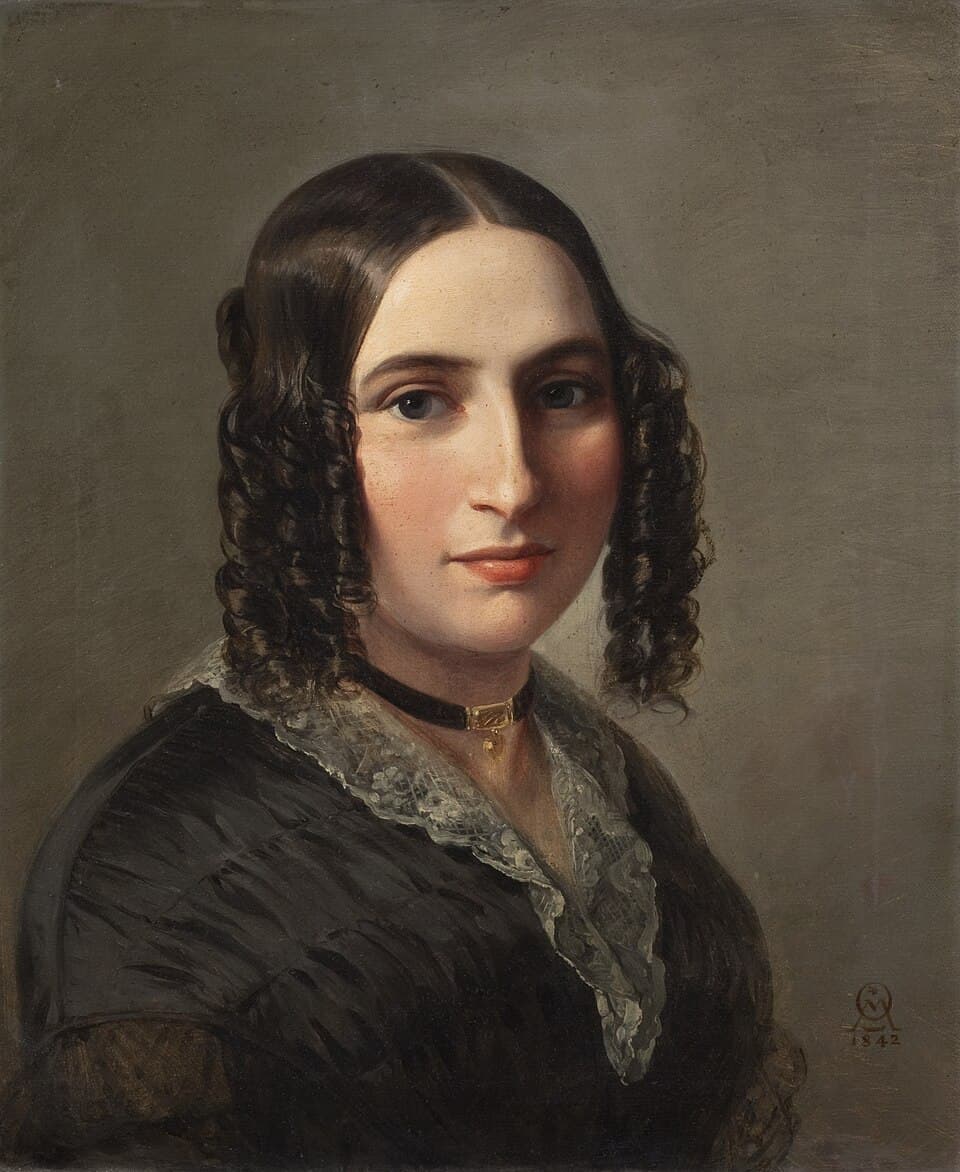
Berlin, a Sunday in the winter of 1846. In the grand salon of the villa on Leipziger Straße, the chairs are still lined up for the evening Sonntagsmusik. At the pianoforte, a forty-year-old woman is putting away her manuscript scores, her first printed collection resting on the music stand. She agrees to speak — in a voice mingling the joy of having finally dared with the lucidity of a whole life lived in the shadows.
—How did you learn, as a child, the place your family had reserved for you in music?
I was told early, and without mincing words. I was fifteen when my father, who nonetheless considered me the most gifted of his children, wrote to me that music would remain for me an ornament, never a profession — that word, Beruf, he kept for Felix. I have read that letter so many times I could sing it. Understand: it was not cruelty, it was the order of the world, as natural to him as the sun rising over Leipziger Straße. A young girl of good family played, charmed, accompanied. She did not sign. I accepted outwardly and disobeyed in secret, at my desk, in the quiet of the mornings, before the house awoke.
That word, profession, he kept for my brother; to me, he offered an ornament.
—How did you feel when people praised Felix's talent in front of you?
A mixture I could never untangle. Felix was my brother, my first listener, the ear to whom I submitted every measure before believing it finished — and we both knew he learned from me as much as I from him. When Zelter introduced me to Goethe as a child prodigy, I felt a door open a crack, then close again as soon as my sex was remembered. I did not envy Felix; I loved him too much for that. But to see the same gift open conservatories before him and only a closed salon before me leaves a fine bitterness, like a sustained wrong note one eventually stops hearing because it lasts so long.
—It is said that one day, Queen Victoria sang one of your melodies thinking it was by Felix. What does that story mean to you?
It makes me smile, and also wince. Some of my Lieder had appeared under Felix's name, for convenience, for prudence — under his name they traveled; under mine, they would have stayed in the drawer. Queen Victoria, who adored those melodies, chose one to sing before him, and he had to admit it was his sister's. I wish I had been a mouse in that room. See the irony: my genius was celebrated at the English court under a first name not my own. They applauded my voice thinking they heard a man's. That is my whole life summed up in a drawing-room anecdote: recognized everywhere, named nowhere.
They applauded my voice thinking they heard a man's.
—Felix himself acknowledged your musical superiority. How do you explain that he nevertheless hesitated to see you publish?
Felix loved me as one protects a precious thing — a little too much, to the point of smothering. He told anyone who would listen that I was a better musician than he, that he still learned from me every time we worked together; I believe he truly thought so. But to publish, for a woman, was to expose oneself, to descend from the salon into the public square, and that frightened him for me more than for himself. He feared the world's judgment, perhaps also to lose me a little. When I finally brought out my Op. 1, it was first without his blessing, then with his rediscovered tenderness. Brotherly love can be a cage as much as a refuge.
Brotherly love can be a cage as much as a refuge.
—You conducted choir and orchestra at your Sunday concerts. What happened inside you when you stepped up to that podium?
Everything fell into order. Imagine the grand salon of the villa filled with two hundred people — poets, painters, travelers from all over Europe — and at the center, that podium from which I held voices and instruments in my hand. In 1831, when I conducted my great Easter cantata, Hiob, before that crowd, I felt a satisfaction that nothing in my domestic life had given me: that of being fully in my place. A woman beating time before an orchestra, in Berlin, was almost a gentle scandal tolerated because it took place in my home, in private. But that Sunday, I knew, in my very flesh, that I was a composer — and that no one could ever take that from me.
I knew, in my very flesh, that I was a composer — and no one could ever take that from me.
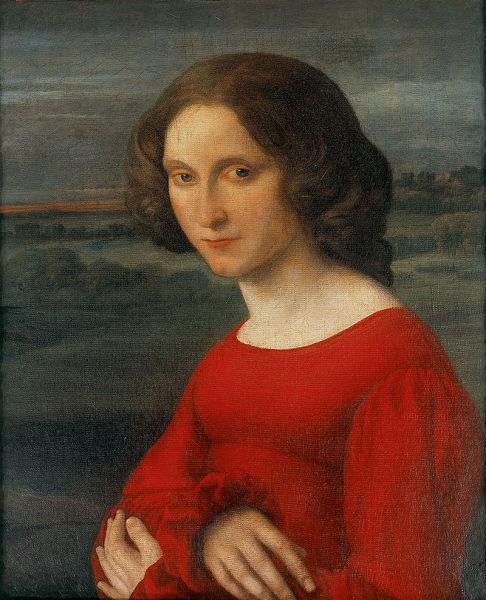
—What exactly were these Sonntagsmusiken, and why did you value them so much?
They were my kingdom, the only one I was allowed. Every Sunday, the salon on Leipziger Straße turned into a concert hall: furniture was pushed aside, the pianoforte was tuned, and the finest minds of Europe came to hear music that no public stage would have let me perform. The Sonntagsmusik was a thoroughly bourgeois institution, a salon where art was made among ourselves, sheltered from commerce and prying eyes. I played, I sang, I created my own pieces before an audience of my choosing. Denied the great door, I had built my own house of music. They had closed the world's theater to me; so I made Sunday my theater.
—Your journey to Rome seems to have changed everything. Do you remember what it awakened in you?
Rome, in 1839, gave me back to myself. Far from Berlin, its conventions and its gray sky, I found a freedom I thought lost: there I was treated as an artist, not as a sister of. I went with my husband Wilhelm, the painter, through ruins and gardens, and each season, each light entered me like a melody. From that stay was born Das Jahr, The Year — twelve piano pieces, one for each month, in which I sought to capture the passage of time and Italian light. Wilhelm illustrated my manuscripts with little drawings; our two arts answered each other. Never had I composed with such fervor, nor such certainty of having something to say.
In Rome, I was treated as an artist, not as a sister of.
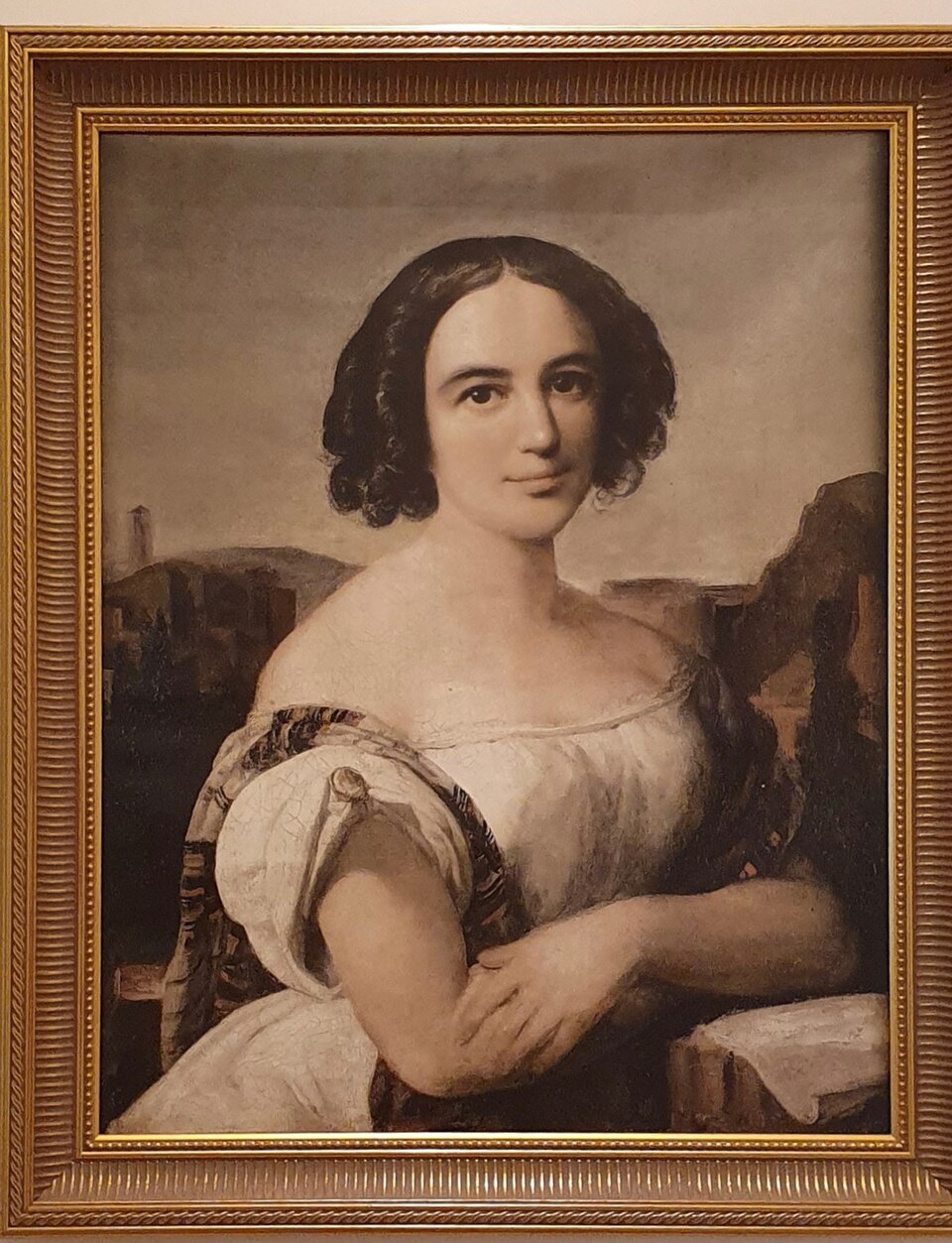
—What does this cycle, Das Jahr, represent for you in relation to the rest of your work?
It is the freest and most complete thing I have written. In Das Jahr, I obeyed no commission, no convention — only the seasons and my memory of Rome. Each month has its color, its climate of the soul: November's melancholy, spring's momentum, December's recollection. I put into it my most personal manner, that Romantic language I owed to no one. I know these pages will probably sleep in my manuscript notebooks, like so many others; few hands will read them. But if ever, in half a century, someone should open them and recognize a whole voice — then I will have existed fully, and not just in the shadow of a name.
—At forty, you finally published under your own name. What did you feel when you saw that collection appear?
A grave happiness, almost incredulous. My Op. 1 appeared in 1846 under the name Fanny Hensel, my name, written in full on a printed score — I who had spent my life signing in secret or under another's. I was happy to have finally dared; the critics were kind, and I felt I had done something right for myself, come what may. At forty, understand what that means: an entire existence spent waiting for permission, and finding it one morning in the light weight of a booklet of Lieder bearing my name. It was not glory. It was better: it was truth.
A whole life waiting for permission, and finding it in the light weight of a booklet bearing my name.
—Do you feel an urgency to create, in this year when you are publishing so much?
Strangely, yes — as if something were pressing me. After Op. 1, I wanted to give more: my Trio in D minor, which I consider my most accomplished work, and those Gartenlieder, my garden songs, melodies born from the simple world where I have lived. I feel I am catching up on thirty years of silence in a few seasons, emptying my drawers before it is too late. In the morning, I still compose before the house awakes, feverish, as if each page snatched from silence were a victory. I do not know how much time I have left. But I write now as a free woman, and that, no one will take from me.
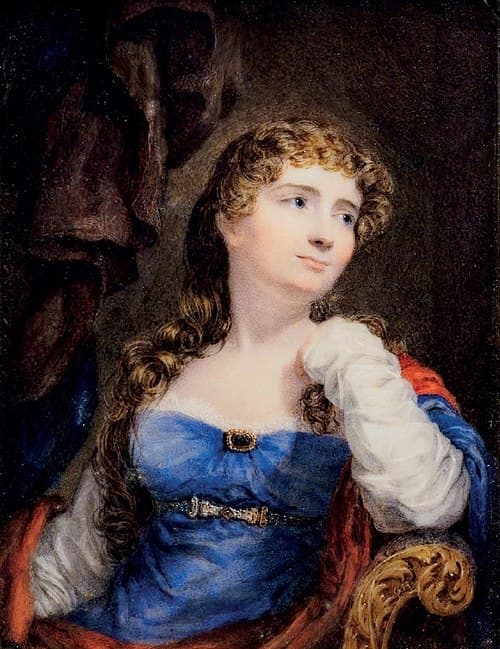
This imaginary interview was generated by artificial intelligence from sources documented in Fanny Mendelssohn's profile. It dramatises what the figure might have said based on what we know about them, but does not constitute attested historical testimony. For primary sources and factual documentation, refer to the full profile.