Kids interview Flora Tristan
by Charactorium · Flora Tristan (1803 — 1844) · Politics · 5 min read
That morning, two twelve-year-old visitors on a school trip pushed open the door of a small, cramped boarding-house room piled with papers. A woman with bright eyes, dressed in a dark gown, greeted them with a tired smile. Her name was Flora Tristan, and she had a great deal to tell them.
—How old were you when you left for so far away, all the way to Peru?
You know, my child, I was thirty. Imagine a sea voyage that lasts months, with nothing but ocean all around you, day after day. I left in 1833 for Arequipa, Peru, to join my father's family. My father was a Peruvian aristocrat, but he died when I was little. I hoped they would give me my share of his inheritance. It was my right, I believed. The boat pitched and rolled, I was afraid, but I also had immense hope in my heart. I recorded everything in my notebook: the sky, the sea, my thoughts. That journey changed everything in me.
—And did they give you the inheritance?
No. And it broke my heart. My family in Arequipa refused to recognize me. Why? Because my parents had not been married under Spanish law. In the eyes of the law, I was therefore nobody's daughter. An outcast. In my day, we said a paria — someone society rejects, without rights, without a name. I took that word and made it the title of my book, Pérégrinations d'une paria, in 1838. You see, my child, when you are denied a place, you can cry... or you can write. I wrote. And that anger taught me to fight for all those who are rejected.
When you are denied a place, you can cry, or you can write.
—Is it true your husband tried to kill you?
Yes, my child. It's a terrible story. I married very young, to André Chazal, an engraver. But he was violent. I left him, with my children — in my day, that was almost impossible for a woman. One day in 1838, in the middle of a Paris street, he pulled out a pistol and shot me. The bullet lodged near my chest. The doctors could never remove it. I carried it inside me until I died. He was sent to hard labor. You know, I was in pain all my life... but that pain, instead of extinguishing me, made me even more determined to defend women.
—Why couldn't you just get a divorce?
Ah, because divorce no longer existed! It had been abolished in France in 1816. Imagine: you are married to a man who frightens you, and the law says it's forever. You cannot really leave. You even have to fight for the right of visitation, that is, the right to see your own children. That was what it meant to be a married woman in my day: almost nothing belonged to you, not even your steps. So I was one of the first to loudly demand the right to divorce. People found me scandalous. But someone had to say it first. An unjust law does not become just because it is old.
—What were the poor neighborhoods you visited in London like?
Oh, it was heartbreaking. I went to London several times. I walked through the most miserable districts, where others dared not set foot. I visited prisons, workshops, streets where entire families were crammed into a single airless room. Children already worked there, thin and gray with fatigue. I noted everything in my travel notebook: wages, hours, the filth. Then I turned it into a book, Promenades dans Londres, in 1840. I wanted to force comfortable people to see what they refused to look at. For you cannot cure a misery you refuse to face.
—What did you do with all your days, actually?
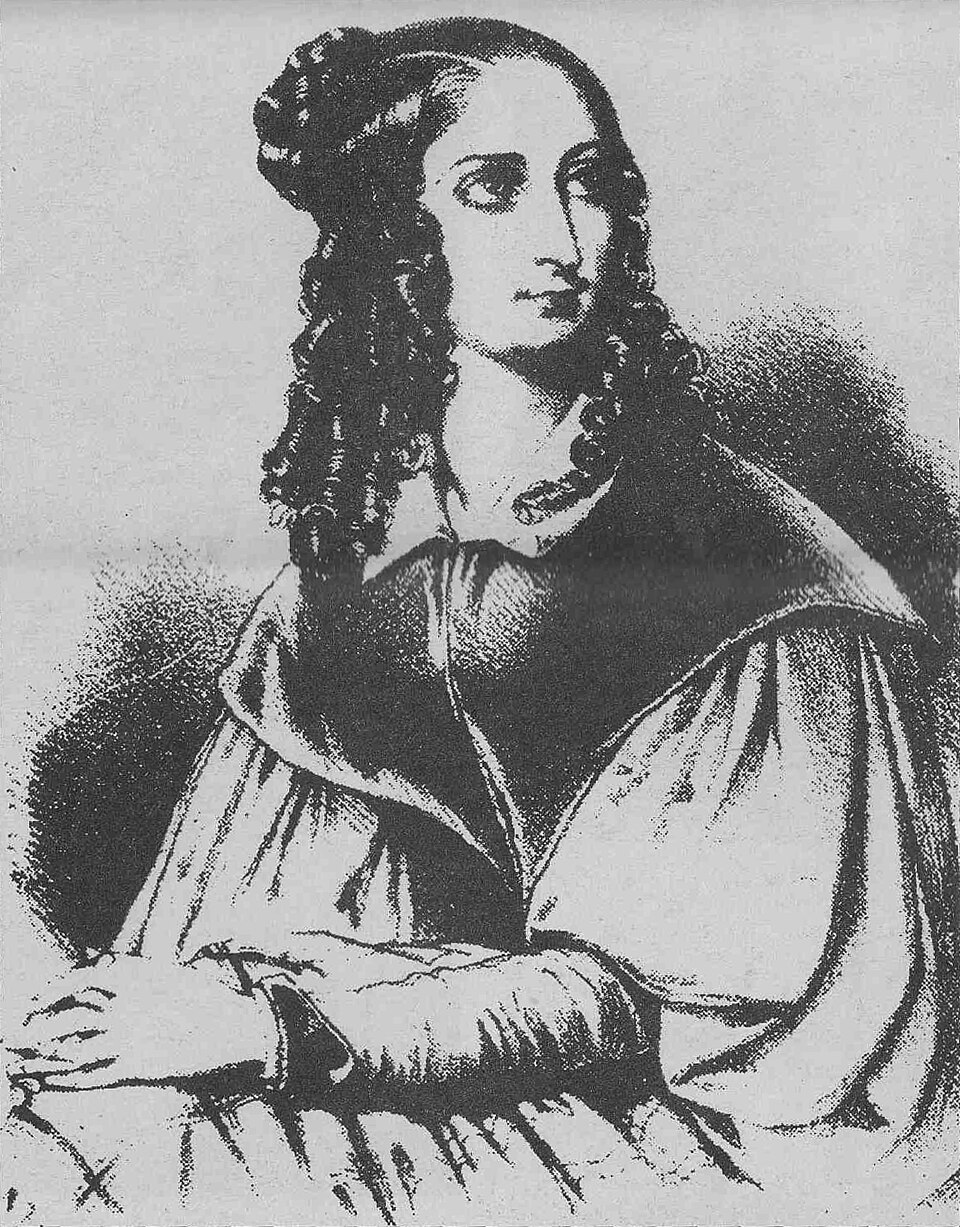
My days were very full, you know! In the morning, I wrote. I would sit at a small desk covered with papers, my pen and inkwell at hand, and compose letters and articles. In the afternoon, I went out. I walked through workshops and spinning mills, talked to the workers, noted how much they earned and how many hours they toiled. In the evening, I attended workers' meetings to speak. I came home late, exhausted, and still wrote down my observations before sleeping. I lived in modest rooms, ate bread and soup. It was not a gentle life. But every note I took was a small weapon against injustice.
—What was your big idea for helping the workers?
My idea boiled down to one word: unite. You see, in my day, workers were alone, each in their corner, weak. Separated, they were crushed without difficulty. Together, they could become a force. I put this in my most important book, L'Union ouvrière, in 1843. And I addressed both men and women — that was new! I launched this call: 'Workers and working women, in the state of isolation you are in, you are weak and you succumb crushed under the balance of power. Unite!' And would you believe it, that was five years before another much more famous manifesto.
Alone, you are crushed; united, you become a force.
—And how could workers read your book?
Ah, good question! A book is useless if it sleeps in a library. So in 1844, I took to the roads of France. It was called my Workers' Tour de France. I went from town to town, with my traveling trunk filled with copies of L'Union ouvrière. I handed them personally to the workers, in the workshops. In Lyon, I met the canuts — the silk weavers — who had already risen up to defend their working conditions. I spoke to them, but above all I listened to them. Carrying my ideas from door to door was far better than merely printing them.
—How did that great journey end?
Badly, my child... and I will tell you frankly. That Tour de France exhausted me. Months of roads, speeches, accumulated fatigue. My body finally gave out. I fell ill with typhus, a terrible fever that could not be cured in my day. I died in Bordeaux, on November 14, 1844. I was only 41, and my journey was not finished. It is sad, yes. But you know, I regret nothing. I spoke to the workers until my last breath. I did what my heart commanded me to do. Dying on the road, after all, is dying standing up.
Dying on the road is dying standing up.
—Did people remember you afterward?
Yes, and it touches me deeply. You know, I died poor and tired, far from home. But the workers of Bordeaux, the very ones I had fought for, did not forget me. In 1848, they pooled their money — each giving a few coins — to erect a monument to me at the Chartreuse Cemetery. They inscribed four words: Liberté, Égalité, Fraternité, Solidarité. And the last one is truly mine: solidarity. And then, a little secret: I never knew my grandson, but he became a great painter. His name was Paul Gauguin. You see, what one sows, others make bloom long after we are gone.
This imaginary interview was generated by artificial intelligence from sources documented in Flora Tristan's profile. It dramatises what the figure might have said based on what we know about them, but does not constitute attested historical testimony. For primary sources and factual documentation, refer to the full profile.