Kids interview Françoise de Graffigny
by Charactorium · Françoise de Graffigny (1695 — 1758) · Literature · 4 min read
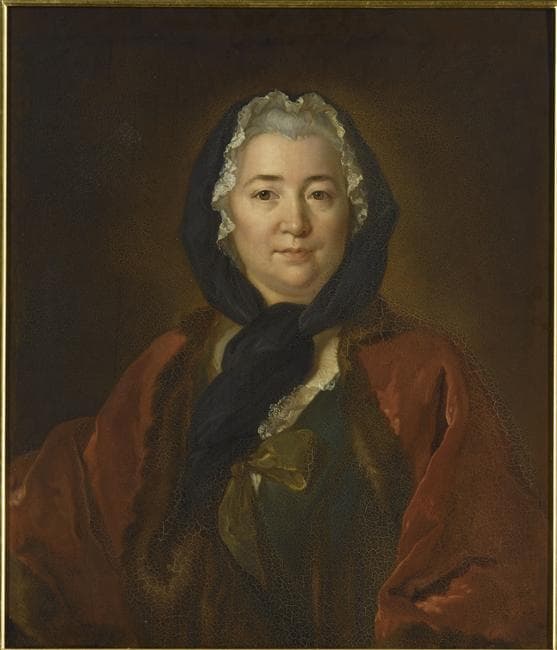
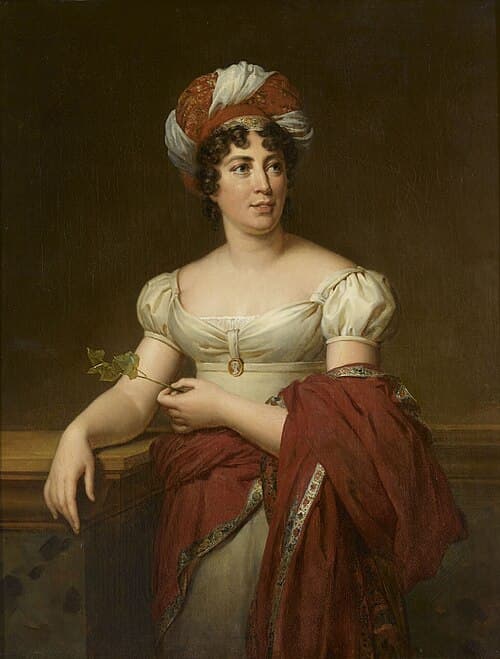
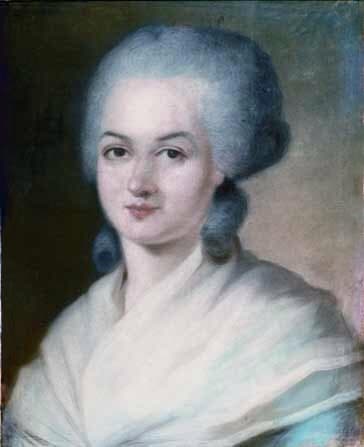
That morning, a school group on a field trip visits an exhibition on the Age of Enlightenment. Two twelve-year-old students stop in front of the portrait of an eighteenth-century lady with a lively gaze. To their great surprise, Françoise de Graffigny seems ready to answer all their questions.
—What was your salon like? Who came to your home in the evening?
You know, my child, my salon was nothing grand. It was a modest apartment on Rue Saint-Hyacinthe in Paris. But in the evening, great things happened there! Thinkers would come and sit near me: Helvétius, young Turgot, and even a fiery boy named Diderot. We discussed new books, ideas of reason and progress. Imagine a somewhat cold room, lit by candlelight, where everyone spoke loudly and laughed. I had little money, you see, but I had something better: friends who thought. What they called a bel esprit, that's it: a cultivated person who knows how to make conversation sparkle.
—Did you really write more than 2,500 letters? How did you manage?
Oh, even more! I spent my life writing to a very dear friend, François-Antoine Devaux. Sometimes several letters in the same day! I had a small portable writing desk: a travel box with ink, quills, and paper. When evening came, I would light a hand candlestick, that small candlestick you hold to see. And I would write, late into the night, until my eyes burned, because my sight was very tired. Imagine a silent room, just the scratching of my quill. Those letters were my way of never being quite alone.
Writing to a friend is holding their hand from afar.
—Is it true that Voltaire kicked you out of his home?
Ah... that story still hurts. In December 1738, I was invited to the Château de Cirey, at Voltaire's and his learned friend Émilie du Châtelet's. One evening, Voltaire accused me of having copied and circulated secret pages of his poem, The Maid of Orleans. In front of everyone, he showered me with reproaches. In those days, letters were sealed with wax to keep secrets, and he believed I had betrayed his. I had to leave in the cold, humiliated. You know, the worst isn't being expelled. It's being accused by someone you admired.
—Were you sad at that moment?
Sad? I was devastated. I wrote to my friend Devaux words I never forgot: 'I am here like a criminal. Voltaire made the most horrible reproaches to me in front of everyone.' Imagine being unjustly accused, far from home, with no one to defend you. The Château de Cirey had become a prison. But this pain taught me one thing, my child. Great men are not always great. Voltaire was a genius, yes, but that evening he was cruel. And I survived. It's by falling that you discover if you know how to get back up.
—What is your most famous book about?
My great novel, Letters from a Peruvian Woman, published in 1747! I tell the story of Zilia, a young Inca princess torn from her country, Peru, and taken by force to France. Everything astonishes her, everything shocks her. Through her foreign eyes, I show how unjust our French society could be, especially toward women. Imagine someone arriving in an unknown world and saying out loud what no one dares see. The book was a huge success: it was reprinted more than forty times! To criticize one's own country, the best is sometimes to look at it with eyes from elsewhere.
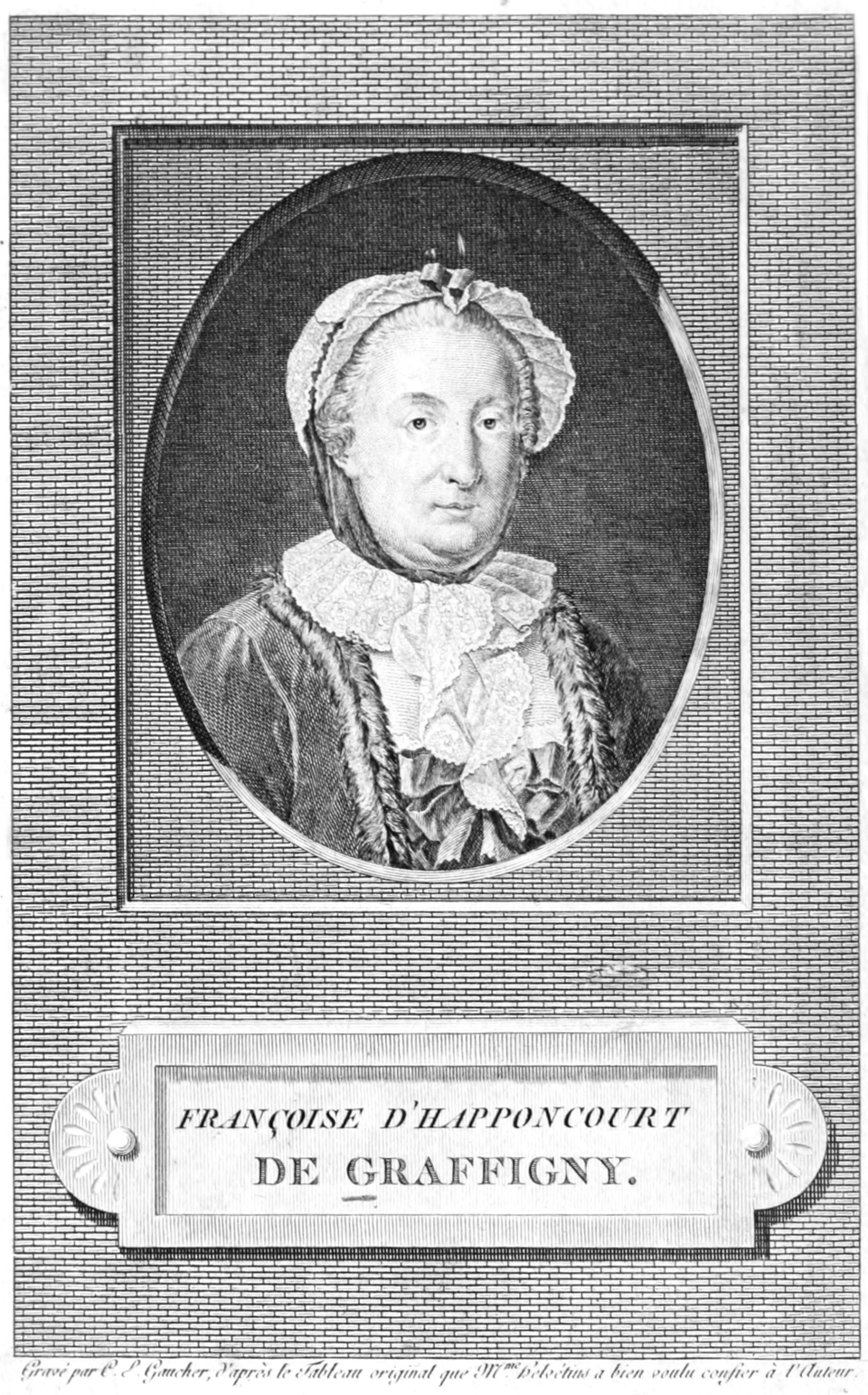
—What are quipus in your story?
Ah, quipus! They are a true marvel. The Incas, my heroine Zilia's people, did not know our writing. To remember things, they made knots on colored cords. Each knot, each color meant something. In my novel, Zilia weaves her quipus to speak to the one she loves, who remained in Peru. It is her way of writing letters, you see? Imagine telling your whole life with strings and knots, without a single letter. For me, that was wondrous. There are a thousand ways to talk to each other; ink is only one.
—Why did you have a foreigner speak rather than yourself?
Good question, really! You know, in my time, a woman who openly criticized France risked a lot. But an Inca princess could say anything! No one blamed her for being surprised by our customs. In my book, I write that 'I will never be accused of having taken too many liberties in portraying customs that are foreign to us.' Through Zilia's voice, I could denounce the fate of women, who were so poorly educated. Imagine being able to tell the truth while hiding behind a mask. Zilia was my mask.
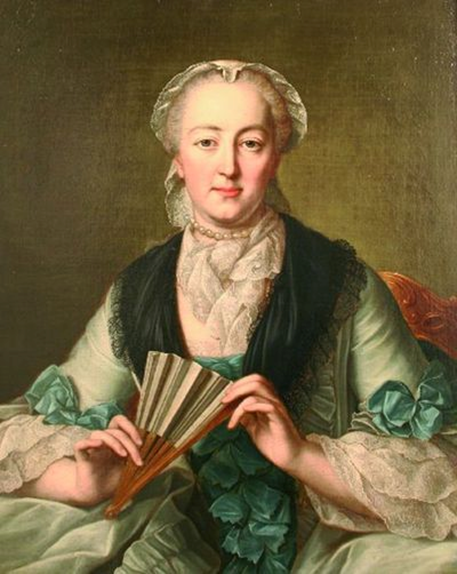
—And in the theater, were you successful?
Oh yes, what a memory! In 1750, my play Cénie was performed at the Comédie-Française, the great theater of Paris. The audience cried! It was called a tearful comedy: a play that mixes laughter and tears to touch people's hearts. It was performed twenty-five times in a row, a triumph for the time! Imagine a packed hall, handkerchiefs everywhere, and me hidden, heart beating, listening to the applause. After so many difficult years, I finally felt loved. Making people cry with happiness is a beautiful profession, you know.
—And did your plays always do well?
Alas, no. Glory does not last forever. In 1758, shortly before my death, I gave a final play, Aristides' Daughter. I had put all my heart into it... but the audience did not like it. This failure pained me greatly, especially since I was already old and quite ill. Imagine preparing a gift for months, and no one looks at it. It was a bit like that. But I regret nothing, my child. An artist's life consists of triumphs and falls; you must love both.
One does not write to succeed; one writes because one cannot do otherwise.
—If you are remembered today, what will it be for?
I would like to be remembered for Zilia, my little Inca princess, and her Letters from a Peruvian Woman. If one day a girl reads my book and tells herself that she too has the right to learn, to think, to write, then I will not have lived in vain. In my time, girls were so poorly educated! I wrote despite an unhappy marriage, despite poverty, despite those who thought me incapable. Imagine a woman alone, at her table, with her quill as her only weapon. That is who I was.
A quill makes no noise, but it crosses centuries better than a sword.
Read further
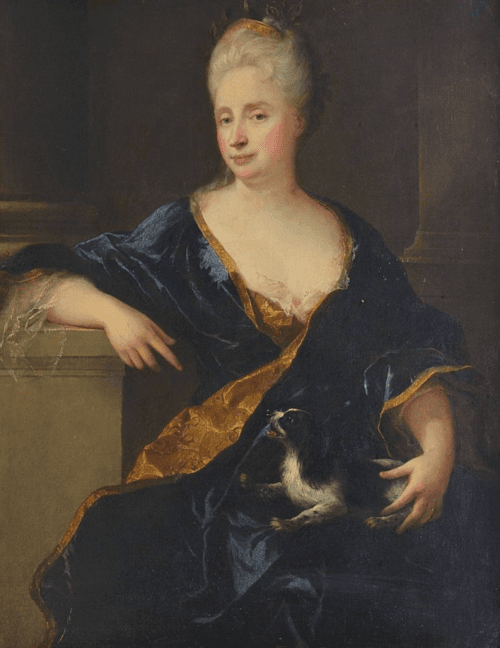
This imaginary interview was generated by artificial intelligence from sources documented in Françoise de Graffigny's profile. It dramatises what the figure might have said based on what we know about them, but does not constitute attested historical testimony. For primary sources and factual documentation, refer to the full profile.