Imaginary interview with Françoise de Graffigny
by Charactorium · Françoise de Graffigny (1695 — 1758) · Literature · 7 min read
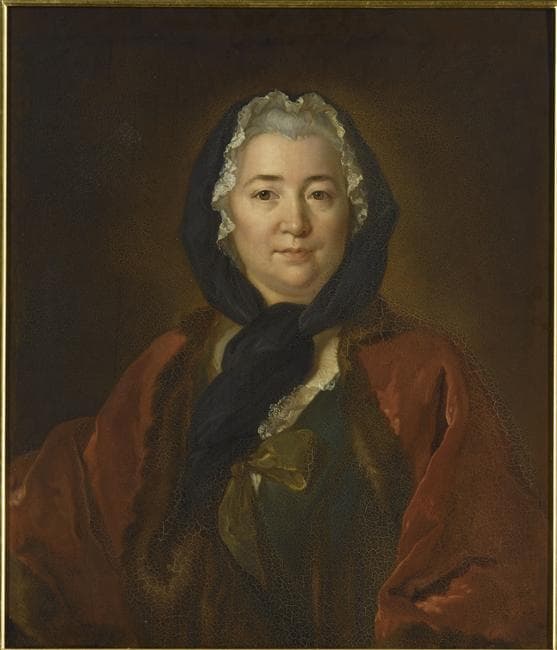
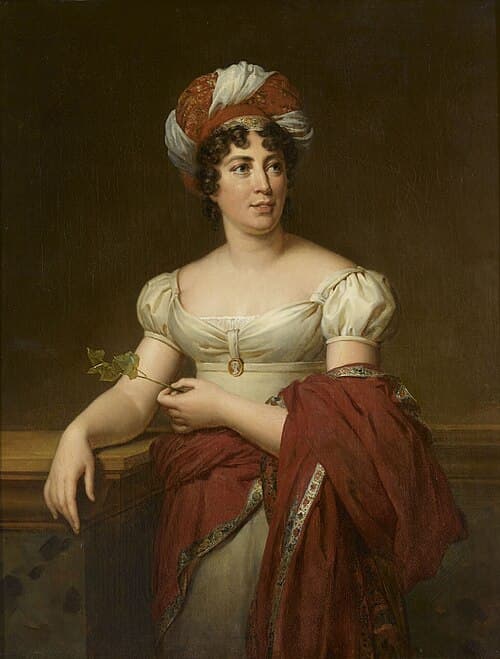
Paris, winter 1757. In a modest apartment on Rue Saint-Hyacinthe, cluttered with books and papers, a sixty-two-year-old woman receives us near a feeble fire, a writing desk on her lap. The pen has not dried; letters for Devaux await. Françoise de Graffigny agrees to revisit, for us, a life that began at the court of Lorraine and reached the stage of the Comédie-Française.
—Where do you come from, and how did a young provincial girl end up taking up the pen?
I was born Françoise d'Issembourg d'Happoncourt, in Nancy, in 1695, in that duchy of Lorraine that was not yet quite France. I grew up in the shadow of Duke Léopold's court, between Nancy and Lunéville, where a girl was taught mainly to please and to be silent. At seventeen I was married to François Huguet de Graffigny, a chamberlain, and I thought I was entering the world. I entered a prison. The pen, you see, did not come from a glorious vocation: it came from the need to write to someone, anyone, so as not to suffocate. You start with notes, you end with novels. Lorraine gave me my accent; misfortune gave me the rest.
Lorraine gave me my accent; misfortune gave me the rest.
—You mention a prison. What happened in that marriage?
My husband was violent and spendthrift, two vices that feed on each other. He squandered and he struck; he even caused, through his brutality, the death of children I carried. I endured what a woman of my time was supposed to endure, that is, the unbearable, until 1723, when I obtained a legal separation. You cannot measure what that word meant then: a woman separating, before the law, from a man the Church had given her was almost a scandal, and above all a rarity. I gained my freedom and lost my security at the same time, for a woman alone, without fortune, is protected by nothing. I traded blows for need. I do not regret the bargain.
I gained my freedom and lost my security at the same time.
—In December 1738, you arrived at the Château de Cirey, at Voltaire and Émilie du Châtelet's. What were you seeking there?
I arrived at Cirey, in Haute-Marne, fleeing Lorraine and uncertainty, my heart full of somewhat foolish hopes. Imagine: the home of Voltaire and the divine Émilie du Châtelet, the sanctuary of science and verse, rooms filled with instruments, manuscripts, fire. One supped late, read tragedies by candlelight, argued about Newton between compliments. I thought I was admitted to the temple. I wrote every evening to my friend Devaux the account of these marvels, not suspecting that my very letters would become the instrument of my downfall. Cirey was, for a few weeks, the most beautiful stay of my life. Then the cruelest. That is how it is: the paradises we think ourselves worthy of are those from which we are driven out.
—How did this friendship turn into drama?
Voltaire was secretly composing his Pucelle d'Orléans, that poem he feared above all to see circulated. He took it into his head that I had let passages circulate in my letters. One evening, before everyone, he overwhelmed me with reproaches as one overwhelms a thief caught red-handed. I wrote to Devaux that evening the only words that came to me: 'I am here like a criminal. Voltaire made the most horrible reproaches to me in front of everyone. I am in a state I cannot describe to you.' I was kept nearly a recluse, watched, suspected, before being allowed to leave under difficult conditions, on winter roads. I learned that night what great men are worth when they are afraid: they willingly sacrifice a defenseless woman.
I learned what great men are worth when they are afraid.
—A few years later, Zilia was born, the heroine of Letters from a Peruvian Woman. How did this young Inca come to you?
In 1747, my Letters from a Peruvian Woman appeared. I made Zilia speak, an Inca princess torn from her temple of the sun in Peru, thrown onto a ship, transported to that France whose language, customs, and follies she understands not. She writes to her fiancé Aza on quipus, those knotted cords the Incas used as writing. Why a Peruvian? Because a foreigner sees what we no longer see. A Parisian woman cannot criticize Paris without being accused of ill humor; an Inca, however, marvels innocently, and her marveling is a weapon. I wrote her at my table, my eyesight already poor, by candlelight. The book saw more than forty editions in my lifetime. Zilia will outlive me, I believe, better than I.
An Inca marvels innocently, and her marveling is a weapon.
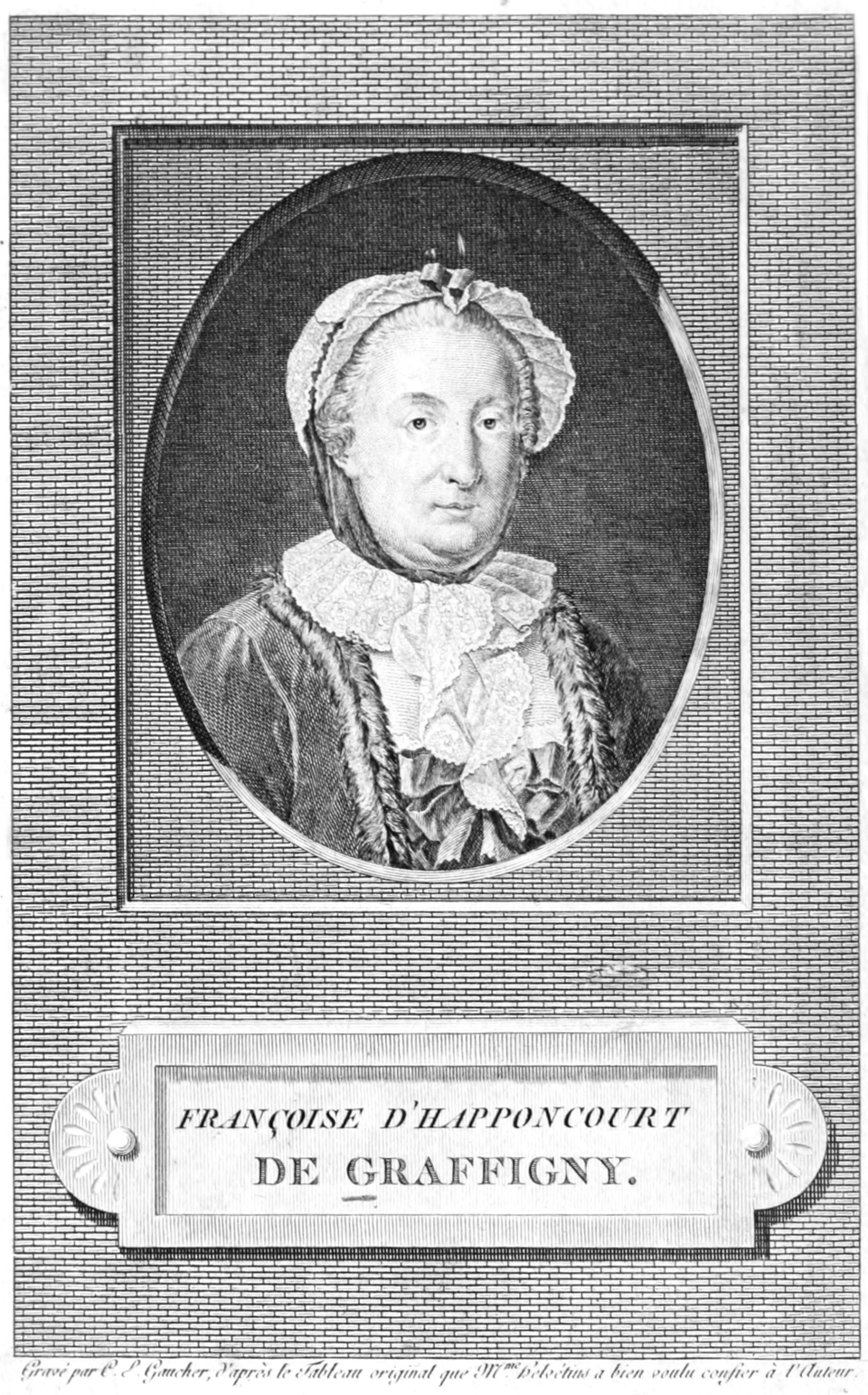
—Many have read in this novel a defense of women's condition. Was that your intention?
I warned my readers from the preface: 'Whatever love of novelty one attributes to the French, I am persuaded that I shall never be accused of taking too much in depicting customs that are foreign to us.' They wanted picturesque savages; I gave them a mirror. For my Zilia discovers that Frenchwomen, under their panniers and rouge, are as captive as she: raised in ignorance, married without being consulted, ruined if they displease. And do you know what I dared? At the end, Zilia does not throw herself into a man's arms. She chooses study, books, her own company. I myself knew the price of marriage and of separation; I was not going to deliver my heroine to a husband to please him.
—Once settled in Paris, you opened your door to people of wit. What happened in your salon?
My salon on Rue Saint-Hyacinthe had none of the splendor of great ladies: a cramped, poorly heated apartment, where I received for lack of a better place in my ruelle, as they said, closest to the fire. But people came. Helvétius, Turgot, and a bubbling young man named Diderot, whose genius had not yet been recognized. We discussed novelties, read pages before they were printed, argued about virtue and kings. I had neither the fortune nor the rank to rival Madame Geoffrin, but I had something that cannot be bought: a nose for beaux esprits before they became such. A salon, you see, is not the furniture. It is the minds you bring together.
A salon is not the furniture: it is the minds you bring together.
—You are said to have written thousands of letters to your friend Devaux. What was this correspondence to you?
Panpan—that is what I call my dear Devaux, who remained in Lorraine—received from me more than two thousand five hundred letters, written over forty years. My portable writing desk never left me; I wrote in the morning over chocolate, in the evening by candlelight, sometimes several times the same day, as one breathes. I told him everything: suppers, rehearsals, my eye troubles, my debts, my angers and hopes. It was my true theater, the only one where I played no role. Others write memoirs for posterity; I wrote only for a friend, and perhaps that is why these pages speak the truth. If ever one wants to know how a woman of my century lived, thought, and trembled, let them read those letters rather than my novels.
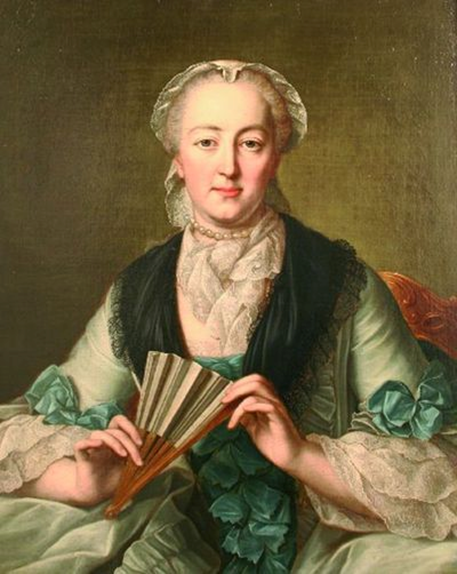
—In 1750, your play Cénie triumphed at the Comédie-Française. Do you remember that evening?
Cénie, in 1750, at the Comédie-Française: I will never forget the sound of the hall. Not laughter—sobs. A whole pit weeping, men wiping their eyes without shame. I had written a comédie larmoyante, that genre somewhat despised but which takes the heart by the hand, where modest virtue finally triumphs over pride. Twenty-five consecutive performances! For a woman, from whom neither invention nor audacity is expected, it was unheard of. I made my characters say that 'virtue needs no foreign ornaments; it pleases by itself, and its triumph is all the more beautiful for being simpler.' That evening, I believed, for once, that simplicity had triumphed, and I with it.
Not laughter—sobs. A whole pit weeping.
—Your last comedy, La Fille d'Aristide, did not meet the same fate. How did you experience that failure?
La Fille d'Aristide, in 1758, was my last play and my bitterest. I had put into it what strength I had left, and little remained: illness held me, my eyesight was failing, money was always lacking. The play fell. The audience that had bathed me in tears for Cénie remained dry and cold. Nothing is forgiven those who have already succeeded; people wait for them to fall again to rejoice. This failure, I will not hide it, finished me as much as the disease that was eating me. One thinks an empty theater is just a lost evening; for one who has staked everything, it is a death sentence in miniature. I faded shortly after, that same year, in Paris. The curtain had fallen for good.
—In the end, how would you like to be remembered as the woman behind the work?
Let them remember, first, that I wrote to live, in the most basic sense: to pay my modest rent on Rue Saint-Hyacinthe, to dress decently, not to depend entirely on the goodwill of my protectors. Men of letters write for glory; women like me write also for the baker. I bargained sharply with my booksellers, I counted my candles. If I could imagine being read a century or two from now, I would want that vulgar and essential detail not to be forgotten: behind Zilia and her quipus, behind the tears of Cénie, there was a woman who was cold, who saw poorly, and who held her pen because it was the only thing in the world that had never betrayed her.
Men of letters write for glory; women like me write also for the baker.
Read further
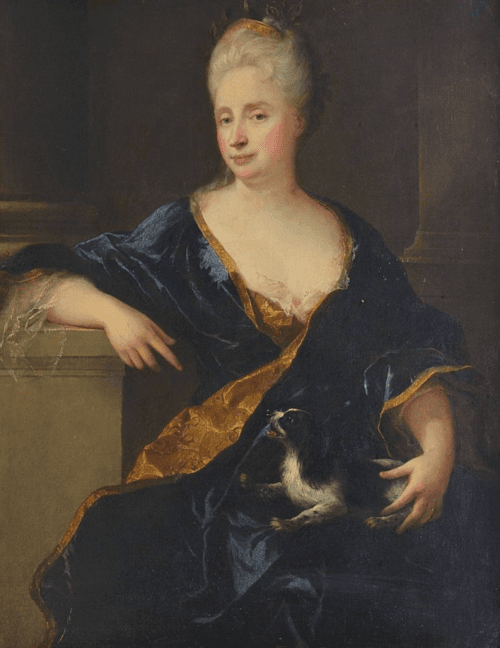

This imaginary interview was generated by artificial intelligence from sources documented in Françoise de Graffigny's profile. It dramatises what the figure might have said based on what we know about them, but does not constitute attested historical testimony. For primary sources and factual documentation, refer to the full profile.