Imaginary interview with Freya Stark
by Charactorium · Freya Stark (1893 — 1993) · Exploration · Literature · 5 min read
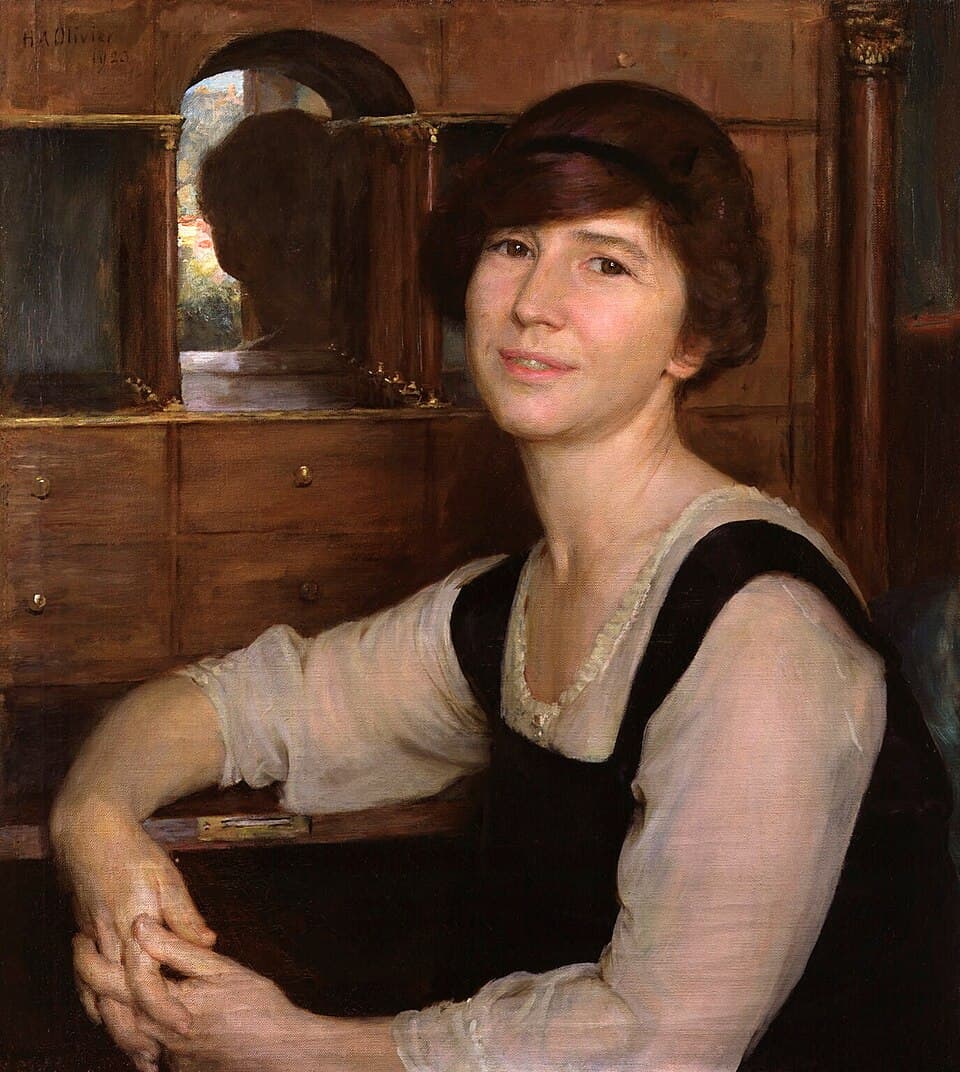
Asolo, a terrace overlooking the hills of Veneto, on a late summer afternoon. In Casa Freia, Persian rugs and copper lanterns brought back from Yemen sit alongside annotated maps pinned to the wall. Freya Stark, small, with a sharp gaze under a neat hairdo, pours strong black tea and agrees to revisit, for us, sixty years of caravan routes.
—How did it all begin: what did you go looking for in Lebanon in 1927?
I left for Lebanon with almost nothing in my pockets and a single fixed idea: to learn Arabic. I had been told that Maronite monks in the mountains taught the language informally. I lived there for a few months in fierce frugality — a hard bed, bread, tea, and hours copying the alphabet. But I already knew, vaguely, that this language was not a drawing-room ornament: it was a key. My old Arabic-English Dictionary never left me. When you greet a man in his own language, his face changes; he offers you his coffee, then his trust, then his home. All the doors of the Levant opened with that little dog-eared book and my clumsy pronunciation.
This language was not a drawing-room ornament: it was a key.
—Why adopt the veil and local clothing instead of an English traveler's outfit?
Because a foreigner in a wide-brimmed hat in a conservative village is a spectacle; and a spectacle sees nothing, it is watched. I carried my trousers and explorer's shirt, of course, for walking and rocky terrain. But when I arrived at a local's home, I willingly put on the veil and long dress. It was not a masquerade: it was politeness, and politeness always pays. Dressed like the local women, I could cross the threshold of houses forbidden to passing men, sit with the wives, listen to what no male traveler would ever hear. They took me for a harmless eccentric — that is exactly what one must be to learn something.
—Your first major book took you to the fortresses of the Assassins. What were you seeking in those mountains?
In 1930, I climbed into the Alborz in Iran, toward the ancient citadels of the Nizarites — those the West calls the Assassins, out of laziness and fear. For three days, I crossed a country where, I believe, no European woman had set foot. I wrote then to my mother: 'I have been travelling for three days through a country where no European woman has gone before me. The villages are friendly and the mountains magnificent, though I confess the mules are less so.' Mules, you see, remain the true test of any exploration. From those weeks came The Valleys of the Assassins, my first real book, the one that made me a writer as much as a walker.
Mules remain the true test of any exploration.
—Do you remember your entry into Hadhramaut, that valley no Westerner had described?
Hadhramaut, in 1934, was the great dream of my life and nearly its end. It is a closed world, locked by the desert, where the old caravan routes still set the rhythm of days. I arrived via Aden, the colonial port, then inland, notebook and Leica slung over my shoulder, photographing cities of dried mud as tall as cathedrals. And then dysentery seized me, brutal, and I had to be evacuated in haste. I raged at being carried away sick when everything remained to be seen. But my notes and photographs came back with me: the first Western account of that ancient civilization. From that fever came The Southern Gates of Arabia.
Hadhramaut was the great dream of my life and nearly its end.
—What in that South Arabia was worth risking your health and life?
I have often been asked that, and I have never been able to answer without seeming mad. Hadhramaut was a fertile, enclosed valley, cradle of ancient merchant families, accessible only to those who consented to endure its solitude. And it was precisely the solitude that attracted me: a place where no one had come to tell you what you should see. I slept under a tent or in a local home, according to Bedouin hospitality, ate dates and rice, and noted everything. A Winter in Arabia came from that second stay. I believe I was born, as I wrote, with an incurable passion for distant places — my mother called it a disease; I have always seen it as the only fitting response to so vast a world.
An incurable passion for distant places — the only fitting response to so vast a world.
—The war turned you into a propaganda agent. How did you go from exploration to intelligence?
When war came, you no longer walked for yourself. From 1939, the British services called me to Cairo: I spoke Arabic, I knew the notables of Iraq and Egypt, I had the ear of both salons and bazaars. In Baghdad, in 1941, I founded the Brotherhood of Freedom — a pro-Allied persuasion network to stem Nazi propaganda, which then flattered many minds in the Arab world. We gathered thousands of local members, intellectuals, notables, around the simple idea that freedom was better than the order of dictators. It was not novelistic espionage: it was conversations, tea, patience. My weapons were the same as always — language and friendship.
My weapons were the same as always — language and friendship.
—After the war, you publicly sided with the Arab peoples. What prompted you to write to the Times?
Because I saw my country betray its word, and a people never forgives that. In 1947, on the eve of the great upheavals in Palestine, I wrote to the Times of London what I held to be obvious: 'We cannot hope to hold the friendship of the Arab world if we continue to disregard the promises made to its peoples. Honesty in diplomacy is not weakness — it is the only lasting foundation.' I was thought imprudent, perhaps biased. But I had slept under their tents, eaten their bread, learned their language; I knew the price of a broken promise in the land of the East. Diplomacy that lies always pays, and later than one thinks.
Diplomacy that lies always pays, and later than one thinks.
—Your last major books go back to antiquity, following Alexander and then Rome. Why this return to the ancients?
Because the earth is read in layers, like a palimpsest, and one understands nothing of a land's present without its past. For Alexander's Path, in 1958, I followed in Asia Minor, in Turkey, the path of the Macedonian conqueror, with a hand-annotated topographic map, correcting along the way the erroneous surveys of armchair cartographers. Then, with Rome on the Euphrates, I walked the ancient eastern frontier of the Empire. I was no longer just a walker: I had read my classics, and I wanted to see if the texts held up against the terrain. Often, they did. Traveling in the footsteps of the illustrious dead is to give them voice again by walking where they walked.
The earth is read in layers, like a palimpsest.
—What would you say about those long letters you wrote every evening, under a tent or in a caravanserai?
In the evening, when the day's journey ended, I would settle in a caravanserai or at a host's home, and write. To my mother, especially — long detailed letters where I poured out everything: the landscapes, the faces, the smell of cardamom coffee, my moods as well. It was both my comfort and my secret workshop, for those pages, reread later, became the living material of my books. My leather notebook received the facts; the letters received the soul of the day. I believe one never writes better than for a single loved person, by lamplight, when the silence of the desert weighs around the tent like a presence.
One never writes better than for a single loved person, by lamplight.
—How did it feel to still travel on donkey-back in Afghanistan past seventy, then be honored by your queen?
To age badly is to stop leaving — so I did not stop. Past seventy, I went to Afghanistan on donkey-back, and later still roamed the interior of Turkey. Young people were astonished; I found it perfectly natural: the body follows the mind's appetite as long as one does not discourage it. In 1972, Queen Elizabeth II made me Dame Commander of the British Empire. I was touched, I admit, not for the title — titles are trinkets — but because it was finally recognized that a woman's life spent on the roads of the Levant had served some purpose. My only real medal is the paths I opened.
To age badly is to stop leaving — so I did not stop.
This imaginary interview was generated by artificial intelligence from sources documented in Freya Stark's profile. It dramatises what the figure might have said based on what we know about them, but does not constitute attested historical testimony. For primary sources and factual documentation, refer to the full profile.