Imaginary dialogue between Élisabeth II and Freya Stark
by Charactorium · Freya Stark (1893 — 1993) · Exploration · Literature · 6 min read
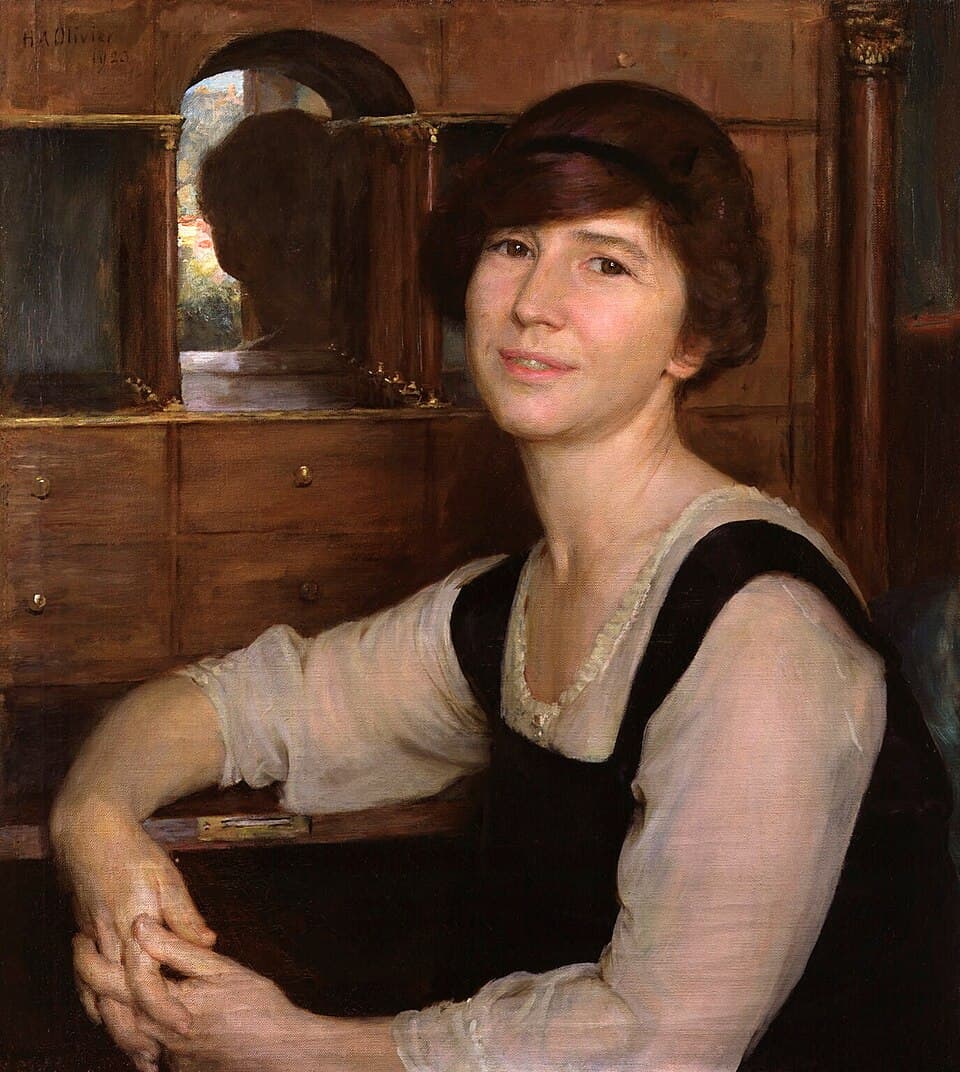
It is in the gardens of Buckingham Palace, in the summer of 1972, that Queen Elizabeth II meets Freya Stark the day after the investiture that made her a Dame Commander of the British Empire. The warm London light glides over the lawns, so far from the burning solitudes of Hadhramaut. The sovereign knows by reputation this woman of nearly eighty who has carried the British name to the forbidden valleys of the Orient. She has come to hear her tell, behind the honors, a life entirely devoted to knowledge of the Arab world.
—Madam, before the fortresses and deserts, there was a language to conquer. How does a young Englishwoman learn Arabic in Lebanon?
Your Majesty, it all began in 1927, when I went alone to Maronite monks to immerse myself in Arabic. I had almost nothing: I slept in rudimentary conditions, I ate little, but I worked on the language from morning to night. In a few months, I had acquired enough to make myself understood — and above all to be accepted. For Arabic is not merely a tool of translation; it is a key that opens men's trust. Without it, I would have been just another foreigner, looked at from afar. With it, I was invited under the tent, told things that no mute traveler would ever have heard. That early frugality taught me a truth I have never forgotten since.
Arabic is not a tool of translation; it is a key that opens men's trust.
—They say you nearly died reaching valleys where no European woman had ever been. Is that true, Dame Stark?
Very true, Madam. In 1934, I wanted to penetrate the Hadhramaut in Yemen, a deep valley almost unknown to the West. I contracted such severe dysentery that I had to be evacuated urgently; I thought the region would claim my skin before I could bring back a single page. But my notes and photographs survived — and they constituted the first Western scientific account of that ancient mercantile civilization. I turned it into The Southern Gates of Arabia, which many consider my best book. Illness passes; what one has seen and recorded remains. I have always believed that an explorer must be ready to pay with their health for what the desert grants them.
Illness passes; what one has seen and recorded remains.
—You mention photographs. What did you seek to capture in regions no one had fixed on a plate?
My Leica never left me, Your Majesty. Where maps lied or ended, the image did not argue. I photographed landscapes, faces, perched villages, caravan routes — everything that risked disappearing or remaining forever invisible to Europe's eyes. It was not art; it was archive. An explorer who returns empty-handed has only taken a walk. With my photographs and notebooks, I brought back material that geographers and scholars could examine after me, contradict or extend. I always worked for that future gaze — people I would never know who would need to know what the world was like before it changed.
An explorer who returns empty-handed has only taken a walk.
—War came. The Crown then needed servants in Cairo and Baghdad. What was your role, Madam?
When war broke out, Your Majesty, I put my knowledge of the Orient at the service of His Majesty your father's government. From 1941, I founded a network we called the Brotherhood of Freedom, in Cairo then in Baghdad. Its purpose was simple: to counter Nazi propaganda, which flattered certain Arab nationalisms against us. I gathered notables, intellectuals, trustworthy men — thousands of local members, in the end — to make another voice heard. It was not a job of arms but of persuasion, made of patience and endless conversations over coffee. My Arabic, my years of travel, the friendships forged in the desert: all of this suddenly became a diplomatic weapon in service of the Crown.
It was not a job of arms but of persuasion, made of patience and coffee.
—Did you really believe that a patiently woven friendship weighed as much as Berlin's speeches among the Arab peoples?
I believed it, Madam, and I still do. Berlin promised much and loudly; we could promise honesty, provided we kept it. I always said that we would not keep the friendship of the Arab world if we despised commitments made to its peoples. Trust, in these regions, cannot be bought or decreed: it is earned man by man, under a tent, sharing salt. The Brotherhood of Freedom rested on that conviction — that real bonds are worth more than all the posters. Of course, I was only a thread in a vast fabric. But I saw with my own eyes notables side with us because they had been listened to rather than harangued.
Trust, in these regions, cannot be decreed: it is earned under a tent, sharing salt.
—You are said to be as scholarly as adventurous. In the footsteps of Alexander, what did the scholar seek more than the traveler?
Your Majesty, travel and scholarship have never been but a single movement for me. In Alexander's Path, in 1958, I traversed Turkey and Asia Minor following the route of the Macedonian conqueror, an annotated topographic map in hand, correcting the lines as I went. Walking where he walked is to understand history with one's feet as much as with books. Later, in Rome on the Euphrates, I studied the eastern frontier of the Roman Empire — again mixing ancient texts with what only intimate knowledge of the ground could teach me. People took me for a lady writing pretty stories; I wanted to be read also as someone who thinks about the past.
Walking where Alexander walked is to understand history with one's feet as much as with books.
—This double life — adventure and study — never seemed impossible to hold in one hand, Dame Stark?
Impossible, no, Madam — but demanding, yes. In the morning, I surveyed a valley or negotiated mules; in the evening, under the lamp, I reread classical Arabic and Persian texts. One constantly nourished the other. Without books, I would have seen only sand in the desert; without the desert, the books would have remained dead letters. Rome on the Euphrates would not have had the same substance if I had not known, in my own fatigue, what it means to hold a frontier at the end of the world. I never believed a woman had to choose between mind and bodily courage. I wanted both, and that is undoubtedly why my days were always too short.
Without books, I would have seen only sand in the desert.
—At an age when others rest, you set off again. Afghanistan on donkey-back, inner Turkey — where does this obstinacy come from, Madam?
From an incurable passion for distant places, Your Majesty — my mother saw it as a disease, I as the only fitting response to a world so vast. Past seventy, I crossed Afghanistan on donkey-back, and later deep Turkey. People were astonished, thought me indestructible. The truth is simpler: as long as my legs carried me and my curiosity did not dim, I saw no reason to stop. Old age, I have always thought, is not a matter of years but of renunciations — and I refused to renounce. A new horizon has the same effect on me as at twenty: it calls me, and I cannot say no.
Old age is not a matter of years but of renunciations.
—Yesterday, in that hall, I made you Dame Commander of the British Empire. What does this distinction from the Crown mean to you?
Madam, receiving this title from your hand yesterday was an honor I did not expect and will hold deep in my heart. I spent my life far from court, in valleys whose names London did not even know, convinced I worked in a solitude no one would measure. That the Crown today recognizes that a life of travel and books can serve the country as much as a more visible career — that is what touches me. I never sought distinctions; I sought to understand the Arab world and to make it understood by my own people. If my stories and my years in the Orient have helped England better know these peoples, then this ribbon you gave me carries, for me, the weight of a whole life.
I sought to understand the Arab world and to make it understood by my own people.
—And now, receiving you here in my gardens, I wonder: what does a woman who has walked so much still dream of?
Of setting off again, Your Majesty — always. As long as morning light falls on a road I have not taken, I feel the same fever as on the first day. I have seen empires dissolve, borders change masters, civilizations Europe never suspected existed; and yet it seems I have only skimmed the surface of the world. What I wish for is not rest but a little more time: to write what I have not written, to revisit a valley, to understand something that always eludes me. Your Majesty has honored me with an end to the journey; I stubbornly believe there is still a path ahead. Curiosity, you see, never ages as fast as we do.
Curiosity never ages as fast as we do.
This imaginary interview was generated by artificial intelligence from sources documented in Freya Stark's profile. It dramatises what the figure might have said based on what we know about them, but does not constitute attested historical testimony. For primary sources and factual documentation, refer to the full profile.